Estrategia de seguimiento de tendencias basada en la superación del marco temporal

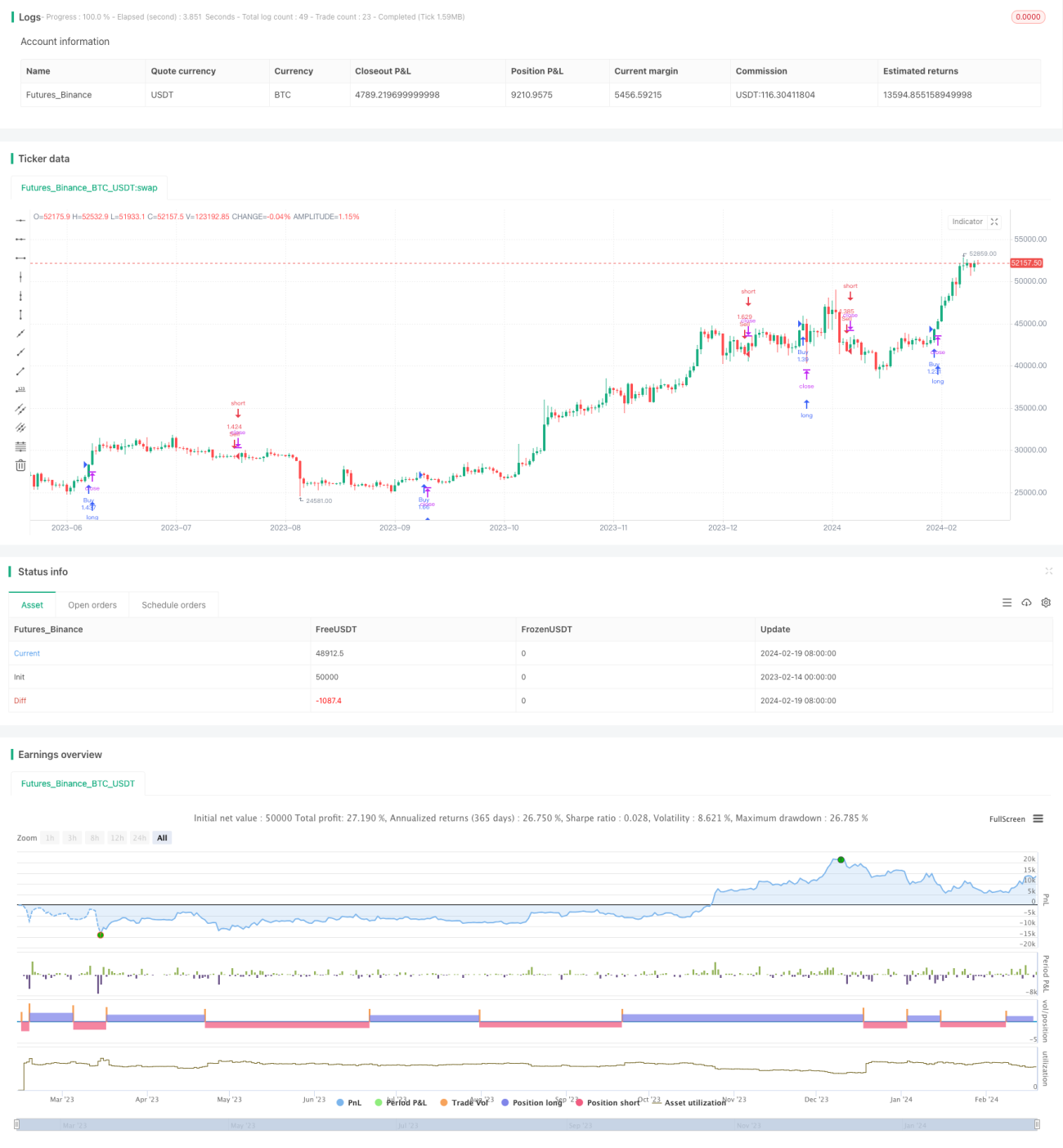
Resumen
La idea central de esta estrategia es identificar las tendencias del mercado combinando múltiples marcos temporales, utilizando un indicador supertrend en el marco temporal superior como filtro, y generando señales de compra y venta en el marco temporal inferior. El objetivo es aprovechar la información de la estructura del mercado proporcionada por el marco temporal superior para mejorar la calidad de las decisiones de trading.
Principio de la Estrategia
La estrategia obtiene el valor del indicador supertrend del marco temporal superior (por defecto, 4 veces el marco temporal actual) mediante la función security. El indicador supertrend consta de dos líneas: la línea de supertrend y la línea de tendencia. Cuando la línea de supertrend está por encima de la línea de tendencia, es una señal alcista; cuando está por debajo, es una señal bajista.
La estrategia utiliza la dirección del supertrend en el marco temporal superior como condición de filtro. Solo cuando la dirección del supertrend en el marco temporal inferior coincide con la del marco temporal superior, se genera una señal de trading. Es decir, solo cuando ambos marcos temporales muestran la misma dirección del indicador, la estrategia abre una posición larga o corta.
De esta manera, se evita el ruido del mercado en el marco temporal inferior y se mejora la fiabilidad de las señales. Al mismo tiempo, se utiliza el marco temporal superior para juzgar la estructura del mercado y tomar una decisión general correcta.
Ventajas de la Estrategia
- Utiliza la información de la estructura del mercado del marco temporal superior para filtrar el ruido del marco temporal inferior, mejorando la calidad de las decisiones de trading.
- Combina el análisis de múltiples marcos temporales, haciendo que las señales de trading sean más fiables.
- Permite personalizar los parámetros del indicador supertrend para optimizar las estrategias de compra y venta.
- Incluye un rango de fechas integrado que permite limitar el período de backtesting.
Análisis de Riesgos
- Las señales del marco temporal superior pueden tener retraso, perdiendo oportunidades a corto plazo.
- El juicio de la estructura del mercado basado en el marco temporal superior tiene cierta probabilidad de error.
- El propio indicador supertrend también puede generar señales falsas.
- La restricción del rango de fechas en el backtesting puede omitir datos importantes, afectando la precisión de los resultados.
Soluciones:
- Ajustar adecuadamente la configuración del marco temporal superior para reducir el retraso de las señales.
- Combinar con otros indicadores para confirmar el juicio estructural del marco temporal superior.
- Optimizar los parámetros del indicador supertrend para mejorar la calidad de las señales.
- Ampliar gradualmente el rango de fechas del backtesting para probar la robustez de la estrategia.
Direcciones de Optimización de la Estrategia
Esta estrategia puede optimizarse en los siguientes aspectos:
- Optimizar los parámetros del indicador supertrend para encontrar la mejor combinación de parámetros.
- Añadir otros indicadores para formar un modelo multifactorial.
- Probar diferentes combinaciones de marcos temporales altos y bajos.
- Incorporar mecanismos de stop-loss para controlar el riesgo.
- Combinar algoritmos de aprendizaje automático para ajustar dinámicamente los hiperparámetros.
Mediante la optimización de parámetros, la combinación de indicadores, la mejora de los stops-loss y la introducción de aprendizaje automático, se puede mejorar significativamente el rendimiento de esta estrategia de seguimiento de tendencias de múltiples marcos temporales.
Conclusión
Esta estrategia aprovecha hábilmente el juicio de tendencia del marco temporal superior para guiar la ejecución de operaciones en el marco temporal inferior. Este diseño de múltiples marcos temporales permite filtrar eficazmente el ruido del mercado e identificar direcciones de tendencia más claras. Además, la función de configuración de fechas incorporada hace que el backtesting sea más flexible. En resumen, se trata de una estrategia de seguimiento de tendencia de múltiples marcos temporales bien diseñada, que merece un mayor estudio y aplicación.
/*backtest
start: 2023-02-14 00:00:00
end: 2024-02-20 00:00:00
period: 1d
basePeriod: 1h
exchanges: [{"eid":"Futures_Binance","currency":"BTC_USDT"}]
*/

// This source code is subject to the terms of the Mozilla Public License 2.0 at https://mozilla.org/MPL/2.0/
// © HeWhoMustNotBeNamed

//@version=4- 1