Estrategia de trading cuantitativo de criptomonedas en gráfico de 1 minuto combinando la Media Móvil Exponencial Triple y el Índice de Fuerza Relativa

Resumen
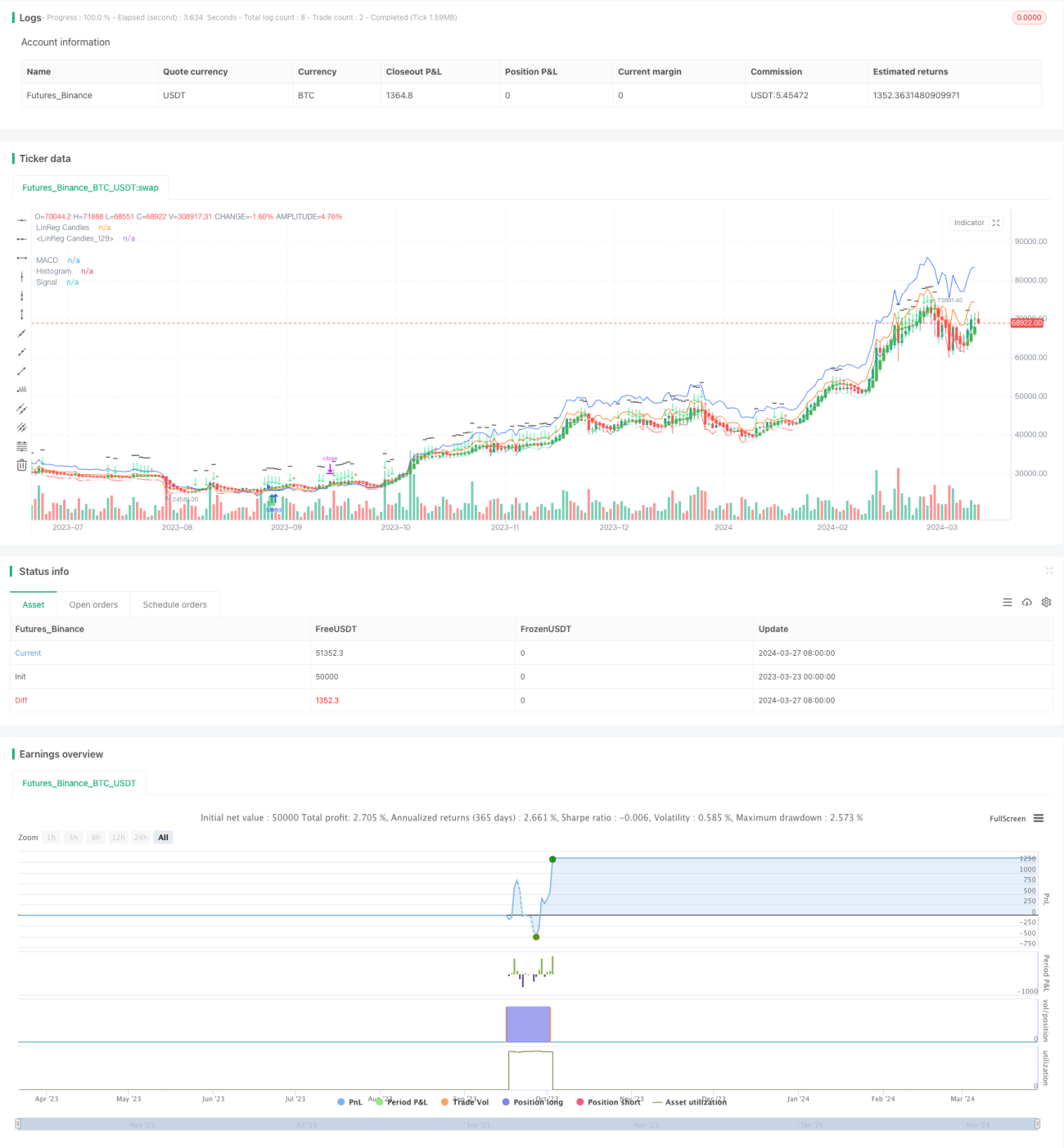
La estrategia combina la Triple Media Móvil Exponencial Convergente/Divergente (Triple MACD) con el Índice de Fuerza Relativa (RSI), diseñada específicamente para el trading cuantitativo en el mercado de criptomonedas con un período de 1 minuto. La idea principal es utilizar indicadores MACD con diferentes parámetros de período para capturar los cambios de impulso alcista y bajista del mercado, mientras que el RSI confirma la fuerza de la tendencia. Al promediar las tres señales MACD, se puede suavizar efectivamente el ruido y mejorar la fiabilidad de las señales de trading. Además, la estrategia emplea la regresión lineal para identificar las fases de consolidación del mercado, evitando operar con frecuencia en rangos laterales. Toda la estrategia es adecuada para bots de trading de rejilla, permitiendo obtener rendimientos estables en las rápidas fluctuaciones del mercado de criptomonedas.
Principio de la Estrategia
Esta estrategia utiliza tres indicadores MACD con diferentes parámetros: períodos rápidos de 5/13/34 y períodos lentos de 8/21/144, calculando la diferencia entre ellos para obtener el valor MACD. Luego, se promedian estos tres MACD, y al valor promedio se le resta su Signal (es decir, la EMA de N períodos del MACD), obteniendo el histograma MACD final. Simultáneamente, se calcula el RSI de 14 períodos para ayudar a juzgar la fuerza de la tendencia. Cuando el histograma MACD promedio pasa de negativo a positivo, el RSI es menor a 55 y hay una disposición alcista, se genera una señal de compra. Por el contrario, cuando el histograma MACD promedio pasa de positivo a negativo, el RSI es mayor a 45 y hay una disposición bajista, se genera una señal de cierre de posición. Además, la estrategia aplica una regresión lineal de 11 períodos a las velas, analizando la proporción entre el cuerpo y las sombras de la vela para identificar consolidaciones.
Análisis de Ventajas
- La combinación de indicadores MACD con múltiples parámetros de período puede reflejar objetivamente los cambios de tendencia en diferentes escalas temporales del mercado, mejorando la precisión en el juicio de tendencias.
- Al combinar MACD y RSI, se forman condiciones estrictas de apertura y cierre de posiciones, lo que ayuda a mejorar la rentabilidad de la estrategia y controlar las pérdidas.
- La señal MACD promedio puede eliminar eficazmente las señales falsas causadas por fluctuaciones frecuentes del indicador, haciendo que las señales de trading sean más fiables.
- El uso de la regresión lineal para determinar consolidaciones evita entrar en el mercado cuando la tendencia no es clara en mercados laterales, reduciendo así las operaciones perdedoras.
- En el mercado de criptomonedas, que cambia rápidamente, una estrategia de trading cuantitativo en el marco temporal de 1 minuto puede capturar mejor las oportunidades de trading que surgen de las fluctuaciones del mercado.
Análisis de Riesgos
- La estrategia se desempeña mejor en mercados con tendencia unidireccional. Si el mercado permanece en un rango lateral amplio durante mucho tiempo, las señales de trading pueden fallar con frecuencia.
- Debido a la alta volatilidad del mercado de criptomonedas, si se producen fluctuaciones extremadamente anómalas a corto plazo, podría resultar en grandes reducciones de capital.
- La selección de parámetros de la estrategia tiene un impacto significativo en la rentabilidad general. Una configuración inadecuada de parámetros puede llevar a que la estrategia falle. Por lo tanto, es necesario realizar una optimización exhaustiva de parámetros y pruebas retrospectivas en diferentes activos antes de la implementación en vivo.
Direcciones de Optimización
- Se puede considerar la introducción de indicadores relacionados con la volatilidad de precios, como el ATR, para filtrar las señales de apertura y reducir las pérdidas causadas por fluctuaciones anormales del mercado.
- Para la identificación de consolidaciones, además de la regresión lineal, se pueden probar otros métodos como niveles de soporte y resistencia, bandas de Bollinger, etc., para mejorar aún más la precisión de identificación.
- En mercados con tendencia, se puede introducir un trailing stop para optimizar los puntos de cierre de posición, maximizando así las ganancias por operación.
- Considerando las diferencias en las características de diferentes activos, se pueden establecer parámetros de estrategia separados para cada activo, mejorando la adaptabilidad y estabilidad general de la estrategia.
Resumen
Esta estrategia combina ingeniosamente la Triple MACD con el RSI, y utiliza la regresión lineal para identificar consolidaciones, formando un sistema completo de trading cuantitativo de alta frecuencia. Las estrictas condiciones de apertura y cierre, junto con el uso de la señal MACD promedio, ayudan a mejorar la precisión del trading y controlar las pérdidas. Aunque la estrategia se desempeña mejor en mercados de tendencia unidireccional, mediante la introducción de filtros de volatilidad, la optimización de los métodos de identificación de consolidaciones, el establecimiento de trailing stops y la configuración de parámetros independientes para diferentes activos, se puede mejorar aún más su adaptabilidad y robustez. En general, es una estrategia de trading cuantitativo de criptomonedas con gran potencial, que merece una mayor optimización y aplicación en vivo.
- 1