Estrategia de cruce de medias móviles exponenciales con apalancamiento

Resumen
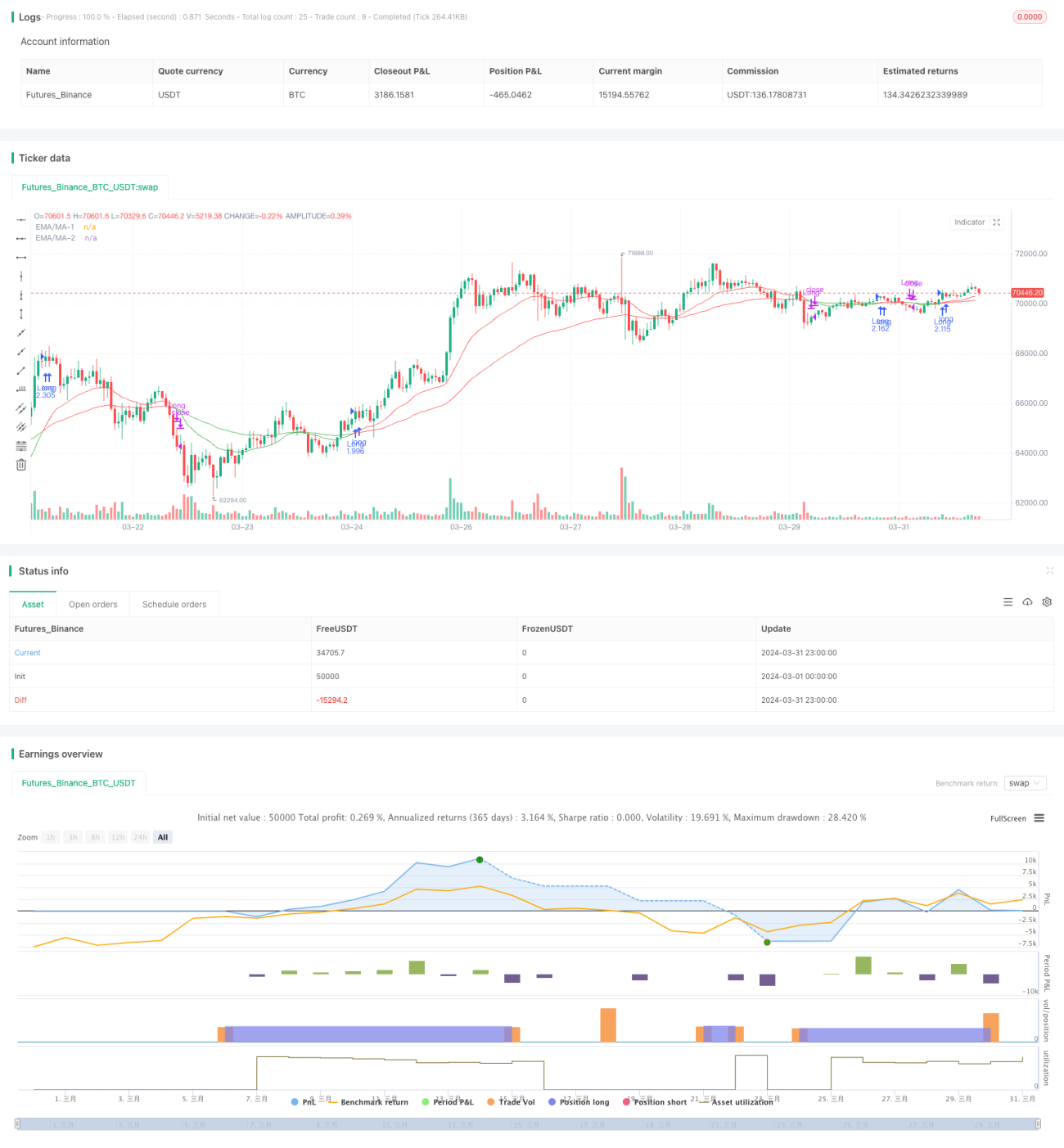
Esta estrategia utiliza el cruce de dos medias móviles exponenciales (EMA) de 20 y 55 períodos para determinar las señales de trading. Cuando la EMA de corto plazo cruza por encima de la EMA de largo plazo, se genera una señal de compra; en caso contrario, se genera una señal de venta. La estrategia también incorpora trading con apalancamiento, amplificando así tanto los beneficios como los riesgos. Además, se añade una condición restrictiva: solo se abre una posición cuando el precio toca la media móvil de corto plazo después del cruce, con el fin de reducir el riesgo de señales falsas. Por último, el usuario puede optar por utilizar medias móviles simples (MA) en lugar de EMA.
Principio de la estrategia
- Calcular las EMA (o MA) de 20 y 55 períodos.
- Determinar si la EMA de corto plazo cruza por encima de la EMA de largo plazo. En caso afirmativo, se establece la variable
readyToEntercomotrue, indicando que se está listo para entrar. - Si
readyToEnterestruey el precio toca la EMA de corto plazo, se ejecuta una compra y se restablecereadyToEnterafalse. - Si la EMA de corto plazo cruza por debajo de la EMA de largo plazo, se cierra la posición.
- Ajustar el tamaño de la posición según el parámetro de apalancamiento.
- La estrategia solo se ejecuta dentro del intervalo de backtesting definido por el usuario.
Ventajas de la estrategia
- El cruce de medias móviles es un método simple y fácil de usar para identificar tendencias, adecuado para la mayoría de los mercados.
- La incorporación de apalancamiento permite amplificar los beneficios.
- La condición restrictiva adicional reduce el riesgo de señales falsas.
- Ofrece dos opciones de medias móviles (EMA y MA) para adaptarse a las preferencias de diferentes usuarios.
- El código tiene una estructura clara, fácil de entender y modificar.
Riesgos de la estrategia
- El apalancamiento amplifica los riesgos; un error de juicio puede generar grandes pérdidas.
- El cruce de medias móviles presenta retraso, lo que puede hacer que se pierda el mejor momento de entrada.
- Solo es adecuada para mercados con tendencias claras; en mercados laterales o con alta volatilidad, puede generar numerosas operaciones y altas comisiones.
Direcciones de optimización
- Se pueden probar diferentes períodos de medias móviles para encontrar los parámetros más adecuados para el mercado actual.
- Se pueden incorporar otros indicadores, como RSI o MACD, para un juicio de tendencia más completo y mejorar la tasa de aciertos.
- Se pueden establecer stop-loss y take-profit para controlar el riesgo de cada operación.
- Se puede ajustar dinámicamente el apalancamiento según la volatilidad del mercado: aumentar el apalancamiento en momentos de baja volatilidad y reducirlo en momentos de alta volatilidad.
- Se pueden introducir algoritmos de aprendizaje automático para optimizar los parámetros de forma adaptativa.
Conclusión
Esta estrategia combina el cruce de medias móviles con el apalancamiento para aprovechar las tendencias del mercado y amplificar los beneficios. Sin embargo, el apalancamiento también conlleva un alto riesgo, por lo que debe utilizarse con precaución. Además, la estrategia tiene margen de mejora mediante la incorporación de más indicadores, el ajuste dinámico de parámetros, etc. En resumen, es adecuada para traders que buscan altos rendimientos y pueden asumir altos riesgos.
/*backtest
start: 2024-03-01 00:00:00
end: 2024-03-31 23:59:59
period: 1h
basePeriod: 15m
exchanges: [{"eid":"Futures_Binance","currency":"BTC_USDT"}]
*/

//@version=5
strategy("EMA Crossover Strategy with Leverage, Conditional Entry, and MA Option", overlay=true, default_qty_type=strategy.percent_of_equity, default_qty_value=100)

// Inputs for backtesting period- 1