Estrategia de captura de tendencia con la media móvil Alligator de Williams

Resumen
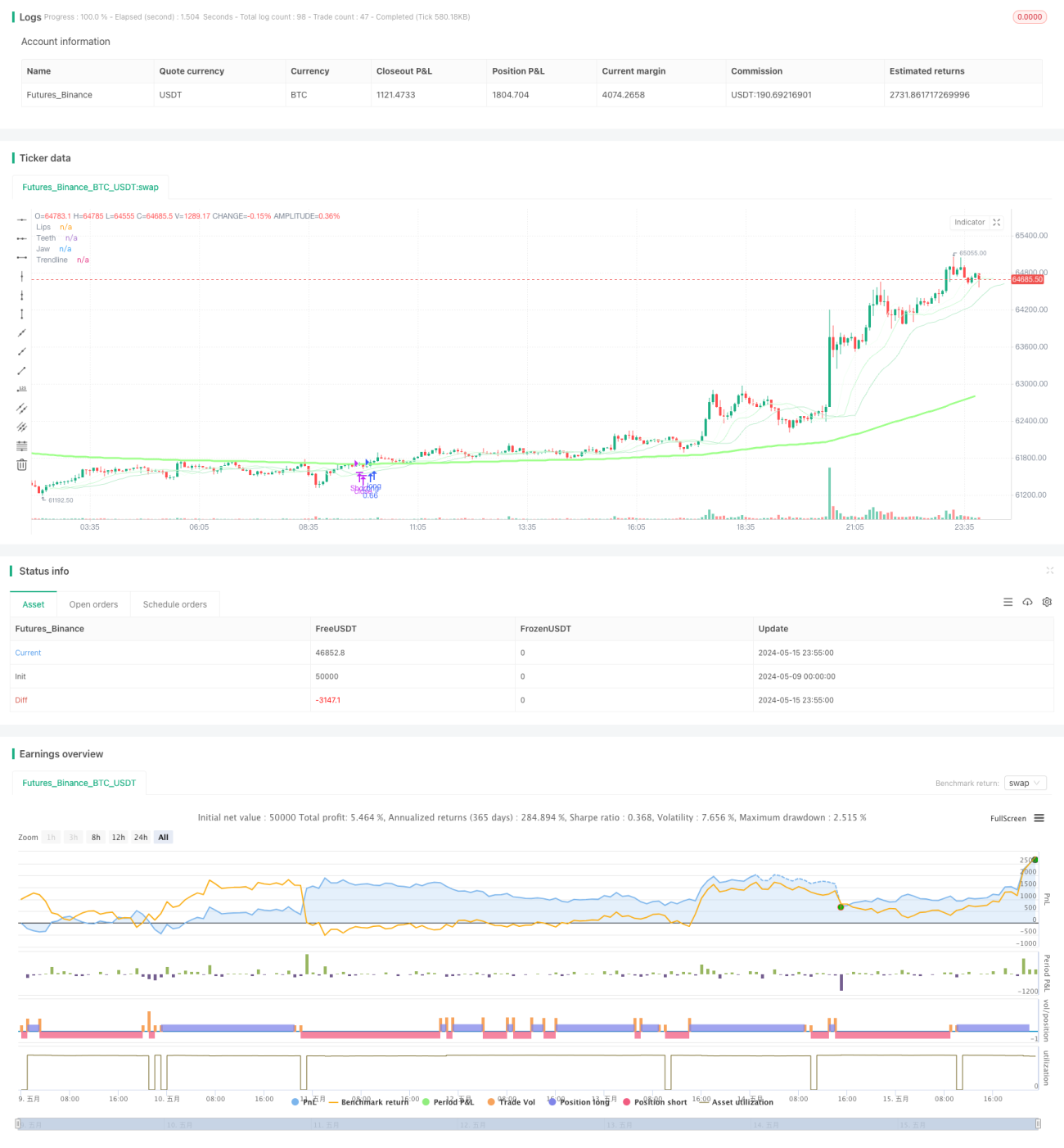
La estrategia de captura de tendencia con media móvil y Cocodrilo de Williams es una estrategia de seguimiento de tendencia que combina el indicador Cocodrilo de Williams y medias móviles. Esta estrategia utiliza la posición relativa de las tres líneas del indicador Cocodrilo de Williams (mandíbula, dientes y labios) para determinar la dirección de la tendencia, mientras que emplea la media móvil como una segunda confirmación de la tendencia. Cuando el precio supera la media móvil y las tres líneas del Cocodrilo de Williams presentan una disposición alcista, la estrategia abre una posición larga; cuando el precio cae por debajo de la media móvil y las tres líneas del Cocodrilo de Williams presentan una disposición bajista, la estrategia abre una posición corta. Esta estrategia es adecuada para mercados con características de tendencia claras, como activos de alta volatilidad como Bitcoin y Ethereum.
Principio de la estrategia
El núcleo de la estrategia de captura de tendencia con media móvil y Cocodrilo de Williams es utilizar el indicador Cocodrilo de Williams y la media móvil para identificar y confirmar la tendencia. El indicador Cocodrilo de Williams consta de tres líneas: Mandíbula (Jaw), Dientes (Teeth) y Labios (Lips), que son medias móviles suavizadas (SMMA) de diferentes períodos. Cuando el mercado está en una tendencia alcista, los Labios están por encima de los Dientes y los Dientes están por encima de la Mandíbula; cuando el mercado está en una tendencia bajista, los Labios están por debajo de los Dientes y los Dientes están por debajo de la Mandíbula. La estrategia introduce la media móvil como una segunda confirmación de la tendencia. Cuando el precio supera la media móvil, combinado con una disposición alcista o bajista del Cocodrilo de Williams, la estrategia abre una posición larga o corta. Este mecanismo de doble confirmación puede filtrar eficazmente el ruido y mejorar la precisión en la identificación de tendencias.
Ventajas de la estrategia
- Seguimiento de tendencia: Al combinar el indicador Cocodrilo de Williams y la media móvil, esta estrategia puede identificar y seguir eficazmente las tendencias del mercado, siendo adecuada para mercados con fuerte tendencia.
- Doble confirmación: La estrategia adopta un mecanismo de doble confirmación con el Cocodrilo de Williams y la media móvil, lo que permite filtrar el ruido, mejorar la precisión en la identificación de tendencias y reducir las señales falsas.
- Parámetros flexibles: Los parámetros de la estrategia son flexibles; los usuarios pueden ajustar los períodos del Cocodrilo de Williams y de la media móvil según las características del mercado y su estilo de trading para optimizar el rendimiento.
- Amplia aplicabilidad: Esta estrategia es adecuada para diversos mercados con fuerte tendencia, como criptomonedas, divisas, futuros de materias primas, etc., y puede servir de referencia para diferentes tipos de traders.
Riesgos de la estrategia
- Mercado lateral: En mercados laterales, el Cocodrilo de Williams y la media móvil pueden generar muchas señales falsas, provocando aperturas y cierres frecuentes que afectan la rentabilidad.
- Cambio de tendencia: La estrategia puede reaccionar lentamente ante un cambio de tendencia, perdiendo el mejor momento de entrada o retrasando la salida, lo que puede ocasionar pérdidas.
- Optimización de parámetros: El rendimiento de la estrategia depende de la elección de parámetros; diferentes configuraciones pueden dar resultados muy dispares, por lo que se requiere un backtesting y optimización exhaustivos.
- Gestión del riesgo: La estrategia no incluye medidas claras de gestión de riesgo, como stop loss o gestión de posición, lo que puede provocar grandes retrocesos en condiciones de volatilidad extrema.
Direcciones de optimización de la estrategia
- Introducir filtro de fuerza de tendencia: Agregar un criterio de fuerza de tendencia en las condiciones de apertura, como el indicador ADX o la pendiente de la media móvil, para filtrar señales débiles y mejorar la calidad de las entradas.
- Optimizar mecanismo de salida: Ante cambios de tendencia, considerar un mecanismo de salida más sensible, como un stop loss basado en ATR o un stop loss por línea de tendencia, para asegurar ganancias rápidamente y reducir retrocesos.
- Optimización dinámica de parámetros: Ajustar dinámicamente los parámetros del Cocodrilo de Williams y la media móvil según los cambios en las condiciones del mercado, para adaptarse a diferentes ritmos y patrones de volatilidad.
- Incorporar gestión de riesgo: Introducir medidas estrictas de gestión de riesgo, como establecer stop loss razonables y reglas de gestión de posición, para controlar la exposición al riesgo por operación y el retroceso máximo de la cuenta global.
Resumen
La estrategia de captura de tendencia con media móvil y Cocodrilo de Williams forma una estrategia de seguimiento de tendencia simple y efectiva al combinar el indicador Cocodrilo de Williams y la media móvil. Es adecuada para mercados con fuerte tendencia y mejora la precisión en la identificación de tendencias mediante un mecanismo de doble confirmación. Sin embargo, la estrategia puede tener un rendimiento deficiente en mercados laterales y carece de medidas claras de gestión de riesgo. En el futuro, se puede considerar optimizar la estrategia desde aspectos como el filtrado de fuerza de tendencia, la optimización del mecanismo de salida, el ajuste dinámico de parámetros y la gestión del riesgo, para mejorar su robustez y rentabilidad.
- 1