Estrategia de media móvil basada en el cruce de medias móviles dobles

Resumen
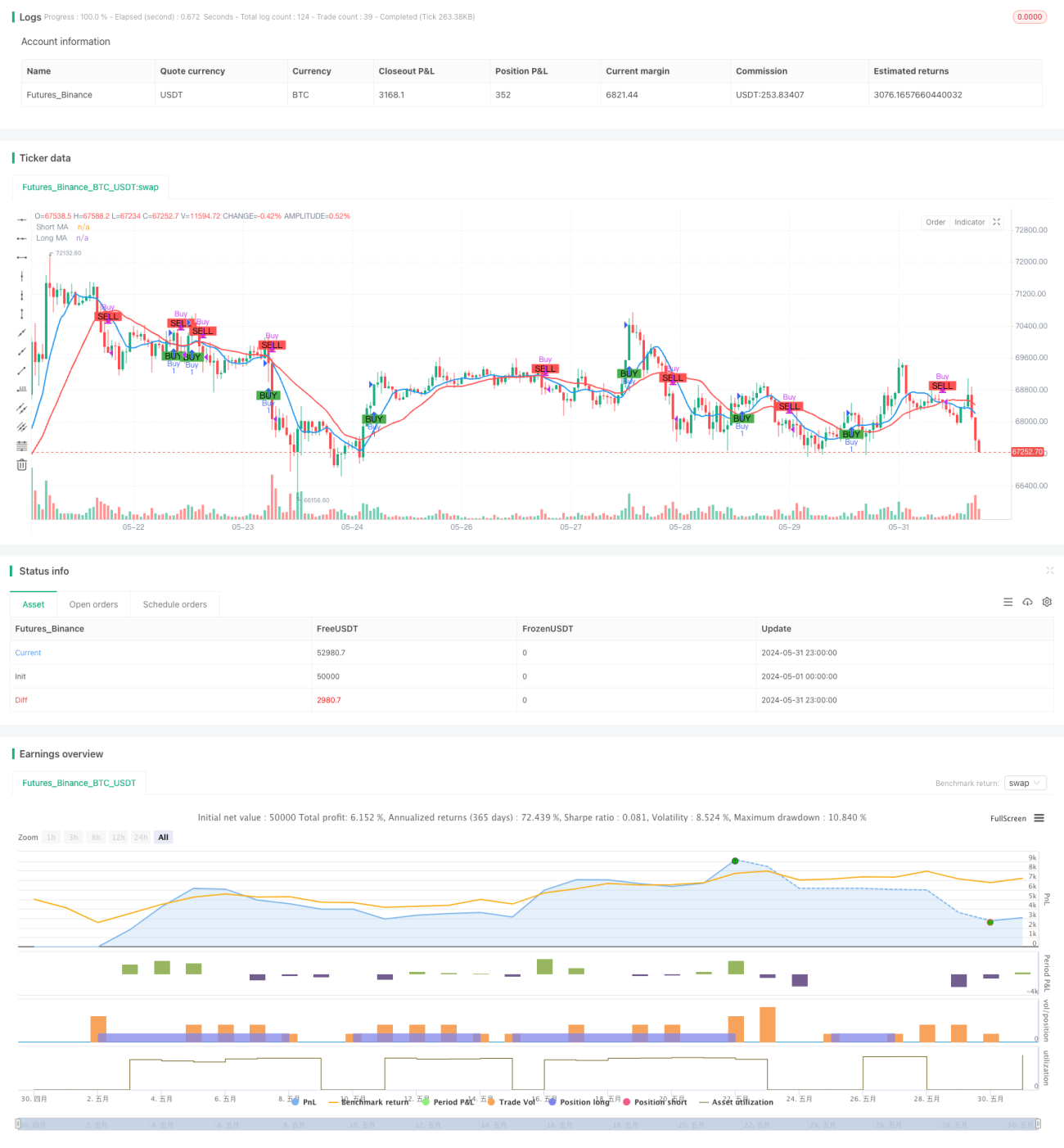
La estrategia de media móvil basada en el cruce de dos medias móviles es un método de trading intradía simple y efectivo, diseñado para identificar oportunidades potenciales de compra y venta en el mercado mediante el análisis de la relación entre dos medias móviles de diferentes períodos. Esta estrategia utiliza una media móvil simple (SMA) de corto plazo y una media móvil simple de largo plazo. Cuando la media móvil de corto plazo cruza por encima de la de largo plazo, indica una señal alcista, sugiriendo una oportunidad potencial de compra. Por el contrario, cuando la media móvil de corto plazo cruza por debajo de la de largo plazo, indica una señal bajista, sugiriendo una oportunidad potencial de venta. Este método de cruce ayuda a los traders a capturar movimientos de tendencia en el mercado, minimizando al mismo tiempo la interferencia del ruido del mercado.
Principio de la Estrategia
El principio central de esta estrategia es utilizar las características de tendencia y el retardo de las medias móviles de diferentes períodos. Al comparar la posición relativa entre la media móvil de corto plazo y la de largo plazo, se determina la dirección de la tendencia actual del mercado y se toman las decisiones de trading correspondientes. Cuando surge una tendencia alcista en el mercado, el precio primero supera la media móvil de largo plazo, y luego la media móvil de corto plazo cruza por encima de la de largo plazo, formando un cruce dorado y generando una señal de compra. Cuando surge una tendencia bajista, el precio primero cae por debajo de la media móvil de largo plazo, y luego la media móvil de corto plazo cruza por debajo de la de largo plazo, formando un cruce de muerte y generando una señal de venta. En la configuración de parámetros de esta estrategia, el período de la media móvil de corto plazo se establece en 9, y el de la media móvil de largo plazo en 21. Estos dos parámetros pueden ajustarse según las características del mercado y las preferencias personales. Además, esta estrategia introduce el concepto de gestión de capital, estableciendo un capital inicial y un porcentaje de riesgo por operación, utilizando el ajuste de tamaño de posición para controlar la exposición al riesgo de cada operación.
Ventajas de la Estrategia
- Simple y comprensible: se basa en la teoría clásica de las medias móviles, con una lógica clara, fácil de entender e implementar.
- Alta adaptabilidad: se puede aplicar en múltiples mercados y diferentes instrumentos de trading; ajustando los parámetros, puede adaptarse flexiblemente a diferentes características del mercado.
- Captura de tendencias: al utilizar el cruce de dos medias móviles para determinar la dirección de la tendencia, ayuda a los traders a seguir la tendencia principal de manera oportuna, aumentando las oportunidades de ganancias.
- Control de riesgo: introduce conceptos de gestión de riesgos, controlando la exposición al riesgo de cada operación mediante el ajuste del tamaño de posición, gestionando eficazmente las pérdidas potenciales.
- Reducción de ruido: aprovecha la característica de retardo de las medias móviles para filtrar eficazmente el ruido aleatorio del mercado, mejorando la fiabilidad de las señales de trading.
Riesgos de la Estrategia
- Selección de parámetros: diferentes configuraciones de parámetros tienen un impacto significativo en el rendimiento de la estrategia; una selección inadecuada puede provocar que la estrategia falle o tenga un rendimiento deficiente.
- Tendencia del mercado: en mercados laterales o puntos de inflexión de tendencia, la estrategia puede experimentar pérdidas consecutivas.
- Costos de deslizamiento: el trading frecuente puede generar altos costos de deslizamiento, afectando la rentabilidad general de la estrategia.
- Eventos de cisne negro: la estrategia tiene poca adaptabilidad a condiciones extremas del mercado; un evento de cisne negro puede provocar grandes pérdidas.
- Riesgo de sobreajuste: si la optimización de parámetros depende demasiado de datos históricos, puede llevar a un rendimiento deficiente de la estrategia en el trading real.
Direcciones de Optimización de la Estrategia
- Optimización dinámica de parámetros: ajustar dinámicamente los parámetros de la estrategia según los cambios en las condiciones del mercado para mejorar la adaptabilidad.
- Confirmación de tendencia: después de generar una señal de trading, introducir otros indicadores o patrones de acción del precio para confirmar la tendencia, mejorando la fiabilidad de la señal.
- Stop loss y take profit: introducir mecanismos razonables de stop loss y take profit para controlar aún más la exposición al riesgo de cada operación.
- Gestión de posición: optimizar los métodos de ajuste de tamaño de posición, por ejemplo, introduciendo indicadores de volatilidad para ajustar dinámicamente el tamaño de la posición según el nivel de volatilidad del mercado.
- Evaluación de fuerza de largos y cortos: evaluar la relación de fuerza entre compradores y vendedores, interviniendo en las etapas iniciales de la tendencia para mejorar la precisión en la captura de la tendencia.
Conclusión
La estrategia de media móvil basada en el cruce de dos medias móviles es un método de trading intradía simple y práctico. Al comparar las posiciones relativas de medias móviles de diferentes períodos, determina la dirección de la tendencia del mercado y genera señales de trading. La estrategia tiene una lógica clara, alta adaptabilidad y puede capturar eficazmente las tendencias del mercado, al mismo tiempo que introduce medidas de gestión de riesgos para controlar las pérdidas potenciales. Sin embargo, también presenta riesgos potenciales como la selección de parámetros, puntos de inflexión de tendencia y trading frecuente. Es necesario mejorar aún más la solidez y rentabilidad de la estrategia mediante optimización dinámica, confirmación de señales y gestión de posición. En general, la media móvil, como indicador clásico de análisis técnico, tiene sus principios básicos y valor práctico ampliamente verificados en el mercado, y es una estrategia de trading digna de investigación profunda y optimización continua.
Ventajas de la Estrategia
- Simplicidad: Esta estrategia se basa en la teoría clásica de las medias móviles, con una lógica clara y fácil de entender e implementar.
- Adaptabilidad: Esta estrategia se puede aplicar a múltiples mercados y diferentes instrumentos de negociación. Ajustando la configuración de los parámetros, puede adaptarse de manera flexible a diferentes características del mercado.
- Captura de Tendencias: Al utilizar el cruce de medias móviles dobles para determinar la dirección de la tendencia, ayuda a los traders a seguir oportunamente la tendencia principal y aumentar las oportunidades de ganancias.
- Control de Riesgos: Esta estrategia introduce el concepto de gestión de riesgos, utilizando el tamaño de la posición para controlar la exposición al riesgo de cada operación, gestionando eficazmente las pérdidas potenciales.
- Reducción de Ruido: Al aprovechar la característica de retardo de las medias móviles, filtra eficazmente el ruido aleatorio del mercado, mejorando la fiabilidad de las señales de negociación.
Riesgos de la Estrategia
- Selección de Parámetros: Diferentes configuraciones de parámetros pueden tener un impacto significativo en el rendimiento de la estrategia. Una selección inadecuada puede llevar al fracaso de la estrategia o a un rendimiento deficiente.
- Tendencia del Mercado: En mercados laterales o puntos de inflexión de tendencia, esta estrategia puede experimentar pérdidas consecutivas.
- Costos de Deslizamiento: Las operaciones frecuentes pueden resultar en costos de deslizamiento más altos, afectando la rentabilidad general de la estrategia.
- Eventos de Cisne Negro: Esta estrategia tiene poca adaptabilidad a condiciones extremas del mercado, y los eventos de cisne negro pueden causar pérdidas significativas a la estrategia.
- Riesgo de Sobreajuste: Si la optimización de parámetros depende demasiado de los datos históricos, puede llevar a un mal rendimiento de la estrategia en la negociación real.
Direcciones de Optimización de la Estrategia
- Optimización Dinámica de Parámetros: Ajustar dinámicamente los parámetros de la estrategia según los cambios en las condiciones del mercado para mejorar la adaptabilidad.
- Confirmación de Tendencia: Después de generar las señales de negociación, introducir otros indicadores o patrones de comportamiento de precios para confirmar la tendencia, mejorando la fiabilidad de las señales.
- Stop-Loss y Take-Profit: Introducir mecanismos razonables de stop-loss y take-profit para controlar aún más la exposición al riesgo de cada operación.
- Gestión de Posiciones: Optimizar el método de tamaño de la posición, como introducir indicadores de volatilidad para ajustar dinámicamente las posiciones según los niveles de volatilidad del mercado.
- Evaluación de Fuerza Alcista-Bajista: Evaluar la relación comparativa entre las fuerzas alcistas y bajistas, entrando en la etapa temprana de una tendencia para mejorar la precisión de la captura de tendencias.
Resumen
La Estrategia de Cruce de Medias Móviles basada en medias móviles dobles es un método de negociación intradiario simple y práctico. Al comparar la relación de posición de medias móviles de diferentes períodos, determina la dirección de la tendencia del mercado y genera señales de negociación. Esta estrategia tiene una lógica clara, una fuerte adaptabilidad, y puede capturar eficazmente las tendencias del mercado al mismo tiempo que introduce medidas de gestión de riesgos para controlar las pérdidas potenciales. Sin embargo, esta estrategia también tiene riesgos potenciales como la selección de parámetros, la reversión de la tendencia y las operaciones frecuentes. Es necesario mejorarla aún más mediante optimización dinámica, confirmación de señales, gestión de posiciones y otros métodos para aumentar la robustez y rentabilidad de la estrategia. En general, como un indicador clásico de análisis técnico, los principios básicos y el valor práctico de las medias móviles han sido ampliamente verificados por el mercado. Es una estrategia de negociación que vale la pena investigar a fondo y optimizar continuamente.
- 1