Estrategia de trading de temporización con parámetros adaptativos de cruce de medias móviles dobles

Resumen
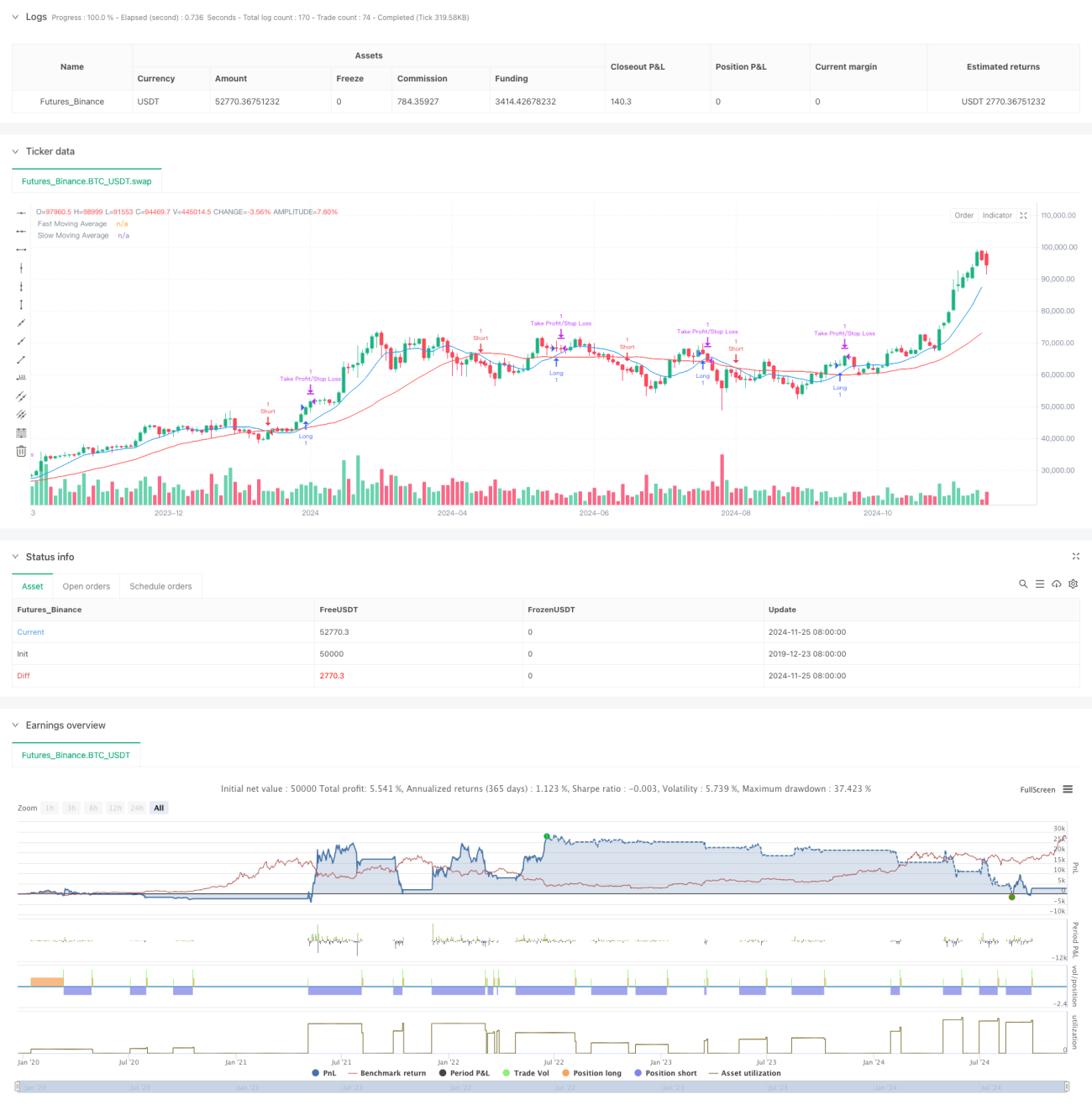
Este es un sistema de trading adaptativo basado en señales de cruce de medias móviles dobles. Genera señales de trading mediante el cruce de una media móvil rápida y una lenta, y combina parámetros ajustables de gestión de riesgos como stop loss, take profit y trailing stop para lograr una gestión flexible de la estrategia. El núcleo de la estrategia radica en el ajuste dinámico de varios parámetros a través de un panel de control, permitiendo que la estrategia se adapte a diferentes condiciones del mercado.
Principio de la estrategia
La estrategia utiliza dos medias móviles, una rápida y una lenta, como indicadores principales. Cuando la media móvil rápida cruza hacia arriba la media móvil lenta, el sistema genera una señal de compra; cuando la media móvil rápida cruza hacia abajo la media móvil lenta, el sistema genera una señal de cierre. Además, la estrategia introduce un triple mecanismo de control de riesgos: stop loss fijo, take profit fijo y trailing stop. Estos parámetros se pueden ajustar en tiempo real a través del panel de control, con un rango desde el 0.1% hasta porcentajes mayores, proporcionando a los traders un control preciso del riesgo.
Ventajas de la estrategia
- Alta flexibilidad de parámetros: La estrategia permite a los traders ajustar los periodos de las medias móviles, los ratios de stop loss/take profit y otros parámetros clave según las condiciones del mercado, lo que la hace más adaptable.
- Gestión de riesgos completa: A través del triple mecanismo de protección (stop loss, take profit, trailing stop), controla eficazmente el riesgo a la baja.
- Lógica operativa clara: Las señales de trading basadas en cruce de medias móviles son simples e intuitivas, fáciles de entender y ejecutar.
- Alto grado de automatización: La estrategia puede ejecutarse de forma totalmente automatizada, reduciendo la influencia emocional de la intervención humana.
Riesgos de la estrategia
- Riesgo de mercado lateral: En mercados laterales o en rango, las señales de cruce de medias móviles son frecuentes, lo que puede provocar un exceso de operaciones y pérdidas consecutivas.
- Riesgo de deslizamiento: Durante fuertes fluctuaciones del mercado, el precio de ejecución real puede desviarse significativamente del precio de la señal.
- Riesgo de optimización de parámetros: Una optimización excesiva de los parámetros puede provocar grandes diferencias entre el rendimiento en vivo y los resultados de backtesting.
- Riesgo sistémico: Eventos importantes repentinos del mercado pueden provocar saltos de precio que superen el nivel de stop loss.
Direcciones de optimización de la estrategia
- Agregar un filtro de tendencia de mercado: Introducir indicadores adicionales de tendencia para evitar operar con frecuencia en mercados laterales.
- Optimizar el método de stop loss: Se puede considerar ajustar dinámicamente el ratio de stop loss combinado con indicadores de volatilidad.
- Introducir indicadores de volumen: Utilizar el volumen como confirmación auxiliar de las señales de trading.
- Agregar filtro de tiempo: Establecer una ventana de tiempo adecuada para evitar períodos de alta volatilidad.
Conclusión
Esta estrategia construye un sistema de trading adaptable mediante el cruce de medias móviles dobles combinado con parámetros flexibles de gestión de riesgos. Las ventajas de la estrategia radican en su alta capacidad de ajuste de parámetros y un control de riesgos completo, pero también se debe prestar atención a los riesgos de los mercados laterales y la optimización de parámetros. Mediante la adición de filtros de tendencia, la optimización de métodos de stop loss y otros medios, la estrategia aún tiene un amplio margen de mejora. Para los traders, establecer parámetros razonables y monitorear continuamente el rendimiento de la estrategia es clave para garantizar su estabilidad.
- 1