Estrategia de inversión de promediación de costos en dólares con bandas de Bollinger de reversión a la media

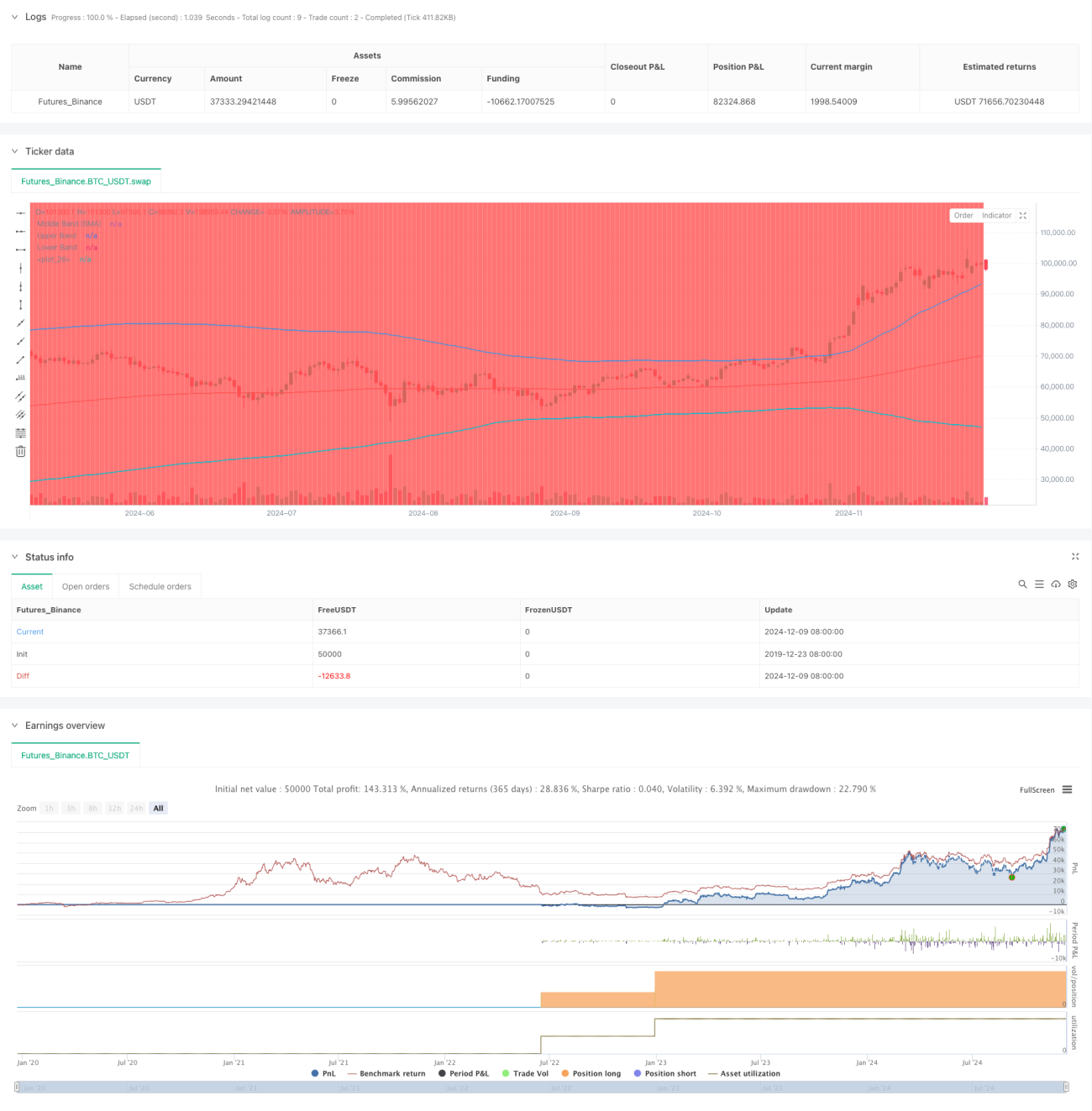
Descripción general
Esta estrategia es una estrategia de inversión inteligente que combina el método de promedio del costo en dólares (DCA) con el indicador técnico de Bandas de Bollinger. Construye posiciones sistemáticamente durante las correcciones de precios, aprovechando el principio de reversión a la media. El núcleo de la estrategia es ejecutar compras por un monto fijo cuando el precio cae por debajo de la banda inferior de Bollinger, obteniendo así mejores precios de entrada durante los períodos de ajuste del mercado.
Principios de la estrategia
El principio central de la estrategia se basa en tres pilares: 1) el método de promedio del costo en dólares, que reduce el riesgo de sincronización del mercado mediante la inversión periódica de una cantidad fija; 2) la teoría de reversión a la media, que sostiene que los precios eventualmente volverán a su promedio histórico; 3) el indicador de Bandas de Bollinger, utilizado para identificar zonas de sobrecompra y sobreventa. Cuando el precio rompe la banda inferior de Bollinger, se activa una señal de compra, y la cantidad comprada se determina dividiendo el monto de inversión establecido entre el precio actual. La estrategia utiliza una media móvil exponencial de 200 períodos como la banda central de Bollinger, con un múltiplo de desviación estándar de 2 para definir las bandas superior e inferior.
Ventajas de la estrategia
- Reducción del riesgo de sincronización del mercado: minimiza los errores humanos mediante compras sistemáticas en lugar de decisiones subjetivas.
- Aprovechamiento de oportunidades de corrección: ejecuta compras automáticamente cuando los precios están sobrevendidos.
- Parámetros flexibles: permite ajustar los parámetros de las Bandas de Bollinger y el monto de inversión según las diferentes condiciones del mercado.
- Reglas claras de entrada y salida: basadas en señales objetivas de indicadores técnicos.
- Ejecución automatizada: no requiere intervención humana, evitando operaciones emocionales.
Riesgos de la estrategia
- Riesgo de fallo de reversión a la media: en mercados tendenciales puede generar muchas señales falsas.
- Riesgo de gestión de capital: se debe reservar suficiente capital para hacer frente a señales de compra consecutivas.
- Riesgo de optimización de parámetros: una optimización excesiva puede llevar a que la estrategia falle.
- Dependencia del entorno del mercado: puede tener un rendimiento deficiente en mercados muy volátiles.
Se recomienda implementar un sistema estricto de gestión de capital y evaluar periódicamente el rendimiento de la estrategia para gestionar estos riesgos.
Direcciones de optimización de la estrategia
- Introducir un filtro de tendencia para evitar operar en contra de la tendencia en tendencias fuertes.
- Agregar un mecanismo de confirmación de múltiples marcos temporales.
- Optimizar el sistema de gestión de capital ajustando dinámicamente el monto de inversión según la volatilidad.
- Incorporar un mecanismo de toma de ganancias para cerrar posiciones cuando el precio regrese a la media.
- Considerar la combinación con otros indicadores técnicos para mejorar la confiabilidad de las señales.
Conclusión
Esta es una estrategia sólida que combina el análisis técnico con un enfoque de inversión sistemático. Utiliza las Bandas de Bollinger para identificar oportunidades de sobreventa y el método de promedio del costo en dólares para reducir el riesgo. La clave del éxito de la estrategia radica en una configuración razonable de los parámetros y una estricta disciplina de ejecución. Aunque existen ciertos riesgos, mediante una optimización continua y una gestión de riesgos adecuada se puede mejorar la estabilidad de la estrategia.
/*backtest
start: 2019-12-23 08:00:00
end: 2024-12-10 08:00:00
period: 1d
basePeriod: 1d
exchanges: [{"eid":"Futures_Binance","currency":"BTC_USDT"}]
*/

//@version=5
strategy("DCA Strategy with Mean Reversion and Bollinger Band", overlay=true) // Define the strategy name and set overlay=true to display on the main chart

// Inputs for investment amount and dates- 1