
Resumen
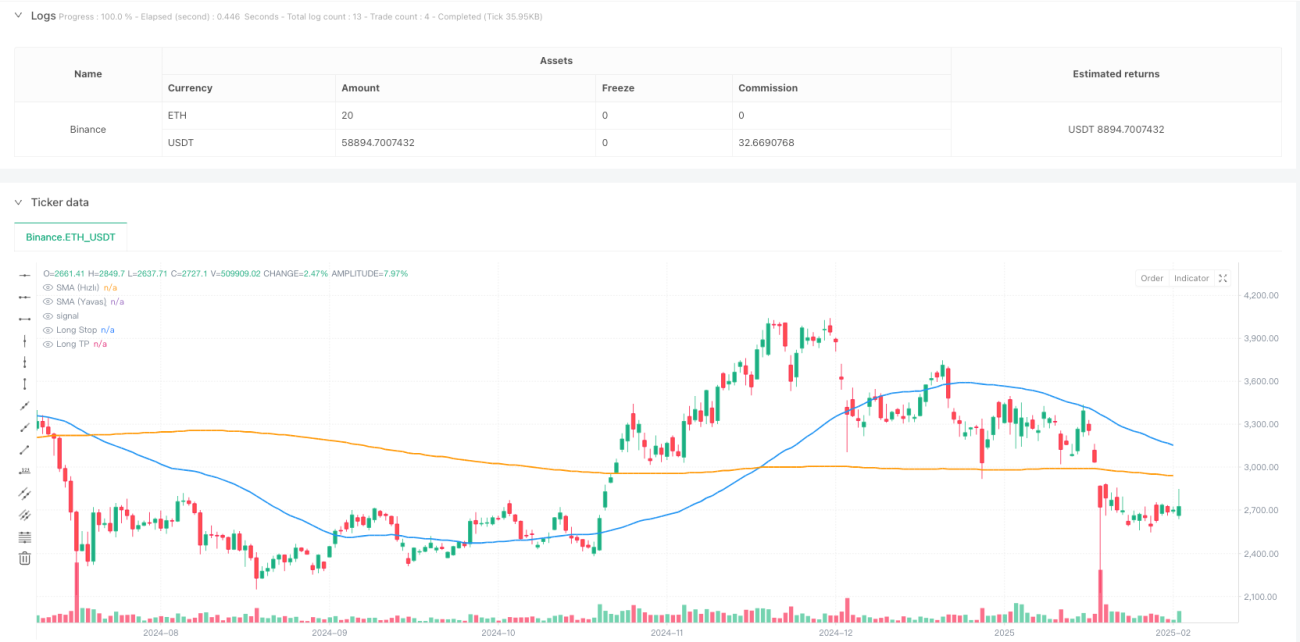
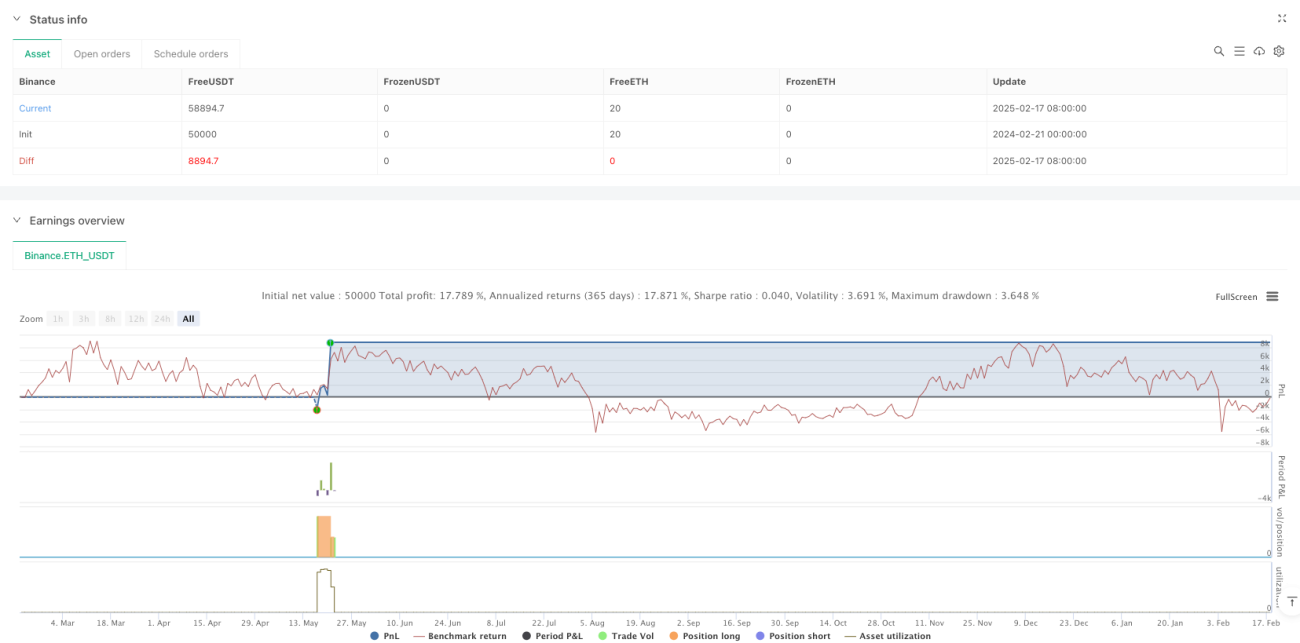
Esta estrategia es un sistema de seguimiento de tendencias que combina múltiples indicadores técnicos. Se basa principalmente en las señales de cruce de RSI, MACD y SMA para determinar la dirección de las operaciones, mientras que utiliza el indicador ATR para ajustar dinámicamente los niveles de stop loss y take profit. La estrategia también incorpora un filtro de volumen para garantizar que las operaciones se realicen con suficiente liquidez de mercado, y emplea un mecanismo de toma de ganancias parcial para optimizar la gestión de capital.
Principio de la estrategia
La estrategia utiliza un mecanismo de triple verificación para confirmar las señales de trading:
- Determina la tendencia principal mediante la relación de posición entre las medias móviles de 50 y 200 períodos.
- Utiliza los cruces del RSI en zonas de sobrecompra/sobreventa para buscar momentos de entrada.
- Combina el indicador MACD para confirmar el impulso de la tendencia.
- Emplea un filtro de volumen para asegurar suficiente liquidez en el mercado.
- Utiliza stops dinámicos basados en ATR y objetivos de ganancia.
El propósito de la verificación múltiple es reducir las señales falsas y aumentar la precisión de las operaciones. La estrategia abre posiciones cuando se cumplen las condiciones alcistas (tendencia al alza + cruce del RSI por encima de 40 + MACD ascendente + confirmación de volumen), y utiliza 2 veces el ATR como stop loss y 4 veces como take profit.
Ventajas de la estrategia
- Verificación cruzada de múltiples indicadores técnicos, reduciendo eficazmente las señales falsas.
- Mecanismo dinámico de stop loss basado en volatilidad, adaptándose a diferentes entornos de mercado.
- Estrategia de toma de ganancias parcial, bloqueando parte de las ganancias mientras se mantiene el potencial alcista.
- Filtro de volumen asegura suficiente liquidez en el mercado.
- Sistema completo de gestión de riesgos que incluye stop loss fijo, stop loss dinámico y toma de ganancias parcial.
Riesgos de la estrategia
- Múltiples indicadores pueden hacer que se pierdan algunas oportunidades de trading.
- Puede sufrir grandes retrocesos en mercados con alta volatilidad.
- La optimización excesiva de parámetros puede llevar a sobreajuste.
- El filtro de volumen puede hacer que se pierdan buenas oportunidades en mercados con baja liquidez.
- El stop loss dinámico podría activarse prematuramente durante períodos de alta volatilidad.
Direcciones de optimización de la estrategia
- Considerar la incorporación de un mecanismo de adaptación a la volatilidad del mercado, ajustando dinámicamente los parámetros en diferentes entornos de volatilidad.
- Introducir análisis de múltiples períodos de tiempo para mejorar la precisión de la identificación de tendencias.
- Optimizar la proporción de toma de ganancias parcial, ajustando la estrategia en diferentes condiciones de mercado.
- Añadir un filtro de fuerza de tendencia para evitar operar en entornos de tendencia débil.
- Considerar la inclusión de análisis de factores estacionales para optimizar el momento de las operaciones.
Conclusión
Esta es una estrategia integral de seguimiento de tendencias que establece un sistema de trading robusto mediante la combinación de múltiples indicadores técnicos. Su principal característica es garantizar la seguridad mientras se adapta a los cambios del mercado a través de mecanismos dinámicos de stop loss y take profit. Aunque existen áreas que requieren optimización, el marco general es razonable y adecuado para un mayor perfeccionamiento y pruebas en tiempo real.
/*backtest
start: 2024-02-21 00:00:00
end: 2025-02-18 08:00:00
period: 1d
basePeriod: 1d
exchanges: [{"eid":"Binance","currency":"ETH_USDT"}]
*/

//@version=5
strategy(    title="AI Trade Strategy v2 (Extended) - Fixed",    shorttitle="AI_Trade_v2",    overlay=true,    format=format.price,    initial_capital=100000,    default_qty_type=strategy.percent_of_equity,    default_qty_value=100,    pyramiding=0)

//============================================================================- 1