
Resumen
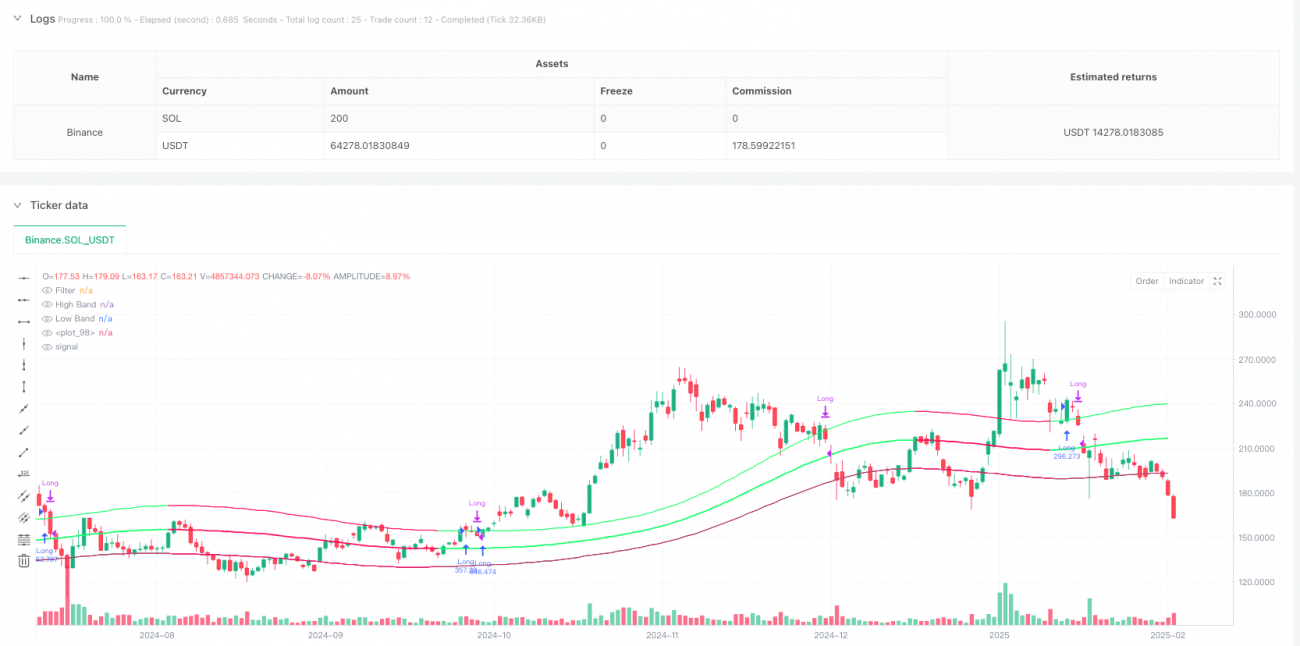
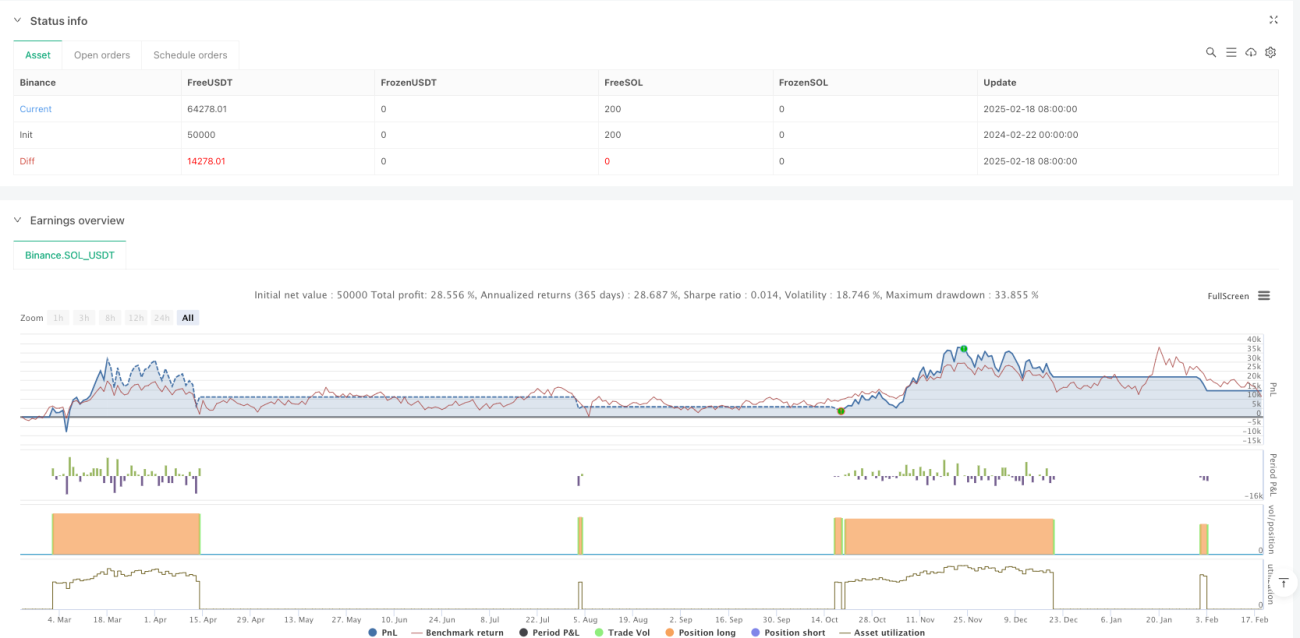
Esta estrategia es un sistema de trading integral que combina el filtro de canal Gaussiano y el indicador RSI estocástico. Determina las oportunidades de trading mediante el cambio direccional del canal Gaussiano y la posición del precio, junto con las señales de sobrecompra/sobreventa del RSI estocástico. La estrategia emplea un modelo matemático complejo para construir un canal adaptativo, filtrando eficazmente el ruido del mercado y capturando movimientos importantes del precio.
Principio de la estrategia
La lógica central de la estrategia se basa en los siguientes componentes clave:
- Cálculo del canal Gaussiano: Utiliza un filtro Gaussiano multipolo para procesar los datos de precio HLC3, creando un canal adaptativo. Optimiza el efecto de filtrado mediante los parámetros beta y alfa, con la opción de reducir el rezago.
- Ajuste del ancho del canal: Ajusta dinámicamente el ancho del canal basándose en el Rango Verdadero (TR), utilizando 1.414 como multiplicador por defecto.
- Señal RSI estocástico: Combina el RSI de 14 períodos con un indicador estocástico, generando señales por encima de 80 o por debajo de 20.
- Condiciones de entrada: Deben cumplirse simultáneamente tres condiciones: canal Gaussiano alcista, precio rompiendo la banda superior, y señal disparada por el RSI estocástico.
- Lógica de salida: Cierra la posición cuando el precio cae por debajo de la banda superior del canal Gaussiano.
Ventajas de la estrategia
- Fiabilidad de las señales: El mecanismo de confirmación múltiple de indicadores mejora significativamente la fiabilidad de las señales de trading.
- Alta adaptabilidad: El canal Gaussiano ajusta automáticamente su ancho según la volatilidad del mercado.
- Filtrado de ruido: El filtro Gaussiano reduce eficazmente el impacto del ruido del mercado.
- Alta flexibilidad: Ofrece múltiples parámetros ajustables, incluyendo el período del canal, el número de polos y los parámetros del RSI.
- Visualización intuitiva: Muestra visualmente la dirección de la tendencia y las señales de trading mediante cambios de color.
Riesgos de la estrategia
- Sensibilidad a los parámetros: El número de polos del canal Gaussiano y la configuración del período de muestreo tienen un gran impacto en el rendimiento de la estrategia.
- Riesgo de rezago: Aunque se ofrece la opción de reducir el rezago, el indicador en sí mismo tiene cierto retraso.
- Riesgo de falsas rupturas: En mercados laterales, pueden aparecer señales de ruptura falsa con frecuencia.
- Gestión de capital insuficiente: La versión actual carece de un mecanismo detallado de gestión de posiciones.
Direcciones de optimización de la estrategia
- Identificación del entorno del mercado: Agregar indicadores de fuerza de tendencia para ajustar los parámetros de la estrategia en diferentes condiciones de mercado.
- Optimización dinámica de parámetros: Ajustar automáticamente la configuración de los parámetros del canal Gaussiano según la volatilidad del mercado.
- Mejora de la gestión de posiciones: Introducir un sistema de gestión de posiciones dinámico basado en la volatilidad.
- Mejora del mecanismo de salida: Agregar un stop loss móvil y un mecanismo de toma de ganancias parcial.
- Optimización del marco temporal: Verificar señales en múltiples marcos temporales para mejorar la estabilidad del trading.
Conclusión
Esta estrategia construye un sistema de trading con alta adaptabilidad mediante la combinación del filtro de canal Gaussiano y el indicador RSI estocástico. La base matemática del canal Gaussiano garantiza la suavidad y fiabilidad de las señales, mientras que la combinación con el RSI estocástico mejora aún más la precisión del momento de entrada. La principal ventaja de la estrategia radica en su eficaz filtrado del ruido del mercado y su capacidad para capturar tendencias con precisión, aunque también es necesario prestar atención a la optimización de parámetros y la gestión de riesgos. A través de las direcciones de optimización sugeridas, el rendimiento general de la estrategia tiene margen para una mejora adicional.
/*backtest
start: 2024-02-22 00:00:00
end: 2025-02-19 08:00:00
period: 1d
basePeriod: 1d
exchanges: [{"eid":"Binance","currency":"SOL_USDT"}]
*/

//@version=5
strategy(title="Gaussian Channel Strategy v3.0", overlay=true, calc_on_every_tick=false, initial_capital=1000, default_qty_type=strategy.percent_of_equity, default_qty_value=100, commission_type=strategy.commission.percent, commission_value=0.1, slippage=0, fill_orders_on_standard_ohlc=true)

//------------------------------------------------------------------------------------------------------------------------------------------------------------------ 1