Estrategia de retroceso de cruce de SMA con stop loss dinámico

SMA MA RRR TP SL
Fecha de creación: 2025-02-21 13:51:50 Última modificación: 2025-02-21 13:51:50
Copiar: 0 Número de Visitas: 338
2
Seguir
319
Seguidores

Estrategia de retroceso de cruce de SMA con stop loss dinámico Estrategia de retroceso de cruce de SMA con stop loss dinámico

Descripción general

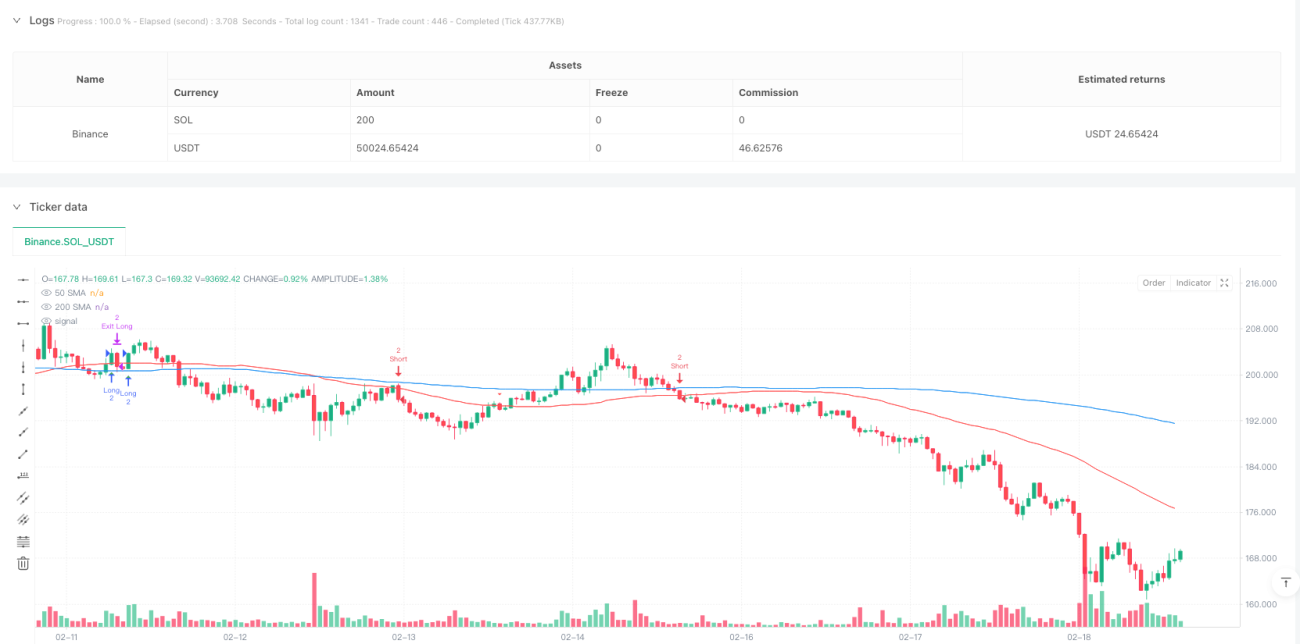
Esta estrategia es un sistema de negociación automatizado basado en el cruce de líneas y la gestión de posiciones dinámicas. Utiliza el promedio móvil simple de 50 y 200 días (SMA) como indicador principal, combinado con el ajuste de posiciones dinámicas y el mecanismo de seguimiento de las paradas, para buscar oportunidades de negociación en las tendencias del mercado. El núcleo de la estrategia es determinar la dirección del mercado a través de la relación entre el precio y la línea de equilibrio, mientras que se aplica la gestión de fondos y el control de riesgos para garantizar la estabilidad de las transacciones.

Principio de estrategia

La estrategia se basa en los siguientes principios centrales:

  1. Las señales de entrada se basan en el cruce de precios con la línea media de 50 días, mientras que se hace referencia a la posición relativa de la línea media de 50 días con la línea media de 200 días para determinar la tendencia general
  2. Cuando el precio se rompe por debajo de la línea media, se activa la señal de más; a la inversa, se activa la señal de menos
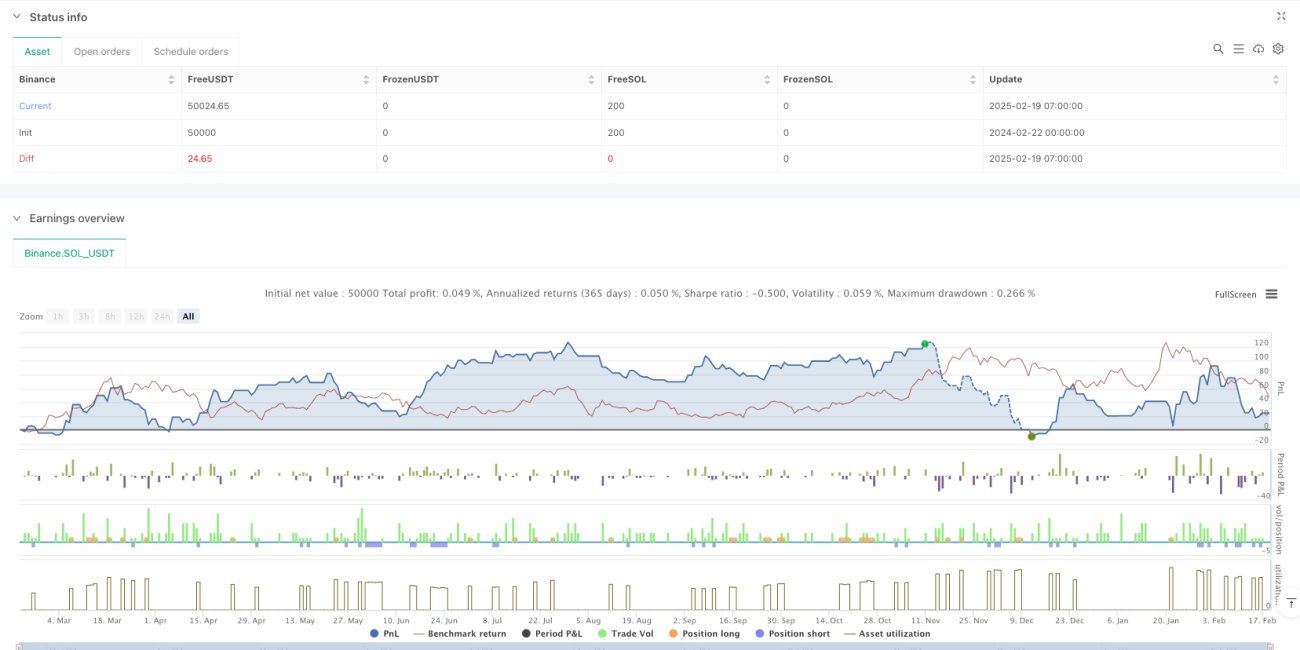
  3. La gestión de posiciones adopta un mecanismo de ajuste dinámico, que aumenta el número de posiciones cuando la ganancia de la cuenta supera los 4000
  4. El Stop Loss utiliza un mecanismo de seguimiento de stop loss, que ajusta dinámicamente la posición de stop loss a medida que aumenta la ganancia
  5. El riesgo-beneficio se establece en una proporción de 1:2,5, lo que garantiza que los beneficios esperados de cada transacción sean mayores que el riesgo

Ventajas estratégicas

  1. La lógica de negociación es clara y clara, combinada con indicadores técnicos y comportamiento de precios para determinar el momento de entrada
  2. La administración de posiciones dinámicas permite aumentar el tamaño de las operaciones y la eficiencia de la utilización de los fondos cuando se obtienen ganancias.
  3. El mecanismo de trazabilidad de los stop-losses es eficaz para bloquear las ganancias y evitar retiros masivos.
  4. Se ha configurado un filtro de horario para operar solo durante las horas de mayor actividad, evitando el riesgo de periodos de baja liquidez
  5. Controles de riesgo adecuados, incluidos objetivos de pérdidas y ganancias y gestión de posiciones

Riesgo estratégico

  1. Puede desencadenar falsas brechas frecuentes en mercados convulsionados, lo que lleva a paros continuos
  2. La gestión dinámica de posiciones puede generar grandes pérdidas en el caso de cambios bruscos en el mercado
  3. La dependencia de un sistema lineal puede retrasarse en un mercado con rápidas fluctuaciones
  4. El riesgo-beneficio fijo puede perder algunas oportunidades potenciales de grandes tendencias
  5. Las restricciones de horario podrían perder oportunidades importantes de mercado

Dirección de optimización de la estrategia

  1. Puede introducir indicadores de volatilidad para ajustar los parámetros de forma dinámica en diferentes entornos de mercado
  2. Considere agregar un indicador de sentimiento en el mercado para mejorar la precisión de las señales de entrada
  3. Optimizar el seguimiento de los parámetros de stop loss para adaptarlos mejor a diferentes entornos del mercado
  4. Aumentar el análisis de múltiples ciclos de tiempo y mejorar la estabilidad de los sistemas de negociación
  5. Introducción de análisis de tráfico para mejorar la fiabilidad de la señal

Resumir

La estrategia combina un sistema de línea uniforme, gestión dinámica de posiciones y un mecanismo de seguimiento de los estancamientos para construir un sistema de negociación relativamente completo. La estrategia tiene la ventaja de tener una lógica de negociación clara y un mecanismo de control de riesgo completo, pero también hay algunas áreas que necesitan ser optimizadas.

Código Fuente de la Estrategia
/*backtest
start: 2024-02-22 00:00:00
end: 2025-02-19 08:00:00
period: 1h
basePeriod: 1h
exchanges: [{"eid":"Binance","currency":"SOL_USDT"}]
*/

//@version=5
strategy("15m - Rebound 50SMA with Dynamic Lots & Trailing Stop, RRR 2:1, Date Filter (Closed Bars Only)", 
     overlay=true, 
     initial_capital=50000, 
     default_qty_type=strategy.fixed, 
     default_qty_value=1, 
     pyramiding=0, 
     calc_on_order_fills=true)

// ===== INPUTS =====
sma50Period  = input.int(50, "50 SMA Period", minval=1)
sma200Period = input.int(200, "200 SMA Period", minval=1)

// ===== CALCULATE SMAs =====
sma50  = ta.sma(close, sma50Period)
sma200 = ta.sma(close, sma200Period)

// ===== PLOT SMAs =====
plot(sma50, color=color.red, title="50 SMA")
plot(sma200, color=color.blue, title="200 SMA")

// ===== DEFINE TRADING SESSIONS =====
// Trading is allowed 15 minutes after market open:
//   - New York: 09:45–16:00 (America/New_York)
//   - London:   08:15–16:00 (Europe/London)
nySession     = not na(time("15", "0945-1600", "America/New_York"))
londonSession = not na(time("15", "0815-1600", "Europe/London"))
inSession     = nySession or londonSession

// ===== DEFINE DATE RANGE =====
// Only allow orders on or after January 1, 2024.
// (We include seconds in the timestamp for proper parsing.)
startDate   = timestamp("UTC", 2024, 1, 1, 0, 0, 0)
inDateRange = time >= startDate

// ===== DEFINE ENTRY CONDITIONS =====
// ----- LONG ENTRY CONDITION -----
// A long entry is triggered when:
//   - The previous candle closed below the 50 SMA and the current candle closes above it,
//   - And the 50 SMA is above the 200 SMA.
longCondition = (close[1] < sma50[1]) and (close > sma50) and (sma50 > sma200)

// ----- SHORT ENTRY CONDITION -----
// A short entry is triggered when:
//   - The previous candle closed above the 50 SMA and the current candle closes below it,
//   - And the 50 SMA is below the 200 SMA.
shortCondition = (close[1] > sma50[1]) and (close < sma50) and (sma50 < sma200)

// ===== DEBUG PLOTS =====
plotshape(longCondition and barstate.isconfirmed, title="Long Signal", location=location.belowbar, color=color.green, style=shape.triangleup, size=size.tiny)
plotshape(shortCondition and barstate.isconfirmed, title="Short Signal", location=location.abovebar, color=color.red, style=shape.triangledown, size=size.tiny)

// ===== VARIABLES FOR STOP LOSS MANAGEMENT =====
// For long positions.
var float initialLongStop = na   // Set at entry: low of the rebound candle.
var float trailStopLong   = na   // Updated trailing stop for long.
// For short positions.
var float initialShortStop = na  // Set at entry: high of the rebound candle.
var float trailStopShort   = na  // Updated trailing stop for short.

// ===== DYNAMIC LOT SIZE =====
// If current profit (strategy.equity - 50000) exceeds 4000, lot size becomes 3; otherwise, 2.
lotSize = (strategy.equity - 50000 > 4000) ? 3 : 2

// ===== ENTRY LOGIC (EXECUTED ON CONFIRMED BARS) =====
if barstate.isconfirmed and inSession and inDateRange and longCondition and strategy.position_size <= 0
    initialLongStop := low
    trailStopLong   := initialLongStop
    if strategy.position_size < 0
        strategy.close("Short", comment="Close Short before Long")
    // Submit a market order entry (no offset).
    strategy.entry("Long", strategy.long, qty=lotSize, comment="Enter Long")
    
if barstate.isconfirmed and inSession and inDateRange and shortCondition and strategy.position_size >= 0
    initialShortStop := high
    trailStopShort   := initialShortStop
    if strategy.position_size > 0
        strategy.close("Long", comment="Close Long before Short")
    // Submit a market order entry (no offset).
    strategy.entry("Short", strategy.short, qty=lotSize, comment="Enter Short")
    
// ===== TRAILING STOP LOGIC & EXIT ORDERS (ON CLOSED BARS) =====

if barstate.isconfirmed and strategy.position_size > 0
    // For Long Positions:
    floatingProfitLong = (close - strategy.position_avg_price) / syminfo.mintick
    newTrailLong = trailStopLong  // Default: no change.
    if floatingProfitLong >= 20 and floatingProfitLong < 30
        newTrailLong := initialLongStop + 5 * syminfo.mintick
    else if floatingProfitLong >= 31 and floatingProfitLong < 40
        newTrailLong := initialLongStop + 10 * syminfo.mintick
    else if floatingProfitLong >= 41 and floatingProfitLong < 50
        newTrailLong := initialLongStop + 15 * syminfo.mintick
    // Update trailing stop only if the new value is more favorable.
    trailStopLong := math.max(trailStopLong, newTrailLong)
    
    longRisk = strategy.position_avg_price - trailStopLong
    tpLong   = strategy.position_avg_price + 2.5 * longRisk
    strategy.exit("Exit Long", from_entry="Long", stop=trailStopLong, limit=tpLong)

if barstate.isconfirmed and strategy.position_size < 0
    // For Short Positions:
    floatingProfitShort = (strategy.position_avg_price - close) / syminfo.mintick
    newTrailShort = trailStopShort  // Default: no change.
    if floatingProfitShort >= 20 and floatingProfitShort < 30
        newTrailShort := initialShortStop - 5 * syminfo.mintick
    else if floatingProfitShort >= 31 and floatingProfitShort < 40
        newTrailShort := initialShortStop - 10 * syminfo.mintick
    else if floatingProfitShort >= 41 and floatingProfitShort < 50
        newTrailShort := initialShortStop - 15 * syminfo.mintick
    // Update trailing stop only if the new value is more favorable.
    trailStopShort := math.min(trailStopShort, newTrailShort)
    
    shortRisk = trailStopShort - strategy.position_avg_price
    tpShort = strategy.position_avg_price - 2.5 * shortRisk
    strategy.exit("Exit Short", from_entry="Short", stop=trailStopShort, limit=tpShort)