
Resumen
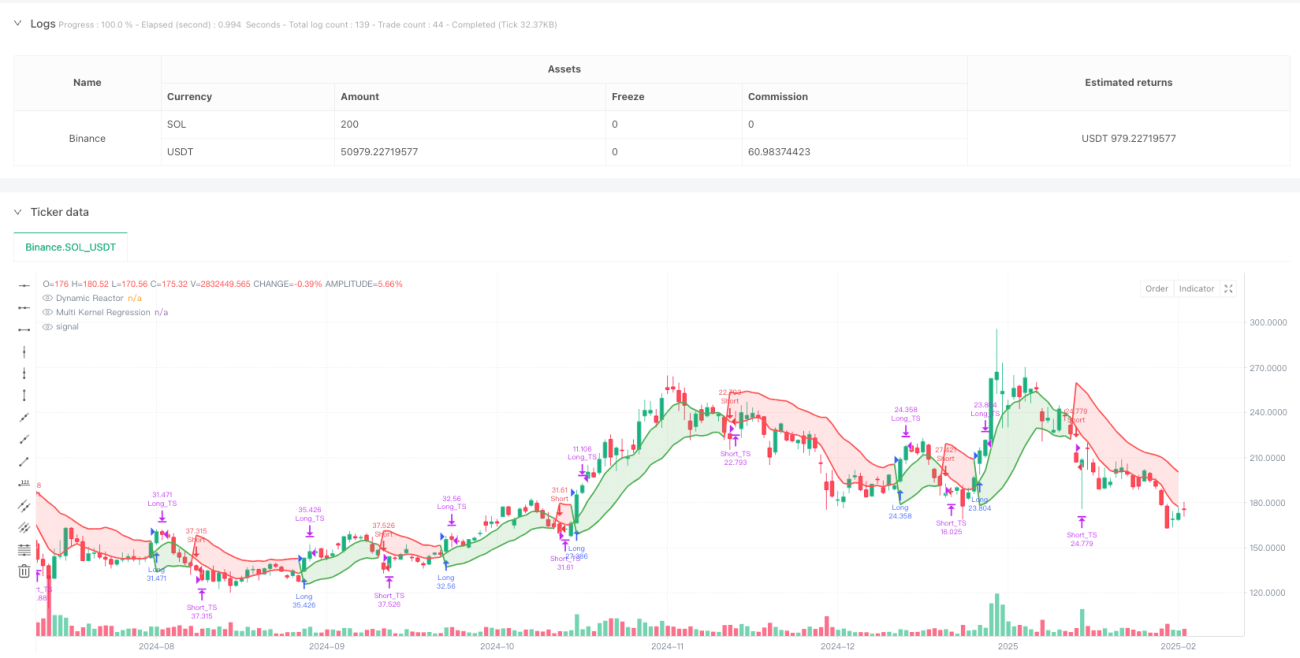
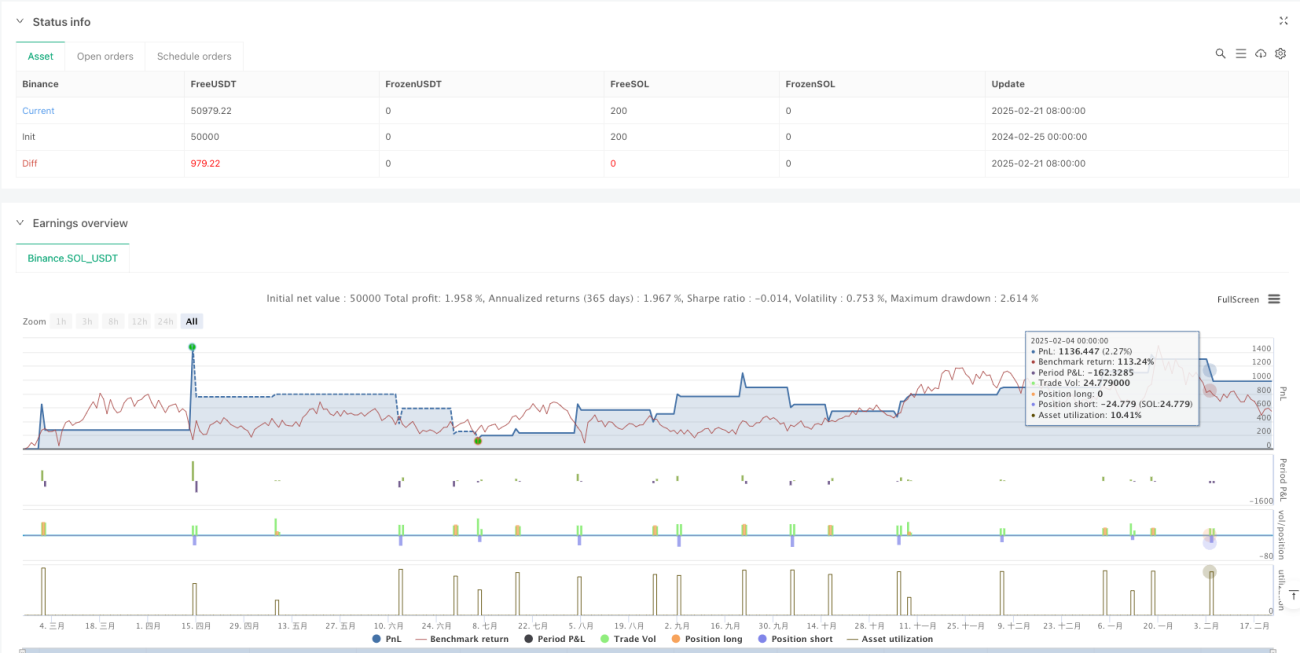
La estrategia es un sistema de seguimiento de tendencias que combina un Reactor Dinámico (Dynamic Reactor) y una Regresión de Múltiples Núcleos (Multi-Kernel Regression). Captura las tendencias del mercado fusionando canales ATR, medias móviles SMA, regresión de núcleo gaussiano y regresión de núcleo de Epanechnikov, y utiliza el indicador RSI para filtrar las señales. La estrategia también incluye un sistema completo de gestión de posiciones, con funciones como stop loss dinámico, múltiples objetivos de ganancias y trailing stop.
Principio de la estrategia
El núcleo de la estrategia consta de dos partes principales. La primera parte es el Reactor Dinámico (DR), que construye un canal de precios adaptativo basado en ATR y SMA. El ancho del canal está determinado por el multiplicador ATR, y la posición del canal se ajusta con el movimiento de la SMA. Cuando el precio supera el canal, el sistema actualiza la dirección de la tendencia. La segunda parte es la Regresión de Múltiples Núcleos (MKR), que combina dos funciones de núcleo diferentes: el núcleo gaussiano y el núcleo de Epanechnikov. Al establecer diferentes parámetros de ancho de banda y pesos, el sistema puede ajustar mejor la evolución de los precios. Las señales de trading se generan en el cruce entre la línea MKR y la línea DR, y se filtran mediante el indicador RSI para evitar operaciones en zonas de sobrecompra o sobreventa.
Ventajas de la estrategia
- Alta adaptabilidad: mediante la combinación del reactor dinámico y la regresión de múltiples núcleos, la estrategia se adapta automáticamente a diferentes entornos de mercado y condiciones de volatilidad.
- Gestión de riesgos completa: incluye múltiples mecanismos de control de riesgos como stop loss dinámico, toma de ganancias escalonada y trailing stop.
- Alta calidad de las señales: mediante el filtrado RSI y la confirmación del cruce de dos líneas, reduce eficazmente las señales falsas.
- Alta eficiencia computacional: aunque utiliza algoritmos complejos de regresión de núcleos, se garantiza el rendimiento en tiempo real mediante la optimización de los métodos de cálculo.
Riesgos de la estrategia
- Sensibilidad a los parámetros: la efectividad de la estrategia depende en gran medida de la configuración de parámetros como el multiplicador ATR y el ancho de banda de la función de núcleo; parámetros inadecuados pueden provocar un exceso de operaciones o la pérdida de oportunidades.
- Retardo: debido al uso de medias móviles y algoritmos de regresión, puede existir cierto retardo en mercados con movimientos rápidos.
- Adaptabilidad al mercado: la estrategia se desempeña bien en mercados con tendencia, pero puede generar señales falsas con frecuencia en mercados laterales o de rango.
- Complejidad computacional: el cálculo de la parte de regresión de múltiples núcleos es relativamente complejo, por lo que se debe prestar atención a la optimización del rendimiento en entornos de trading de alta frecuencia.
Direcciones de optimización de la estrategia
- Adaptación de parámetros: se puede introducir un mecanismo adaptativo que ajuste dinámicamente el multiplicador ATR y el ancho de banda de la función de núcleo según la volatilidad del mercado.
- Optimización de señales: considerar agregar indicadores auxiliares como volumen y patrones de precios para mejorar la fiabilidad de las señales.
- Control de riesgos: ajustar dinámicamente las proporciones de stop loss y objetivos de ganancias según la volatilidad del mercado.
- Filtro de mercado: agregar un módulo de identificación del entorno del mercado para utilizar diferentes estrategias de trading según las condiciones del mercado.
Conclusión
Se trata de un sistema de trading completo que fusiona métodos estadísticos modernos con el análisis técnico tradicional. Gracias a la innovadora combinación del reactor dinámico y la regresión de múltiples núcleos, así como a un sólido mecanismo de gestión de riesgos, esta estrategia muestra una buena adaptabilidad y estabilidad. Aunque existen algunos aspectos que requieren optimización, mediante una mejora continua y el ajuste de parámetros, la estrategia tiene el potencial de mantener un rendimiento estable en diferentes entornos de mercado.
/*backtest
start: 2024-07-20 00:00:00
end: 2025-07-19 08:00:00
period: 1d
basePeriod: 1d
exchanges: [{"eid":"Binance","currency":"ETH_USDT","balance":2000000}]
*/

//@version=5
strategy("DR+MKR Signals – Band SL, Multiple TP & Trailing Stop", overlay=true, default_qty_value=10)

// =====================================================================- 1