Estrategia de impulso adaptativo de tendencia de la teoría de Dow

DTTAS HH/HL LH/LL SL/TP TTS
Fecha de creación: 2025-04-03 13:05:17 Última modificación: 2025-04-03 13:05:17
Copiar: 0 Número de Visitas: 359
2
Seguir
319
Seguidores

Estrategia de impulso adaptativo de tendencia de la teoría de Dow Estrategia de impulso adaptativo de tendencia de la teoría de Dow

Descripción general

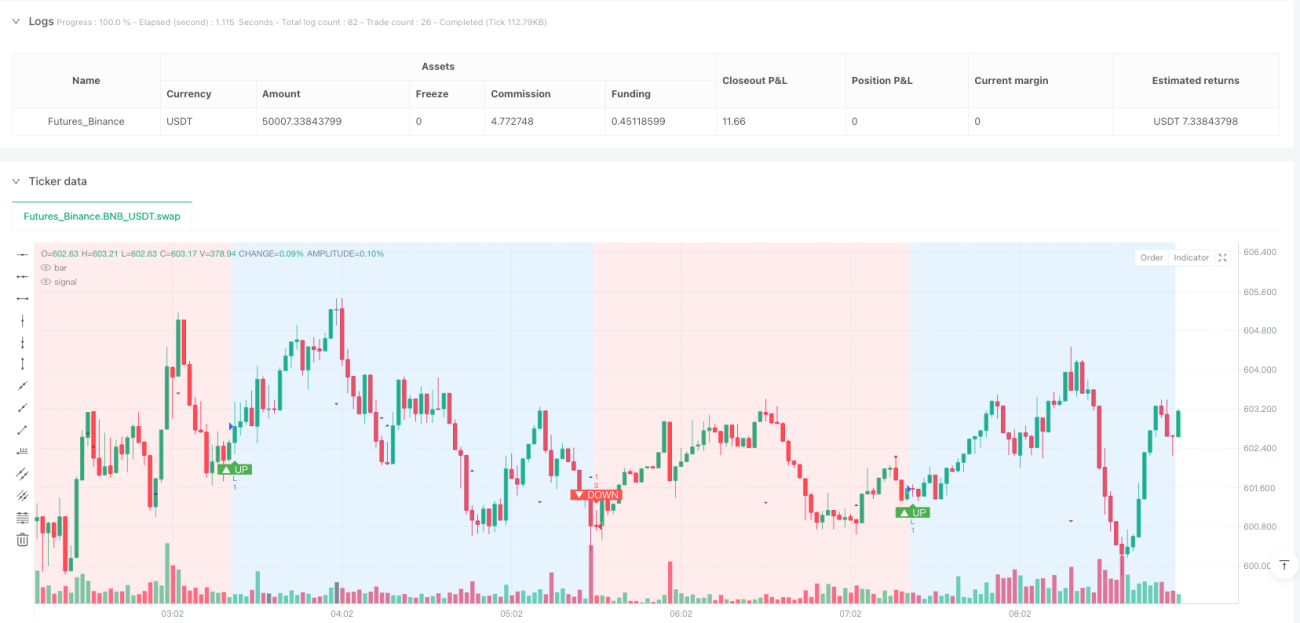
La estrategia de dinámica de adaptación de las tendencias de la teoría de Dow es un método de negociación avanzado basado en los principios de la teoría clásica de Dow para guiar las decisiones de negociación mediante la identificación de los puntos de inflexión clave de las tendencias del mercado. La estrategia se centra en detectar y confirmar la dinámica básica de las tendencias de precios, utilizando los máximos más altos (Higher Highs) y los mínimos más altos (Higher Lows) para definir la tendencia alcista y los mínimos más bajos (Lower Highs) y los mínimos más bajos (Lower Lows) para definir la tendencia descendente.

Principio de estrategia

El principio central de la estrategia se basa en el método clásico de identificación de tendencias de la teoría de Dow. La estrategia detecta los puntos de inflexión clave mediante el uso de las funciones ta.pivothigh () y ta.pivotlow (). La implementación concreta incluye los siguientes pasos clave:

  1. Detección de puntos de inflexión: Determina el número de columnas a la izquierda y a la izquierda usando el parámetro pivotLookback para identificar los puntos altos y bajos.
  2. Confirmación de tendencia: la tendencia al alza solo se confirma cuando se cumplen al mismo tiempo las condiciones de un máximo más alto y un mínimo más alto; de la misma manera, la tendencia a la baja solo se confirma cuando se cumplen al mismo tiempo las condiciones de un máximo más bajo y un mínimo más bajo.
  3. Continuidad de tendencia: Si no se cumplen las condiciones de conversión de tendencia, la estrategia mantendrá el estado de tendencia anterior, lo que permite un seguimiento de tendencia más suave.

Ventajas estratégicas

  1. Identificación de tendencias dinámicas: la estrategia capta de forma dinámica los cambios en las tendencias del mercado mediante el análisis continuo de los puntos de inflexión clave.
  2. Modo de negociación flexible: ofrece tres modos de negociación automáticos, solo hacer más y solo hacer menos, para satisfacer las necesidades de diferentes operadores.
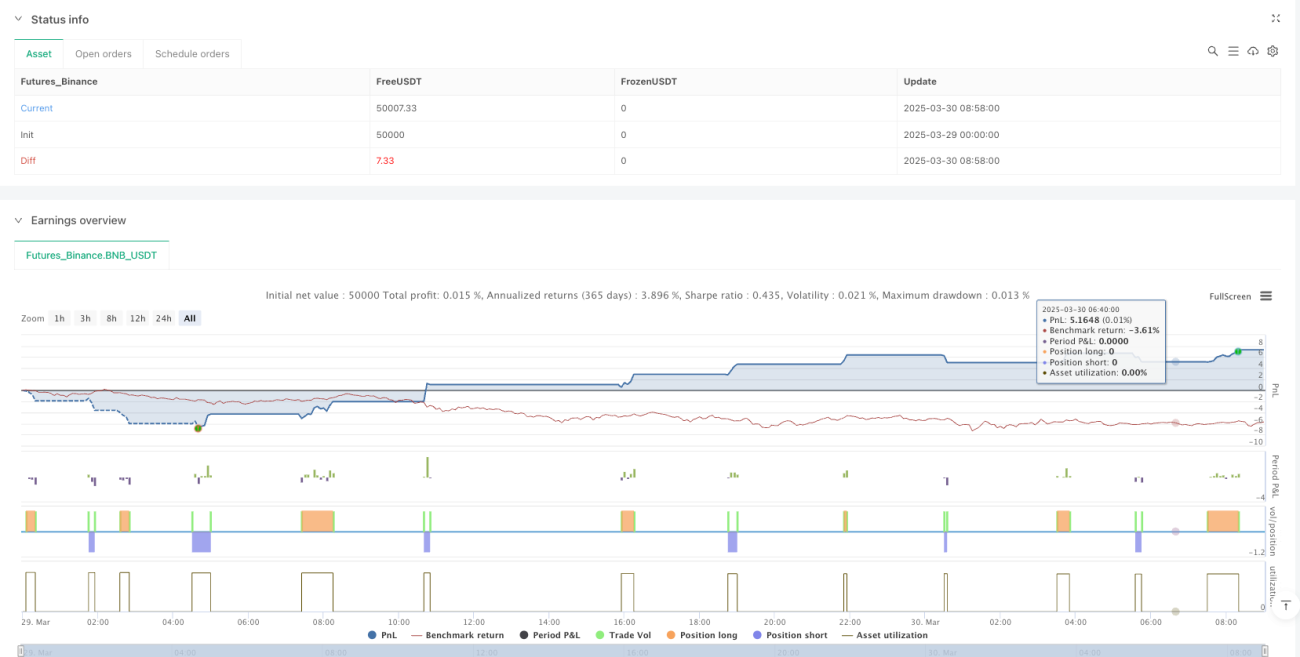
  3. Gestión de riesgos: mecanismos de stop loss y stop-loss incorporados para controlar el riesgo de una sola transacción.
  4. Visualización de tendencias: muestra la dirección de las tendencias de forma intuitiva a través de colores de fondo y marcas, lo que ayuda a los operadores a comprender rápidamente el estado del mercado.
  5. Baja latencia: En comparación con las estrategias tradicionales de medias móviles, este método responde a los cambios de tendencia más rápidamente.

Riesgo estratégico

  1. Riesgo de atraso: Debido al uso de detección de puntos de inflexión, la estrategia tiene un riesgo inherente de atraso y puede no capturar las primeras señales de tendencia.
  2. Riesgo de mercado vibrante: en mercados donde la volatilidad no es evidente, los pequeños cambios frecuentes en los precios pueden conducir a transacciones innecesarias.
  3. Sensibilidad de los parámetros: la elección de los parámetros pivotLookback tiene un gran impacto en el rendimiento de la estrategia, que requiere ajustes en diferentes mercados y marcos de tiempo.
  4. Costos de transacción: La frecuencia de las transacciones puede generar costos de transacción más altos, especialmente si las comisiones son más altas.

Dirección de optimización de la estrategia

  1. Introducción de filtros adicionales: combinación de indicadores de fuerza de tendencia (como ATR) para filtrar señales de tendencia débiles.
  2. Ajuste de parámetros dinámicos: desarrollo de un mecanismo de parámetros de pivot Lookback que se adapta a la volatilidad del mercado.
  3. Verificación de múltiples marcos de tiempo: Verificación cruzada de señales de tendencia en diferentes marcos de tiempo para mejorar la fiabilidad de la señal.
  4. Mejoramiento del aprendizaje automático: explorar el uso de algoritmos de aprendizaje automático para optimizar la identificación de tendencias y el tiempo de entrada.
  5. Optimización de la gestión de riesgos: ajuste de los límites de pérdidas y paradas en función de la dinámica de la volatilidad del mercado

Resumir

La estrategia de la dinámica de adaptación de la teoría de las tendencias de Dow es una poderosa estrategia de seguimiento de tendencias que ofrece a los comerciantes una herramienta sistematizada de identificación de tendencias a través de innovadoras técnicas de análisis de puntos de inflexión. A pesar de algunos riesgos inherentes, su flexibilidad y dinámica lo convierten en un método valioso en las estrategias modernas de comercio cuantitativo. La aplicación exitosa de la estrategia requiere una comprensión profunda de su funcionamiento y una optimización y adaptación continuas según el entorno específico del mercado.

Overview

The Dow Theory Trend Adaptive Momentum Strategy is an advanced trading approach based on classic Dow Theory principles, designed to guide trading decisions by identifying key turning points in market trends. The strategy focuses on detecting and confirming the fundamental dynamics of price trends, using Higher Highs and Higher Lows to define uptrends, and Lower Highs and Lower Lows to define downtrends. This method aims to provide a systematic approach to capturing market trends and responding promptly when trends change.

Strategy Principles

The core principle of this strategy is based on the classic Dow Theory trend identification method. The strategy detects key turning points using ta.pivothigh() and ta.pivotlow() functions. Specific implementation includes the following key steps:

  1. Turning Point Detection: Use the pivotLookback parameter to determine the number of bars on both sides for identifying highs and lows.
  2. Trend Confirmation: An uptrend is confirmed only when both Higher Highs and Higher Lows conditions are met; similarly, a downtrend is confirmed only when both Lower Highs and Lower Lows conditions are satisfied.
  3. Trend Persistence: If trend conversion conditions are not met, the strategy maintains the previous trend state, achieving smoother trend tracking.

Strategy Advantages

  1. Dynamic Trend Identification: By continuously analyzing key turning points, the strategy can dynamically capture market trend changes.
  2. Flexible Trading Modes: Provides three trading modes - automatic, long-only, and short-only - to meet different traders’ needs.
  3. Risk Management: Built-in stop-loss and take-profit mechanisms effectively control the risk of individual trades.
  4. Trend Visualization: Intuitively displays trend direction through background colors and markers, making it easy for traders to understand market conditions.
  5. Low Latency: Compared to traditional moving average strategies, this method can respond to trend changes more quickly.

Strategy Risks

  1. Lag Risk: Due to using pivot point detection, the strategy inherently carries a lag risk and may not capture the earliest trend signals.
  2. Ranging Market Risk: In markets with unclear fluctuations, frequent small price changes may lead to unnecessary trades.
  3. Parameter Sensitivity: The choice of pivotLookback parameter significantly impacts strategy performance and requires adjustment for different markets and timeframes.
  4. Trading Costs: Frequent trading may result in high transaction costs, especially with higher commission rates.

Strategy Optimization Directions

  1. Introduce Additional Filters: Combine trend strength indicators (such as ATR) to filter weak trend signals.
  2. Dynamic Parameter Adjustment: Develop an adaptive pivotLookback parameter mechanism based on market volatility.
  3. Multi-Timeframe Verification: Cross-verify trend signals across different timeframes to improve signal reliability.
  4. Machine Learning Enhancement: Explore using machine learning algorithms to optimize trend identification and entry timing.
  5. Risk Management Optimization: Dynamically adjust stop-loss and take-profit distances based on market volatility.

Conclusion

The Dow Theory Trend Adaptive Momentum Strategy is a powerful trend-following method that provides traders with a systematic trend identification tool through innovative turning point analysis techniques. Despite some inherent risks, its flexibility and dynamism make it a valuable approach in modern quantitative trading strategies. Successfully applying this strategy requires a deep understanding of its working principles and continuous optimization and adjustment based on specific market environments.

Código Fuente de la Estrategia
/*backtest
start: 2025-03-29 00:00:00
end: 2025-03-30 09:00:00
period: 2m
basePeriod: 2m
exchanges: [{"eid":"Futures_Binance","currency":"BNB_USDT"}]
*/

//@version=5
// strategy(title="Dow Theory Trend Strategy v3", shorttitle="Dow Trend Strat v3", overlay=true,
//      initial_capital=10000, default_qty_type=strategy.percent_of_equity, default_qty_value=10,
//      commission_type=strategy.commission.percent, commission_value=0.1, // Example strategy settings with commission
//      process_orders_on_close=true) // Consider processing on bar close for more stable backtests
strategy(title="Dow Theory Trend Strategy v3", shorttitle="Dow Trend Strat v3", overlay=true) // Basic strategy settings

// --- 設定 ---
// Calculation Settings
pivotLookback = input.int(10, title="Pivot Lookback Period", minval=1, tooltip="ピボットハイ/ローを検出するための左右のバーの数", group="Calculation Settings")

// Display Settings
showPivotPoints = input.bool(true, title="Show Pivot Points", tooltip="ピボットハイ/ローのポイントを表示します", group="Display Settings")
showTrendChange = input.bool(true, title="Show Trend Change Signals", tooltip="トレンド転換のシグナル(エントリーポイント)を表示します", group="Display Settings")

// Strategy Settings
// --- Manual Trend Override (配列定義を input 内に変更) ---
manualTrendMode = input.string("Auto", title="Manual Trend Mode",
     options=["Auto", "Long Only", "Short Only"], // オプションをここで直接定義
     tooltip="手動でトレード方向を指定 (Auto: ダウ理論に従う, Long Only: ロングのみ, Short Only: ショートのみ)",
     group="Strategy Settings")

// Risk Management Settings
useStopLoss = input.bool(true, title="Use Stop Loss", group="Risk Management")
stopLossTicks = input.float(100, title="Stop Loss (Ticks)", minval=1, group="Risk Management", tooltip="エントリー価格からのストップロスまでのティック(最小値動き)数。例:EURUSDで20 pips (tick=0.00001)なら200。")
useTakeProfit = input.bool(true, title="Use Take Profit", group="Risk Management")
takeProfitTicks = input.float(200, title="Take Profit (Ticks)", minval=1, group="Risk Management", tooltip="エントリー価格からのテイクプロフィットまでのティック(最小値動き)数。例:EURUSDで40 pips (tick=0.00001)なら400。")

// --- ピボットハイ/ローの検出 ---
pivotHighPrice = ta.pivothigh(high, pivotLookback, pivotLookback)
pivotLowPrice = ta.pivotlow(low, pivotLookback, pivotLookback)

// --- ピボットポイントの値を保持するための変数 ---
var float lastPivotHigh = na
var float prevPivotHigh = na
var float lastPivotLow = na
var float prevPivotLow = na
var int lastPivotHighBar = na
var int prevPivotHighBar = na
var int lastPivotLowBar = na
var int prevPivotLowBar = na

// --- 新しいピボットが確定したかどうかの検出と値の更新 ---
if not na(pivotHighPrice)
    if na(lastPivotHigh) or pivotHighPrice != lastPivotHigh
        prevPivotHigh := lastPivotHigh
        prevPivotHighBar := lastPivotHighBar
        lastPivotHigh := pivotHighPrice
        lastPivotHighBar := bar_index - pivotLookback

if not na(pivotLowPrice)
    if na(lastPivotLow) or pivotLowPrice != lastPivotLow
        prevPivotLow := lastPivotLow
        prevPivotLowBar := lastPivotLowBar
        lastPivotLow := pivotLowPrice
        lastPivotLowBar := bar_index - pivotLookback

// --- ダウ理論に基づくトレンド判定 (改良版) ---
var int trendDirection = 0
bool hasEnoughPivots = not na(lastPivotHigh) and not na(prevPivotHigh) and not na(lastPivotLow) and not na(prevPivotLow)

if hasEnoughPivots
    isHigherHigh = lastPivotHigh > prevPivotHigh
    isHigherLow = lastPivotLow > prevPivotLow
    isUptrendConfirmed = isHigherHigh and isHigherLow

    isLowerHigh = lastPivotHigh < prevPivotHigh
    isLowerLow = lastPivotLow < prevPivotLow
    isDowntrendConfirmed = isLowerHigh and isLowerLow

    if isUptrendConfirmed
        trendDirection := 1
    else if isDowntrendConfirmed
        trendDirection := -1
    else
        trendDirection := trendDirection[1]

// --- トレンド転換の検出 ---
bool trendChanged = ta.change(trendDirection) != 0
bool changedToUp = trendChanged and trendDirection == 1
bool changedToDown = trendChanged and trendDirection == -1

// --- 描画処理 ---
bgcolor(trendDirection == 1 ? color.new(color.blue, 85) : trendDirection == -1 ? color.new(color.red, 85) : color.new(color.gray, 90), title="Trend Background")
plotshape(showPivotPoints and not na(pivotHighPrice), title="Pivot High", location=location.abovebar, color=color.new(color.maroon, 20), style=shape.triangledown, size=size.tiny, offset=-pivotLookback)
plotshape(showPivotPoints and not na(pivotLowPrice), title="Pivot Low", location=location.belowbar, color=color.new(color.navy, 20), style=shape.triangleup, size=size.tiny, offset=-pivotLookback)
plotshape(showTrendChange and changedToUp, title="Uptrend Start Signal", location=location.belowbar, color=color.new(color.green, 0), style=shape.labelup, text="▲ UP", textcolor=color.white, size=size.small)
plotshape(showTrendChange and changedToDown, title="Downtrend Start Signal", location=location.abovebar, color=color.new(color.red, 0), style=shape.labeldown, text="▼ DOWN", textcolor=color.white, size=size.small)

// --- ストラテジーロジック ---
bool allowLong = manualTrendMode == "Auto" or manualTrendMode == "Long Only"
bool allowShort = manualTrendMode == "Auto" or manualTrendMode == "Short Only"

if (changedToUp and allowLong)
    strategy.entry("L", strategy.long, comment="Go Long")
    if (useStopLoss or useTakeProfit)
        float slValue = useStopLoss and stopLossTicks > 0 ? stopLossTicks : na
        float tpValue = useTakeProfit and takeProfitTicks > 0 ? takeProfitTicks : na
        strategy.exit("LX", from_entry="L", loss=slValue, profit=tpValue, comment_loss="SL Long", comment_profit="TP Long")

if (changedToDown and allowShort)
    strategy.entry("S", strategy.short, comment="Go Short")
    if (useStopLoss or useTakeProfit)
        float slValue = useStopLoss and stopLossTicks > 0 ? stopLossTicks : na
        float tpValue = useTakeProfit and takeProfitTicks > 0 ? takeProfitTicks : na
        strategy.exit("SX", from_entry="S", loss=slValue, profit=tpValue, comment_loss="SL Short", comment_profit="TP Short")

// --- デバッグ用 ---
// plot(trendDirection, title="Trend Direction Value")