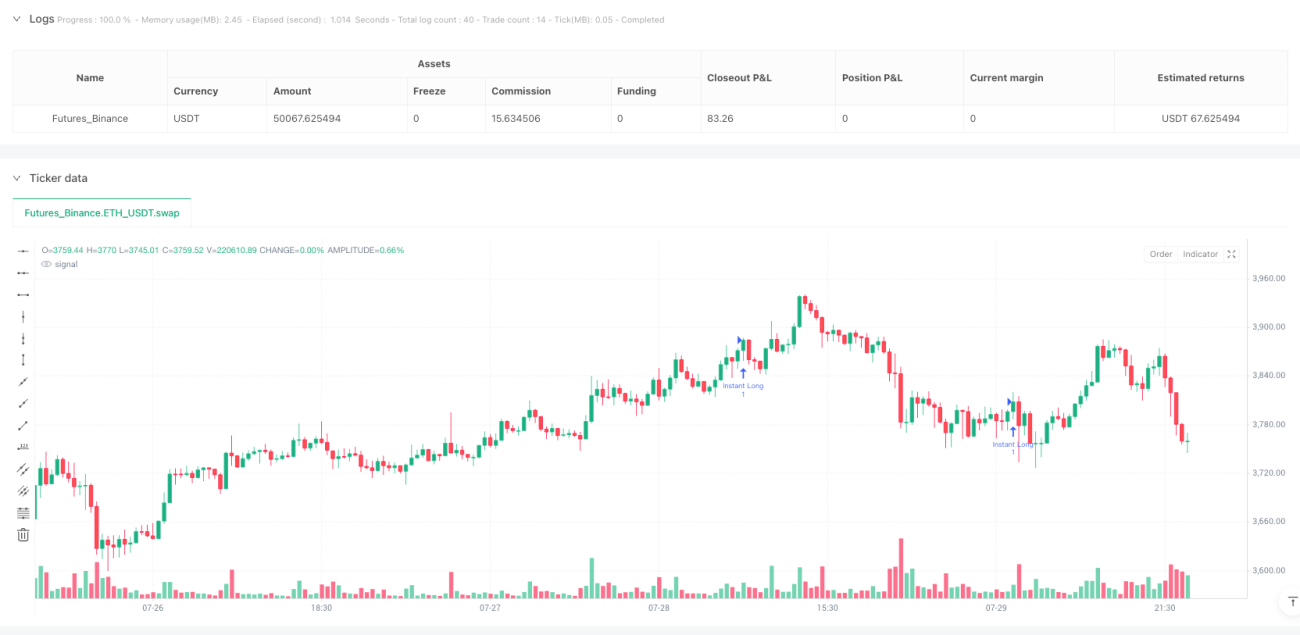
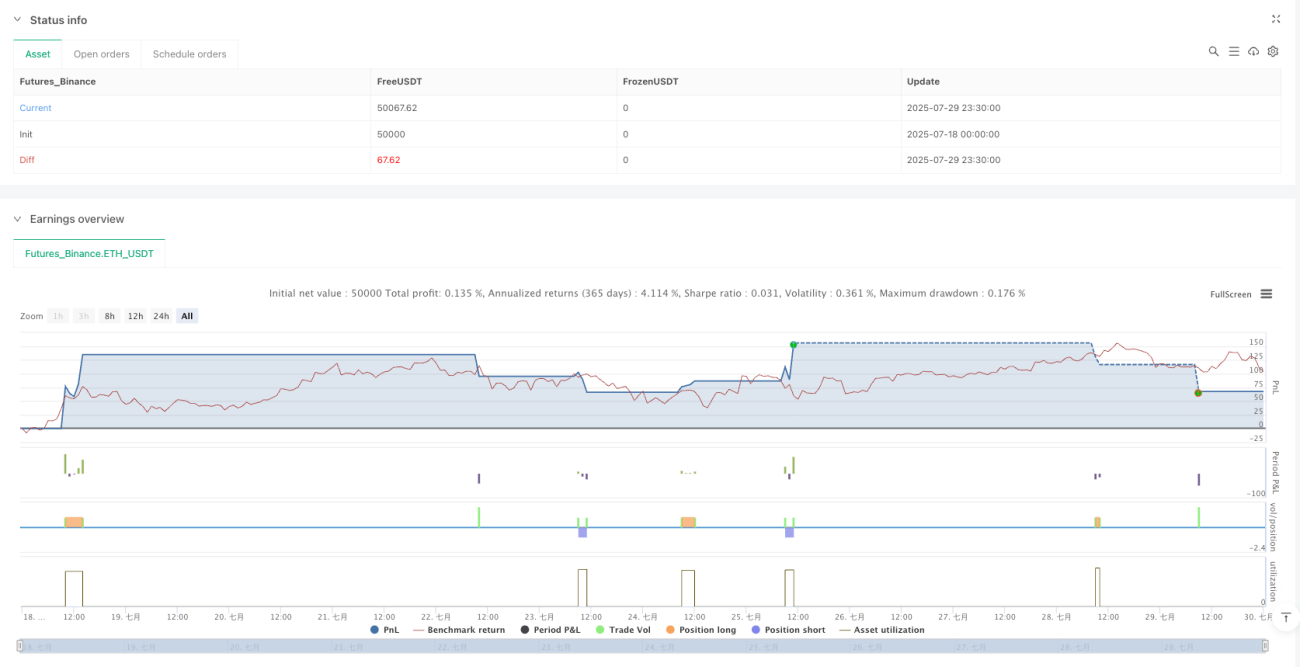
La estrategia ATR Breakout Tracking Stop Loss es un sistema de trading cuantitativo que combina breakouts de rango abierto (Opening Range Breakout) con análisis de mercado inteligente (Smart Money Concepts). La estrategia se enfoca en capturar breakouts de rango de precios que se forman 5 minutos después de la apertura del mercado de valores (09:30-09:35 EST) y combina múltiples condiciones de filtrado para garantizar la calidad de la señal de trading.
La lógica central de la estrategia de seguimiento de pérdidas ATR para romper el rango de apertura se basa en la importancia del rango de precios inicial después de la apertura del mercado. La estrategia primero captura y registra los máximos y mínimos de los precios en una ventana de tiempo específica (09:30-09:35 EST), formando un “rango de apertura” (Opening Range).
Identificación y verificación de brecha en el espacio abierto: El sistema registra los máximos y mínimos de los precios dentro de una ventana de tiempo especificada, y luego monitorea las rupturas. Las rupturas deben ser verificadas a través de un doble mecanismo de filtrado:
Mecanismo de admisiónLa estrategia apoya dos formas de entrada:
Ajustes para detener la pérdidaEl sistema ofrece dos tipos de stop loss:
Gestión de riesgosEl sistema utiliza el multiplicador de riesgo: recompensa para calcular automáticamente la posición de parada y realizar una gestión de riesgo dinámica. Por ejemplo, una configuración de la relación de riesgo: recompensa de 2: 1 significa que los beneficios potenciales son el doble de los pérdidas potenciales.
ATR para el seguimiento: Una vez que las ganancias alcanzan la tasa de retorno de riesgo predeterminada, el sistema puede activar un stop loss de seguimiento basado en ATR, bloqueando una parte de las ganancias y permitiendo que la tendencia continúe.
Una segunda oportunidad de comercioEl sistema puede buscar automáticamente oportunidades de ruptura en la zona de apertura, lo que permite la posibilidad de realizar operaciones en ambos sentidos el mismo día.
Enfocarse en oportunidades de negocio de calidadA través de un mecanismo de verificación múltiple (filtrado de sombras, filtrado de distancia), la estrategia reduce significativamente las transacciones falsas y aumenta la tasa de éxito.
Mecanismo de admisión flexible: soporte de entrada inmediata o retroceso, adaptado a diferentes estilos de negociación y condiciones de mercado. La entrada inmediata es adecuada para una fuerte tendencia, mientras que la entrada retrocesada ofrece un precio de entrada más favorable.
La adaptación a la gestión de riesgosLa configuración de paradas dinámicas basadas en la multiplicación de la rentabilidad por el riesgo asegura que cada operación tenga una característica de riesgo uniforme y permite una gestión de fondos estandarizada.
Maximizar las gananciasLa función de seguimiento de pérdidas de ATR permite que las tendencias fuertes continúen, evitando la salida prematura, al tiempo que protege los beneficios obtenidos.
Alta visibilidadEl sistema ofrece una amplia gama de funciones de asistencia visual, que incluyen marcas de intervalo, etiquetas de verificación de brecha, indicaciones de estado de transacción, marcas de entrada / parada / parada, etc., para mejorar la intuitividad de las decisiones comerciales.
Diseño de post-evaluación sin prejuiciosLa adopción de una estrategia globalbarstate.isconfirmedAsegurarse de que todas las decisiones se basan en datos de precios confirmados, evitando las desviaciones de pronóstico y en el entorno de las operaciones reales.
Mecanismo de segunda oportunidadA través de la activación de la función de comercio de segunda oportunidad, la estrategia puede adaptarse rápidamente a los cambios en el mercado cuando se equivocan en la dirección inicial, capturar oportunidades de reversión y mejorar la eficiencia en el uso de los fondos.
Optimización de la gestión de sesionesLa función de cierre automático de la sesión asegura que no se mantenga la posición durante la noche, reduciendo el riesgo de pasar la noche.
Riesgo de fluctuación en el período de formación de la franjaEn el período de formación del rango de apertura (de 09:30 a 09:35), el mercado puede experimentar fluctuaciones anormales, lo que lleva a un rango demasiado ancho o demasiado estrecho. Un rango demasiado ancho puede causar un alto de pérdidas demasiado grande, mientras que un rango demasiado estrecho puede desencadenar falsos breaks frecuentes. Cómo solucionarloSe puede considerar la posibilidad de aumentar el filtro del tamaño de la franja de apertura para excluir la franja anormal; o ajustar el filtro de la fecha de negociación para evitar días específicos de alta volatilidad (como el día en que se publican los datos económicos importantes).
Riesgo de una retirada drástica después de la ruptura: El mercado puede retroceder drásticamente después de una ruptura efectiva, lo que hace que el mercado continúe su movimiento en la dirección original después de que el stop loss sea activado. Cómo solucionarloConsidere el uso de una configuración de parada de pérdidas más flexible, como la parada de intervalo paralelo; o ajuste el mecanismo de entrada para cambiar la entrada para obtener un mejor precio de entrada y una menor exposición al riesgo.
La calidad de la señal depende de la configuración del filtroEl filtro de la línea de sombra y la configuración de los parámetros de filtro de distancia probados por la brecha tienen un impacto significativo en la calidad de la señal. Los parámetros incorrectos pueden filtrar buenas oportunidades de negociación o recibir demasiadas señales de baja calidad. Cómo solucionarloOptimización de los parámetros del filtro a través de la retroalimentación histórica para encontrar la configuración óptima para un mercado y una variedad específicos. Considere el uso de parámetros de adaptación para ajustar los estándares de filtración en función de la dinámica de la volatilidad del mercado.
Seguimiento de la sensibilidad de los parámetros de stop lossATR: El ajuste de los parámetros de seguimiento de pérdidas demasiado apretado puede causar una salida prematura en un ajuste pequeño, mientras que el ajuste de exceso de relajación puede causar una devolución excesiva de ganancias. Cómo solucionarloAjuste de los ciclos y multiplicadores de ATR basados en las características históricas de fluctuación de la variedad objetivo. Considere la implementación de una estrategia de liquidación por lotes, con paradas fijas en algunas posiciones y paradas de seguimiento en otras.
Limitación de la frecuencia de las transaccionesEstrategia: ejecutar un máximo de dos operaciones al día (transaciones iniciales y transacciones de segunda oportunidad) y puede no aprovechar todas las oportunidades del día. Cómo solucionarloConsidere estrategias de expansión para monitorear intervalos de precios importantes en otros períodos del día; o en combinación con otros indicadores técnicos para formar estrategias de combinación para aumentar las fuentes de señales de negociación.
Adaptación al ciclo de intervalos abiertosLa estrategia actual utiliza un intervalo de apertura de 5 minutos fijo, que se puede ajustar según la dinámica de la volatilidad del mercado. En un mercado de baja volatilidad, el intervalo de tiempo se puede reducir a 3 minutos, mientras que en un mercado de alta volatilidad se puede extender a 10 minutos, para adaptarse mejor a diferentes condiciones del mercado.
Confirmación combinada de la cantidadEn el mecanismo de verificación de brecha, se añaden las condiciones de filtración de la transacción, que requieren que la transacción en el momento de la ruptura sea significativamente superior a la transacción promedio de los ciclos anteriores, lo que mejora la efectividad de la ruptura. Esto se puede lograr calculando la proporción entre la transacción de la ruptura y el promedio de la transacción de los N ciclos anteriores.
Análisis de marcos de tiempo múltiples: Introducir filtros de tendencia en los marcos de tiempo más altos, entrar en juego solo cuando la tendencia de la línea diaria o horaria coincide con la dirección de la ruptura, lo que aumenta la probabilidad de éxito de las operaciones. La tendencia en los marcos de tiempo más altos se puede determinar mediante una simple pendiente de media móvil o un indicador de tendencia más avanzado.
Optimización de la gestión de fondosImplementar un mecanismo de ajuste dinámico del tamaño de la posición, que ajuste automáticamente el número de contratos en función de la volatilidad histórica, el tamaño de la cuenta actual y el rendimiento reciente, para lograr un control de riesgo más preciso. Por ejemplo, aumentar gradualmente la posición después de una serie de ganancias y reducir la posición después de una serie de pérdidas.
Modelos de aprendizaje automático integradosIntroducción de modelos de aprendizaje automático para evaluar la calidad de las rupturas, para identificar los patrones de ruptura con mayor probabilidad de éxito a través de modelos de entrenamiento de datos históricos. Las características pueden incluir el tamaño de la franja de apertura, la volatilidad del mercado, el movimiento de los precios del día de negociación anterior, el patrón de tiempo específico, etc.
Mejorar la lógica de la segunda oportunidadOptimización de las condiciones de activación de las operaciones de segunda oportunidad, no solo en función del fracaso de las operaciones iniciales, sino también en función de los cambios en la estructura del mercado y los nuevos indicadores de dinámica para mejorar la tasa de éxito de las operaciones de segunda oportunidad.
Parámetros de variedades personalizadas: Desarrollar un conjunto de parámetros optimizados para las diferentes variedades de negociación, teniendo en cuenta las características de fluctuación y el comportamiento de los precios únicos de cada variedad. Por ejemplo, las variedades con mayor fluctuación pueden requerir una configuración de filtro más flexible y una relación de riesgo-beneficio más conservadora.
Integración de los indicadores de la emoción del mercadoIntroducción del índice VIX u otros indicadores de la emoción del mercado, ajuste de los parámetros de la estrategia o suspensión temporal de la negociación durante la emoción del mercado extrema, para evitar un entorno de alta incertidumbre.
La estrategia de seguimiento de pérdidas de ATR para la ruptura de la franja de apertura es un sistema de comercio cuantitativo bien estructurado que combina hábilmente la ruptura de la franja de apertura, el mecanismo de filtración inteligente, las opciones de entrada flexibles y las funciones avanzadas de gestión de riesgos. La estrategia es especialmente adecuada para el comercio intradía en el mercado de acciones y futuros de los EE.UU., para obtener ganancias mediante la captura de rupturas direccionales después de la apertura.
El valor central de la estrategia reside en su mecanismo de verificación múltiple y su sistema de gestión de riesgos, que reduce significativamente las transacciones falsas a través de filtros de sombra y distancia, mientras que el uso de la relación de retorno de riesgo multiplicado y el seguimiento de la parada de pérdidas ATR aseguran una exposición de riesgo y protección de ganancias consistentes. La función de comercio de segunda oportunidad agrega adaptabilidad y oportunidades de ganancias adicionales a la estrategia.
A pesar de las múltiples ventajas de esta estrategia, los usuarios deben tener en cuenta la importancia de la optimización de los parámetros, los diferentes mercados y variedades pueden necesitar ajustes específicos para obtener el mejor resultado. Al mismo tiempo, se recomienda a los operadores que utilicen esta estrategia como parte de un sistema de negociación completo, en combinación con un análisis de mercado más amplio y principios de gestión de riesgos.
La estrategia tiene el potencial de mejorar aún más su estabilidad y rentabilidad y convertirse en una herramienta poderosa en la caja de herramientas de los comerciantes profesionales mediante la implementación de la dirección de optimización de las recomendaciones, en particular, los parámetros de adaptación, el análisis de marcos de tiempo múltiples y el sistema de gestión de fondos mejorado.
/*backtest
start: 2025-07-18 00:00:00
end: 2025-07-30 00:00:00
period: 30m
basePeriod: 30m
exchanges: [{"eid":"Futures_Binance","currency":"ETH_USDT"}]
*/
//@version=5
strategy("Casper SMC 5min ORB - Roboquant AI", overlay=true, default_qty_type=strategy.fixed, default_qty_value=1, max_bars_back=500, calc_on_order_fills=true, calc_on_every_tick=false, initial_capital=50000, currency=currency.USD)
// === STRATEGY SETTINGS ===
// Risk Management
contracts = input.int(1, "Contracts", minval=1, group="Risk Management")
risk_multiplier = input.float(2.0, "Risk:Reward Multiplier", minval=0.5, maxval=10.0, group="Risk Management")
sl_points = input.int(2, "Stop Loss Points Below/Above Breakout Candle", minval=1, group="Risk Management")
// Entry Settings
entry_type = input.string("Instant", "Entry Type", options=["Retracement", "Instant"], group="Entry Settings")
retracement_percent = input.float(50.0, "Retracement % of Breakout Candle Body", minval=10.0, maxval=90.0, group="Entry Settings")
// Stop Loss Settings
sl_type = input.string("Opposite Range", "Stop Loss Type", options=["Breakout Candle", "Opposite Range"], group="Stop Loss Settings")
// Second Chance Trade Settings
enable_second_chance = input.bool(false, "Enable Second Chance Trade", group="Second Chance Trade")
second_chance_info = input.string("If initial SL is hit, allow opposite breakout trade", "Info: Second Chance Logic", group="Second Chance Trade")
// Breakout Filter Settings
use_wick_filter = input.bool(false, "Use Wick Filter", group="Breakout Filter")
max_wick_percent = input.float(50.0, "Max Wick % of Candle Body", minval=10.0, maxval=200.0, group="Breakout Filter")
// Breakout Distance Filters
use_breakout_distance_filter = input.bool(true, "Use Breakout Distance Filter", group="Breakout Distance Filter")
min_breakout_multiplier = input.float(0.1, "Min Breakout Distance (OR Size * X)", minval=0.0, maxval=3.0, group="Breakout Distance Filter")
max_breakout_multiplier = input.float(1.6, "Max Breakout Distance (OR Size * X)", minval=0.5, maxval=5.0, group="Breakout Distance Filter")
// Trailing Stop Loss Settings
use_trailing_sl = input.bool(false, "Use Trailing Stop Loss", group="Trailing Stop Loss")
profit_r_multiplier = input.float(1.0, "Start Trailing After X R Profit", minval=0.5, maxval=5.0, group="Trailing Stop Loss")
atr_length = input.int(14, "ATR Length", minval=1, maxval=50, group="Trailing Stop Loss")
atr_multiplier = input.float(1.0, "ATR Multiplier for Trailing", minval=0.5, maxval=5.0, group="Trailing Stop Loss")
// Session Management
or_start_hour = input.int(9, "Opening Range Start Hour", minval=0, maxval=23, group="Session Management")
or_start_minute = input.int(30, "Opening Range Start Minute", minval=0, maxval=59, group="Session Management")
or_end_minute = input.int(35, "Opening Range End Minute", minval=0, maxval=59, group="Session Management")
session_timezone = input.string("America/New_York", "Session Timezone", group="Session Management")
force_session_close = input.bool(true, "Force Close at Session End", group="Session Management")
session_end_hour = input.int(16, "Session End Hour", minval=0, maxval=23, group="Session Management")
session_end_minute = input.int(0, "Session End Minute", minval=0, maxval=59, group="Session Management")
// Day of Week Trading Filters
trade_monday = input.bool(true, "Trade on Monday", group="Day of Week Filters")
trade_tuesday = input.bool(true, "Trade on Tuesday", group="Day of Week Filters")
trade_wednesday = input.bool(true, "Trade on Wednesday", group="Day of Week Filters")
trade_thursday = input.bool(true, "Trade on Thursday", group="Day of Week Filters")
trade_friday = input.bool(true, "Trade on Friday", group="Day of Week Filters")
// Visual Settings
high_line_color = input.color(color.green, title="Opening Range High Line Color", group="Visual Settings")
low_line_color = input.color(color.red, title="Opening Range Low Line Color", group="Visual Settings")
// Label Control Settings
show_trading_disabled_labels = input.bool(false, "Show Trading Disabled Labels", group="Label Controls")
show_breakout_validation_labels = input.bool(true, "Show Breakout Validation Labels", group="Label Controls")
show_second_chance_labels = input.bool(false, "Show Second Chance Labels", group="Label Controls")
show_trade_status_labels = input.bool(false, "Show Trade Status Labels", group="Label Controls")
show_entry_labels = input.bool(false, "Show Entry Labels", group="Label Controls")
show_sl_tp_labels = input.bool(false, "Show Stop Loss / Take Profit Labels", group="Label Controls")
// === VARIABLES ===
// ATR for trailing stop loss
atr = ta.atr(atr_length)
// === NYSE OPENING RANGE LOGIC ===
// FIXED: Using configurable hour/minute inputs with timezone
current_time = time(timeframe.period, "0000-2400:23456", session_timezone)
current_hour = hour(current_time, session_timezone)
current_minute = minute(current_time, session_timezone)
is_opening_range = current_hour == or_start_hour and current_minute >= or_start_minute and current_minute <= or_end_minute
// Check if we're at the start of a new trading day - FIXED: More reliable detection
is_new_day = ta.change(time("1D"))
// ADDED: Check if trading is allowed on current day of week (using session timezone)
current_day = dayofweek(current_time, session_timezone)
is_trading_day_allowed = (current_day == dayofweek.monday and trade_monday) or (current_day == dayofweek.tuesday and trade_tuesday) or (current_day == dayofweek.wednesday and trade_wednesday) or (current_day == dayofweek.thursday and trade_thursday) or (current_day == dayofweek.friday and trade_friday)
// Variables to store opening range high and low for current day
var float or_high = na
var float or_low = na
var bool lines_drawn = false
var bool breakout_occurred = false
var float breakout_candle_high = na
var float breakout_candle_low = na
var float breakout_price = na
var string breakout_direction = na
var int or_start_bar = na // ADDED: Store the bar index when opening range starts
// ADDED: Second chance trade variables
var bool first_trade_sl_hit = false
var string first_trade_direction = na
var bool second_chance_available = false
var bool second_trade_taken = false
var bool daily_trades_complete = false // ADDED: Prevent more than 2 trades per day
// Reset variables at the start of each trading day
if is_new_day
or_high := na
or_low := na
lines_drawn := false
breakout_occurred := false
breakout_candle_high := na
breakout_candle_low := na
breakout_price := na
breakout_direction := na
or_start_bar := na // ADDED: Reset opening range start bar
// ADDED: Reset second chance variables
first_trade_sl_hit := false
first_trade_direction := na
second_chance_available := false
second_trade_taken := false
daily_trades_complete := false // ADDED: Reset trade limit
// Capture opening range data during 09:30-09:35 EST
if is_opening_range
if na(or_high) or na(or_low)
or_high := high
or_low := low
or_start_bar := bar_index // ADDED: Store the bar index when opening range starts
else
or_high := math.max(or_high, high)
or_low := math.min(or_low, low)
// Draw lines when we're past the opening range and haven't drawn yet
if not is_opening_range and not na(or_high) and not na(or_low) and not na(or_start_bar) and not lines_drawn
// FIXED: Lines start from the actual opening range start time and extend forward
start_x = or_start_bar
end_x = bar_index + 50 // Extend lines forward for visibility
lines_drawn := true
// ADDED: Show visual indicator if trading is disabled for current day
if not is_trading_day_allowed and show_trading_disabled_labels
day_name = current_day == dayofweek.monday ? "Monday" :
current_day == dayofweek.tuesday ? "Tuesday" :
current_day == dayofweek.wednesday ? "Wednesday" :
current_day == dayofweek.thursday ? "Thursday" :
current_day == dayofweek.friday ? "Friday" : "Weekend"
label.new(x=bar_index, y=(or_high + or_low) / 2, text="Trading Disabled\n" + day_name, color=color.gray, textcolor=color.white, style=label.style_label_center, size=size.normal)
// Check for breakouts after opening range is complete (only first breakout of the day)
// FIXED: Added barstate.isconfirmed to avoid lookahead bias
if barstate.isconfirmed and not is_opening_range and not na(or_high) and not na(or_low) and lines_drawn and not breakout_occurred and not daily_trades_complete and is_trading_day_allowed
// Calculate candle body and wick percentages
candle_body = math.abs(close - open)
top_wick = high - math.max(open, close)
bottom_wick = math.min(open, close) - low
top_wick_percent = candle_body > 0 ? (top_wick / candle_body) * 100 : 0
bottom_wick_percent = candle_body > 0 ? (bottom_wick / candle_body) * 100 : 0
// ADDED: Calculate opening range size for distance filters
or_size = or_high - or_low
// Check for first breakout above opening range high
if close > or_high
// FIXED: Mark breakout as occurred FIRST (this is THE breakout candle)
breakout_occurred := true
breakout_candle_high := high
breakout_candle_low := low
breakout_price := close
breakout_direction := "long"
// ADDED: Validate this specific breakout candle against distance filter
breakout_distance_valid = true
if use_breakout_distance_filter
min_breakout_level = or_high + (or_size * min_breakout_multiplier)
max_breakout_level = or_high + (or_size * max_breakout_multiplier)
breakout_distance_valid := close >= min_breakout_level and close <= max_breakout_level
// Apply wick filter for long breakouts
wick_filter_valid = not use_wick_filter or top_wick_percent <= max_wick_percent
// Show appropriate label based on validation results
if show_breakout_validation_labels
if wick_filter_valid and breakout_distance_valid
label.new(x=bar_index, y=high, text="VALID", color=high_line_color, textcolor=color.white, style=label.style_label_down, size=size.tiny)
else
label.new(x=bar_index, y=high, text="INVALID", color=color.gray, textcolor=color.white, style=label.style_label_down, size=size.tiny)
// Mark breakout as invalid so no trade will be placed (regardless of label setting)
if not (wick_filter_valid and breakout_distance_valid)
breakout_direction := "invalid"
// Check for first breakout below opening range low
else if close < or_low
// FIXED: Mark breakout as occurred FIRST (this is THE breakout candle)
breakout_occurred := true
breakout_candle_high := high
breakout_candle_low := low
breakout_price := close
breakout_direction := "short"
// ADDED: Validate this specific breakout candle against distance filter
breakout_distance_valid = true
if use_breakout_distance_filter
min_breakout_level = or_low - (or_size * min_breakout_multiplier)
max_breakout_level = or_low - (or_size * max_breakout_multiplier)
breakout_distance_valid := close <= min_breakout_level and close >= max_breakout_level
// Apply wick filter for short breakouts
wick_filter_valid = not use_wick_filter or bottom_wick_percent <= max_wick_percent
// Show appropriate label based on validation results
if show_breakout_validation_labels
if wick_filter_valid and breakout_distance_valid
label.new(x=bar_index, y=low, text="VALID", color=low_line_color, textcolor=color.white, style=label.style_label_up, size=size.tiny)
else
label.new(x=bar_index, y=low, text="INVALID", color=color.gray, textcolor=color.white, style=label.style_label_up, size=size.tiny)
// Mark breakout as invalid so no trade will be placed (regardless of label setting)
if not (wick_filter_valid and breakout_distance_valid)
breakout_direction := "invalid"
// ADDED: Check for second chance breakout (opposite direction after initial SL hit)
// FIXED: Added barstate.isconfirmed to avoid lookahead bias
if barstate.isconfirmed and not is_opening_range and not na(or_high) and not na(or_low) and lines_drawn and second_chance_available and not second_trade_taken and not daily_trades_complete and is_trading_day_allowed
// Calculate candle body and wick percentages
candle_body = math.abs(close - open)
top_wick = high - math.max(open, close)
bottom_wick = math.min(open, close) - low
top_wick_percent = candle_body > 0 ? (top_wick / candle_body) * 100 : 0
bottom_wick_percent = candle_body > 0 ? (bottom_wick / candle_body) * 100 : 0
// ADDED: Calculate opening range size for distance filters
or_size = or_high - or_low
// If first trade was LONG and failed, look for SHORT breakout
if first_trade_direction == "long" and close < or_low
// FIXED: Mark second chance breakout as taken FIRST
second_trade_taken := true
second_chance_available := false
breakout_candle_high := high
breakout_candle_low := low
breakout_price := close
breakout_direction := "short"
// ADDED: Validate this specific breakout candle against distance filter
breakout_distance_valid = true
if use_breakout_distance_filter
min_breakout_level = or_low - (or_size * min_breakout_multiplier)
max_breakout_level = or_low - (or_size * max_breakout_multiplier)
breakout_distance_valid := close <= min_breakout_level and close >= max_breakout_level
// Apply wick filter for short breakouts
wick_filter_valid = not use_wick_filter or bottom_wick_percent <= max_wick_percent
// Show appropriate label based on validation results
if show_second_chance_labels
if wick_filter_valid and breakout_distance_valid
label.new(x=bar_index, y=low, text="2nd Chance\nOR Low Break\nVALID", color=color.orange, textcolor=color.white, style=label.style_label_up, size=size.tiny)
else
label.new(x=bar_index, y=low, text="2nd Chance\nOR Low Break\nINVALID", color=color.gray, textcolor=color.white, style=label.style_label_up, size=size.tiny)
// Mark breakout as invalid so no trade will be placed (regardless of label setting)
if not (wick_filter_valid and breakout_distance_valid)
breakout_direction := "invalid"
// If first trade was SHORT and failed, look for LONG breakout
else if first_trade_direction == "short" and close > or_high
// FIXED: Mark second chance breakout as taken FIRST
second_trade_taken := true
second_chance_available := false
breakout_candle_high := high
breakout_candle_low := low
breakout_price := close
breakout_direction := "long"
// ADDED: Validate this specific breakout candle against distance filter
breakout_distance_valid = true
if use_breakout_distance_filter
min_breakout_level = or_high + (or_size * min_breakout_multiplier)
max_breakout_level = or_high + (or_size * max_breakout_multiplier)
breakout_distance_valid := close >= min_breakout_level and close <= max_breakout_level
// Apply wick filter for long breakouts
wick_filter_valid = not use_wick_filter or top_wick_percent <= max_wick_percent
// Show appropriate label based on validation results
if show_second_chance_labels
if wick_filter_valid and breakout_distance_valid
label.new(x=bar_index, y=high, text="2nd Chance\nOR High Break\nVALID", color=color.orange, textcolor=color.white, style=label.style_label_down, size=size.tiny)
else
label.new(x=bar_index, y=high, text="2nd Chance\nOR High Break\nINVALID", color=color.gray, textcolor=color.white, style=label.style_label_down, size=size.tiny)
// Mark breakout as invalid so no trade will be placed (regardless of label setting)
if not (wick_filter_valid and breakout_distance_valid)
breakout_direction := "invalid"
// === STRATEGY LOGIC ===
// Check if we have a breakout and place retracement entry orders
var bool entry_placed = false
var bool second_entry_placed = false // ADDED: Track second trade entry separately
var float entry_price = na
var float stop_loss = na
var float take_profit = na
var float trailing_stop = na
var bool trailing_active = false
var float initial_risk = na
var bool trailing_started = false
var string current_entry_id = na // FIXED: Track which entry ID we're using
// Arrays to store historical trade boxes
var array<box> historical_trade_boxes = array.new<box>()
var array<box> historical_sl_boxes = array.new<box>()
var array<box> historical_tp_boxes = array.new<box>()
// Variables to track current active trade boxes for extending to exit
var box current_profit_box = na
var box current_sl_box = na
// ADDED: General position close detection for extending boxes - Handle timing issues
if barstate.isconfirmed and strategy.position_size == 0 and strategy.position_size[1] != 0
// Extend trade visualization boxes to exact exit point when any position closes
if not na(current_profit_box)
// Ensure minimum 8 bars width or extend to current bar, whichever is longer
box_left = box.get_left(current_profit_box)
min_right = box_left + 8
final_right = math.max(min_right, bar_index)
box.set_right(current_profit_box, final_right)
current_profit_box := na // Clear reference after extending
if not na(current_sl_box)
// Ensure minimum 8 bars width or extend to current bar, whichever is longer
box_left = box.get_left(current_sl_box)
min_right = box_left + 8
final_right = math.max(min_right, bar_index)
box.set_right(current_sl_box, final_right)
current_sl_box := na // Clear reference after extending
// ADDED: Backup safety check - extend boxes if position is closed but boxes still active
if not na(current_profit_box) and strategy.position_size == 0
box_left = box.get_left(current_profit_box)
min_right = box_left + 8
final_right = math.max(min_right, bar_index)
box.set_right(current_profit_box, final_right)
current_profit_box := na
if not na(current_sl_box) and strategy.position_size == 0
box_left = box.get_left(current_sl_box)
min_right = box_left + 8
final_right = math.max(min_right, bar_index)
box.set_right(current_sl_box, final_right)
current_sl_box := na
// Reset entry flag on new day
if is_new_day
entry_placed := false
second_entry_placed := false // ADDED: Reset second entry flag
entry_price := na
stop_loss := na
take_profit := na
trailing_stop := na
trailing_active := false
initial_risk := na
trailing_started := false
current_entry_id := na // FIXED: Reset entry ID
current_profit_box := na // ADDED: Reset current trade boxes
current_sl_box := na
// SIMPLIFIED: Detect when position closes to enable second chance (FIXED for lookahead bias)
if barstate.isconfirmed and strategy.position_size == 0 and strategy.position_size[1] != 0 and entry_placed and not first_trade_sl_hit
// A position just closed and we had an active trade
if enable_second_chance and not second_trade_taken
// Simplified logic - if position closed, enable second chance
first_trade_sl_hit := true
first_trade_direction := breakout_direction
second_chance_available := true
// Reset variables for potential second trade
entry_price := na
trailing_stop := na
trailing_active := false
initial_risk := na
trailing_started := false
current_entry_id := na
// Add visual marker
if show_trade_status_labels
label.new(x=bar_index, y=close, text="Trade Closed\nSecond Chance Available", color=color.yellow, textcolor=color.black, style=label.style_label_down, size=size.tiny)
else
// Second chance not enabled or already taken - mark day complete
daily_trades_complete := true
// ADDED: Handle case where first breakout was invalid (no trade placed)
if breakout_occurred and breakout_direction == "invalid" and enable_second_chance and not first_trade_sl_hit
// First breakout was invalid, enable second chance immediately
first_trade_sl_hit := true
// Determine what direction the invalid breakout was
first_trade_direction := breakout_price > or_high ? "long" : "short"
second_chance_available := true
if show_trade_status_labels
label.new(x=bar_index + 1, y=(or_high + or_low) / 2, text="First Breakout Invalid\nSecond Chance Available", color=color.yellow, textcolor=color.black, style=label.style_label_center, size=size.tiny)
// REMOVED: Complex historical box cleanup to avoid lookahead bias
// Historical boxes will be cleaned up automatically by Pine Script's runtime
// Place entry orders after breakout - FIXED: Add barstate.isconfirmed for consistency
if barstate.isconfirmed and not daily_trades_complete and is_trading_day_allowed and ((breakout_occurred and not entry_placed and not na(breakout_candle_high) and breakout_direction != "invalid") or (second_trade_taken and not second_entry_placed and not na(breakout_candle_high) and breakout_direction != "invalid"))
// For long breakout
if breakout_direction == "long"
// Calculate stop loss based on selected method
if sl_type == "Breakout Candle"
stop_loss := breakout_candle_low - (sl_points * syminfo.mintick)
else
// Use opposite side of opening range (below opening range low)
stop_loss := or_low - (sl_points * syminfo.mintick)
if entry_type == "Retracement"
// Calculate retracement entry price (x% of breakout candle body)
breakout_candle_body = breakout_candle_high - breakout_candle_low
retracement_amount = breakout_candle_body * (retracement_percent / 100)
entry_price := breakout_candle_high - retracement_amount
// FIXED: Store the entry ID we're using (differentiate first vs second chance)
current_entry_id := second_trade_taken ? "Long Retracement 2nd" : "Long Retracement"
// Place buy limit order at retracement level
strategy.entry(current_entry_id, strategy.long, limit=entry_price, qty=contracts)
// Add visual markers
if show_entry_labels
entry_label_text = second_trade_taken ? "BUY LIMIT (2nd)\n" + str.tostring(entry_price, "#.##") : "BUY LIMIT\n" + str.tostring(entry_price, "#.##")
label.new(x=bar_index, y=entry_price, text=entry_label_text, color=color.green, textcolor=color.white, style=label.style_label_up, size=size.tiny)
else
// Immediate entry at breakout candle close
entry_price := breakout_price
// FIXED: Store the entry ID we're using (differentiate first vs second chance)
current_entry_id := second_trade_taken ? "Instant Long 2nd" : "Instant Long"
// Place buy market order
strategy.entry(current_entry_id, strategy.long, qty=contracts)
// Add visual markers
if show_entry_labels
entry_label_text = second_trade_taken ? "BUY MARKET (2nd)\n" + str.tostring(entry_price, "#.##") : "BUY MARKET\n" + str.tostring(entry_price, "#.##")
label.new(x=bar_index, y=entry_price, text=entry_label_text, color=color.green, textcolor=color.white, style=label.style_label_up, size=size.tiny)
// Calculate take profit based on risk:reward
risk_size = entry_price - stop_loss
take_profit := entry_price + (risk_size * risk_multiplier)
// FIXED: Set exit orders with proper entry ID and always include initial stop loss
if use_trailing_sl
// Initialize trailing stop and calculate initial risk
trailing_stop := stop_loss
trailing_active := true
initial_risk := math.abs(entry_price - stop_loss)
trailing_started := false
// FIXED: Always set initial stop loss, even with trailing enabled
exit_id = second_trade_taken ? "Long Exit 2nd" : "Long Exit"
strategy.exit(exit_id, current_entry_id, stop=stop_loss, limit=take_profit)
else
// FIXED: Use stored entry ID
exit_id = second_trade_taken ? "Long Exit 2nd" : "Long Exit"
strategy.exit(exit_id, current_entry_id, stop=stop_loss, limit=take_profit)
// Create trade visualization boxes (TradingView style) - FIXED: Minimum 8 bars width
// Blue profit zone box (from entry to take profit)
// Store trade boxes for historical display - FIXED: Remove time usage
array.push(historical_trade_boxes, current_profit_box)
array.push(historical_sl_boxes, current_sl_box)
array.push(historical_tp_boxes, na) // No TP box for long trades
// Add stop loss and take profit markers
if show_sl_tp_labels
label.new(x=bar_index, y=stop_loss, text="SL\n" + str.tostring(stop_loss, "#.##"), color=color.red, textcolor=color.white, style=label.style_label_down, size=size.tiny)
label.new(x=bar_index, y=take_profit, text="TP\n" + str.tostring(take_profit, "#.##"), color=color.blue, textcolor=color.white, style=label.style_label_down, size=size.tiny)
// ADDED: Set the appropriate entry flag based on which trade this is
if second_trade_taken
second_entry_placed := true
daily_trades_complete := true
else
entry_placed := true
// For short breakout
else if breakout_direction == "short"
// Calculate stop loss based on selected method
if sl_type == "Breakout Candle"
stop_loss := breakout_candle_high + (sl_points * syminfo.mintick)
else
// Use opposite side of opening range (above opening range high)
stop_loss := or_high + (sl_points * syminfo.mintick)
if entry_type == "Retracement"
// Calculate retracement entry price (x% of breakout candle body)
breakout_candle_body = breakout_candle_high - breakout_candle_low
retracement_amount = breakout_candle_body * (retracement_percent / 100)
entry_price := breakout_candle_low + retracement_amount
// FIXED: Store the entry ID we're using (differentiate first vs second chance)
current_entry_id := second_trade_taken ? "Short Retracement 2nd" : "Short Retracement"
// Place sell limit order at retracement level
strategy.entry(current_entry_id, strategy.short, limit=entry_price, qty=contracts)
// Add visual markers
if show_entry_labels
entry_label_text = second_trade_taken ? "SELL LIMIT (2nd)\n" + str.tostring(entry_price, "#.##") : "SELL LIMIT\n" + str.tostring(entry_price, "#.##")
label.new(x=bar_index, y=entry_price, text=entry_label_text, color=color.red, textcolor=color.white, style=label.style_label_down, size=size.tiny)
else
// Immediate entry at breakout candle close
entry_price := breakout_price
// FIXED: Store the entry ID we're using (differentiate first vs second chance)
current_entry_id := second_trade_taken ? "Instant 2nd" : "Instant Short"
// Place sell market order
strategy.entry(current_entry_id, strategy.short, qty=contracts)
// Add visual markers
if show_entry_labels
entry_label_text = second_trade_taken ? "SELL MARKET (2nd)\n" + str.tostring(entry_price, "#.##") : "SELL MARKET\n" + str.tostring(entry_price, "#.##")
label.new(x=bar_index, y=entry_price, text=entry_label_text, color=color.red, textcolor=color.white, style=label.style_label_down, size=size.tiny)
// Calculate take profit based on risk:reward
risk_size = stop_loss - entry_price
take_profit := entry_price - (risk_size * risk_multiplier)
// FIXED: Set exit orders with proper entry ID and always include initial stop loss
if use_trailing_sl
// Initialize trailing stop and calculate initial risk
trailing_stop := stop_loss
trailing_active := true
initial_risk := math.abs(entry_price - stop_loss)
trailing_started := false
// FIXED: Always set initial stop loss, even with trailing enabled
exit_id = second_trade_taken ? "Short Exit 2nd" : "Short Exit"
strategy.exit(exit_id, current_entry_id, stop=stop_loss, limit=take_profit)
else
// FIXED: Use stored entry ID
exit_id = second_trade_taken ? "Short Exit 2nd" : "Short Exit"
strategy.exit(exit_id, current_entry_id, stop=stop_loss, limit=take_profit)
// Create trade visualization boxes (TradingView style) - FIXED: Minimum 8 bars width
// Store trade boxes for historical display - FIXED: Remove time usage
array.push(historical_trade_boxes, current_profit_box)
array.push(historical_sl_boxes, current_sl_box)
array.push(historical_tp_boxes, na) // No TP box for short trades
// Add stop loss and take profit markers
if show_sl_tp_labels
label.new(x=bar_index, y=stop_loss, text="SL\n" + str.tostring(stop_loss, "#.##"), color=color.red, textcolor=color.white, style=label.style_label_up, size=size.tiny)
label.new(x=bar_index, y=take_profit, text="TP\n" + str.tostring(take_profit, "#.##"), color=color.blue, textcolor=color.white, style=label.style_label_up, size=size.tiny)
// ADDED: Set the appropriate entry flag based on which trade this is
if second_trade_taken
second_entry_placed := true
daily_trades_complete := true
else
entry_placed := true
// === TRAILING STOP LOGIC ===
// FIXED: Proper trailing stop loss management
if use_trailing_sl and trailing_active and strategy.position_size != 0 and not na(current_entry_id)
if strategy.position_size > 0 // Long position
// Calculate current unrealized profit in points
current_profit = close - entry_price
profit_r = current_profit / initial_risk
// Check if we should start trailing (after X R profit)
if not trailing_started and profit_r >= profit_r_multiplier
trailing_started := true
// Start trailing from a level that's better than the initial stop
trailing_stop := math.max(trailing_stop, close - (atr * atr_multiplier))
// Update trailing stop if trailing has started
if trailing_started
// Calculate new trailing stop using ATR
potential_new_stop = close - (atr * atr_multiplier)
// Only move stop loss up (never down) and ensure it's better than initial SL
if potential_new_stop > trailing_stop and potential_new_stop > stop_loss
trailing_stop := potential_new_stop
// Update the exit order with new trailing stop
exit_id = second_trade_taken ? "Long Exit 2nd" : "Long Exit"
strategy.exit(exit_id, current_entry_id, stop=trailing_stop, limit=take_profit)
else if strategy.position_size < 0 // Short position
// Calculate current unrealized profit in points
current_profit = entry_price - close
profit_r = current_profit / initial_risk
// Check if we should start trailing (after X R profit)
if not trailing_started and profit_r >= profit_r_multiplier
trailing_started := true
// Start trailing from a level that's better than the initial stop
trailing_stop := math.min(trailing_stop, close + (atr * atr_multiplier))
// Update trailing stop if trailing has started
if trailing_started
// Calculate new trailing stop using ATR
potential_new_stop = close + (atr * atr_multiplier)
// Only move stop loss down (never up) and ensure it's better than initial SL
if potential_new_stop < trailing_stop and potential_new_stop < stop_loss
trailing_stop := potential_new_stop
// Update the exit order with new trailing stop
exit_id = second_trade_taken ? "Short Exit 2nd" : "Short Exit"
strategy.exit(exit_id, current_entry_id, stop=trailing_stop, limit=take_profit)
// === SESSION END CLOSE ===
// Force close all positions at configured session end time (optional)
// FIXED: Using configurable hour/minute with timezone
if force_session_close and current_hour == session_end_hour and current_minute == session_end_minute
// ADDED: Extend boxes immediately before session close to prevent timing issues
if not na(current_profit_box)
// Ensure minimum 8 bars width or extend to current bar, whichever is longer
box_left = box.get_left(current_profit_box)
min_right = box_left + 8
final_right = math.max(min_right, bar_index)
box.set_right(current_profit_box, final_right)
current_profit_box := na // Clear reference after extending
if not na(current_sl_box)
// Ensure minimum 8 bars width or extend to current bar, whichever is longer
box_left = box.get_left(current_sl_box)
min_right = box_left + 8
final_right = math.max(min_right, bar_index)
box.set_right(current_sl_box, final_right)
current_sl_box := na // Clear reference after extending
strategy.close_all(comment="Session End Close")
// === ALERTS ===
alert_once_long = (strategy.position_size > 0) and (strategy.position_size[1] == 0)
alert_once_short = (strategy.position_size < 0) and (strategy.position_size[1] == 0)
alertcondition(alert_once_long, title="Long Entry (Once)", message="Long Entry Signal")
alertcondition(alert_once_short, title="Short Entry (Once)", message="Short Entry Signal")