
Resumen
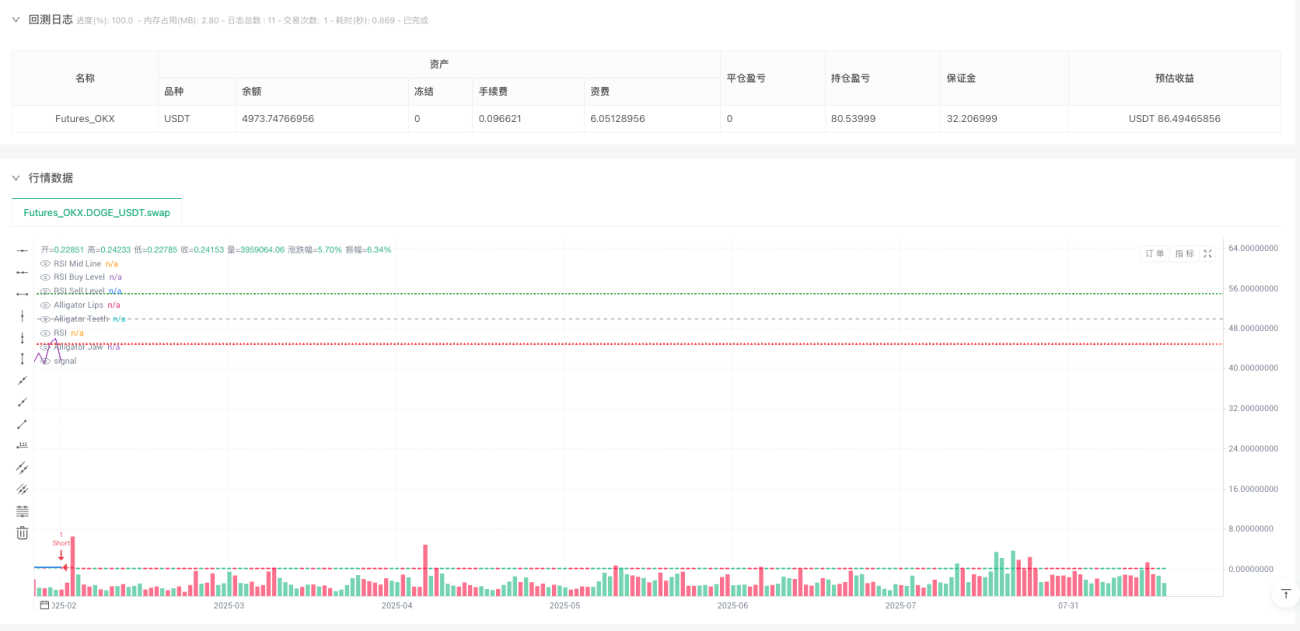
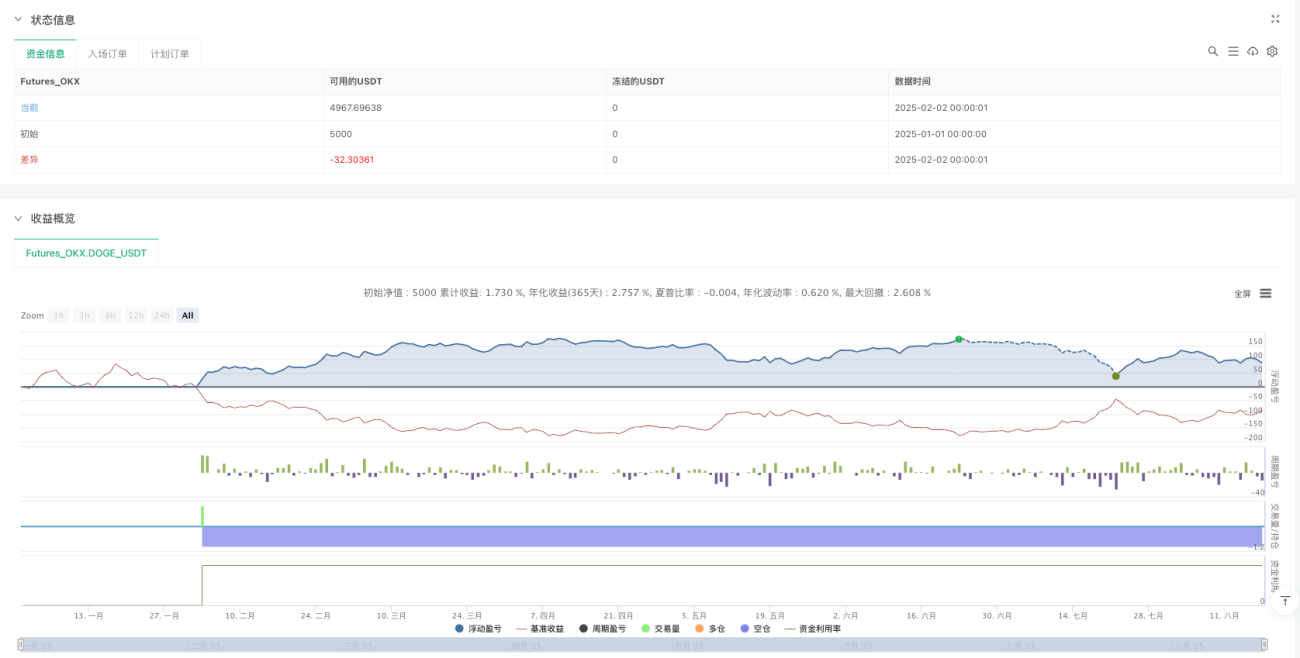
La estrategia de ruptura de impulso RSI con el indicador Williams Alligator es un sistema de trading cuantitativo de múltiples marcos temporales que integra el indicador Williams Alligator y el Índice de Fuerza Relativa (RSI). La estrategia opera en velas de 15 minutos, utilizando las tres líneas de media móvil del indicador Alligator (labios, dientes, mandíbula) para determinar la dirección de la tendencia del mercado, al mismo tiempo que incorpora el RSI para confirmar la fuerza del impulso, formando un sistema completo de señales de entrada y salida. La estrategia cuenta con mecanismos claros de stop loss y take profit, y un filtrado de múltiples condiciones para asegurar la fiabilidad de las señales, lo que la hace especialmente adecuada para entornos de mercado con tendencias claras.
Principio de la Estrategia
El principio central de la estrategia se basa en la capacidad de identificación de tendencias del indicador Williams Alligator y la función de confirmación de impulso del RSI. El Williams Alligator está compuesto por tres medias móviles de diferentes períodos: mandíbula (13 períodos, desplazamiento 8), dientes (8 períodos, desplazamiento 5) y labios (5 períodos, desplazamiento 3). Cuando estas tres líneas se alinean en el orden labios > dientes > mandíbula, indica una tendencia alcista; en caso contrario, una tendencia bajista.
La activación de una señal de compra requiere el cumplimiento simultáneo de cuatro condiciones: precio de cierre por encima de labios, labios por encima de dientes, dientes por encima de mandíbula, y RSI superior a 55. Este mecanismo de filtrado múltiple asegura que solo se abran posiciones cuando la tendencia sea clara y el impulso sea suficiente. La señal de venta es la opuesta: precio de cierre por debajo de labios, labios por debajo de dientes, dientes por debajo de mandíbula, y RSI inferior a 45.
El mecanismo de stop loss incorpora una triple protección: RSI cayendo por debajo de 50, precio cruzando por debajo de dientes, o labios cayendo por debajo de dientes. El take profit se fija en un monto fijo (25 rupias), proporcionando un control claro de la relación riesgo-recompensa.
Ventajas de la Estrategia
En primer lugar, la integración de múltiples indicadores proporciona una mayor precisión en las señales. El indicador Williams Alligator es experto en identificar el inicio y el final de las tendencias, mientras que el RSI puede medir eficazmente el impulso del precio; la combinación de ambos reduce significativamente la probabilidad de señales falsas. En segundo lugar, la estrategia adopta una verificación progresiva de condiciones: solo se genera una señal de trading cuando todas las condiciones se cumplen simultáneamente, lo que mejora notablemente la tasa de éxito de las operaciones.
La estrategia tiene una buena adaptabilidad; ajustando los parámetros puede adaptarse a diferentes entornos de mercado y activos. El marco temporal de 15 minutos permite capturar movimientos de precios a corto y medio plazo sin generar operaciones excesivamente frecuentes. El mecanismo de take profit fijo simplifica el proceso de toma de decisiones y ayuda a mantener la disciplina en el trading.
La estrategia también cuenta con un sistema completo de gestión de riesgos: las tres condiciones de stop loss aseguran una salida oportuna en situaciones adversas, controlando eficazmente la pérdida máxima por operación. Las señales de trading visualizadas hacen que la ejecución sea más intuitiva y conveniente.
Riesgos de la Estrategia
El principal riesgo que enfrenta la estrategia incluye el riesgo de reversión de tendencia. En caso de una reversión fuerte del mercado, múltiples indicadores pueden fallar simultáneamente, generando pérdidas significativas. Especialmente en mercados laterales, el indicador Alligator puede producir frecuentes señales falsas, y el RSI también puede dar lecturas engañosas durante periodos de consolidación.
Si bien el mecanismo de take profit fijo simplifica la operativa, también puede limitar el potencial de ganancias en tendencias fuertes. Cuando el mercado presenta movimientos unidireccionales sostenidos, un take profit prematuro podría hacer perder oportunidades de mayor beneficio. La naturaleza rezagada es otro aspecto a considerar: dado que el Williams Alligator se basa en medias móviles, tiene un retardo inherente, lo que puede provocar que los puntos de entrada no sean lo suficientemente oportunos.
La sensibilidad a los parámetros también es un punto de riesgo. Los valores críticos del RSI (55 y 45), así como los períodos del indicador Alligator, deben ajustarse según las condiciones del mercado; parámetros fijos pueden no ser adecuados para todos los entornos. Además, la estrategia es sensible a los costos de transacción; las entradas y salidas frecuentes pueden ver sus ganancias erosionadas por comisiones y deslizamientos.
Direcciones de Optimización
El ajuste dinámico de parámetros es una importante dirección de optimización. Se puede introducir un mecanismo adaptativo que ajuste automáticamente los umbrales del RSI y los parámetros del Alligator según la volatilidad del mercado. Por ejemplo, aumentar el umbral del RSI en entornos de alta volatilidad y reducirlo en entornos de baja volatilidad, para adaptarse a diferentes condiciones de mercado.
El mecanismo de take profit puede cambiarse de un monto fijo a un take profit dinámico, por ejemplo, utilizando múltiplos del ATR (Average True Range) como objetivo, lo que se adapta mejor a las características de volatilidad del mercado. También se puede considerar la implementación de un trailing stop: una vez que las ganancias alcancen cierto nivel, activar un stop loss dinámico para capturar mayores movimientos tendenciales.
Agregar un filtro de entorno de mercado es otra dirección de optimización. Se puede introducir un indicador de fuerza del mercado o de volatilidad para determinar si el mercado actual es adecuado para la estrategia, pausando las operaciones en entornos desfavorables. Un filtro de tiempo también es importante, evitando operar durante periodos de baja liquidez.
El mecanismo de confirmación de señales puede reforzarse aún más. Se puede añadir una confirmación por volumen, solo considerando válida la señal si el volumen aumenta. También se puede considerar un análisis de múltiples marcos temporales: confirmar la dirección de la tendencia en un marco temporal superior y luego buscar puntos de entrada específicos en un marco temporal inferior.
Resumen
La estrategia de ruptura de impulso RSI con el indicador Williams Alligator es un sistema de trading cuantitativo relativamente completo. Mediante la integración de múltiples indicadores y un estricto filtrado de condiciones, muestra un buen potencial de rendimiento en mercados con tendencia. Sus principales ventajas radican en la gestión sistemática del riesgo y un mecanismo claro de generación de señales, lo que proporciona a los traders un marco de trading relativamente estable.
Sin embargo, la estrategia también presenta algunas limitaciones, especialmente en mercados laterales donde su rendimiento puede no ser óptimo; los parámetros fijos pueden no adaptarse a todos los entornos. Mediante la introducción de ajustes dinámicos de parámetros, la mejora del mecanismo de take profit y la adición de filtros de entorno de mercado, se puede mejorar aún más su adaptabilidad y rentabilidad.
Para los traders que utilicen esta estrategia, se recomienda realizar pruebas retrospectivas exhaustivas y validación en tiempo real en diferentes condiciones de mercado, y ajustar los parámetros según el rendimiento observado. Al mismo tiempo, mantener una buena gestión de capital y disciplina de trading es clave para la implementación exitosa de la estrategia.
Primero, la fusión de múltiples indicadores proporciona una precisión mejorada en las señales. El Williams Alligator es excelente para identificar el inicio y el final de las tendencias, mientras que el RSI mide eficazmente el impulso del precio; su combinación reduce significativamente la probabilidad de señales falsas. En segundo lugar, la estrategia emplea una verificación progresiva de condiciones, generando señales de trading solo cuando todas las condiciones se cumplen simultáneamente, lo que mejora sustancialmente la tasa de éxito de las operaciones.
La estrategia demuestra una buena adaptabilidad, permitiendo ajustes de parámetros para adecuarse a diferentes entornos de mercado e instrumentos de trading. El marco temporal de 15 minutos captura las fluctuaciones de precio a medio plazo evitando una frecuencia de trading excesiva. El mecanismo de take-profit fijo simplifica las decisiones de trading y ayuda a mantener la disciplina operativa.
La estrategia también cuenta con un sistema integral de gestión de riesgos, donde las condiciones de triple stop-loss garantizan salidas oportunas en situaciones adversas, controlando eficazmente la pérdida máxima por operación. La identificación visual de las señales de trading hace que la ejecución de la estrategia sea más intuitiva y conveniente.
Riesgos de la Estrategia
Los riesgos principales incluyen el riesgo de reversión de tendencia. Durante reversiones fuertes del mercado, múltiples indicadores pueden fallar simultáneamente, provocando pérdidas significativas. Particularmente en mercados oscilantes, el indicador Alligator puede generar señales falsas frecuentes, mientras que el RSI puede producir lecturas engañosas durante fases de consolidación lateral.
Si bien el mecanismo de take-profit fijo simplifica las operaciones, puede limitar el potencial de ganancias durante movimientos fuertes de tendencia. En mercados direccionales sostenidos, la toma de ganancias prematura podría hacer perder oportunidades de mayores beneficios. La latencia es otra preocupación, ya que la base de medias móviles del Williams Alligator crea un retardo natural, lo que puede provocar momentos de entrada subóptimos.
La sensibilidad a los parámetros presenta un riesgo adicional. Los valores umbral del RSI (55 y 45) y los parámetros de período del Alligator requieren ajustes para diferentes entornos de mercado; los parámetros fijos pueden no adaptarse a todas las condiciones del mercado. Además, la estrategia es sensible a los costos de trading, donde las entradas y salidas frecuentes pueden erosionar los rendimientos debido a comisiones y deslizamientos.
Direcciones de Optimización
El ajuste dinámico de parámetros representa una dirección de optimización crucial. Implementar mecanismos adaptativos para ajustar automáticamente los umbrales del RSI y los parámetros del Alligator en función de la volatilidad del mercado podría mejorar el rendimiento. Por ejemplo, elevar los umbrales del RSI en entornos de alta volatilidad y reducirlos en condiciones de baja volatilidad permitiría una mejor adaptación a las distintas condiciones del mercado.
El mecanismo de take-profit podría evolucionar de montos fijos a objetivos dinámicos, como usar múltiplos del ATR (Average True Range) como objetivos de ganancias, adaptándose mejor a las características de volatilidad del mercado. También se podría considerar la implementación de take-profits dinámicos (trailing), activando stops dinámicos después de alcanzar ciertos niveles de ganancia para capturar mayores ganancias basadas en la tendencia.
Agregar filtros de entorno de mercado es otra vía de optimización. Introducir indicadores de fortaleza del mercado o medidas de volatilidad para evaluar si el mercado actual es adecuado para la estrategia podría pausar el trading durante condiciones desfavorables. Los filtros de tiempo son igualmente importantes, evitando operaciones durante períodos de baja liquidez.
Es necesario fortalecer aún más los mecanismos de confirmación de señales. Se podría agregar confirmación de volumen, validando las señales solo durante la expansión del volumen. También se podría considerar el análisis de múltiples marcos temporales, confirmando la dirección de la tendencia en marcos temporales superiores antes de buscar puntos de entrada específicos en marcos inferiores.
Resumen
La Estrategia de Ruptura del Impulso RSI Alligator de Williams es un sistema de trading cuantitativo relativamente bien diseñado que, mediante la integración de múltiples indicadores y un filtrado estricto de condiciones, demuestra un buen potencial de rendimiento en mercados con tendencia. Las principales ventajas de la estrategia residen en su gestión sistemática del riesgo y sus mecanismos claros de generación de señales, proporcionando a los traders un marco de trading relativamente estable.
Sin embargo, la estrategia tiene limitaciones, particularmente un rendimiento potencialmente inferior en mercados oscilantes, donde los parámetros fijos pueden no adaptarse a todos los entornos de mercado. Mediante el ajuste dinámico de parámetros, la mejora de los mecanismos de toma de ganancias y un filtrado adicional del entorno de mercado, se puede mejorar aún más la adaptabilidad y rentabilidad de la estrategia.
Para los traders que implementen esta estrategia, se recomienda realizar pruebas retrospectivas exhaustivas y verificación en vivo en diferentes entornos de mercado, ajustando los parámetros según el rendimiento real. Mantener una adecuada gestión de capital y disciplina de trading sigue siendo crucial para una implementación exitosa de la estrategia.
- 1