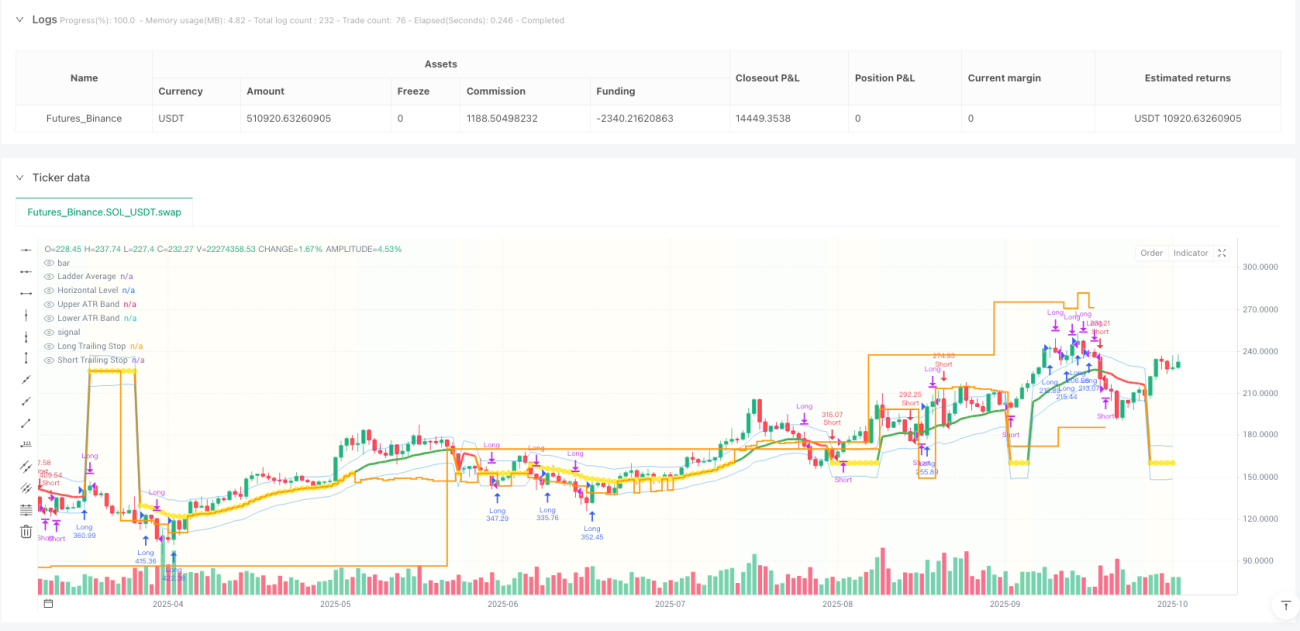
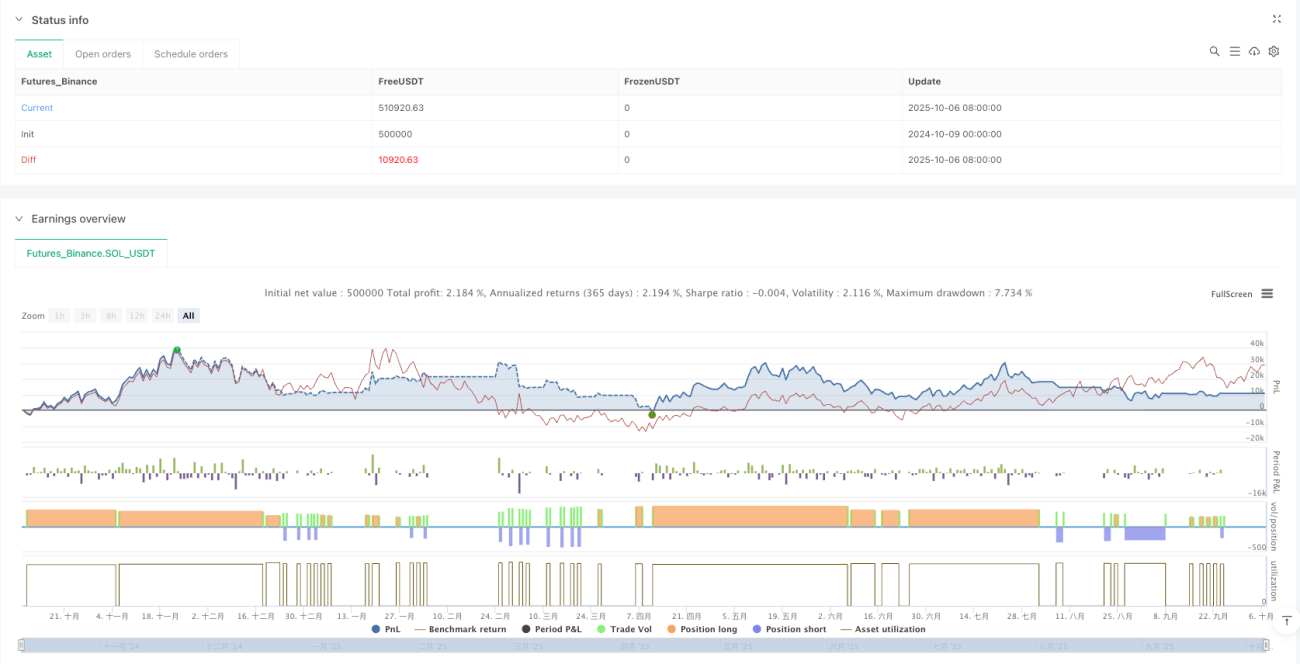
Como practicante de comercio cuantitativo, a menudo me preguntan: ¿por qué las estrategias que han funcionado bien en mercados de tendencia comienzan a retroceder tan rápidamente cuando ocurren turbulencias?
La respuesta es simple: la mayoría de las estrategias de seguimiento de tendencias sufren de “obsesividad a las tendencias” y siempre intentan mantener una alta frecuencia de operaciones en cualquier entorno de mercado, pero pasan por alto un hecho fundamental:El 70% del tiempo el mercado está en un estado de oscilación horizontal.。
La estrategia de promedios escalonados que analizaremos hoy ofrece una interesante solución a este dolor de cabeza:Seguimiento activo en los mercados de tendencia, “elegantes” en los mercados convulsivos。
Las estrategias tradicionales de medias móviles tienen un defecto mortal: siempre están cambiando. Ya sea que el mercado esté en una fuerte tendencia o en una oscilación horizontal, las medias se ajustan constantemente a las fluctuaciones de los precios, lo que genera una gran cantidad de falsas señales.
La idea central de la Escalera promedio es:Dejar que la línea media se “congele” en ciertas condiciones。
La lógica de implementación es la siguiente:
Detección de estado de tendenciaEl índice ADX es un indicador de la intensidad de las tendencias en el mercado.
Cambio de línea uniforme dinámico:
La ingeniosidad de este diseño es que:Permite que las estrategias muestren diferentes “personalidades” en diferentes entornos de mercadoEl valor de las monedas es el valor de las divisas de las monedas.
Además de la base de la escala de medias, la estrategia incluye un módulo de captura de tendencias, que considero la parte más innovadora:
Mecanismo de retroceso rápido:
Este diseño resuelve un problema importante con las estrategias tradicionales:Cómo ajustar rápidamente la posición al comienzo de un cambio de tendencia。
Imagínese una situación en la que acaba de liquidar una posición de más de un cabeza debido a un stop loss y el resultado es una fuerte tendencia a la baja. Las estrategias tradicionales pueden requerir esperar la confirmación de nuevas señales, pero este sistema de “captura de tendencias” puede establecer posiciones de cabeza en blanco rápidamente en tres períodos.
La estrategia que más vale la pena aprender es la deMecanismos de gestión de riesgos diferenciados:
Control de riesgos en los mercados horizontales:
Control de riesgos en mercados de tendencia:
Este diseño refleja una importante filosofía de negociación:Diferentes entornos de mercado requieren diferentes preferencias de riesgoEn el mercado horizontal, debemos ser más cautelosos; en el mercado de tendencia, necesitamos dar más espacio a las ganancias.
El tradicional stop-loss móvil suele ser demasiado mecanizado, ya sea por ser demasiado apretado para provocar salidas prematuras o por no proteger eficazmente las ganancias. El stop-loss móvil escalonado de esta estrategia ofrece una solución más inteligente:
Escalera de ajuste de la lógica:
La ventaja de este diseño es que:Se trata de una estrategia que permite a las tendencias tener suficiente espacio para desarrollarse, a la vez que protege las ganancias.。
Basado en mi experiencia en el terreno, el uso de estas estrategias requiere tener en cuenta lo siguiente:
Trampas de optimización de parámetrosNo se debe optimizar demasiado el umbral ADX, los valores entre 25-30 se muestran estables en la mayoría de los mercados
Adaptabilidad del mercadoLa estrategia es más adecuada para mercados moderadamente volátiles, que pueden requerir ajustes en los multiplicadores ATR en entornos de extrema volatilidad.
Administración de fondosSe recomienda que las posiciones individuales no superen el 10% del capital total, especialmente cuando se activa la función de captura de tendencias.
Reconocimiento de la trampaTenga especial cuidado con el efecto de los puntos de deslizamiento y las comisiones, especialmente en el caso de operaciones frecuentes en mercados convulsionados.
Desde el punto de vista de la evolución de la estrategia cuantitativa, esta estrategia representa una dirección evolutiva importante:La transición de una lógica única a una adaptación de varios estados。
Las estrategias tradicionales a menudo tratan de responder a todas las situaciones del mercado con un conjunto de lógica fija, mientras que esta estrategia muestra la sabiduría de “ajustar el terreno”:
La idea de diseño es de gran inspiración para los desarrolladores de estrategias:Debemos hacer que las estrategias tengan la capacidad de “percepción del mercado”, en lugar de ejecutar ciegamente una lógica fija.。
Finalmente, es importante destacar que ninguna estrategia es universal. Esta estrategia de promedio escalonado, aunque es elegante en teoría, aún necesita ser adaptada en la práctica, en combinación con el entorno específico del mercado y las preferencias de riesgo personales.La mejor estrategia es siempre la que mejor se adapte a ti.。
/*backtest
start: 2024-10-09 00:00:00
end: 2025-10-07 08:00:00
period: 1d
basePeriod: 1d
exchanges: [{"eid":"Futures_Binance","currency":"SOL_USDT","balance":500000}]
*/
//@version=5
strategy("Trend Following Ladder Average Strategy", overlay=true, default_qty_type=strategy.percent_of_equity, default_qty_value=10)
// ═══════════════════════════════════════════════════════════════════════════════
// SETTINGS AND PARAMETERS
// ═══════════════════════════════════════════════════════════════════════════════
// Ladder Average Settings
ma_length = input.int(title="Average Period", defval=21, minval=5)
ma_type = input.string(title="Average Type", defval="EMA", options=["SMA", "EMA", "WMA"])
// Trend Strength Settings
adx_length = input.int(title="Trend Strength Period (ADX)", defval=14, minval=5)
trend_threshold = input.float(title="Trend Strength Threshold", defval=25.0, minval=10.0, step=5.0)
sideways_slope_threshold = input.float(title="Sideways Market Slope Threshold", defval=0.3, minval=0.1, step=0.1)
// Trend Catching Settings
enable_trend_catch = input.bool(title="Trend Catching System", defval=true)
trend_catch_adx_threshold = input.float(title="Trend Catch ADX Threshold", defval=30.0, minval=20.0, step=5.0)
trend_catch_di_diff = input.float(title="DI+ DI- Difference Threshold", defval=10.0, minval=5.0, step=2.5)
quick_entry_bars = input.int(title="Quick Entry Waiting Bars", defval=3, minval=1, maxval=10)
// ATR and Volatility Settings
atr_length = input.int(title="ATR Period", defval=14, minval=1)
atr_multiplier = input.float(title="ATR Multiplier", defval=2.0, minval=0.1, step=0.1)
// Ladder Trailing Stop Settings
ladder_step = input.float(title="Ladder Step Size (%)", defval=1.0, minval=0.1, step=0.1)
max_ladders = input.int(title="Maximum Ladder Count", defval=5, minval=2, maxval=10)
// Stop Loss and Take Profit Settings
use_stop_loss = input.bool(title="Use Stop Loss", defval=false)
use_take_profit = input.bool(title="Use Take Profit", defval=false)
use_trailing_stop = input.bool(title="Use Trailing Stop", defval=true)
sl_type = input.string(title="Stop Loss Type", defval="ATR", options=["ATR", "Percent", "Points"])
sl_atr_multiplier = input.float(title="SL ATR Multiplier", defval=2.0, minval=0.5, step=0.1)
sl_percent = input.float(title="SL Percent (%)", defval=2.0, minval=0.1, step=0.1)
sl_points = input.float(title="SL Points", defval=100, minval=1)
tp_type = input.string(title="Take Profit Type", defval="ATR", options=["ATR", "Percent", "Points", "Risk/Reward"])
tp_atr_multiplier = input.float(title="TP ATR Multiplier", defval=3.0, minval=0.5, step=0.1)
tp_percent = input.float(title="TP Percent (%)", defval=3.0, minval=0.1, step=0.1)
tp_points = input.float(title="TP Points", defval=150, minval=1)
tp_risk_reward = input.float(title="Risk/Reward Ratio", defval=2.0, minval=0.5, step=0.1)
// Horizontal Level Settings
horizontal_lookback = input.int(title="Horizontal Level Stabilization Period", defval=10, minval=3)
// ═══════════════════════════════════════════════════════════════════════════════
// INDICATORS AND CALCULATIONS
// ═══════════════════════════════════════════════════════════════════════════════
// ATR calculation
atr_value = ta.atr(atr_length)
// Moving Average calculation
ma_value = ma_type == "SMA" ? ta.sma(close, ma_length) : ma_type == "EMA" ? ta.ema(close, ma_length) : ma_type == "WMA" ? ta.wma(close, ma_length) : ta.ema(close, ma_length)
// ADX (Trend Strength) calculation - Manual calculation
tr = math.max(high - low, math.max(math.abs(high - close[1]), math.abs(low - close[1])))
plus_dm = high - high[1] > low[1] - low ? math.max(high - high[1], 0) : 0
minus_dm = low[1] - low > high - high[1] ? math.max(low[1] - low, 0) : 0
plus_di = 100 * ta.rma(plus_dm, adx_length) / ta.rma(tr, adx_length)
minus_di = 100 * ta.rma(minus_dm, adx_length) / ta.rma(tr, adx_length)
adx_value = 100 * ta.rma(math.abs(plus_di - minus_di) / (plus_di + minus_di), adx_length)
// MA slope calculation (for sideways market detection)
ma_slope = (ma_value - ma_value[5]) / ma_value[5] * 100
// Trend state detection
is_strong_trend = adx_value > trend_threshold
is_sideways_by_slope = math.abs(ma_slope) < sideways_slope_threshold
is_sideways = not is_strong_trend or is_sideways_by_slope
// Trend direction detection (DI+ vs DI-)
is_uptrend = plus_di > minus_di
is_downtrend = minus_di > plus_di
di_difference = math.abs(plus_di - minus_di)
// Strong trend momentum detection
strong_uptrend = adx_value > trend_catch_adx_threshold and plus_di > minus_di and di_difference > trend_catch_di_diff
strong_downtrend = adx_value > trend_catch_adx_threshold and minus_di > plus_di and di_difference > trend_catch_di_diff
// Position tracking system
var bool just_closed_long = false
var bool just_closed_short = false
var int bars_since_close = 0
// Position closure tracking - Fixed
if strategy.position_size == 0 and strategy.position_size[1] != 0
if strategy.position_size[1] > 0
just_closed_long := true
just_closed_short := false
else
just_closed_short := true
just_closed_long := false
bars_since_close := 0
else if strategy.position_size == 0
bars_since_close += 1
if bars_since_close > quick_entry_bars
just_closed_long := false
just_closed_short := false
else
just_closed_long := false
just_closed_short := false
bars_since_close := 0
// Ladder Average System
var float ladder_ma = na
var float horizontal_level = na
var int sideways_count = 0
// Trend-following ladder average
if is_strong_trend and not is_sideways_by_slope
// Normal MA tracking in strong trend
ladder_ma := ma_value
sideways_count := 0
else
// When trend weakens or in sideways market
sideways_count += 1
if sideways_count >= horizontal_lookback or na(horizontal_level)
horizontal_level := ma_value
ladder_ma := horizontal_level
// Market state
market_state = is_strong_trend and not is_sideways_by_slope ? "TREND" : "SIDEWAYS"
// Volatility measurement
volatility = atr_value / close * 100
// ═══════════════════════════════════════════════════════════════════════════════
// STOP LOSS AND TAKE PROFIT CALCULATIONS
// ═══════════════════════════════════════════════════════════════════════════════
// Stop Loss calculation function
calculate_stop_loss(entry_price_val, is_long) =>
sl_value = sl_type == "ATR" ? (is_long ? entry_price_val - (atr_value * sl_atr_multiplier) : entry_price_val + (atr_value * sl_atr_multiplier)) : sl_type == "Percent" ? (is_long ? entry_price_val * (1 - sl_percent / 100) : entry_price_val * (1 + sl_percent / 100)) : sl_type == "Points" ? (is_long ? entry_price_val - sl_points : entry_price_val + sl_points) : (is_long ? entry_price_val - (atr_value * sl_atr_multiplier) : entry_price_val + (atr_value * sl_atr_multiplier))
sl_adjusted = if is_sideways
is_long ? math.min(sl_value, ladder_ma - atr_value * 0.5) : math.max(sl_value, ladder_ma + atr_value * 0.5)
else
sl_value
sl_adjusted
// Take Profit calculation function
calculate_take_profit(entry_price_val, stop_loss_val, is_long) =>
tp_value = tp_type == "ATR" ? (is_long ? entry_price_val + (atr_value * tp_atr_multiplier) : entry_price_val - (atr_value * tp_atr_multiplier)) : tp_type == "Percent" ? (is_long ? entry_price_val * (1 + tp_percent / 100) : entry_price_val * (1 - tp_percent / 100)) : tp_type == "Points" ? (is_long ? entry_price_val + tp_points : entry_price_val - tp_points) : tp_type == "Risk/Reward" ? (is_long ? entry_price_val + (math.abs(entry_price_val - stop_loss_val) * tp_risk_reward) : entry_price_val - (math.abs(entry_price_val - stop_loss_val) * tp_risk_reward)) : (is_long ? entry_price_val + (atr_value * tp_atr_multiplier) : entry_price_val - (atr_value * tp_atr_multiplier))
tp_adjusted = if is_sideways
is_long ? math.max(tp_value, ladder_ma + atr_value * 1.5) : math.min(tp_value, ladder_ma - atr_value * 1.5)
else
tp_value
tp_adjusted
var float current_sl = na
var float current_tp = na
// ═══════════════════════════════════════════════════════════════════════════════
// ENTRY SIGNALS
// ═══════════════════════════════════════════════════════════════════════════════
// Normal entry conditions
normal_long = strategy.position_size == 0 and ((is_strong_trend and close > ladder_ma and close[1] <= ladder_ma[1]) or (is_sideways and close < ladder_ma and close > ladder_ma - atr_value))
normal_short = strategy.position_size == 0 and ((is_strong_trend and close < ladder_ma and close[1] >= ladder_ma[1]) or (is_sideways and close > ladder_ma and close < ladder_ma + atr_value))
// Trend catching entry conditions
trend_catch_long = enable_trend_catch and strategy.position_size == 0 and just_closed_short and bars_since_close <= quick_entry_bars and strong_uptrend and close > close[1] and close > ladder_ma
trend_catch_short = enable_trend_catch and strategy.position_size == 0 and just_closed_long and bars_since_close <= quick_entry_bars and strong_downtrend and close < close[1] and close < ladder_ma
// Strong momentum entry conditions (even if no position closed, but strong trend exists)
momentum_long = enable_trend_catch and strategy.position_size == 0 and strong_uptrend and close > ladder_ma and close > close[1] and close > open
momentum_short = enable_trend_catch and strategy.position_size == 0 and strong_downtrend and close < ladder_ma and close < close[1] and close < open
// Combined entry conditions
long_condition = normal_long or trend_catch_long or momentum_long
short_condition = normal_short or trend_catch_short or momentum_short
// Entry type determination
entry_type = if trend_catch_long or trend_catch_short
"TREND_CATCH"
else if momentum_long or momentum_short
"MOMENTUM"
else
market_state
// ═══════════════════════════════════════════════════════════════════════════════
// LADDER TRAILING STOP SYSTEM
// ═══════════════════════════════════════════════════════════════════════════════
var float[] ladder_levels = array.new<float>()
var float current_trailing_stop = na
var float entry_price = na
// Calculate ladder levels function
calculate_ladder_levels(entry_price_val, is_long) =>
ladder_array = array.new<float>()
base_level = ladder_ma
for i = 1 to max_ladders
level_value = if is_long
base_level + (atr_value * atr_multiplier * i * ladder_step / 100)
else
base_level - (atr_value * atr_multiplier * i * ladder_step / 100)
array.push(ladder_array, level_value)
ladder_array
// Trailing stop update function
update_trailing_stop(entry_price_val, current_price, is_long) =>
stop_level = if is_long
initial_stop = is_sideways ? ladder_ma - atr_value : entry_price_val - (atr_value * atr_multiplier)
new_stop = initial_stop
if array.size(ladder_levels) > 0
for i = 0 to array.size(ladder_levels) - 1
level_value = array.get(ladder_levels, i)
if current_price >= level_value
adjusted_stop = is_sideways ? ladder_ma : entry_price_val + (atr_value * atr_multiplier * (i + 1) * 0.3)
if adjusted_stop > new_stop
new_stop := adjusted_stop
new_stop
else
initial_stop = is_sideways ? ladder_ma + atr_value : entry_price_val + (atr_value * atr_multiplier)
new_stop = initial_stop
if array.size(ladder_levels) > 0
for i = 0 to array.size(ladder_levels) - 1
level_value = array.get(ladder_levels, i)
if current_price <= level_value
adjusted_stop = is_sideways ? ladder_ma : entry_price_val - (atr_value * atr_multiplier * (i + 1) * 0.3)
if adjusted_stop < new_stop
new_stop := adjusted_stop
new_stop
stop_level
// ═══════════════════════════════════════════════════════════════════════════════
// POSITION MANAGEMENT
// ═══════════════════════════════════════════════════════════════════════════════
// Long position entry
if long_condition
strategy.entry("Long", strategy.long, comment="Long: " + market_state)
entry_price := close
ladder_levels := calculate_ladder_levels(close, true)
// Stop Loss calculation (only if active)
if use_stop_loss
current_sl := calculate_stop_loss(close, true)
// Take Profit calculation (only if active)
if use_take_profit
temp_sl = use_stop_loss ? current_sl : close - (atr_value * sl_atr_multiplier)
current_tp := calculate_take_profit(close, temp_sl, true)
// Trailing stop initialization (only if active)
if use_trailing_stop
current_trailing_stop := is_sideways ? ladder_ma - atr_value : close - (atr_value * atr_multiplier)
// Short position entry
if short_condition
strategy.entry("Short", strategy.short, comment="Short: " + market_state)
entry_price := close
ladder_levels := calculate_ladder_levels(close, false)
// Stop Loss calculation (only if active)
if use_stop_loss
current_sl := calculate_stop_loss(close, false)
// Take Profit calculation (only if active)
if use_take_profit
temp_sl = use_stop_loss ? current_sl : close + (atr_value * sl_atr_multiplier)
current_tp := calculate_take_profit(close, temp_sl, false)
// Trailing stop initialization (only if active)
if use_trailing_stop
current_trailing_stop := is_sideways ? ladder_ma + atr_value : close + (atr_value * atr_multiplier)
// Position exit management
if strategy.position_size > 0 // Long position
// If using fixed SL/TP
if use_stop_loss and use_take_profit
strategy.exit("Long Exit", "Long", stop=current_sl, limit=current_tp, comment="SL/TP")
else if use_stop_loss and not use_take_profit
strategy.exit("Long Exit", "Long", stop=current_sl, comment="SL Only")
else if not use_stop_loss and use_take_profit
strategy.exit("Long Exit", "Long", limit=current_tp, comment="TP Only")
// If using trailing stop (optional)
if use_trailing_stop
current_trailing_stop := update_trailing_stop(entry_price, close, true)
if close <= current_trailing_stop
strategy.close("Long", comment="Trailing Stop")
if strategy.position_size < 0 // Short position
// If using fixed SL/TP
if use_stop_loss and use_take_profit
strategy.exit("Short Exit", "Short", stop=current_sl, limit=current_tp, comment="SL/TP")
else if use_stop_loss and not use_take_profit
strategy.exit("Short Exit", "Short", stop=current_sl, comment="SL Only")
else if not use_stop_loss and use_take_profit
strategy.exit("Short Exit", "Short", limit=current_tp, comment="TP Only")
// If using trailing stop (optional)
if use_trailing_stop
current_trailing_stop := update_trailing_stop(entry_price, close, false)
if close >= current_trailing_stop
strategy.close("Short", comment="Trailing Stop")
// ═══════════════════════════════════════════════════════════════════════════════
// VISUALIZATION
// ═══════════════════════════════════════════════════════════════════════════════
// Ladder Average plot
plot(ladder_ma, color=is_sideways ? color.orange : (ma_slope > 0 ? color.green : color.red), linewidth=3, title="Ladder Average")
// Horizontal level plot
plot(is_sideways ? horizontal_level : na, color=color.yellow, style=plot.style_circles, linewidth=2, title="Horizontal Level")
// ATR-based bands
upper_band = ladder_ma + atr_value
lower_band = ladder_ma - atr_value
plot(upper_band, color=color.new(color.blue, 70), title="Upper ATR Band")
plot(lower_band, color=color.new(color.blue, 70), title="Lower ATR Band")
// Stop Loss and Take Profit plots (only if active)
plot(strategy.position_size != 0 and use_stop_loss ? current_sl : na, color=color.red, style=plot.style_circles, linewidth=2, title="Stop Loss")
plot(strategy.position_size != 0 and use_take_profit ? current_tp : na, color=color.green, style=plot.style_circles, linewidth=2, title="Take Profit")
// Trailing stop plot (only if active)
plot(strategy.position_size > 0 and use_trailing_stop ? current_trailing_stop : na, color=color.orange, style=plot.style_stepline, linewidth=2, title="Long Trailing Stop")
plot(strategy.position_size < 0 and use_trailing_stop ? current_trailing_stop : na, color=color.orange, style=plot.style_stepline, linewidth=2, title="Short Trailing Stop")
// Market state background color
bgcolor(is_sideways ? color.new(color.yellow, 95) : (is_strong_trend ? color.new(color.green, 98) : color.new(color.gray, 98)), title="Market State")