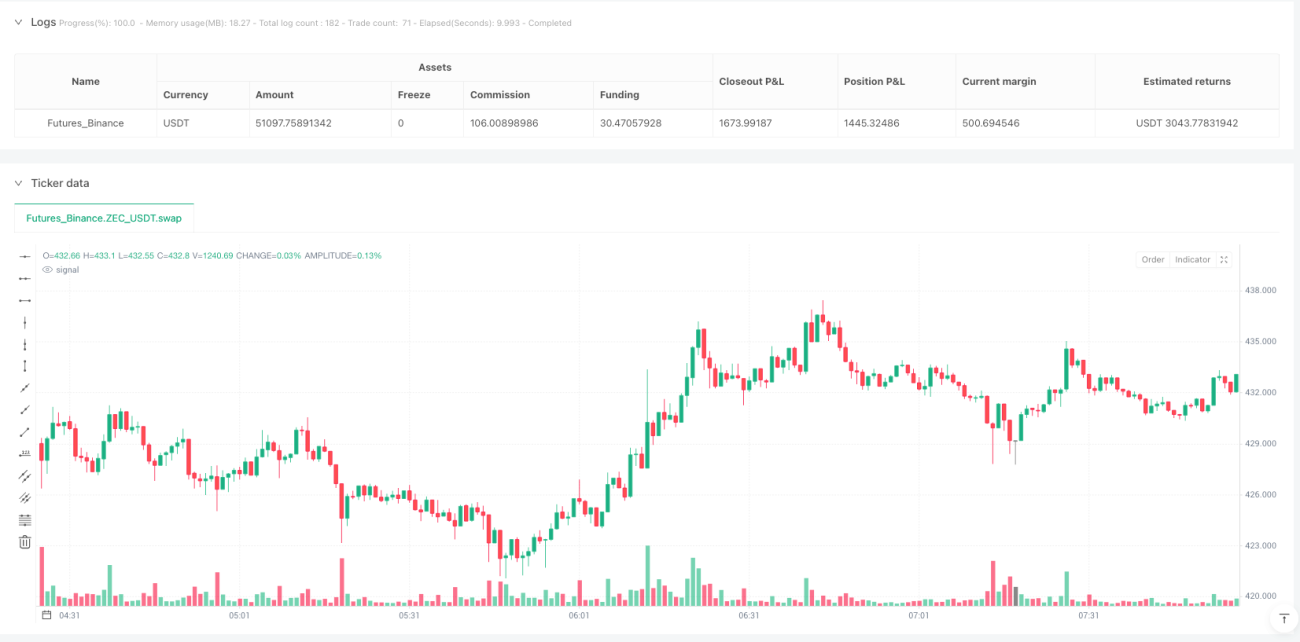
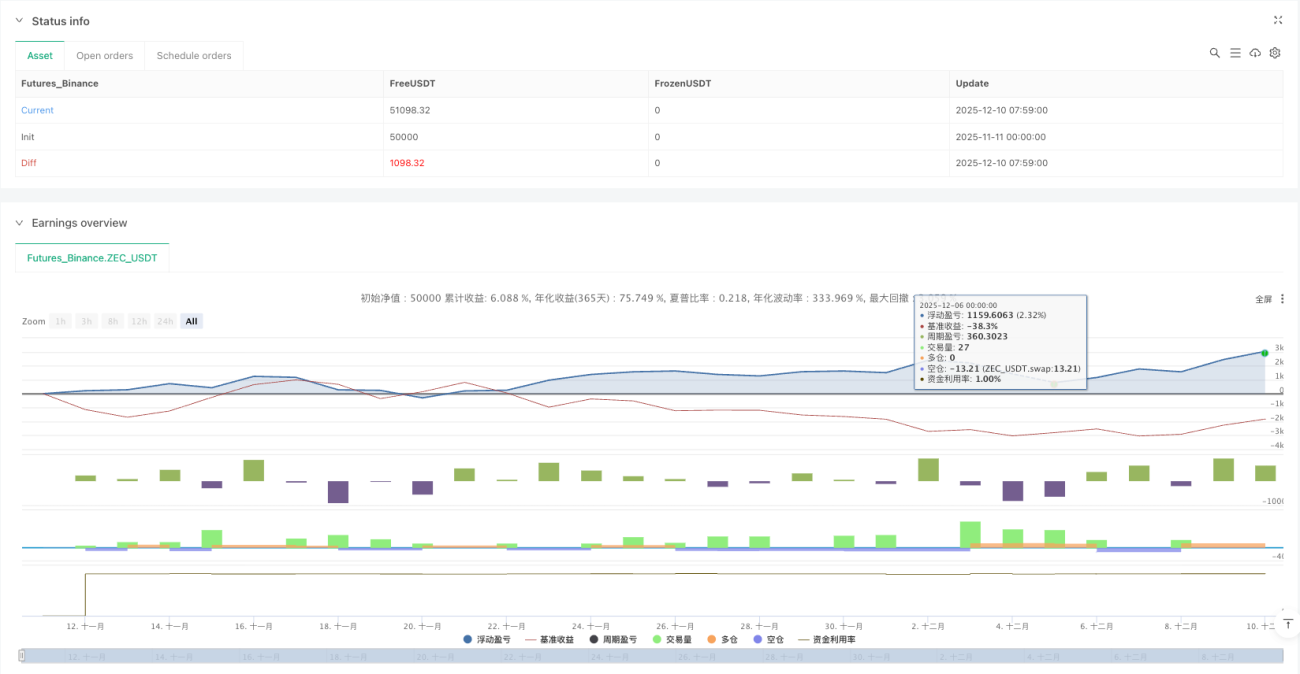
¿Sabes? Esta estrategia es como un viejo conductor de inversión súper prudente! No persigue ciegamente la caída, sino que primero observa la gran tendencia con el “telescopio” (análisis de la estructura del mercado en múltiples marcos de tiempo), y luego confirma que la dirección no es un problema, y luego usa la ruptura del canal de Dongxian como señal de entrada.
Lo más interesante es que también “construye el almacén por lotes” de la misma manera que cuando compras un plato, lo que te gusta es probar uno y luego comprar más. ¡Cuando el precio se mueve en la dirección favorable, aumenta el almacén inteligente en función de la ATR (la amplitud real promedio) para que los beneficios vayan más lejos!
¡Acentrarse en las cosas!La estrategia tiene tres puntos fuertes:
1. Filtración de estructuras de múltiples marcos de tiempo 🕐 Al igual que la navegación para determinar la dirección general antes de conducir, la estrategia analiza la estructura del mercado en un ciclo más amplio. ¡Solo se hace más cuando hay una gran tendencia al alza y nada cuando hay una gran tendencia a la baja!
2. Sistema de acondicionamiento dinámico ATR 📊 Las estrategias tradicionales son o una palanca o una posición fija. ¡Esta estrategia es más inteligente! Determina el momento y la posición de parada de la posición en función de la volatilidad del mercado (ATR). Cuando el mercado fluctúa mucho, da más espacio; cuando fluctúa, el control es más estricto.
3. La señal de reversión se estabilizó 🔄 La lógica de la posición baja es la más genial: en lugar de esperar a que se detenga o se fije un objetivo, se cierra la posición cuando aparece una señal de entrada inversa. ¡Así se puede capturar la mayor parte de los beneficios de la tendencia y retirarse a tiempo cuando la tendencia cambia!
¡Ha llegado la guía de la fosa!
¿Cuándo es mejor usar esta estrategia?
Mejor escenario de uso:
No es apropiado:
Recuerde: esta es una estrategia de “trabajar poco y vivir poco”, no es una herramienta para hacerse rico de la noche a la mañana, sino un buen ayudante para mantener su dinero en la tendencia.
/*backtest
start: 2025-11-11 00:00:00
end: 2025-12-10 08:00:00
period: 1m
basePeriod: 1m
exchanges: [{"eid":"Futures_Binance","currency":"ZEC_USDT"}]
*/
//@version=6
strategy("Trend $ZEC", shorttitle="$ZEC 1/15m", overlay=true,
initial_capital=10000,
default_qty_type=strategy.cash,
default_qty_value=5000,
commission_type=strategy.commission.percent,
commission_value=0.06,
slippage=0,
max_lines_count=500,
max_labels_count=500)
// ========== 參數設定 ==========
// 唐奇安通道參數
entry_period = input.int(20, "進場通道週期", minval=1, group="通道設定")
exit_period = input.int(10, "出場通道週期", minval=1, group="通道設定")
// ATR 參數
atr_period = input.int(20, "ATR 週期", minval=1, group="ATR 設定")
atr_stop_mult = input.float(2.0, "止損 ATR 倍數", minval=0.1, step=0.1, group="ATR 設定")
atr_add_mult = input.float(0.5, "加倉 ATR 倍數", minval=0.1, step=0.1, group="ATR 設定")
// 多空結構參數 - 加入多時間框架
swing_length = input.int(160, "結構擺動長度", minval=1, group="📊 多空結構過濾")
structure_timeframe = input.timeframe("1", "結構時間框架", group="📊 多空結構過濾", tooltip="選擇結構判斷的時間週期,空白=當前圖表,D=日線,W=週線")
show_structure_lines = input.bool(false, "顯示結構線", group="📊 多空結構過濾")
show_structure_labels = input.bool(false, "顯示結構標籤", group="📊 多空結構過濾")
// 加倉設定
max_units = input.int(2, "最大單位數(含首次)", minval=1, maxval=10, group="倉位管理")
position_size = input.int(5000, "每單位資金(USD)", minval=100, group="倉位管理", tooltip="10000U本金分2次進場,每次5000U")
// 顯示設定
show_channels = input.bool(false, "顯示通道", group="顯示設定")
show_atr_lines = input.bool(false, "顯示 ATR 線", group="顯示設定")
show_labels = input.bool(true, "顯示標籤", group="顯示設定")
show_table = input.bool(false, "顯示資訊面板", group="顯示設定")
label_distance = input.float(2.5, "標籤距離 K 棒倍數", minval=0.1, step=0.1, group="顯示設定", tooltip="標籤距離K棒的ATR倍數")
show_label_lines = input.bool(false, "顯示標籤連線", group="顯示設定")
// ========== 計算唐奇安通道 ==========
entry_upper = ta.highest(high, entry_period)
entry_lower = ta.lowest(low, entry_period)
exit_upper = ta.highest(high, exit_period)
exit_lower = ta.lowest(low, exit_period)
// ========== 計算 ATR (N值) ==========
N = ta.atr(atr_period)
// ========== 多時間框架多空結構判斷 ==========
// 計算結構的函數
f_calculate_structure() =>
var int trend = 0
var float lastHigh = na
var float lastLow = na
swingHigh = ta.pivothigh(high, swing_length, swing_length)
swingLow = ta.pivotlow(low, swing_length, swing_length)
if not na(swingHigh)
lastHigh := swingHigh
if not na(swingLow)
lastLow := swingLow
if not na(lastHigh) and close > lastHigh and trend != 1
trend := 1
if not na(lastLow) and close < lastLow and trend != -1
trend := -1
[trend, lastHigh, lastLow]
// 獲取指定時間框架的結構
[structure_trend_mtf, last_structure_high_mtf, last_structure_low_mtf] = request.security(syminfo.tickerid, structure_timeframe, f_calculate_structure(), lookahead=barmerge.lookahead_off)
// 使用多時間框架的結構趨勢
structure_trend = structure_trend_mtf
last_structure_high = last_structure_high_mtf
last_structure_low = last_structure_low_mtf
// 檢測結構變化(用於繪製標籤)
var int prev_structure_trend = 0
bool bull_break = structure_trend == 1 and prev_structure_trend != 1
bool bear_break = structure_trend == -1 and prev_structure_trend != -1
prev_structure_trend := structure_trend
// 繪製結構突破標籤
if show_structure_labels
if bull_break
label.new(bar_index, low, "多方結構", style=label.style_label_up, color=color.new(color.green, 0), textcolor=color.white, size=size.small)
if bear_break
label.new(bar_index, high, "空方結構", style=label.style_label_down, color=color.new(color.red, 0), textcolor=color.white, size=size.small)
// ========== 持倉狀態追蹤 ==========
var float entry_price = na
var float[] add_prices = array.new_float(0)
var int position = 0
var int units = 0
var float stop_loss = na
// ========== 進場訊號 (加入結構過濾) ==========
long_entry_signal = close > entry_upper[1] and structure_trend == 1
short_entry_signal = close < entry_lower[1] and structure_trend == -1
long_entry = long_entry_signal and position != 1
short_entry = short_entry_signal and position != -1
// ========== 加倉訊號 ==========
long_add = false
short_add = false
if position == 1 and units < max_units
if array.size(add_prices) > 0
last_add_price = array.get(add_prices, array.size(add_prices) - 1)
long_add := close >= last_add_price + (atr_add_mult * N)
else
long_add := close >= entry_price + (atr_add_mult * N)
if position == -1 and units < max_units
if array.size(add_prices) > 0
last_add_price = array.get(add_prices, array.size(add_prices) - 1)
short_add := close <= last_add_price - (atr_add_mult * N)
else
short_add := close <= entry_price - (atr_add_mult * N)
// ========== 出場訊號 (改為反向訊號出場) ==========
// 多單出場:當空單進場訊號觸發時
long_exit = (position == 1) and short_entry_signal
// 空單出場:當多單進場訊號觸發時
short_exit = (position == -1) and long_entry_signal
// ========== 更新持倉狀態 ==========
if long_entry
position := 1
units := 1
entry_price := close
array.clear(add_prices)
array.push(add_prices, close)
stop_loss := close - (atr_stop_mult * N)
alert_msg = timeframe.period + " 做多 EP:" + str.tostring(close, "#.##")
strategy.entry("多單1", strategy.long, qty=position_size/close, comment=alert_msg, alert_message=alert_msg)
else if short_entry
position := -1
units := 1
entry_price := close
array.clear(add_prices)
array.push(add_prices, close)
stop_loss := close + (atr_stop_mult * N)
alert_msg = timeframe.period + " 做空 EP:" + str.tostring(close, "#.##")
strategy.entry("空單1", strategy.short, qty=position_size/close, comment=alert_msg, alert_message=alert_msg)
else if long_add
units := units + 1
array.push(add_prices, close)
stop_loss := close - (atr_stop_mult * N)
alert_msg = timeframe.period + " 加倉多 " + str.tostring(units) + "/" + str.tostring(max_units) + " EP:" + str.tostring(close, "#.##")
strategy.entry("多單" + str.tostring(units), strategy.long, qty=position_size/close, comment=alert_msg, alert_message=alert_msg)
else if short_add
units := units + 1
array.push(add_prices, close)
stop_loss := close + (atr_stop_mult * N)
alert_msg = timeframe.period + " 加倉空 " + str.tostring(units) + "/" + str.tostring(max_units) + " EP:" + str.tostring(close, "#.##")
strategy.entry("空單" + str.tostring(units), strategy.short, qty=position_size/close, comment=alert_msg, alert_message=alert_msg)
else if long_exit or short_exit
if long_exit
alert_msg = timeframe.period + " 平多 反向訊號"
strategy.close_all(comment=alert_msg, alert_message=alert_msg)
if short_exit
alert_msg = timeframe.period + " 平空 反向訊號"
strategy.close_all(comment=alert_msg, alert_message=alert_msg)
position := 0
units := 0
entry_price := na
array.clear(add_prices)
stop_loss := na
// ========== 繪製通道 ==========
plot(show_channels ? entry_upper : na, "進場上軌", color=color.new(color.red, 0), linewidth=2)
plot(show_channels ? entry_lower : na, "進場下軌", color=color.new(color.green, 0), linewidth=2)
plot(show_channels ? exit_upper : na, "出場上軌", color=color.new(color.orange, 50), linewidth=1, style=plot.style_circles)
plot(show_channels ? exit_lower : na, "出場下軌", color=color.new(color.blue, 50), linewidth=1, style=plot.style_circles)
// 繪製結構高低點
plot(show_structure_lines ? last_structure_high : na, "結構高點", color=color.new(color.red, 70), linewidth=2, style=plot.style_stepline)
plot(show_structure_lines ? last_structure_low : na, "結構低點", color=color.new(color.green, 70), linewidth=2, style=plot.style_stepline)
// ========== 繪製 ATR 線 ==========
plot(show_atr_lines and position != 0 ? stop_loss : na, "止損線", color=color.new(color.red, 0), linewidth=2, style=plot.style_cross)
var float next_add_long = na
if position == 1 and units < max_units
next_add_long := array.size(add_prices) > 0 ? array.get(add_prices, array.size(add_prices) - 1) + (atr_add_mult * N) : entry_price + (atr_add_mult * N)
else
next_add_long := na
plot(show_atr_lines and position == 1 and units < max_units ? next_add_long : na, "下次加倉(多)", color=color.new(color.yellow, 30), linewidth=1, style=plot.style_stepline)
var float next_add_short = na
if position == -1 and units < max_units
next_add_short := array.size(add_prices) > 0 ? array.get(add_prices, array.size(add_prices) - 1) - (atr_add_mult * N) : entry_price - (atr_add_mult * N)
else
next_add_short := na
plot(show_atr_lines and position == -1 and units < max_units ? next_add_short : na, "下次加倉(空)", color=color.new(color.yellow, 30), linewidth=1, style=plot.style_stepline)