Stratégie de croisement de doubles moyennes mobiles avec momentum

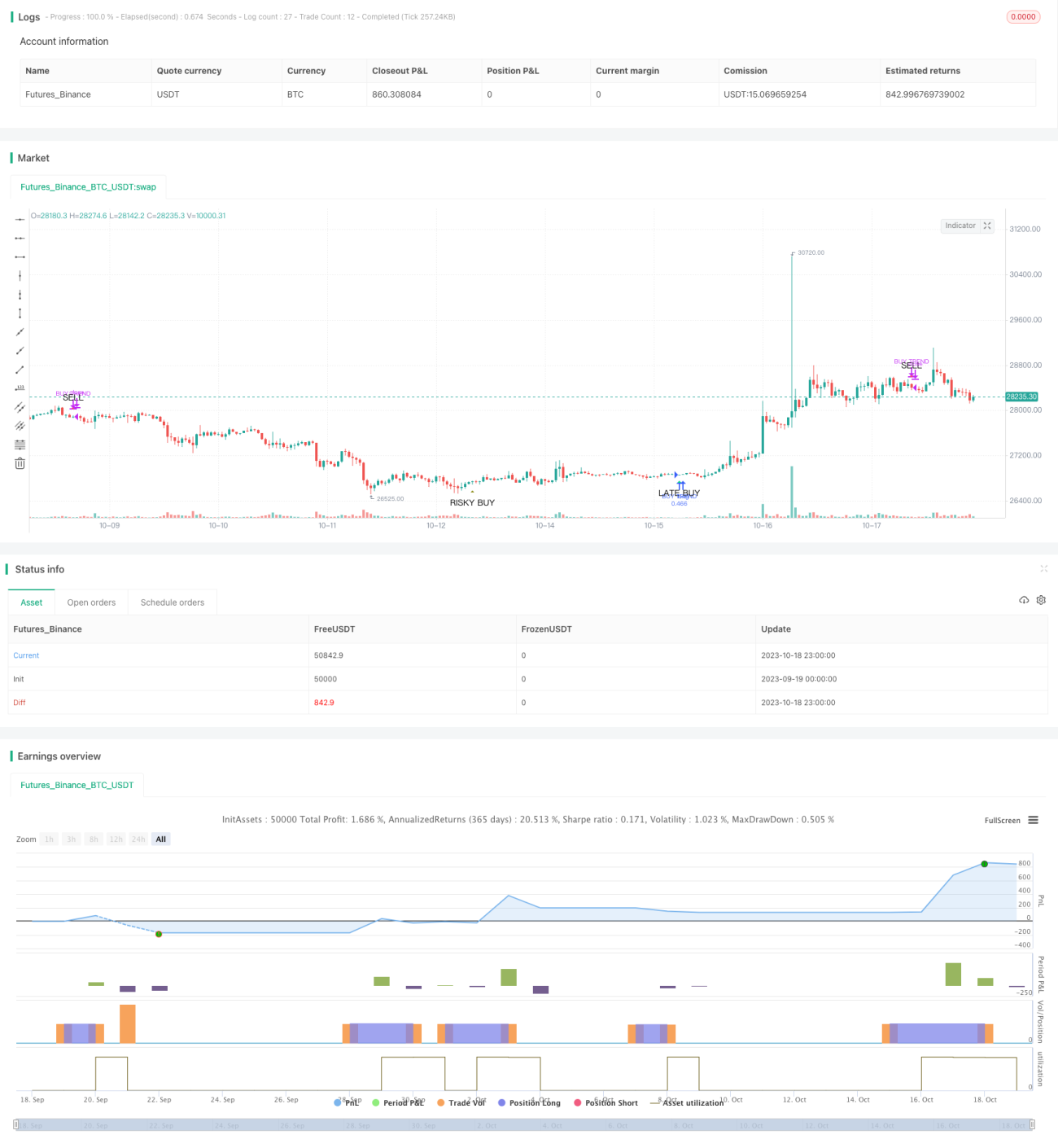
Aperçu
Cette stratégie utilise le croisement de moyennes mobiles pour déterminer la direction du momentum des prix, complété par les signaux de croisement doré et de croisement mort pour identifier la tendance générale, réalisant ainsi un suivi de tendance.
Principe de la stratégie
La stratégie utilise le croisement de deux moyennes mobiles, EMA et SMA, pour juger la direction du momentum des prix. L'EMA réagit plus rapidement, tandis que la SMA est plus stable. Lorsque l'EMA croise au-dessus de la SMA, cela indique une forte hausse des prix et on prend une position longue ; lorsqu'elle croise en dessous, cela signale une forte baisse et on prend une position courte.
En outre, la stratégie utilise le croisement d'une SMA à cycle court et d'une SMA à cycle long pour déterminer la direction de la tendance générale. Lorsque la SMA rapide croise au-dessus de la SMA lente, il s'agit d'un croisement doré, indiquant une tendance haussière à long terme ; lorsqu'elle croise en dessous, c'est un croisement mort, signalant une tendance baissière à long terme.
La stratégie considère une opportunité d'achat lorsque l'EMA croise au-dessus de la SMA. Si à ce moment il y a un croisement doré, cela signifie que l'achat bénéficie non seulement du momentum à court terme, mais aussi de la cohérence avec la tendance à long terme, ce qui constitue une meilleure occasion d'achat ; si c'est un croisement mort, cela indique que l'achat ne repose que sur le momentum à court terme et est en décalage avec la tendance à long terme, ce qui représente une opportunité d'achat plus risquée.
Avantages
- Utilisation du croisement de moyennes mobiles pour juger le momentum et la direction des prix
- Prise en compte simultanée du momentum à court terme et de la tendance à long terme
- Confirmation des signaux via deux indicateurs combinés, offrant une fiabilité accrue
- Possibilité d'adaptation à différentes périodes en ajustant les paramètres des moyennes mobiles
- Configuration optionnelle pour afficher ou non les signaux de trading spécifiques, interface personnalisable
Analyse des risques
- Le croisement de moyennes mobiles présente un retard, ce qui peut entraîner des occasions manquées d'achat ou de vente optimales
- La SMA à période fixe ne peut pas refléter en temps réel les variations de prix
- Les moyennes mobiles à court et long terme peuvent générer des signaux de croisement erronés
- Une détention prolongée peut augmenter le risque de capital
Il est possible de réduire les risques en combinant d'autres indicateurs pour confirmer les signaux, en optimisant les paramètres de période des moyennes mobiles, ou en mettant en place des stop-loss.
Pistes d'optimisation
- Ajout de filtres basés sur d'autres indicateurs (volume, bandes de Bollinger, etc.)
- Mise en place d'une stratégie de stop-loss
- Optimisation des paramètres de période des moyennes mobiles
- Optimisation de la gestion du capital
- Prise en compte d'ajustements en temps réel de la proportion des positions
Résumé
Dans l'ensemble, cette stratégie constitue une approche de suivi de tendance relativement stable et fiable. Elle prend en compte à la fois le momentum des prix à court terme et la direction de la tendance à long terme, en générant des signaux de trading via le croisement de moyennes mobiles. Par rapport à une stratégie à moyenne mobile unique, elle combine deux indicateurs pour une confirmation, ce qui améliore la fiabilité. Cependant, en tant que stratégie de suivi de tendance, l'optimisation des paramètres et la gestion des risques sont essentielles. Des tests et des ajustements itératifs sont nécessaires pour en tirer pleinement parti. Grâce à une optimisation et des améliorations continues, cette stratégie peut devenir un composant précieux d'un portefeuille d'investissement quantitatif à long terme.
- 1