Heiken Ashi et la stratégie Supertrend

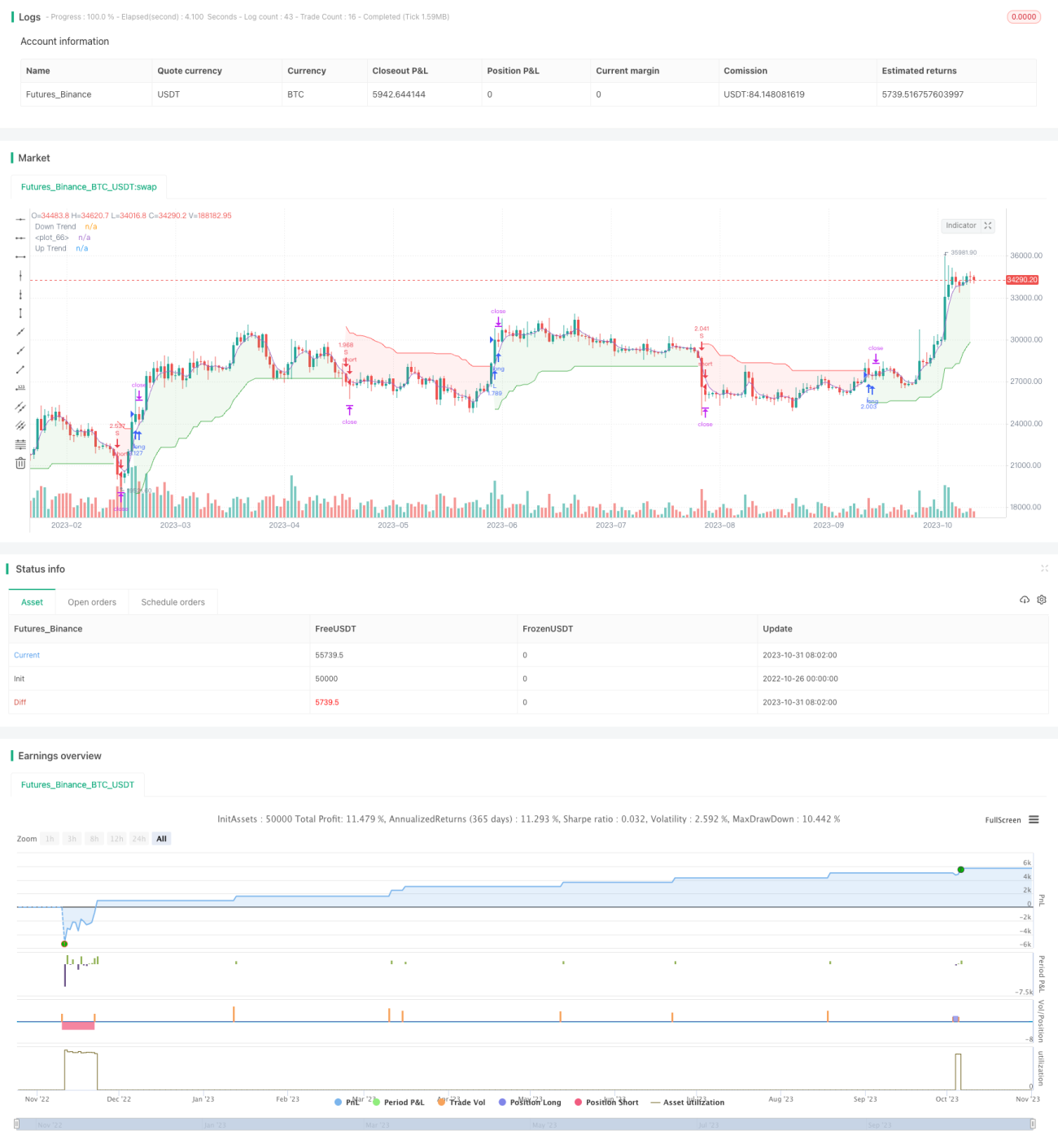
Aperçu
La stratégie Heikin Ashi et Super Trend est une stratégie de suivi de tendance qui combine les graphiques en chandeliers Heikin Ashi et l'indicateur Super Trend. Cette stratégie vise à identifier la direction de la tendance, à trader dans la zone de tendance et à sortir rapidement lors des inversions de tendance, minimisant ainsi les pertes liées aux trades non tendanciels.
Principe de la stratégie
Les chandeliers Heikin Ashi sont un type spécial de graphique en chandeliers qui utilise la moyenne des prix d'ouverture, de clôture, du plus haut et du plus bas pour dessiner le corps de la bougie, permettant ainsi de filtrer le bruit du marché et de rendre le graphique plus clair. L'indicateur Super Trend, quant à lui, est composé de deux courbes qui déterminent la direction de la tendance via des niveaux de support et de résistance dynamiques.
La stratégie calcule d'abord les chandeliers Heikin Ashi, puis calcule l'indicateur Super Trend à partir de ces chandeliers. Lorsque le prix franchit l'indicateur Super Trend, un signal de transaction est généré. Plus précisément, la stratégie utilise les chandeliers Heikin Ashi pour calculer l'Average True Range (ATR), puis combine l'ATR et le prix moyen pour obtenir les bandes supérieure et inférieure du Super Trend. Un signal long est généré lorsque le prix franchit la bande inférieure, et un signal short lorsqu'il franchit la bande supérieure.
La stratégie optimise également les paramètres de l'indicateur Super Trend en utilisant la combinaison de paramètres la plus performante, améliorant ainsi la sensibilité de l'indicateur. De plus, la stratégie intègre un mécanisme de stop-loss qui permet de contrôler les risques tout en préservant les profits.
Analyse des avantages
- L'utilisation des chandeliers Heikin Ashi filtre le bruit, rendant les signaux plus clairs.
- L'indicateur Super Trend capture rapidement les changements de tendance et émet des signaux de transaction en temps opportun.
- L'optimisation des paramètres améliore la fiabilité de l'indicateur.
- Le mécanisme de stop-loss intégré permet un contrôle efficace des risques.
- La combinaison du suivi de tendance et d'un système de trading mécanique offre un haut degré d'automatisation.
Analyse des risques
- Le haut degré d'automatisation du système de trading nécessite une surveillance attentive pour éviter les anomalies.
- Bien que les chandeliers Heikin Ashi filtrent le bruit, ils peuvent également manquer de très petits signaux de retournement.
- L'indicateur Super Trend peut générer de faux signaux, entraînant des entrées ou des stop-loss prématurés.
- Un mauvais réglage du stop-loss peut également entraîner des pertes inutiles.
- Des données de backtest insuffisantes peuvent conduire à un surapprentissage. Les résultats en trading réel peuvent différer considérablement des backtests.
Pistes d'optimisation
- Tester davantage de combinaisons de paramètres pour affiner l'indicateur Super Trend.
- Essayer d'autres indicateurs pour confirmer les signaux du Super Trend et réduire le taux de faux signaux.
- Optimiser la stratégie de stop-loss afin de minimiser les stop-loss inutiles tout en préservant les profits.
- Ajouter des algorithmes d'apprentissage automatique pour entraîner la capacité à juger les tendances réelles à partir de grandes données.
- Utiliser des périodes plus longues et des données historiques provenant de différents marchés pour les backtests, afin d'améliorer la fiabilité.
Résumé
La stratégie Heikin Ashi et Super Trend est une stratégie de suivi de tendance. Elle identifie la direction de la tendance, trade dans les grandes tendances et effectue un stop-loss rapide lors des retournements. La stratégie intègre le filtrage du bruit des chandeliers Heikin Ashi et la capacité de capture rapide des changements de tendance de l'indicateur Super Trend. Grâce à l'optimisation des paramètres et à la conception du mécanisme de stop-loss, elle permet d'améliorer les rendements tout en contrôlant les risques. À l'avenir, la stratégie pourra être optimisée en affinant davantage les paramètres, en ajoutant des indicateurs de confirmation, en élargissant les données de backtest, etc., afin d'améliorer la stabilité et la fiabilité du système.
/*backtest
start: 2022-10-26 00:00:00
end: 2023-11-01 00:00:00
period: 1d
basePeriod: 1h
exchanges: [{"eid":"Futures_Binance","currency":"BTC_USDT"}]
*/

//@version=5

strategy("Heiken Ashi & Super Trend_ARM", overlay=true,  pyramiding=1,initial_capital = 10000, default_qty_type= strategy.percent_of_equity, default_qty_value = 100, calc_on_order_fills=false, slippage=0,commission_type=strategy.commission.percent,commission_value=0.02)
- 1