Stratégie automatique de suivi de tendance basée sur les points pivots et les retracements de Fibonacci

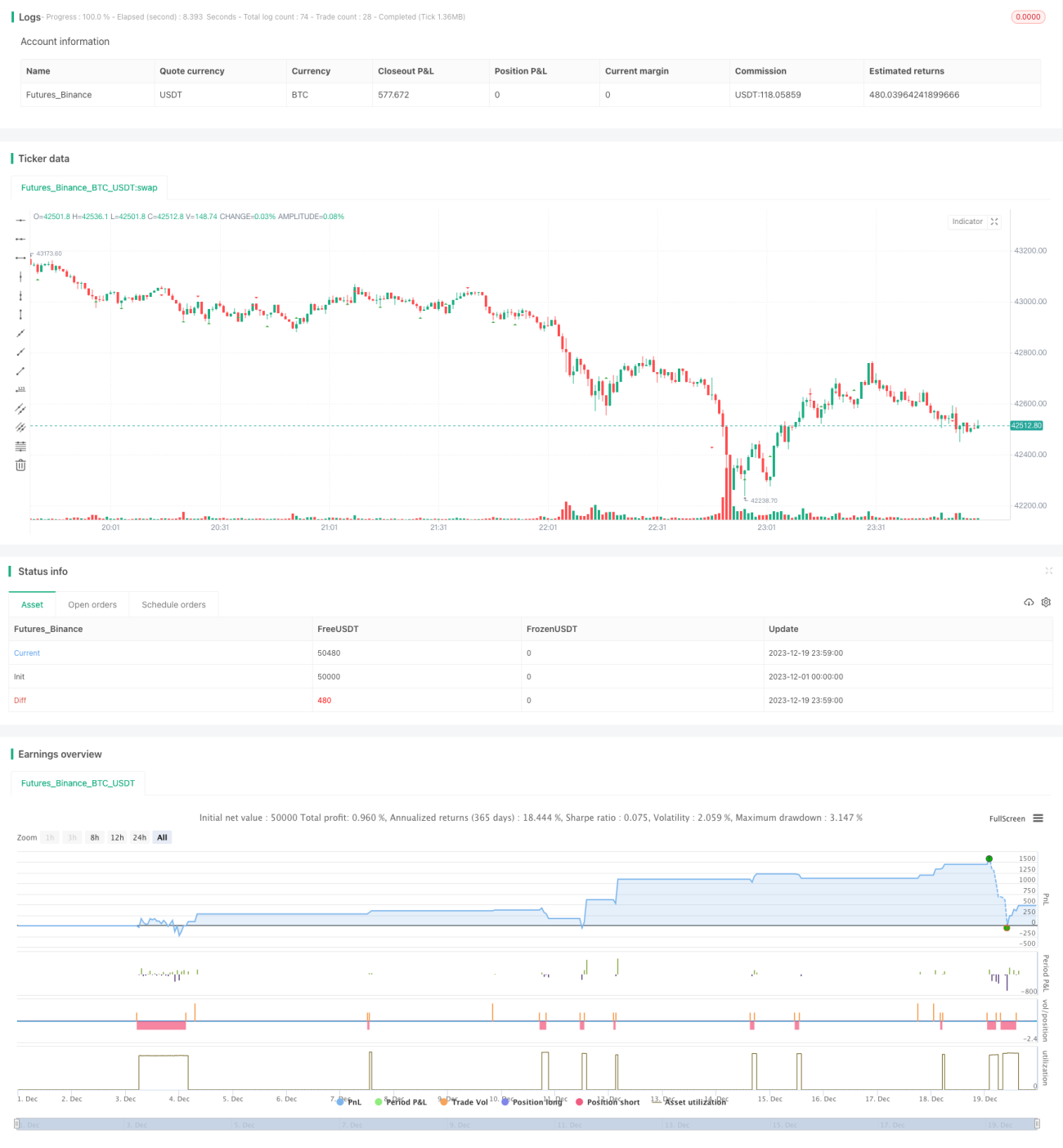
Aperçu
Cette stratégie identifie automatiquement les vagues ABC des actions sur la base des points pivots et des ratios de retracement de Fibonacci, et génère des signaux de position longue ou courte. La stratégie utilise des points pivots pour déterminer les vagues de prix, puis calcule les ratios de retracement de Fibonacci entre les vagues ABC. Si certaines conditions sont remplies, un signal de transaction est produit.
Principe de la stratégie
- Calculer les points hauts et bas pivots de l'action.
- Déterminer si le prix descend depuis le sommet de la vague précédente ou monte depuis le creux de la vague précédente.
- Calculer le ratio de retracement de Fibonacci entre la vague actuelle et la vague précédente.
- Si les ratios de retracement des vagues haussières et baissières se situent tous deux dans une plage appropriée, on considère qu'une formation de vague ABC est probable.
- Après confirmation de la vague ABC, pour une position longue, le stop-loss est fixé au point C et le take-profit à 1,5 fois la fluctuation ; pour une position courte, le stop-loss est fixé au point A et le take-profit à 1,5 fois la fluctuation.
Analyse des avantages
- Utiliser les points pivots pour identifier les zones de support et de résistance clés, améliorant ainsi la précision des signaux.
- Appliquer le retracement de Fibonacci pour reconnaître la formation ABC, capturant automatiquement les points de renversement de tendance.
- Les niveaux de take-profit et de stop-loss sont clairs et raisonnables, évitant des pertes importantes.
Analyse des risques
- Les points pivots et le retracement de Fibonacci ne garantissent pas à chaque fois une identification précise des points de renversement de tendance, ce qui peut entraîner des erreurs de jugement.
- Les stop-loss aux points C et A peuvent être franchis, entraînant une augmentation des pertes.
- Un réglage des paramètres est nécessaire, par exemple la plage des ratios de retracement de Fibonacci.
Pistes d'optimisation
- Intégrer davantage d'indicateurs techniques pour aider à identifier la formation ABC et améliorer la précision des signaux.
- Optimiser la plage des ratios de retracement de Fibonacci pour s'adapter à davantage de conditions de marché.
- Utiliser des méthodes d'apprentissage automatique pour entraîner un modèle de reconnaissance de la formation ABC.
Résumé
Cette stratégie utilise les points pivots pour déterminer les zones de support et de résistance clés, et identifie automatiquement la formation ABC à l'aide des ratios de retracement de Fibonacci, générant des signaux de transaction longue ou courte aux points de retournement de vagues. La logique de la stratégie est claire et simple, les niveaux de take-profit et de stop-loss sont raisonnables, permettant un contrôle efficace des risques. Cependant, il existe un certain risque d'erreur de jugement, et une optimisation et une amélioration supplémentaires sont nécessaires pour s'adapter à davantage de conditions de marché.
- 1