Stratégie de rupture basée sur le sentiment intégrant plusieurs indicateurs


Date de création: 2024-01-17 17:53:55 Dernière modification: 2024-01-17 17:53:55
Copier: 0 Nombre de clics: 745
1
Suivre
1617
Abonnés

Stratégie de rupture basée sur le sentiment intégrant plusieurs indicateurs

Aperçu

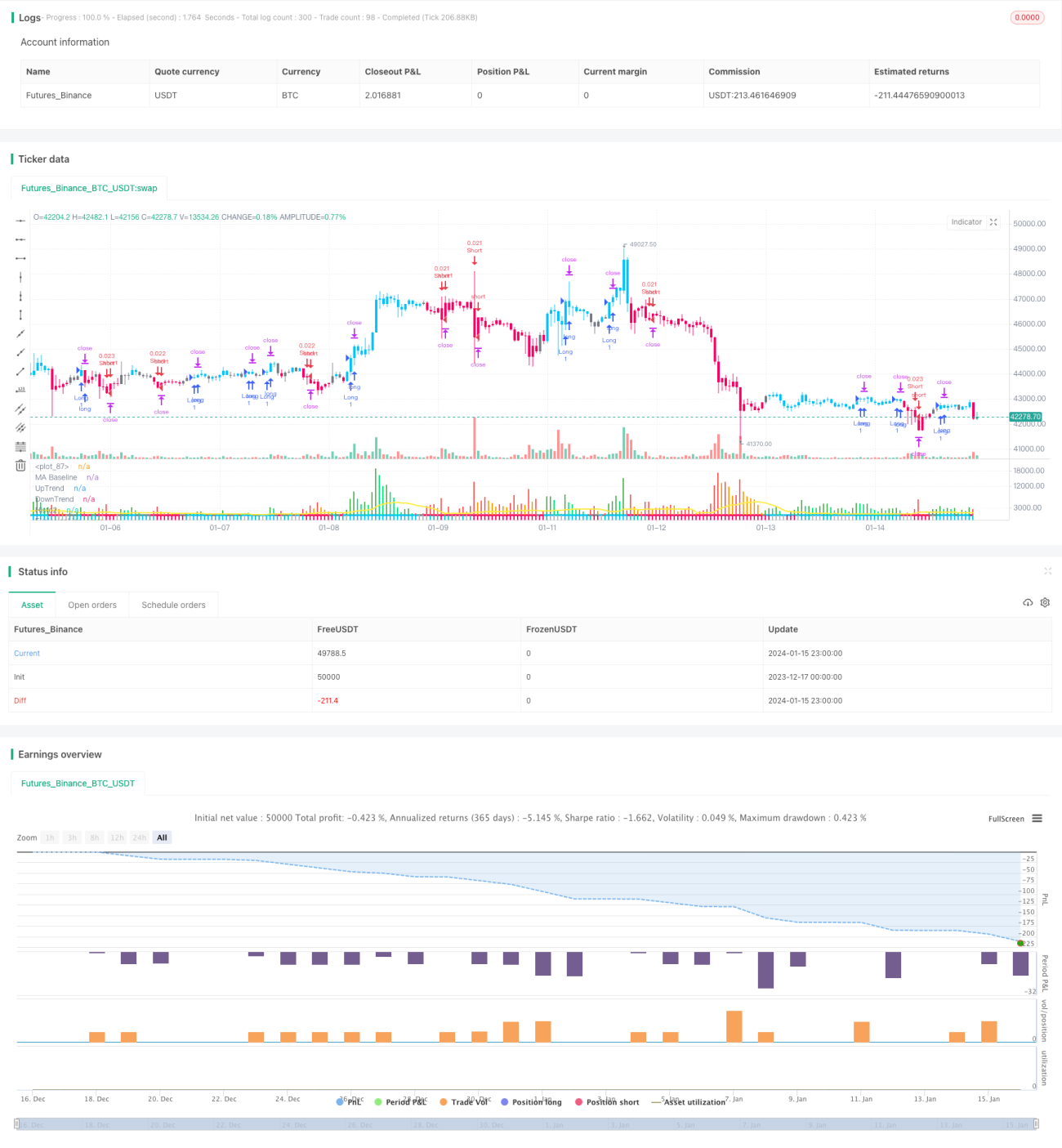
Cette stratégie combine trois indicateurs de type émotionnel, l’indicateur de type amélioré QQE, l’indicateur d’hybride SSL et l’indicateur de rupture de Waddah Attar, pour former un signal de négociation, qui appartient à une stratégie de rupture de type émotionnel, pilotée par plusieurs indicateurs. Il peut juger de l’émotion du marché avant la rupture, éviter les fausses ruptures et appartient à une stratégie de rupture de qualité supérieure.

Principe de stratégie

La logique de base de cette stratégie consiste à prendre des décisions commerciales basées sur trois indicateurs:

Indicateur amélioré QQE: Cet indicateur est une amélioration de l’indicateur RSI pour le rendre plus sensible et permettre de juger de l’humeur du marché. Cette stratégie utilise cet indicateur pour juger des signaux de revers bas et de revers haut.

Indicateur d’hybride SSLL’indicateur prend en compte les ruptures de plusieurs moyennes mobiles pour déterminer les signes du marché. Cette stratégie utilise l’indicateur pour déterminer la forme des ruptures de canaux.

Le réchauffement climatique a provoqué une explosion de l’indice Waddah Attar.L’indicateur détermine la force de rupture du prix à l’intérieur du canal. La stratégie utilise l’indicateur pour déterminer la dynamique suffisante pour la rupture.

La stratégie génère une décision d’achat lorsque l’indicateur QQE émet un signal de retour vers le bas, l’indicateur SSL montre une rupture en haut de la voie, et l’indicateur Waddah Attar juge une explosion de dynamique. Lorsque les trois indicateurs émettent simultanément des signaux opposés, une décision de vente est prise.

Cette stratégie, qui définit à la fois des points d’arrêt et des points d’arrêt précis pour un maximum de profit, est une stratégie de percée de haute qualité motivée par l’émotion.

Analyse des avantages

Cette stratégie présente les avantages suivants:

  1. L’intégration de plusieurs indicateurs pour évaluer le sentiment du marché et éviter les risques de fausses percées
  2. Prendre en compte les indicateurs de retournement, les indicateurs de passage et les indicateurs de dynamique pour garantir une forte confirmation du marché lors d’une percée
  3. Limiter le risque, suivre et verrouiller les bénéfices avec un arrêt mobile de haute précision
  4. Les paramètres ont été testés avec beaucoup d’optimisation, la stabilité est bonne et convient à la tenue de lignes moyennes à longues
  5. paramètres d’indicateur configurables qui permettent d’ajuster automatiquement le style de stratégie pour s’adapter à une situation de marché plus large

Analyse des risques

Les principaux risques associés à cette stratégie sont les suivants:

  1. La baisse continue du marché des actions peut entraîner des pertes mineures.
  2. Le fait de devoir s’appuyer sur plusieurs indicateurs simultanément peut s’avérer inefficace dans certains marchés
  3. Il existe un risque d’optimisation excessive des paramètres sur des indicateurs multiples tels que les indicateurs de QQE, qui doivent être configurés avec prudence.
  4. L’arrêt de la mobilité peut être plus difficile à gérer dans des circonstances particulières.

Il est recommandé d’ajuster les paramètres de l’indicateur pour les rendre plus stables et d’augmenter de manière appropriée le cycle de détention pour obtenir un taux de rendement plus élevé.

Direction d’optimisation

Cette stratégie peut être améliorée par:

  1. Adapter les paramètres des indicateurs pour les rendre plus stables ou plus sensibles
  2. Ajout d’un module d’optimisation de la taille des positions basé sur la volatilité
  3. Ajout d’un module d’apprentissage automatique pour évaluer les conditions du marché en temps réel
  4. Utilisation de modèles d’apprentissage en profondeur pour prédire la forme des indicateurs et améliorer l’exactitude des décisions
  5. L’introduction d’analyses sur des périodes de temps intermédiaires réduit la probabilité de fausses percées.

Résumer

Cette stratégie utilise l’ensemble des avantages de plusieurs indicateurs d’humeur dominants pour construire une stratégie de percée motivée par l’émotion très efficace. Elle a réussi à éviter les risques liés à de nombreuses percées de mauvaise qualité, tout en étant dotée d’une philosophie de stop-loss de haute précision pour localiser les bénéfices, une combinaison de stratégies de percée éprouvées et fiables qui méritent d’être apprises et appliquées.

Code source de la stratégie
/*backtest
start: 2023-12-17 00:00:00
end: 2024-01-16 00:00:00
period: 1h
basePeriod: 15m
exchanges: [{"eid":"Futures_Binance","currency":"BTC_USDT"}]
*/

// Strategy based on the 3 indicators:
//  - QQE MOD
//  - SSL Hybrid
//  - Waddah Attar Explosion
//
// Strategy was designed for the purpose of back testing. 
// See strategy documentation for info on trade entry logic.
// 
// Credits:
//  - QQE MOD: Mihkel00 (https://www.tradingview.com/u/Mihkel00/)
//  - SSL Hybrid: Mihkel00 (https://www.tradingview.com/u/Mihkel00/)
//  - Waddah Attar Explosion: shayankm (https://www.tradingview.com/u/shayankm/)

//@version=5
strategy("QQE MOD + SSL Hybrid + Waddah Attar Explosion", overlay=false)

// =============================================================================
// STRATEGY INPUT SETTINGS
// =============================================================================

// ---------------
// Risk Management
// ---------------
swingLength = input.int(10, "Swing High/Low Lookback Length", group='Strategy: Risk Management', tooltip='Stop Loss is calculated by the swing high or low over the previous X candles')
accountRiskPercent = input.float(2, "Account percent loss per trade", step=0.1, group='Strategy: Risk Management', tooltip='Each trade will risk X% of the account balance')

// ----------
// Date Range
// ----------
start_year = input.int(title='Start Date', defval=2022, minval=2010, maxval=3000, group='Strategy: Date Range', inline='1')
start_month = input.int(title='', defval=1, group='Strategy: Date Range', inline='1', options = [1, 2, 3, 4, 5, 6, 7, 8, 9, 10, 11, 12])
start_date = input.int(title='', defval=1, group='Strategy: Date Range', inline='1', options = [1, 2, 3, 4, 5, 6, 7, 8, 9, 10, 11, 12, 13, 14, 15, 16, 17, 18, 19, 20, 21, 22, 23, 24, 25, 26, 27, 28, 29, 30, 31])
end_year = input.int(title='End Date', defval=2023, minval=1800, maxval=3000, group='Strategy: Date Range', inline='2')
end_month = input.int(title='', defval=1, group='Strategy: Date Range', inline='2', options = [1, 2, 3, 4, 5, 6, 7, 8, 9, 10, 11, 12])
end_date = input.int(title='', defval=1, group='Strategy: Date Range', inline='2', options = [1, 2, 3, 4, 5, 6, 7, 8, 9, 10, 11, 12, 13, 14, 15, 16, 17, 18, 19, 20, 21, 22, 23, 24, 25, 26, 27, 28, 29, 30, 31])
in_date_range = true
// =============================================================================
// INDICATORS
// =============================================================================

// -------
// QQE MOD
// -------
RSI_Period = input.int(6, title='RSI Length', group='Indicators: QQE Mod Settings')
SF = input.int(6, title='RSI Smoothing', group='Indicators: QQE Mod Settings')
QQE = input.int(3, title='Fast QQE Factor', group='Indicators: QQE Mod Settings')
ThreshHold = input.int(3, title='Thresh-hold', group='Indicators: QQE Mod Settings')
qqeSrc = input(close, title='RSI Source', group='Indicators: QQE Mod Settings')
Wilders_Period = RSI_Period * 2 - 1

Rsi = ta.rsi(qqeSrc, RSI_Period)
RsiMa = ta.ema(Rsi, SF)
AtrRsi = math.abs(RsiMa[1] - RsiMa)
MaAtrRsi = ta.ema(AtrRsi, Wilders_Period)
dar = ta.ema(MaAtrRsi, Wilders_Period) * QQE

longband = 0.0
shortband = 0.0
trend = 0

DeltaFastAtrRsi = dar
RSIndex = RsiMa
newshortband = RSIndex + DeltaFastAtrRsi
newlongband = RSIndex - DeltaFastAtrRsi
longband := RSIndex[1] > longband[1] and RSIndex > longband[1] ? math.max(longband[1], newlongband) : newlongband
shortband := RSIndex[1] < shortband[1] and RSIndex < shortband[1] ? math.min(shortband[1], newshortband) : newshortband
cross_1 = ta.cross(longband[1], RSIndex)
trend := ta.cross(RSIndex, shortband[1]) ? 1 : cross_1 ? -1 : nz(trend[1], 1)
FastAtrRsiTL = trend == 1 ? longband : shortband

length = input.int(50, minval=1, title='Bollinger Length', group='Indicators: QQE Mod Settings')
qqeMult = input.float(0.35, minval=0.001, maxval=5, step=0.1, title='BB Multiplier', group='Indicators: QQE Mod Settings')
basis = ta.sma(FastAtrRsiTL - 50, length)
dev = qqeMult * ta.stdev(FastAtrRsiTL - 50, length)
upper = basis + dev
lower = basis - dev
//qqe_color_bar = RsiMa - 50 > upper ? #00c3ff : RsiMa - 50 < lower ? #ff0062 : color.gray

// Zero cross
QQEzlong = 0
QQEzlong := nz(QQEzlong[1])
QQEzshort = 0
QQEzshort := nz(QQEzshort[1])
QQEzlong := RSIndex >= 50 ? QQEzlong + 1 : 0
QQEzshort := RSIndex < 50 ? QQEzshort + 1 : 0

Zero = hline(0, color=color.white, linestyle=hline.style_dotted, linewidth=1, display=display.none)

RSI_Period2 = input.int(6, title='RSI Length', group='Indicators: QQE Mod Settings')
SF2 = input.int(5, title='RSI Smoothing', group='Indicators: QQE Mod Settings')
QQE2 = input.float(1.61, title='Fast QQE2 Factor', group='Indicators: QQE Mod Settings')
ThreshHold2 = input.int(3, title='Thresh-hold', group='Indicators: QQE Mod Settings')
src2 = input(close, title='RSI Source', group='Indicators: QQE Mod Settings')
Wilders_Period2 = RSI_Period2 * 2 - 1

Rsi2 = ta.rsi(src2, RSI_Period2)
RsiMa2 = ta.ema(Rsi2, SF2)
AtrRsi2 = math.abs(RsiMa2[1] - RsiMa2)
MaAtrRsi2 = ta.ema(AtrRsi2, Wilders_Period2)
dar2 = ta.ema(MaAtrRsi2, Wilders_Period2) * QQE2
longband2 = 0.0
shortband2 = 0.0
trend2 = 0

DeltaFastAtrRsi2 = dar2
RSIndex2 = RsiMa2
newshortband2 = RSIndex2 + DeltaFastAtrRsi2
newlongband2 = RSIndex2 - DeltaFastAtrRsi2
longband2 := RSIndex2[1] > longband2[1] and RSIndex2 > longband2[1] ? math.max(longband2[1], newlongband2) : newlongband2
shortband2 := RSIndex2[1] < shortband2[1] and RSIndex2 < shortband2[1] ? math.min(shortband2[1], newshortband2) : newshortband2
cross_2 = ta.cross(longband2[1], RSIndex2)
trend2 := ta.cross(RSIndex2, shortband2[1]) ? 1 : cross_2 ? -1 : nz(trend2[1], 1)
FastAtrRsi2TL = trend2 == 1 ? longband2 : shortband2

// Zero cross
QQE2zlong = 0
QQE2zlong := nz(QQE2zlong[1])
QQE2zshort = 0
QQE2zshort := nz(QQE2zshort[1])
QQE2zlong := RSIndex2 >= 50 ? QQE2zlong + 1 : 0
QQE2zshort := RSIndex2 < 50 ? QQE2zshort + 1 : 0

hcolor2 = RsiMa2 - 50 > ThreshHold2 ? color.silver : RsiMa2 - 50 < 0 - ThreshHold2 ? color.silver : na
plot(RsiMa2 - 50, color=hcolor2, title='Histo2', style=plot.style_columns, transp=50)

Greenbar1 = RsiMa2 - 50 > ThreshHold2
Greenbar2 = RsiMa - 50 > upper
Redbar1 = RsiMa2 - 50 < 0 - ThreshHold2
Redbar2 = RsiMa - 50 < lower

plot(Greenbar1 and Greenbar2 == 1 ? RsiMa2 - 50 : na, title='QQE Up', style=plot.style_columns, color=color.new(#00c3ff, 0))
plot(Redbar1 and Redbar2 == 1 ? RsiMa2 - 50 : na, title='QQE Down', style=plot.style_columns, color=color.new(#ff0062, 0))

// ----------
// SSL HYBRID
// ----------
show_Baseline = input(title='Show Baseline', defval=true)
show_SSL1 = input(title='Show SSL1', defval=false)
show_atr = input(title='Show ATR bands', defval=true)
//ATR
atrlen = input(14, 'ATR Period')
mult = input.float(1, 'ATR Multi', step=0.1)
smoothing = input.string(title='ATR Smoothing', defval='WMA', options=['RMA', 'SMA', 'EMA', 'WMA'])

ma_function(source, atrlen) =>
    if smoothing == 'RMA'
        ta.rma(source, atrlen)
    else
        if smoothing == 'SMA'
            ta.sma(source, atrlen)
        else
            if smoothing == 'EMA'
                ta.ema(source, atrlen)
            else
                ta.wma(source, atrlen)
atr_slen = ma_function(ta.tr(true), atrlen)
////ATR Up/Low Bands
upper_band = atr_slen * mult + close
lower_band = close - atr_slen * mult

////BASELINE / SSL1 / SSL2 / EXIT MOVING AVERAGE VALUES
maType = input.string(title='SSL1 / Baseline Type', defval='HMA', options=['SMA', 'EMA', 'DEMA', 'TEMA', 'LSMA', 'WMA', 'MF', 'VAMA', 'TMA', 'HMA', 'JMA', 'Kijun v2', 'EDSMA', 'McGinley'])
len = input(title='SSL1 / Baseline Length', defval=60)

SSL2Type = input.string(title='SSL2 / Continuation Type', defval='JMA', options=['SMA', 'EMA', 'DEMA', 'TEMA', 'WMA', 'MF', 'VAMA', 'TMA', 'HMA', 'JMA', 'McGinley'])
len2 = input(title='SSL 2 Length', defval=5)
SSL3Type = input.string(title='EXIT Type', defval='HMA', options=['DEMA', 'TEMA', 'LSMA', 'VAMA', 'TMA', 'HMA', 'JMA', 'Kijun v2', 'McGinley', 'MF'])
len3 = input(title='EXIT Length', defval=15)
src = input(title='Source', defval=close)

tema(src, len) =>
    ema1 = ta.ema(src, len)
    ema2 = ta.ema(ema1, len)
    ema3 = ta.ema(ema2, len)
    3 * ema1 - 3 * ema2 + ema3
kidiv = input.int(defval=1, maxval=4, title='Kijun MOD Divider')

jurik_phase = input(title='* Jurik (JMA) Only - Phase', defval=3)
jurik_power = input(title='* Jurik (JMA) Only - Power', defval=1)
volatility_lookback = input(10, title='* Volatility Adjusted (VAMA) Only - Volatility lookback length')
//MF
beta = input.float(0.8, minval=0, maxval=1, step=0.1, title='Modular Filter, General Filter Only - Beta')
feedback = input(false, title='Modular Filter Only - Feedback')
z = input.float(0.5, title='Modular Filter Only - Feedback Weighting', step=0.1, minval=0, maxval=1)
//EDSMA
ssfLength = input.int(title='EDSMA - Super Smoother Filter Length', minval=1, defval=20)
ssfPoles = input.int(title='EDSMA - Super Smoother Filter Poles', defval=2, options=[2, 3])

//EDSMA
get2PoleSSF(src, length) =>
    PI = 2 * math.asin(1)
    arg = math.sqrt(2) * PI / length
    a1 = math.exp(-arg)
    b1 = 2 * a1 * math.cos(arg)
    c2 = b1
    c3 = -math.pow(a1, 2)
    c1 = 1 - c2 - c3

    ssf = 0.0
    ssf := c1 * src + c2 * nz(ssf[1]) + c3 * nz(ssf[2])
    ssf

get3PoleSSF(src, length) =>
    PI = 2 * math.asin(1)

    arg = PI / length
    a1 = math.exp(-arg)
    b1 = 2 * a1 * math.cos(1.738 * arg)
    c1 = math.pow(a1, 2)

    coef2 = b1 + c1
    coef3 = -(c1 + b1 * c1)
    coef4 = math.pow(c1, 2)
    coef1 = 1 - coef2 - coef3 - coef4

    ssf = 0.0
    ssf := coef1 * src + coef2 * nz(ssf[1]) + coef3 * nz(ssf[2]) + coef4 * nz(ssf[3])
    ssf

ma(type, src, len) =>
    float result = 0
    if type == 'TMA'
        result := ta.sma(ta.sma(src, math.ceil(len / 2)), math.floor(len / 2) + 1)
        result
    if type == 'MF'
        ts = 0.
        b = 0.
        c = 0.
        os = 0.
        //----
        alpha = 2 / (len + 1)
        a = feedback ? z * src + (1 - z) * nz(ts[1], src) : src
        //----
        b := a > alpha * a + (1 - alpha) * nz(b[1], a) ? a : alpha * a + (1 - alpha) * nz(b[1], a)
        c := a < alpha * a + (1 - alpha) * nz(c[1], a) ? a : alpha * a + (1 - alpha) * nz(c[1], a)
        os := a == b ? 1 : a == c ? 0 : os[1]
        //----
        upper = beta * b + (1 - beta) * c
        lower = beta * c + (1 - beta) * b
        ts := os * upper + (1 - os) * lower
        result := ts
        result
    if type == 'LSMA'
        result := ta.linreg(src, len, 0)
        result
    if type == 'SMA'  // Simple
        result := ta.sma(src, len)
        result
    if type == 'EMA'  // Exponential
        result := ta.ema(src, len)
        result
    if type == 'DEMA'  // Double Exponential
        e = ta.ema(src, len)
        result := 2 * e - ta.ema(e, len)
        result
    if type == 'TEMA'  // Triple Exponential
        e = ta.ema(src, len)
        result := 3 * (e - ta.ema(e, len)) + ta.ema(ta.ema(e, len), len)
        result
    if type == 'WMA'  // Weighted
        result := ta.wma(src, len)
        result
    if type == 'VAMA'  // Volatility Adjusted
        /// Copyright © 2019 to present, Joris Duyck (JD)
        mid = ta.ema(src, len)
        dev = src - mid
        vol_up = ta.highest(dev, volatility_lookback)
        vol_down = ta.lowest(dev, volatility_lookback)
        result := mid + math.avg(vol_up, vol_down)
        result
    if type == 'HMA'  // Hull
        result := ta.wma(2 * ta.wma(src, len / 2) - ta.wma(src, len), math.round(math.sqrt(len)))
        result
    if type == 'JMA'  // Jurik
        /// Copyright © 2018 Alex Orekhov (everget)
        /// Copyright © 2017 Jurik Research and Consulting.
        phaseRatio = jurik_phase < -100 ? 0.5 : jurik_phase > 100 ? 2.5 : jurik_phase / 100 + 1.5
        beta = 0.45 * (len - 1) / (0.45 * (len - 1) + 2)
        alpha = math.pow(beta, jurik_power)
        jma = 0.0
        e0 = 0.0
        e0 := (1 - alpha) * src + alpha * nz(e0[1])
        e1 = 0.0
        e1 := (src - e0) * (1 - beta) + beta * nz(e1[1])
        e2 = 0.0
        e2 := (e0 + phaseRatio * e1 - nz(jma[1])) * math.pow(1 - alpha, 2) + math.pow(alpha, 2) * nz(e2[1])
        jma := e2 + nz(jma[1])
        result := jma
        result
    if type == 'Kijun v2'
        kijun = math.avg(ta.lowest(len), ta.highest(len))  //, (open + close)/2)
        conversionLine = math.avg(ta.lowest(len / kidiv), ta.highest(len / kidiv))
        delta = (kijun + conversionLine) / 2
        result := delta
        result
    if type == 'McGinley'
        mg = 0.0
        mg := na(mg[1]) ? ta.ema(src, len) : mg[1] + (src - mg[1]) / (len * math.pow(src / mg[1], 4))
        result := mg
        result
    if type == 'EDSMA'

        zeros = src - nz(src[2])
        avgZeros = (zeros + zeros[1]) / 2

        // Ehlers Super Smoother Filter 
        ssf = ssfPoles == 2 ? get2PoleSSF(avgZeros, ssfLength) : get3PoleSSF(avgZeros, ssfLength)

        // Rescale filter in terms of Standard Deviations
        stdev = ta.stdev(ssf, len)
        scaledFilter = stdev != 0 ? ssf / stdev : 0

        alpha = 5 * math.abs(scaledFilter) / len

        edsma = 0.0
        edsma := alpha * src + (1 - alpha) * nz(edsma[1])
        result := edsma
        result
    result

///SSL 1 and SSL2
emaHigh = ma(maType, high, len)
emaLow = ma(maType, low, len)

maHigh = ma(SSL2Type, high, len2)
maLow = ma(SSL2Type, low, len2)

///EXIT
ExitHigh = ma(SSL3Type, high, len3)
ExitLow = ma(SSL3Type, low, len3)

///Keltner Baseline Channel
BBMC = ma(maType, close, len)
useTrueRange = input(true)
multy = input.float(0.2, step=0.05, title='Base Channel Multiplier')
Keltma = ma(maType, src, len)
range_1 = useTrueRange ? ta.tr : high - low
rangema = ta.ema(range_1, len)
upperk = Keltma + rangema * multy
lowerk = Keltma - rangema * multy

//Baseline Violation Candle
open_pos = open * 1
close_pos = close * 1
difference = math.abs(close_pos - open_pos)
atr_violation = difference > atr_slen
InRange = upper_band > BBMC and lower_band < BBMC

//SSL1 VALUES
Hlv = int(na)
Hlv := close > emaHigh ? 1 : close < emaLow ? -1 : Hlv[1]
sslDown = Hlv < 0 ? emaHigh : emaLow

//EXIT VALUES
Hlv3 = int(na)
Hlv3 := close > ExitHigh ? 1 : close < ExitLow ? -1 : Hlv3[1]
sslExit = Hlv3 < 0 ? ExitHigh : ExitLow
base_cross_Long = ta.crossover(close, sslExit)
base_cross_Short = ta.crossover(sslExit, close)
codiff = base_cross_Long ? 1 : base_cross_Short ? -1 : na

//COLORS
show_color_bar = input(title='Color Bars', defval=true)
color_bar = close > upperk ? #00c3ff : close < lowerk ? #ff0062 : color.gray
color_ssl1 = close > sslDown ? #00c3ff : close < sslDown ? #ff0062 : na

//PLOTS
plotarrow(codiff, colorup=color.new(#00c3ff, 20), colordown=color.new(#ff0062, 20), title='Exit Arrows', maxheight=20, offset=0, display=display.none)
p1 = plot(0, color=color_bar, linewidth=3, title='MA Baseline', transp=0)
barcolor(show_color_bar ? color_bar : na)

// ---------------------
// WADDAH ATTAR EXPLOSION
// ---------------------
sensitivity = input.int(180, title="Sensitivity", group='Indicators: Waddah Attar Explosion')
fastLength=input.int(20, title="FastEMA Length", group='Indicators: Waddah Attar Explosion')
slowLength=input.int(40, title="SlowEMA Length", group='Indicators: Waddah Attar Explosion')
channelLength=input.int(20, title="BB Channel Length", group='Indicators: Waddah Attar Explosion')
waeMult=input.float(2.0, title="BB Stdev Multiplier", group='Indicators: Waddah Attar Explosion')

calc_macd(source, fastLength, slowLength) =>
	fastMA = ta.ema(source, fastLength)
	slowMA = ta.ema(source, slowLength)
	fastMA - slowMA

calc_BBUpper(source, length, mult) => 
	basis = ta.sma(source, length)
	dev = mult * ta.stdev(source, length)
	basis + dev

calc_BBLower(source, length, mult) => 
	basis = ta.sma(source, length)
	dev = mult * ta.stdev(source, length)
	basis - dev

t1 = (calc_macd(close, fastLength, slowLength) - calc_macd(close[1], fastLength, slowLength))*sensitivity

e1 = (calc_BBUpper(close, channelLength, waeMult) - calc_BBLower(close, channelLength, waeMult))

trendUp = (t1 >= 0) ? t1 : 0
trendDown = (t1 < 0) ? (-1*t1) : 0

plot(trendUp, style=plot.style_columns, linewidth=1, color=(trendUp<trendUp[1]) ? color.lime : color.green, transp=45, title="UpTrend", display=display.none)
plot(trendDown, style=plot.style_columns, linewidth=1, color=(trendDown<trendDown[1]) ? color.orange : color.red, transp=45, title="DownTrend", display=display.none)
plot(e1, style=plot.style_line, linewidth=2, color=color.yellow, title="ExplosionLine", display=display.none)

// =============================================================================
// STRATEGY LOGIC
// =============================================================================

// QQE Mod
qqeGreenBar = Greenbar1 and Greenbar2
qqeRedBar = Redbar1 and Redbar2
qqeBuy = qqeGreenBar and not qqeGreenBar[1]
qqeSell = qqeRedBar and not qqeRedBar[1]

// SSL Hybrid
sslBuy = close > upperk and close > BBMC
sslSell = close < lowerk and close < BBMC

// Waddah Attar Explosion
waeBuy = trendUp > 0 and trendUp > e1
waeSell = trendDown > 0 and trendDown > e1

inLong = strategy.position_size > 0
inShort = strategy.position_size < 0

longCondition = qqeBuy and sslBuy and waeBuy and in_date_range
shortCondition = qqeSell and sslSell and waeSell and in_date_range

swingLow = ta.lowest(source=low, length=swingLength)
swingHigh = ta.highest(source=high, length=swingLength)

longStopPercent = math.abs((1 - (swingLow / close)) * 100)
shortStopPercent = math.abs((1 - (swingHigh / close)) * 100)

// Position sizing (default risk 2% per trade)
riskAmt = strategy.equity * accountRiskPercent / 100
longQty = math.abs(riskAmt / longStopPercent * 100) / close
shortQty = math.abs(riskAmt / shortStopPercent * 100) / close

if (longCondition and not inShort and not inLong)
    strategy.entry("Long", strategy.long, qty=longQty)
    strategy.exit("Long  SL/TP", from_entry="Long", stop=swingLow, alert_message='Long SL Hit')
    buyLabel = label.new(x=bar_index, y=high[1], color=color.green, style=label.style_label_up)
    label.set_y(id=buyLabel, y=0)
    label.set_tooltip(id=buyLabel, tooltip="Risk Amt: " + str.tostring(riskAmt) + " Qty: " + str.tostring(longQty) + " Swing low: " + str.tostring(swingLow) + " Stop Percent: " + str.tostring(longStopPercent))

if (shortCondition and not inLong and not inShort)
    strategy.entry("Short", strategy.short, qty=shortQty)
    strategy.exit("Short  SL/TP", from_entry="Short", stop=swingHigh, alert_message='Short SL Hit')
    sellLabel = label.new(x=bar_index, y=high[1], color=color.red, style=label.style_label_up)
    label.set_y(id=sellLabel, y=0)
    label.set_tooltip(id=sellLabel, tooltip="Risk Amt: " + str.tostring(riskAmt) + " Qty: " + str.tostring(shortQty) + " Swing high: " + str.tostring(swingHigh) + " Stop Percent: " + str.tostring(shortStopPercent))

openTradesInProfit() =>
    result = 0.
    for i = 0 to strategy.opentrades-1
        result += strategy.opentrades.profit(i)
    result > 0

exitLong = inLong and base_cross_Short and openTradesInProfit()
strategy.close(id = "Long", when = exitLong, comment = "Closing Long", alert_message="Long TP Hit")

exitShort = inShort and base_cross_Long and openTradesInProfit()
strategy.close(id = "Short", when = exitShort, comment = "Closing Short", alert_message="Short TP Hit")

// =============================================================================
// DATA WINDOW PLOTTING
// =============================================================================

plotchar(0, "===========", "", location = location.top, color=#141823)
plotchar(0, "BUY SIGNALS:", "", location = location.top, color=#141823)
plotchar(0, "===========", "", location = location.top, color=#141823)

plotchar(qqeBuy, "QQE Mod: Buy Signal", "", location = location.top, color=qqeBuy ? color.green : color.orange)
plotchar(sslBuy, "SSL Hybrid: Buy Signal", "", location = location.top, color=sslBuy ? color.green : color.orange)
plotchar(waeBuy, "Waddah Attar Explosion: Buy Signal", "", location = location.top, color=waeBuy ? color.green : color.orange)
plotchar(inLong, "inLong", "", location = location.top, color=inLong ? color.green : color.orange)
plotchar(exitLong, "Exit Long", "", location = location.top, color=exitLong ? color.green : color.orange)

plotchar(0, "============", "", location = location.top, color=#141823)
plotchar(0, "SELL SIGNALS:", "", location = location.top, color=#141823)
plotchar(0, "============", "", location = location.top, color=#141823)

plotchar(qqeSell, "QQE Mod: Sell Signal", "", location = location.top, color=qqeSell ? color.red : color.orange)
plotchar(sslSell, "SSL Hybrid: Sell Signal", "", location = location.top, color=sslSell ? color.red : color.orange)
plotchar(waeSell, "Waddah Attar Explosion: Sell Signal", "", location = location.top, color=waeSell ? color.red : color.orange)
plotchar(inShort, "inShort", "", location = location.top, color=inShort ? color.red : color.orange)
plotchar(exitShort, "Exit Short", "", location = location.top, color=exitShort ? color.red : color.orange)