Stratégie de trading de tendance momentum Ruda

Aperçu
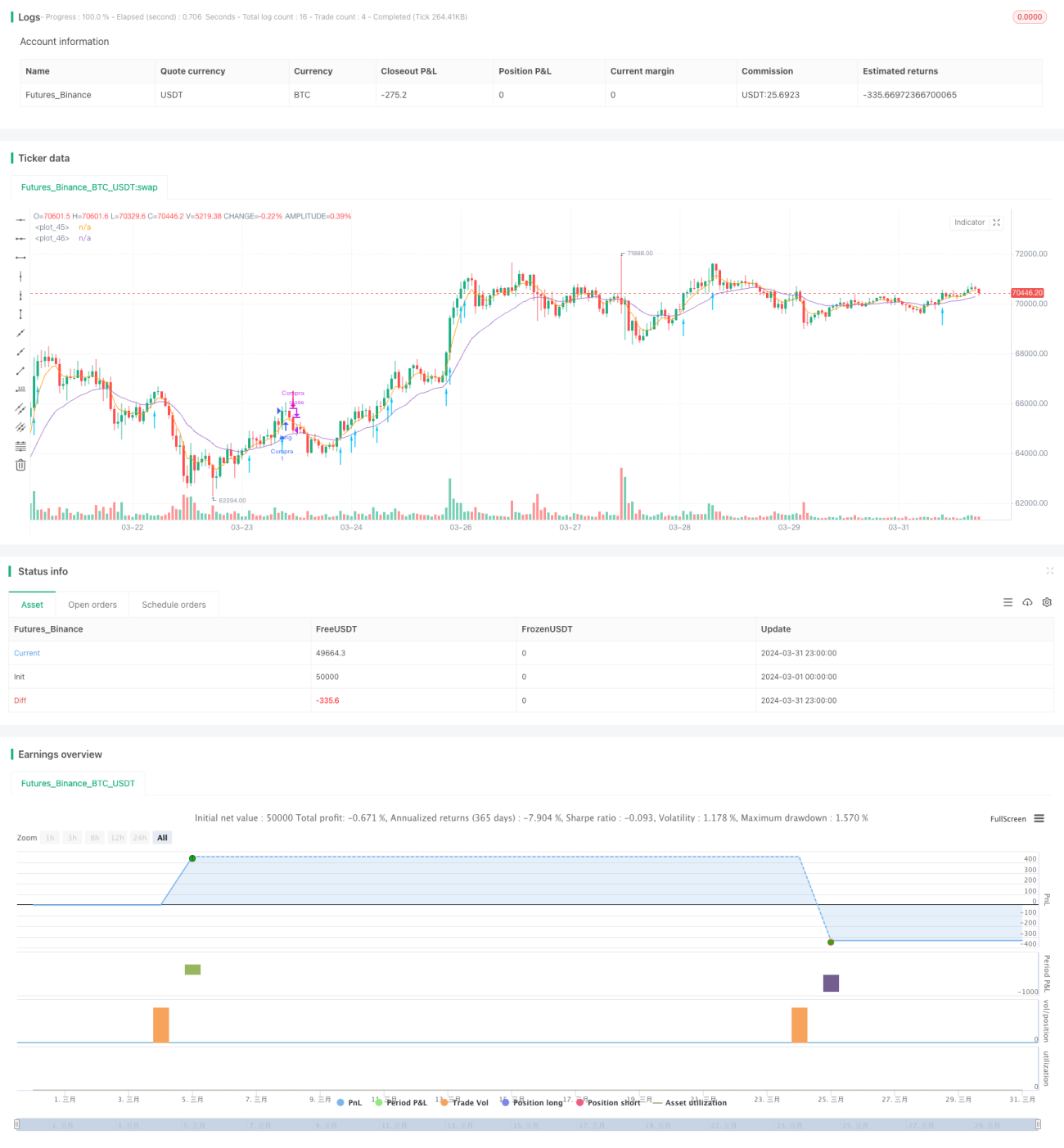
La stratégie de trading de momentum et de tendance Ruda est une stratégie de trading quantitative basée sur des indicateurs de momentum et de tendance. Cette stratégie utilise l'OBV (On Balance Volume), l'EMA (moyenne mobile exponentielle) et le ratio de corps des bougies pour déterminer les signaux d'achat et de vente. Lorsque l'EMA courte période croise au-dessus de l'EMA longue période, que l'OBV atteint un nouveau sommet sur 10 jours et que le ratio de corps de la bougie dépasse un seuil défini, la stratégie achète au prix d'ouverture du jour suivant ; lorsque le prix descend en dessous du stop loss ou que le cours de clôture passe en dessous de l'EMA courte période, la stratégie clôture la position.
Principe de la stratégie
- Calculer deux lignes EMA : paramètre de l'EMA courte période = 5, paramètre de l'EMA longue période = 21. Lorsque l'EMA courte période croise au-dessus de l'EMA longue période, la tendance est considérée comme haussière ; dans le cas contraire, baissière.
- Calculer l'indicateur OBV. Lorsque l'OBV atteint un nouveau plus haut sur 10 jours, la dynamique haussière est considérée comme forte.
- Calculer le ratio de corps de la bougie. Lorsque ce ratio dépasse le seuil défini (par défaut 50 %), la tendance est considérée comme confirmée.
- Lorsque la tendance est haussière, la dynamique haussière est forte et la tendance est confirmée, la stratégie achète au prix d'ouverture du jour suivant. Le stop loss est fixé au minimum entre le plus bas du jour et le prix d'ouverture moins 1 %.
- Lorsque le prix descend en dessous du stop loss ou que le cours de clôture passe en dessous de l'EMA courte période, la stratégie clôture la position.
Analyse des avantages
- En combinant les indicateurs de tendance et de momentum, la stratégie peut capturer les actifs forts.
- L'utilisation du prix d'ouverture du jour suivant et d'un stop loss dynamique permet d'éviter en partie les faux breakouts.
- Les conditions de stop loss et de take profit sont claires, le risque est maîtrisable.
Analyse des risques
- Les indicateurs de tendance et de momentum présentent un retard, ce qui peut entraîner des achats à des sommets et des stop loss prématurés.
- Les paramètres sont fixes, manquent d'adaptabilité ; les performances peuvent varier considérablement selon les conditions de marché.
- Le backtest porte sur un seul marché et un seul actif ; la stabilité et l'applicabilité de la stratégie nécessitent une validation supplémentaire.
Pistes d'optimisation
- Optimiser les paramètres des indicateurs de tendance et de momentum pour améliorer leur sensibilité et leur efficacité.
- Introduire une évaluation de l'état du marché pour ajuster dynamiquement les paramètres selon les caractéristiques actuelles du marché.
- Étendre le périmètre de backtest en testant sur différents marchés et actifs afin d'améliorer la robustesse de la stratégie.
- Envisager l'ajout d'un module de gestion de position et de contrôle des risques pour améliorer le ratio rendement/risque.
Résumé
La stratégie de trading de momentum et de tendance Ruda est une stratégie de trading quantitative simple et pratique. En combinant les indicateurs de tendance et de momentum, elle permet de capturer les actifs forts et les opportunités de tendance. Cependant, cette stratégie présente certaines limites, comme le retard des indicateurs et des paramètres fixes. À l'avenir, des optimisations et des améliorations peuvent être apportées en optimisant les paramètres des indicateurs, en introduisant un mécanisme d'adaptation, en élargissant le champ des backtests et en renforçant la gestion des risques, afin d'améliorer la robustesse et la rentabilité de la stratégie.
- 1