Stratégie de trading SPARK à position dynamique et double indicateur

Aperçu
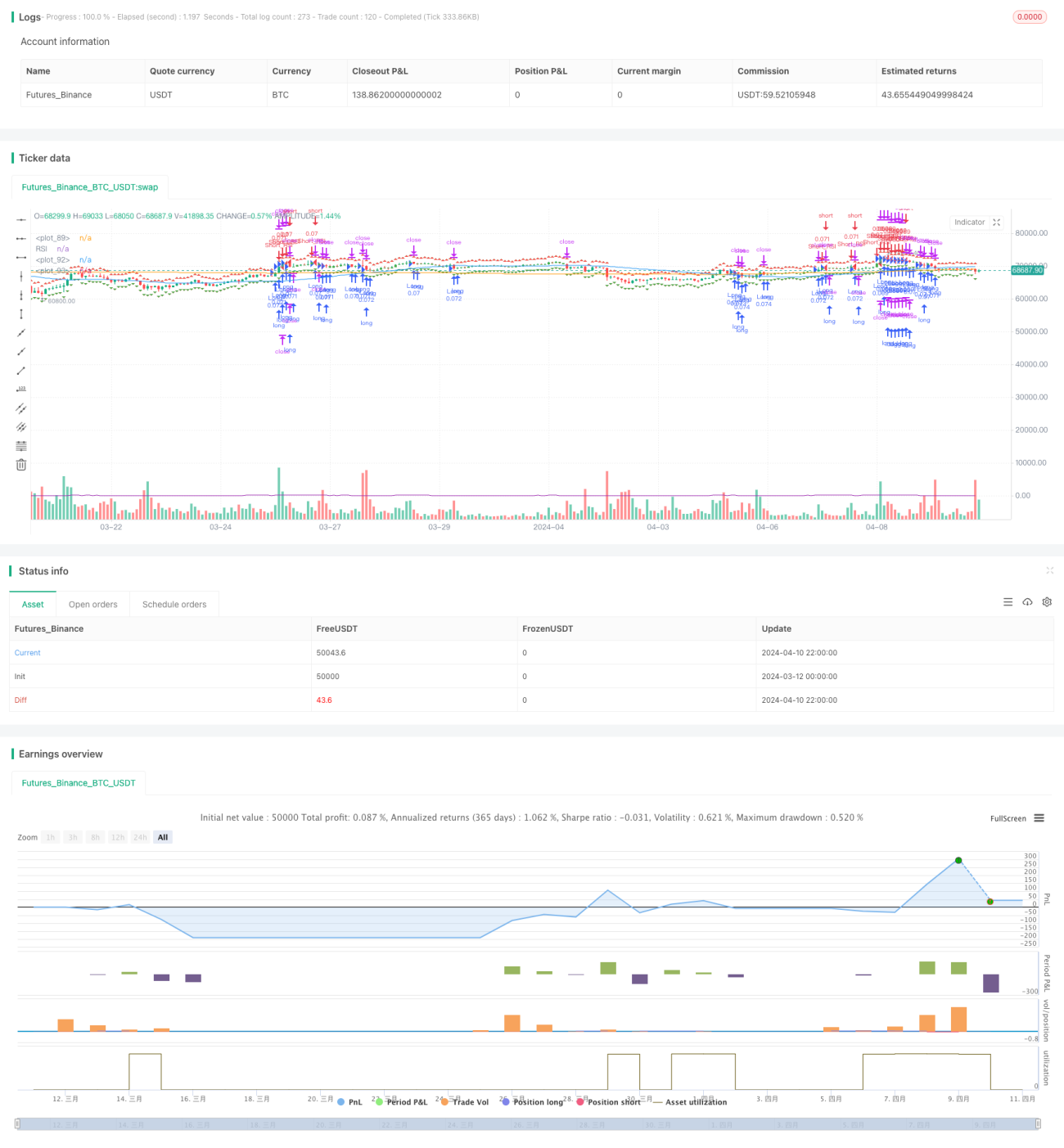
La stratégie SPARK est une stratégie de trading quantitatif combinant un ajustement dynamique des positions et une double confirmation d'indicateurs. Elle utilise l'indicateur SuperTrend et l'indice de force relative (RSI) pour identifier les points d'entrée et de sortie potentiels, tout en employant un mécanisme d'ajustement dynamique des positions pour optimiser l'allocation des capitaux. La stratégie offre également des paramètres personnalisables tels que des niveaux de take-profit et stop-loss flexibles, un contrôle de la fréquence minimale des transactions et une préférence directionnelle.
Principe de la stratégie
Le cœur de la stratégie SPARK repose sur la combinaison de l'indicateur SuperTrend et du RSI. L'indicateur SuperTrend détermine la direction de la tendance en comparant le prix de clôture à des niveaux de support/résistance dynamiques, tandis que le RSI est utilisé pour identifier les conditions de surachat ou de survente du marché. Lorsque le SuperTrend et le RSI remplissent simultanément des conditions spécifiques, la stratégie émet un signal d'entrée.
La stratégie utilise un mécanisme d'ajustement dynamique des positions pour optimiser l'allocation des capitaux pour chaque transaction. En définissant un pourcentage de portefeuille et un effet de levier, la stratégie calcule automatiquement la taille de position optimale en fonction des conditions actuelles du marché et du solde du compte. De plus, la stratégie offre des niveaux de take-profit et stop-loss flexibles, qui peuvent être définis en pourcentage fixe ou calculés dynamiquement.
Avantages de la stratégie
- Double confirmation des indicateurs : En combinant les indicateurs SuperTrend et RSI, la stratégie SPARK peut identifier plus précisément les points d'entrée et de sortie potentiels, réduisant ainsi les risques de faux signaux.
- Ajustement dynamique des positions : La stratégie adopte un mécanisme d'ajustement dynamique des positions qui optimise automatiquement l'allocation des capitaux pour chaque transaction en fonction du pourcentage de portefeuille et de l'effet de levier, améliorant ainsi l'efficacité de l'utilisation des capitaux.
- Gestion flexible des risques : La stratégie propose des niveaux de take-profit et stop-loss flexibles, permettant de choisir entre un pourcentage fixe ou un calcul dynamique selon la tolérance au risque personnelle, pour un contrôle précis des risques.
- Paramètres personnalisables : La stratégie permet à l'utilisateur d'ajuster plusieurs paramètres d'entrée, tels que la période ATR, le multiplicateur, les seuils RSI, etc., afin de s'adapter à différentes conditions de marché et préférences de trading.
Risques de la stratégie
- Risque de marché : Bien que la stratégie SPARK utilise une double confirmation d'indicateurs et un ajustement dynamique des positions, elle peut néanmoins subir des pertes dans des conditions de marché extrêmes.
- Risque d'optimisation des paramètres : Les performances de la stratégie dépendent fortement du choix des paramètres d'entrée. Un réglage inapproprié des paramètres peut entraîner des performances médiocres.
- Risque de surapprentissage : Si les paramètres de la stratégie sont trop optimisés, cela pourrait entraîner de mauvaises performances dans des conditions de marché futures.
Axes d'optimisation de la stratégie
- Introduction d'indicateurs supplémentaires : Envisager d'intégrer d'autres indicateurs techniques, comme le MACD ou les bandes de Bollinger, pour améliorer encore la précision de la confirmation des signaux.
- Optimisation des mécanismes de take-profit et stop-loss : Explorer des stratégies plus avancées de take-profit et stop-loss, telles que le trailing stop ou le take-profit dynamique, afin de mieux protéger les profits et limiter les pertes.
- Ajustement adaptatif des paramètres : Développer un mécanisme adaptatif qui ajuste dynamiquement les paramètres de la stratégie en fonction des conditions du marché, pour s'adapter à un environnement de marché en constante évolution.
Résumé
La stratégie SPARK offre aux traders une solution complète de trading quantitatif en combinant les indicateurs SuperTrend et RSI, en utilisant un mécanisme d'ajustement dynamique des positions et des outils de gestion des risques flexibles. Bien que la stratégie puisse présenter certains risques, grâce à une optimisation et une amélioration continues, la stratégie SPARK peut potentiellement atteindre des performances stables dans diverses conditions de marché.
- 1