Stratégie de moyenne mobile basée sur le croisement de deux moyennes mobiles

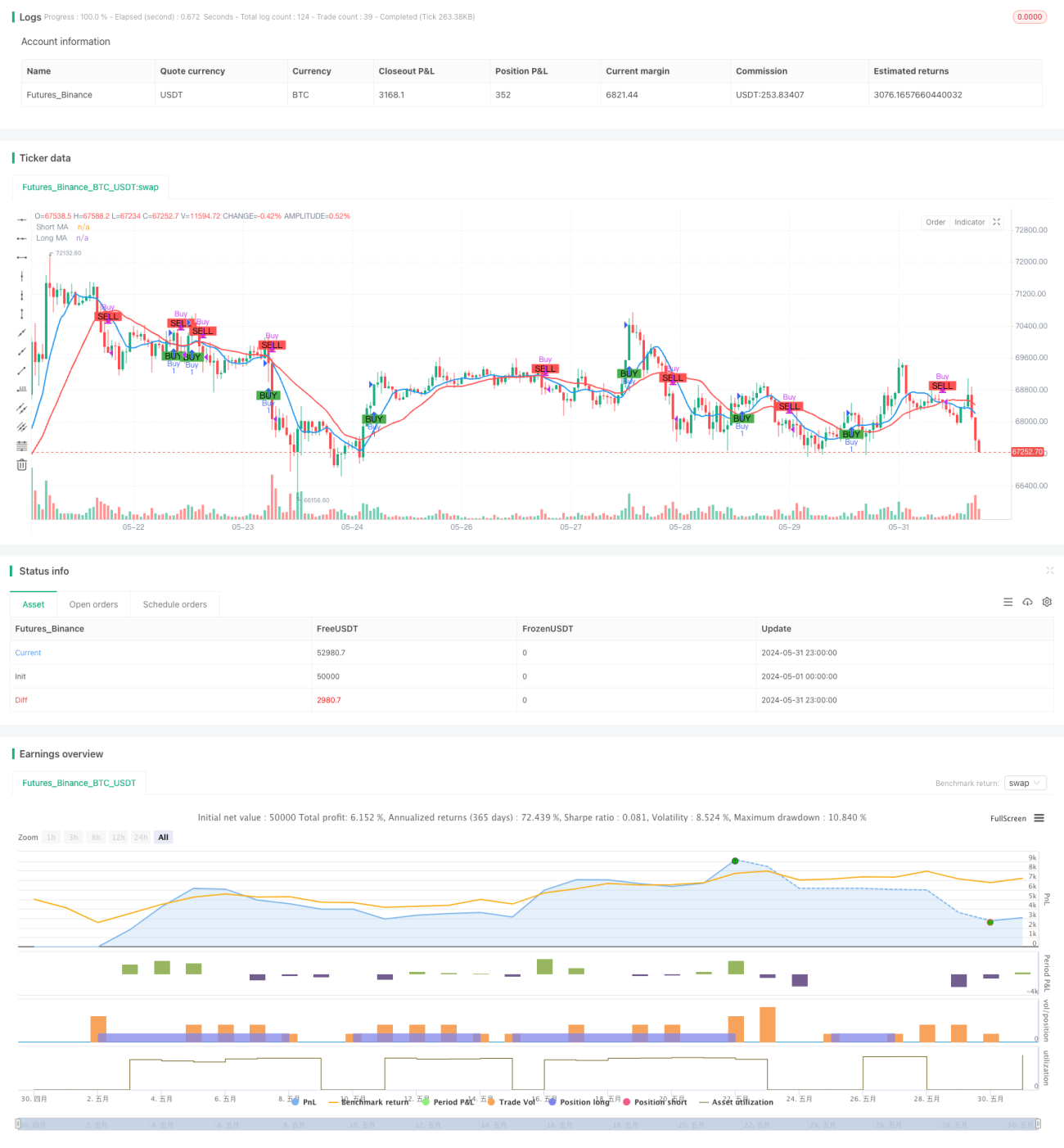
Aperçu
La stratégie de croisement de moyennes mobiles basée sur deux moyennes mobiles est une méthode de trading intraday simple et efficace, visant à identifier les opportunités potentielles d'achat et de vente sur le marché en analysant la relation entre deux moyennes mobiles de périodes différentes. Cette stratégie utilise une moyenne mobile simple (SMA) à court terme et une moyenne mobile simple à long terme. Lorsque la moyenne mobile à court terme croise au-dessus de la moyenne mobile à long terme, cela indique un signal haussier, suggérant une opportunité d'achat potentielle ; inversement, lorsque la moyenne mobile à court terme croise en dessous de la moyenne mobile à long terme, cela indique un signal baissier, suggérant une opportunité de vente potentielle. Cette méthode de croisement aide les traders à capter les mouvements de tendance du marché tout en minimisant les interférences dues au bruit du marché.
Principe de la stratégie
Le principe fondamental de cette stratégie est d'utiliser les caractéristiques de tendance et le décalage des moyennes mobiles de différentes périodes. En comparant la position relative de la moyenne mobile à court terme et de la moyenne mobile à long terme, elle détermine la direction de la tendance actuelle du marché et prend les décisions de trading correspondantes. Lorsqu'une tendance haussière apparaît sur le marché, le prix franchit d'abord la moyenne mobile à long terme, puis la moyenne mobile à court terme croise au-dessus de cette dernière, formant un croisement doré et générant un signal d'achat. Lorsqu'une tendance baissière apparaît sur le marché, le prix passe d'abord en dessous de la moyenne mobile à long terme, puis la moyenne mobile à court terme croise en dessous, formant un croisement mortel et générant un signal de vente. Dans les paramètres de cette stratégie, la période de la moyenne mobile à court terme est fixée à 9 et celle de la moyenne mobile à long terme à 21. Ces deux paramètres peuvent être ajustés en fonction des caractéristiques du marché et des préférences personnelles. De plus, cette stratégie introduit le concept de gestion de capital en définissant un capital initial et un pourcentage de risque par transaction, en utilisant un dimensionnement de position pour contrôler l'exposition au risque de chaque opération.
Avantages de la stratégie
- Simplicité et compréhension : Cette stratégie repose sur la théorie classique des moyennes mobiles, avec une logique claire, facile à comprendre et à mettre en œuvre.
- Grande adaptabilité : Cette stratégie peut s'appliquer à plusieurs marchés et à différents instruments de trading ; en ajustant les paramètres, elle peut s'adapter de manière flexible à diverses caractéristiques de marché.
- Capture des tendances : Le croisement de deux moyennes mobiles pour déterminer la direction de la tendance aide les traders à suivre rapidement la tendance dominante, augmentant ainsi les opportunités de profit.
- Contrôle des risques : Cette stratégie intègre des concepts de gestion des risques, en contrôlant l'exposition au risque de chaque transaction via le dimensionnement des positions, gérant efficacement les pertes potentielles.
- Réduction du bruit : En exploitant le décalage des moyennes mobiles, elle filtre efficacement le bruit aléatoire du marché, améliorant la fiabilité des signaux de trading.
Risques de la stratégie
- Choix des paramètres : Des réglages de paramètres différents ont un impact significatif sur les performances ; un mauvais choix peut entraîner l'échec ou des performances médiocres de la stratégie.
- Tendance du marché : En période de marché latéral ou de retournement de tendance, cette stratégie peut subir des pertes consécutives.
- Coûts de glissement : Des transactions fréquentes peuvent entraîner des coûts de glissement élevés, affectant le rendement global de la stratégie.
- Événements cygne noir : Cette stratégie s'adapte mal aux conditions de marché extrêmes ; un événement cygne noir peut entraîner des pertes importantes.
- Risque de surajustement : Si l'optimisation des paramètres repose trop sur les données historiques, la stratégie peut mal performer en trading réel.
Axes d'optimisation de la stratégie
- Optimisation dynamique des paramètres : Ajuster dynamiquement les paramètres en fonction des changements des conditions de marché pour améliorer l'adaptabilité.
- Confirmation de tendance : Après la génération d'un signal de trading, introduire d'autres indicateurs ou schémas de prix pour confirmer la tendance, améliorant ainsi la fiabilité du signal.
- Stop-loss et take-profit : Mettre en place des mécanismes de stop-loss et de take-profit raisonnables pour mieux contrôler l'exposition au risque par transaction.
- Gestion des positions : Optimiser la méthode de dimensionnement des positions, par exemple en introduisant des indicateurs de volatilité, pour ajuster dynamiquement la taille des positions en fonction du niveau de volatilité du marché.
- Évaluation de la force haussière/baissière : Évaluer le rapport de force entre positions longues et courtes pour intervenir dès le début d'une tendance, améliorant ainsi la précision de la capture de tendance.
Conclusion
La stratégie de croisement de moyennes mobiles est une méthode de trading intraday simple et pratique. En comparant la position des moyennes mobiles de différentes périodes, elle détermine la direction de la tendance du marché et génère des signaux de trading. Cette stratégie a une logique claire, une forte adaptabilité et peut capturer efficacement les tendances du marché, tout en intégrant des mesures de gestion des risques pour contrôler les pertes potentielles. Cependant, elle présente également des risques potentiels liés au choix des paramètres, aux retournements de tendance, aux transactions fréquentes, etc. Il est nécessaire d'améliorer encore sa robustesse et sa rentabilité via l'optimisation dynamique, la confirmation des signaux et la gestion des positions. Dans l'ensemble, en tant qu'indicateur d'analyse technique classique, les principes fondamentaux et la valeur pratique des moyennes mobiles ont été largement validés par le marché, ce qui en fait une stratégie de trading digne d'une recherche approfondie et d'une optimisation continue.
Avantages de la stratégie
- Simplicité : Cette stratégie repose sur la théorie classique des moyennes mobiles, avec une logique claire, facile à comprendre et à mettre en œuvre.
- Adaptabilité : Cette stratégie peut être appliquée à plusieurs marchés et à différents instruments de trading. En ajustant les paramètres, elle peut s'adapter de manière flexible aux différentes caractéristiques du marché.
- Capture de tendance : En utilisant le croisement de deux moyennes mobiles pour déterminer la direction de la tendance, elle aide les traders à suivre en temps utile la tendance dominante et à augmenter les opportunités de profit.
- Contrôle des risques : Cette stratégie introduit le concept de gestion des risques, en utilisant le dimensionnement des positions pour contrôler l'exposition au risque de chaque transaction, gérant ainsi efficacement les pertes potentielles.
- Réduction du bruit : En exploitant la caractéristique de retard des moyennes mobiles, elle filtre efficacement le bruit aléatoire du marché, améliorant ainsi la fiabilité des signaux de trading.
Risques de la stratégie
- Choix des paramètres : Différents réglages de paramètres peuvent avoir un impact significatif sur les performances de la stratégie. Un choix inapproprié peut entraîner l'échec de la stratégie ou des performances médiocres.
- Tendance du marché : Dans des marchés en range ou à des points de retournement de tendance, cette stratégie peut subir des pertes consécutives.
- Coûts de slippage : Des transactions fréquentes peuvent entraîner des coûts de slippage plus élevés, affectant la rentabilité globale de la stratégie.
- Événements cygnes noirs : Cette stratégie s'adapte mal aux conditions de marché extrêmes ; des événements cygnes noirs peuvent causer des pertes importantes à la stratégie.
- Risque de surajustement : Si l'optimisation des paramètres repose trop sur les données historiques, cela peut entraîner de mauvaises performances de la stratégie en trading réel.
Directions d'optimisation de la stratégie
- Optimisation dynamique des paramètres : Ajuster dynamiquement les paramètres de la stratégie en fonction des changements des conditions de marché pour améliorer l'adaptabilité.
- Confirmation de tendance : Après la génération des signaux de trading, introduire d'autres indicateurs ou modèles de comportement des prix pour confirmer la tendance, améliorant ainsi la fiabilité des signaux.
- Stop-loss et take-profit : Introduire des mécanismes raisonnables de stop-loss et de take-profit pour mieux contrôler l'exposition au risque de chaque transaction.
- Gestion des positions : Optimiser la méthode de dimensionnement des positions, par exemple en introduisant des indicateurs de volatilité pour ajuster dynamiquement les positions en fonction des niveaux de volatilité du marché.
- Évaluation de la force haussière et baissière : Évaluer la relation comparative entre les forces haussières et baissières, en entrant en début de tendance pour améliorer la précision de la capture de tendance.
Résumé
La stratégie de croisement de moyennes mobiles basée sur deux moyennes mobiles est une méthode de trading intraday simple et pratique. En comparant la position relative des moyennes mobiles de différentes périodes, elle détermine la direction de la tendance du marché et génère des signaux de trading. Cette stratégie a une logique claire, une forte adaptabilité, et peut capturer efficacement les tendances du marché tout en introduisant des mesures de gestion des risques pour contrôler les pertes potentielles. Cependant, cette stratégie présente également des risques potentiels tels que le choix des paramètres, les retournements de tendance, les transactions fréquentes, etc. Elle doit être améliorée davantage par l'optimisation dynamique, la confirmation des signaux, la gestion des positions, et d'autres méthodes pour renforcer la robustesse et la rentabilité de la stratégie. En général, en tant qu'indicateur classique d'analyse technique, les principes de base et la valeur pratique des moyennes mobiles ont été largement vérifiés par le marché. C'est une stratégie de trading qui mérite une étude approfondie et une optimisation continue.
- 1