Stratégie de trading quantitative de rupture d'intervalle SMA multiple et de verrouillage dynamique des bénéfices

SMA
Date de création: 2024-12-20 16:28:54 Dernière modification: 2024-12-20 16:28:54
Copier: 0 Nombre de clics: 441
1
Suivre
1617
Abonnés

Stratégie de trading quantitative de rupture d’intervalle SMA multiple et de verrouillage dynamique des bénéfices

Aperçu

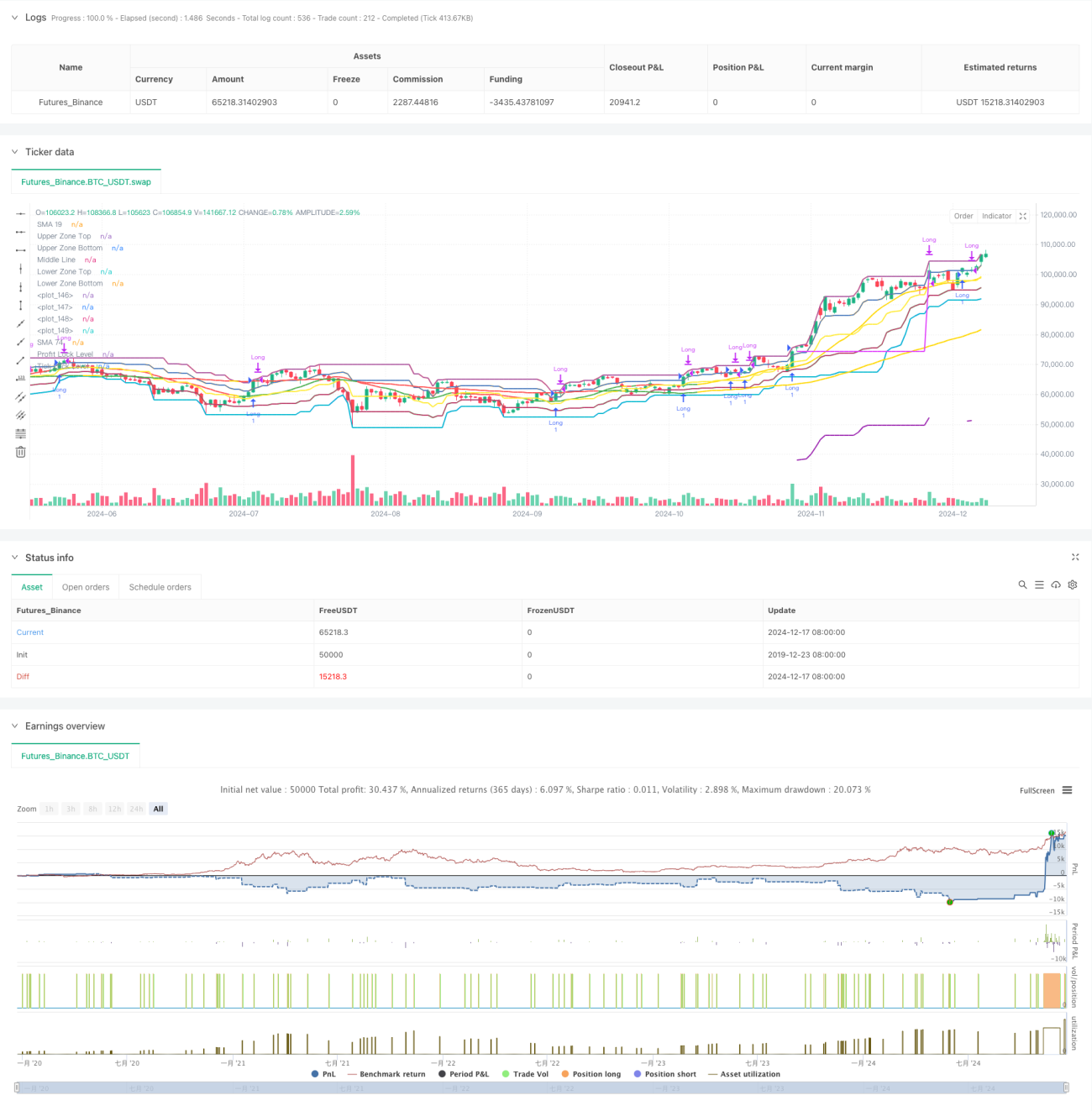
Il s’agit d’une stratégie de négociation de suivi de tendance dynamique basée sur les indicateurs SMA, combinée à des intervalles de prix, à des indicateurs aléatoires et à un mécanisme de protection de multiples bénéfices. La stratégie utilise des signaux croisés de mouvements de prix dans différents intervalles, combinés à des moyennes mobiles à court et à long terme, tout en utilisant des indicateurs aléatoires pour déterminer l’état du marché et la force de la tendance, permettant une capture de tendance efficace.

Principe de stratégie

La logique fondamentale de la stratégie comprend les éléments clés suivants :

  1. Construction d’un cadre de tendance à l’aide de 19 cycles et 74 cycles SMA
  2. L’état du marché est jugé à l’aide d’indicateurs aléatoires à 60 cycles, en divisant les couleurs du SMA en quatre états: jaune, vert, rouge et orange
  3. 5 niveaux importants dans la fourchette de prix pour juger de la force ou de la faiblesse des prix
  4. Les conditions d’entrée doivent être remplies en même temps :
    • Le SMA est vert ou jaune
    • Les prix dépassent la zone orange
    • Le prix de clôture est au-dessus du SMA à court terme
  5. Il y a deux types d’arrêt:
    • Retrait de la protection en pourcentage du prix le plus élevé
    • Blocage des bénéfices sur base de points fixes

Avantages stratégiques

  1. Le mécanisme de confirmation multiple réduit les faux signaux
  2. Une division dynamique adaptée aux différents environnements de marché
  3. Le double frein permet une meilleure maîtrise des risques
  4. Une classification claire de l’état du marché aide à saisir le rythme du marché
  5. La surveillance de l’état des transactions en temps réel facilite le débogage des stratégies
  6. Combinaison d’indicateurs techniques et d’analyse du comportement des prix

Risque stratégique

  1. Une survente des transactions sur un marché en crise
  2. Le point fixe de l’arrêt de l’aiguille peut avoir été manqué
  3. L’optimisation des paramètres peut conduire à un surapprentissage
  4. Une reprise rapide du marché pourrait entraîner une perte de profit
  5. Les conditions de confirmation multiple peuvent avoir manqué certaines opportunités de transaction La solution est simple:
  • Ajout d’un filtre de fréquence
  • Ajustez dynamiquement les paramètres d’arrêt
  • Renforcer le mécanisme d’identification de l’environnement du marché
  • Optimiser le timing des matchs

Orientation de l’optimisation de la stratégie

  1. Paramètres d’ajustement dynamique des indicateurs de volatilité
  2. Adaptation des conditions de blocage en fonction de l’état du marché
  3. Ajouter un mécanisme de confirmation du volume des transactions
  4. Ajouter un filtre de force de tendance
  5. Optimiser les méthodes de segmentation en tenant compte des caractéristiques du marché
  6. Améliorer les mécanismes de gestion des risques, tels que:
    • Stop-loss par jour
    • Contrôle de retrait maximal
    • Limite de temps de détention

Résumer

La stratégie utilise plusieurs indicateurs techniques et méthodes d’analyse du comportement des prix pour construire un système de négociation complet. L’avantage de la stratégie réside dans les mécanismes de confirmation multiples et le système de freinage flexible, mais il faut également tenir compte de l’impact de l’environnement du marché sur la performance de la stratégie.

Code source de la stratégie
/*backtest
start: 2019-12-23 08:00:00
end: 2024-12-18 08:00:00
period: 1d
basePeriod: 1d
exchanges: [{"eid":"Futures_Binance","currency":"BTC_USDT"}]
*/

//@version=5
strategy(title="SMA Color Strategy", 
     overlay=true, 
     initial_capital=10000,
     max_bars_back=5000,
     max_labels_count=500,
     max_boxes_count=500,
     default_qty_type=strategy.fixed,
     default_qty_value=1,
     currency=currency.NONE,
     process_orders_on_close=true)

// === INPUTS ===
zoneLength = input.int(20, "Price Zone Length", minval=5)
profitLockPct = input.float(50, "Profit Lock Percentage", minval=1, maxval=100, step=5) / 100
ticksToLock = input.int(12, "Ticks to Activate Lock", minval=1, tooltip="Number of ticks price must move up to activate tick-based lock")
ticksToSecure = input.int(10, "Ticks to Secure", minval=1, tooltip="Number of ticks to lock in once activated")

// Calculate tick values
tickSize = syminfo.mintick
ticksToLockPoints = ticksToLock * tickSize
ticksToSecurePoints = ticksToSecure * tickSize

// Calculate price zones
h = ta.highest(high, zoneLength)
l = ta.lowest(low, zoneLength)
priceRange = h - l
lvl5 = h
lvl4 = l + (priceRange * 0.75)  // Orange line
lvl3 = l + (priceRange * 0.50)  // Yellow line
lvl2 = l + (priceRange * 0.25)  // Green line
lvl1 = l

// Calculate SMAs
sma19 = ta.sma(close, 19)
sma74 = ta.sma(close, 74)

// Stochastic calculation for color logic
k = ta.stoch(close, high, low, 60)
d = ta.sma(k, 10)

// SMA Color Logic with state tracking
var color currentSMAColor = color.orange
var color previousSMAColor = color.orange
var string currentColorName = "ORANGE"
var string previousColorName = "ORANGE"

smaColor = if d >= 80 or d <= 20
    color.rgb(255, 215, 0)
else if d > d[1]
    color.green
else if d < d[1]
    color.red
else
    color.orange

// Update color state and names
if smaColor != currentSMAColor
    previousSMAColor := currentSMAColor
    currentSMAColor := smaColor
    previousColorName := currentColorName
    currentColorName := if smaColor == color.rgb(255, 215, 0)
        "YELLOW"
    else if smaColor == color.green
        "GREEN"
    else if smaColor == color.red
        "RED"
    else
        "ORANGE"

// Color logic for SMA74
sma74Color = if smaColor == color.rgb(255, 215, 0)
    color.rgb(255, 215, 0)                          
else if sma74 < sma19                               
    color.green
else                                                
    color.red

// === ENTRY CONDITIONS ===
smaIsGreen = smaColor == color.green
greenCandle = close > open
candleAboveOrange = close > lvl4
candleAboveSMA = close > sma19
crossedAboveOrange = ta.crossover(close, lvl4)
smaIsYellow = smaColor == color.rgb(255, 215, 0)

longCondition1 = smaIsGreen and greenCandle and candleAboveOrange and candleAboveSMA and crossedAboveOrange
longCondition2 = smaIsYellow and crossedAboveOrange and candleAboveSMA

// === PROFIT LOCK SYSTEM ===
var float entryPrice = na
var float maxPrice = na
var float profitLockLevel = na
var bool tickLockActivated = false
var float tickBasedLockLevel = na

// Reset variables on new trade entry
if (longCondition1 or longCondition2)
    entryPrice := close
    maxPrice := close
    profitLockLevel := close * (1 - profitLockPct)
    tickLockActivated := false
    tickBasedLockLevel := na

// Update maximum price and profit locks when in a trade
if strategy.position_size > 0
    maxPrice := math.max(maxPrice, high)
    profitLockLevel := math.max(profitLockLevel, maxPrice * (1 - profitLockPct))
    
    // Check if price has moved up enough to activate tick-based lock
    if not tickLockActivated and (maxPrice - entryPrice) >= ticksToLockPoints
        tickLockActivated := true
        tickBasedLockLevel := entryPrice + ticksToSecurePoints

// === EXIT CONDITIONS ===
exitOnYellowLine = close < lvl3
exitOnProfitLock = low < profitLockLevel and strategy.position_size > 0
exitOnTickLock = tickLockActivated and low < tickBasedLockLevel

// === TRADE MANAGEMENT ===
if (longCondition1 or longCondition2)
    strategy.entry("Long", strategy.long)

if strategy.position_size > 0
    if exitOnYellowLine
        strategy.close("Long", comment="Close below yellow")
    if exitOnProfitLock
        strategy.close("Long", comment="Profit lock triggered")
    if exitOnTickLock
        strategy.close("Long", comment="Tick-based lock triggered")

// Plot indicators
plot(sma19, "SMA 19", color=smaColor, linewidth=2)
plot(sma74, "SMA 74", color=sma74Color, linewidth=2)
plot(lvl5, "Upper Zone Top", color=color.red, linewidth=2)
plot(lvl4, "Upper Zone Bottom", color=color.orange, linewidth=2)
plot(lvl3, "Middle Line", color=color.yellow, linewidth=2)
plot(lvl2, "Lower Zone Top", color=color.green, linewidth=2)
plot(lvl1, "Lower Zone Bottom", color=color.blue, linewidth=2)

// Plot profit lock levels
plot(strategy.position_size > 0 ? profitLockLevel : na, "Profit Lock Level", color=color.purple, style=plot.style_linebr, linewidth=2)
plot(strategy.position_size > 0 and tickLockActivated ? tickBasedLockLevel : na, "Tick Lock Level", color=color.fuchsia, style=plot.style_linebr, linewidth=2)

// Fill zones
var p1 = plot(lvl5, display=display.none)
var p2 = plot(lvl4, display=display.none)
var p3 = plot(lvl2, display=display.none)
var p4 = plot(lvl1, display=display.none)
fill(p1, p2, color=color.new(color.red, 90))
fill(p3, p4, color=color.new(color.green, 90))

// Debug Table
if barstate.islast
    var table debugTable = table.new(position.top_right, 2, 13, bgcolor=color.new(color.black, 70), frame_width=1)
    
    table.cell(debugTable, 0, 0, "Current Color", text_color=color.white)
    table.cell(debugTable, 1, 0, currentColorName, text_color=currentSMAColor)
    
    table.cell(debugTable, 0, 1, "Previous Color", text_color=color.white)
    table.cell(debugTable, 1, 1, previousColorName, text_color=previousSMAColor)
    
    table.cell(debugTable, 0, 2, "Entry 1 (Green)", text_color=color.white)
    table.cell(debugTable, 1, 2, str.tostring(longCondition1), text_color=color.white)
    
    table.cell(debugTable, 0, 3, "Entry 2 (Yellow)", text_color=color.white)
    table.cell(debugTable, 1, 3, str.tostring(longCondition2), text_color=color.white)
    
    table.cell(debugTable, 0, 4, "Current Position", text_color=color.white)
    table.cell(debugTable, 1, 4, str.tostring(strategy.position_size), text_color=color.white)
    
    table.cell(debugTable, 0, 5, "Entry Price", text_color=color.white)
    table.cell(debugTable, 1, 5, str.tostring(entryPrice), text_color=color.white)
    
    table.cell(debugTable, 0, 6, "Max Price", text_color=color.white)
    table.cell(debugTable, 1, 6, str.tostring(maxPrice), text_color=color.white)
    
    table.cell(debugTable, 0, 7, "Profit Lock Level", text_color=color.white)
    table.cell(debugTable, 1, 7, str.tostring(profitLockLevel), text_color=color.white)
    
    table.cell(debugTable, 0, 8, "Tick Lock Active", text_color=color.white)
    table.cell(debugTable, 1, 8, str.tostring(tickLockActivated), text_color=color.white)
    
    table.cell(debugTable, 0, 9, "Tick Lock Level", text_color=color.white)
    table.cell(debugTable, 1, 9, str.tostring(tickBasedLockLevel), text_color=color.white)
    
    table.cell(debugTable, 0, 10, "Price Move (Ticks)", text_color=color.white)
    table.cell(debugTable, 1, 10, str.tostring(strategy.position_size > 0 ? (maxPrice - entryPrice) / tickSize : 0), text_color=color.white)
    
    table.cell(debugTable, 0, 11, "Locked Profit %", text_color=color.white)
    table.cell(debugTable, 1, 11, str.tostring(strategy.position_size > 0 ? ((maxPrice - entryPrice) / entryPrice * 100) : 0.0) + "%", text_color=color.white)
    
    table.cell(debugTable, 0, 12, "Exit Signals", text_color=color.white)
    table.cell(debugTable, 1, 12, "Y:" + str.tostring(exitOnYellowLine) + " P:" + str.tostring(exitOnProfitLock) + " T:" + str.tostring(exitOnTickLock), text_color=color.white)