Stratégie de trading par grille de Bollinger adaptative

Aperçu
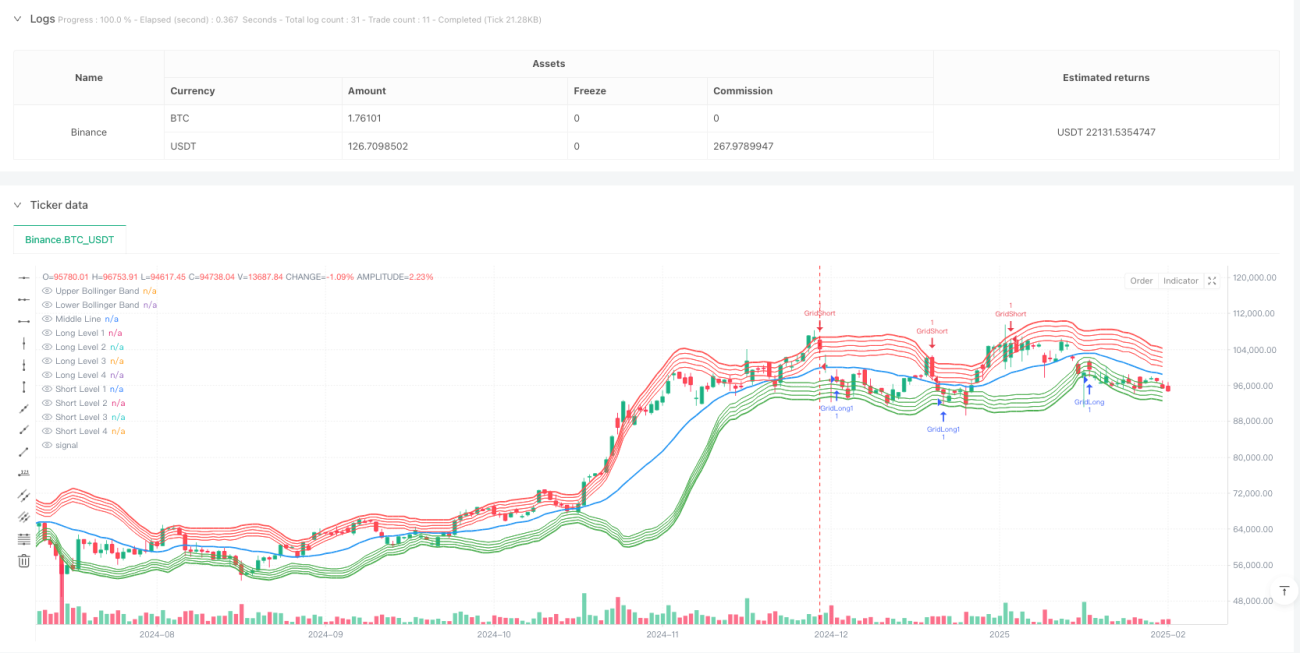
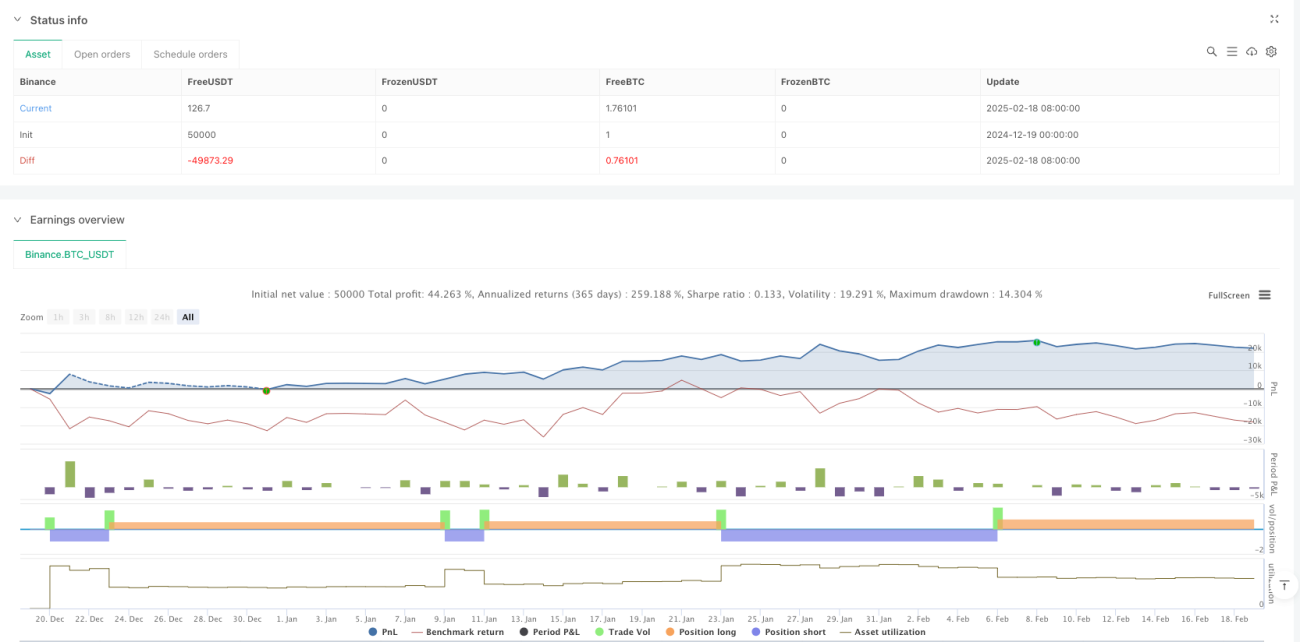
Il s'agit d'une stratégie de trading en grille avancée basée sur les bandes de Bollinger. La stratégie détermine dynamiquement la position de la grille à l'aide des bandes supérieure et inférieure ainsi que de la bande médiane de l'indicateur, et ajuste automatiquement l'espacement des grilles en fonction de la volatilité du marché. Le système exécute des transactions longues ou courtes correspondantes lorsque le prix franchit une ligne de la grille, automatisant ainsi entièrement le trading en grille.
Principe de la stratégie
La stratégie utilise une moyenne mobile sur 20 périodes comme bande médiane des bandes de Bollinger, avec un écart-type de 2 comme largeur de bande. Sur la base des bandes de Bollinger, la stratégie définit 4 niveaux de grille entre les bandes supérieure et inférieure, avec un espacement de grille de 1 %. Lorsque le prix franchit à la hausse une ligne de grille, le système exécute une opération longue ; lorsqu'il franchit à la baisse une ligne de grille, le système exécute une opération courte. Cette conception permet à la stratégie de générer des gains continus dans un marché en range.
Avantages de la stratégie
- Ajustement dynamique – La position de la grille se déplace avec les bandes de Bollinger, permettant à la stratégie de s'adapter à différents environnements de marché.
- Risque maîtrisé – Les bandes de Bollinger limitent la zone de trading, évitant une surexposition dans des conditions de marché extrêmes.
- Hautement automatisé – Le système exécute les transactions automatiquement, sans intervention humaine.
- Trading bidirectionnel – Possibilité de profiter à la fois des hausses et des baisses du marché.
- Paramètres ajustables – L'espacement des grilles et le nombre de niveaux peuvent être modifiés selon les besoins.
Risques de la stratégie
- Risque de marché directionnel – Des drawdowns importants peuvent survenir en cas de tendance unidirectionnelle.
- Risque de gestion du capital – L'activation simultanée de plusieurs grilles peut entraîner une surexposition des positions.
- Risque de slippage – Une volatilité élevée du marché peut entraîner des écarts entre le prix d'exécution et le niveau de la grille.
- Risque technique – Les bandes de Bollinger peuvent générer de faux signaux de cassure.
Solutions :
- Définir une limite totale de positions
- Introduire un filtre de tendance
- Optimiser le mécanisme d'exécution des ordres
- Ajouter des filtres de confirmation de signaux
Pistes d'optimisation de la stratégie
- Espacement de grille adaptatif – Ajuster dynamiquement l'espacement des grilles en fonction de la volatilité.
- Intégration du volume et du prix – Optimiser le timing d'entrée en combinant des indicateurs de volume.
- Optimisation du stop-loss – Concevoir un mécanisme de stop-loss plus flexible.
- Optimisation de la gestion du capital – Mettre en place une gestion de position basée sur le risque.
- Collaboration multi-périodes – Introduire un mécanisme de confirmation de signaux sur plusieurs périodes.
Résumé
Cette stratégie combine les bandes de Bollinger avec le trading en grille pour créer un système de trading automatisé alliant flexibilité et stabilité. Son principal avantage réside dans sa capacité à s'adapter à différents environnements de marché tout en permettant un contrôle des risques via le réglage des paramètres. Bien qu'elle comporte certains risques inhérents, une optimisation et un perfectionnement continus peuvent aboutir à un système de trading plus robuste.
- 1