Stratégie quantitative de suivi de tendance long/short avec stop-loss dynamique

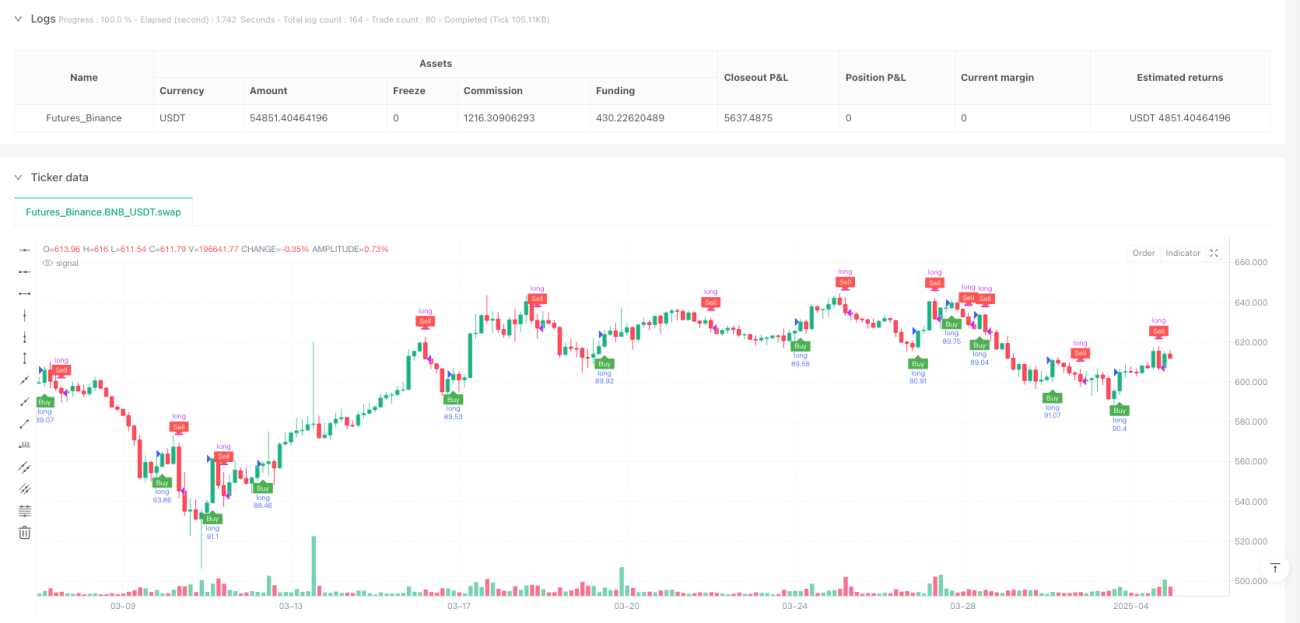
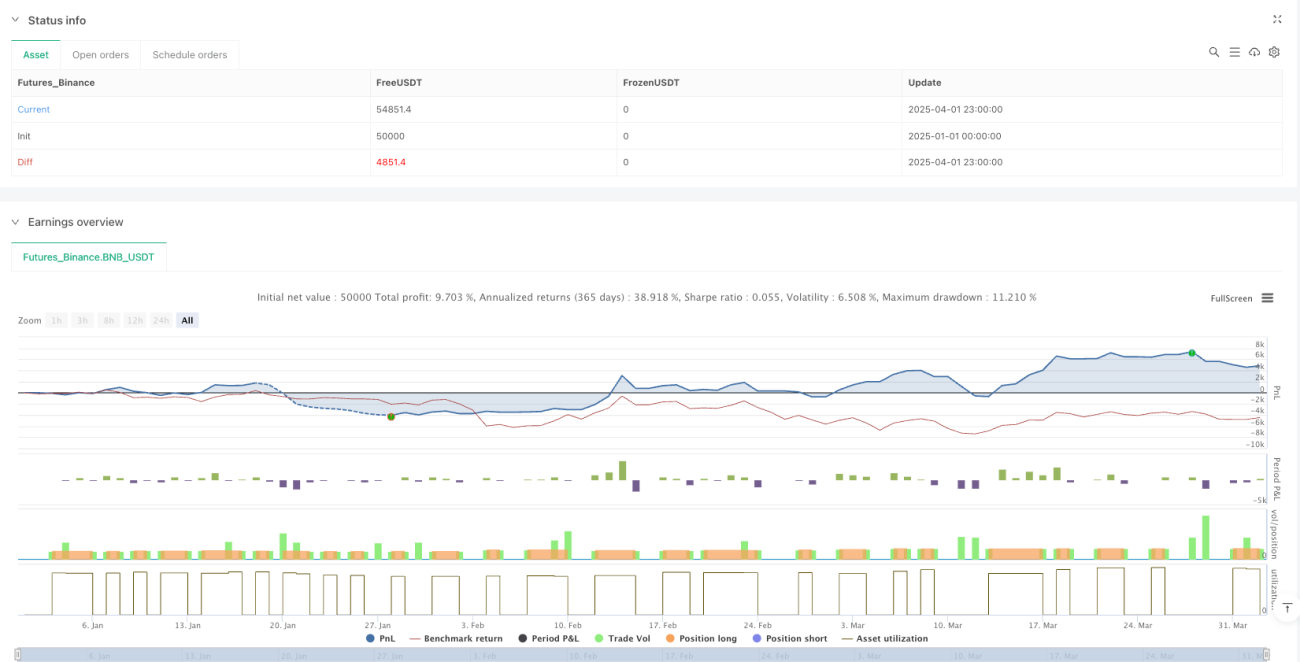
Aperçu
Il s'agit d'une stratégie de suivi de tendance long/short basée sur l'Average True Range (ATR) et la moyenne mobile exponentielle (EMA). La stratégie permet une capture précise des tendances et une gestion des risques grâce à un stop-loss dynamique et une identification de la direction de la tendance.
Principe de la stratégie
Le principe central de la stratégie comprend les étapes clés suivantes :
- Utilisation de l'indicateur ATR pour calculer un niveau de stop-loss dynamique
- Combinaison avec l'EMA pour déterminer la direction du prix
- Identification des signaux de trading via la position relative du prix par rapport au stop-loss
- Utilisation optionnelle des bougies Heikin Ashi pour affiner la détection des signaux
Logique de calcul principale :
- Stop-loss dynamique = Prix actuel ± (ATR * coefficient de sensibilité)
- L'identification de la tendance repose sur le croisement entre l'EMA et le stop-loss
- Un signal de trading est généré lorsque le prix franchit le stop-loss et que l'EMA effectue un croisement
Avantages de la stratégie
- Gestion dynamique des risques : le stop-loss est calculé de manière adaptative avec l'ATR, ajusté en temps réel en fonction de la volatilité du marché
- Suivi précis des tendances : l'EMA réagit rapidement aux variations de prix, capturant les points de retournement
- Grande flexibilité : personnalisation de la période ATR et du coefficient de sensibilité
- Option d'utiliser les bougies Heikin Ashi pour améliorer encore la détection des signaux
- Trading à faible fréquence, réduisant les coûts de transaction
- Adapté à plusieurs marchés et instruments
Risques de la stratégie
- Des marchés en range peuvent générer de faux signaux fréquents
- Un paramétrage inapproprié peut entraîner un excès de trading
- Les facteurs fondamentaux et les événements imprévus ne sont pas pris en compte
- Il existe des différences entre le backtest et le trading réel
Recommandations de contrôle des risques :
- Optimiser les paramètres en réduisant le coefficient de sensibilité
- Combiner avec d'autres indicateurs pour confirmation
- Mettre en place un stop-loss et une gestion de la taille des positions
- Surveiller et ajuster en continu
Pistes d'optimisation de la stratégie
- Introduire des algorithmes d'apprentissage automatique pour optimiser dynamiquement les paramètres
- Ajouter une validation multi-périodes
- Combiner avec d'autres indicateurs techniques
- Développer un mécanisme de sélection adaptative des paramètres
- Ajouter un module d'ajustement des risques
Objectifs d'optimisation : améliorer la stabilité de la stratégie, réduire le drawdown, augmenter l'efficacité des profits
Résumé
Il s'agit d'une stratégie de suivi dynamique de tendance basée sur l'ATR et l'EMA, permettant une participation relativement stable au marché grâce à un mécanisme de stop-loss flexible et une identification des tendances. La stratégie présente une bonne adaptabilité et des caractéristiques de gestion des risques, mais nécessite encore une optimisation et une validation continues.
/*backtest
start: 2025-01-01 00:00:00
end: 2025-04-02 00:00:00
period: 3h
basePeriod: 3h
exchanges: [{"eid":"Futures_Binance","currency":"BNB_USDT"}]
*/

//@version=6
strategy("ducanhmaster v1", overlay=true, commission_type=strategy.commission.percent, commission_value=0.1, slippage=3, default_qty_type=strategy.percent_of_equity, default_qty_value=100)

// Inputs- 1