
Aperçu
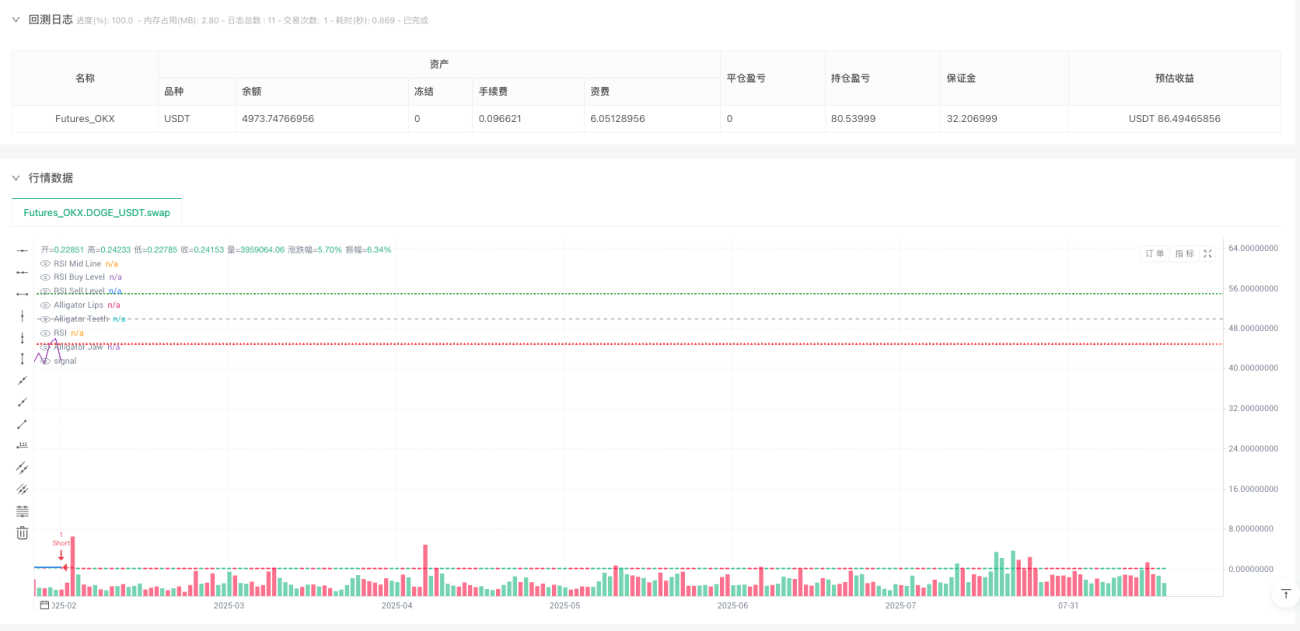
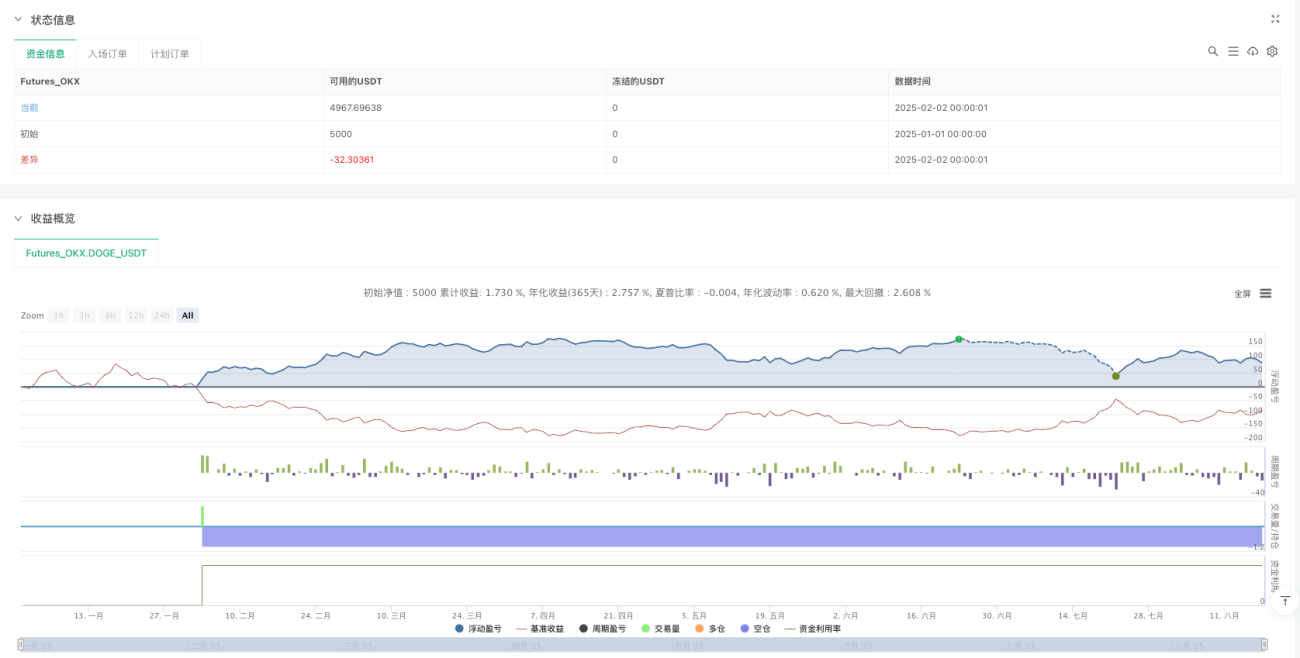
La stratégie de rupture de momentum RSI de l'Alligator de Williams est une stratégie de trading quantitatif multi-timeframes qui combine l'indicateur Alligator de Williams et l'indice de force relative (RSI). Cette stratégie utilise des chandeliers de 15 minutes. Elle détermine la direction du marché via les trois moyennes mobiles de l'Alligator (Lèvres, Dents, Mâchoire) tout en confirmant la force du momentum avec le RSI, créant ainsi un système complet de signaux d'entrée et de sortie. La stratégie intègre des mécanismes clairs de stop-loss et de take-profit, avec un filtrage multi-conditions pour garantir la fiabilité des signaux, ce qui la rend particulièrement adaptée aux marchés présentant des tendances marquées.
Logique de la stratégie
Le principe fondamental de cette stratégie repose sur la capacité de l'Alligator de Williams à identifier les tendances et sur la fonction de confirmation du momentum du RSI. L'Alligator de Williams est composé de trois moyennes mobiles de périodes différentes : la Mâchoire (13 périodes, décalage 8), les Dents (8 périodes, décalage 5) et les Lèvres (5 périodes, décalage 3). Lorsque ces trois lignes sont alignées dans l'ordre Lèvres > Dents > Mâchoire, cela indique une tendance haussière ; l'ordre inverse indique une tendance baissière.
Le déclenchement d'un signal d'achat nécessite la satisfaction simultanée de quatre conditions : le cours de clôture au-dessus des Lèvres, les Lèvres au-dessus des Dents, les Dents au-dessus de la Mâchoire, et le RSI supérieur à 55. Ce mécanisme de filtrage multiple garantit que des positions ne sont ouvertes que lorsque la tendance est claire et le momentum suffisant. Les signaux de vente sont inverses : cours de clôture en dessous des Lèvres, Lèvres en dessous des Dents, Dents en dessous de la Mâchoire, et RSI inférieur à 45.
Le mécanisme de stop-loss intègre une triple protection : RSI descendant sous 50, prix passant sous les Dents, ou Lèvres passant sous les Dents. Le take-profit est fixé à un montant déterminé (25 roupies), offrant un contrôle clair du ratio risque/récompense.
Avantages de la stratégie
Premièrement, la combinaison de multiples indicateurs offre une plus grande précision des signaux. L'Alligator de Williams excelle dans l'identification du début et de la fin des tendances, tandis que le RSI mesure efficacement le momentum des prix. Leur association réduit considérablement la probabilité de faux signaux. Deuxièmement, la stratégie utilise une validation progressive des conditions ; un ordre n'est généré que lorsque toutes les conditions sont simultanément remplies, ce qui améliore considérablement le taux de réussite des transactions.
Cette stratégie est dotée d'une bonne adaptabilité ; les paramètres peuvent être ajustés pour convenir à différents environnements de marché et instruments. Le timeframe de 15 minutes permet de capter les fluctuations de prix à court et moyen terme sans générer une fréquence de transactions excessive. Le mécanisme de take-profit fixe simplifie le processus de décision commerciale et aide à maintenir la discipline de trading.
La stratégie comprend également un système de gestion des risques complet. Les trois conditions de stop-loss garantissent une sortie rapide en cas d'évolution défavorable, limitant efficacement la perte maximale par transaction. Les signaux de trading visuels rendent l'exécution de la stratégie plus intuitive et pratique.
Risques de la stratégie
Le principal risque auquel cette stratégie est confrontée est le risque de retournement de tendance. En cas de retournement de marché violent, les multiples indicateurs peuvent échouer simultanément, entraînant des pertes importantes. En particulier sur les marchés range, l'Alligator peut générer de fréquents faux signaux, et le RSI peut également produire des lectures trompeuses pendant les phases de consolidation.
Bien que le mécanisme de take-profit fixe simplifie les opérations, il peut également limiter le potentiel de profit lors de fortes tendances. Lorsque le marché évolue de manière unidirectionnelle et prolongée, un take-profit prématuré peut faire manquer des opportunités de gains plus importants. La latence est un autre point d'attention ; étant basé sur des moyennes mobiles, l'Alligator de Williams présente un retard inhérent, ce qui peut entraîner des points d'entrée moins opportuns.
La sensibilité aux paramètres est également un point de risque. Les valeurs critiques du RSI (55 et 45) ainsi que les paramètres de période de l'Alligator doivent être ajustés en fonction des différents environnements de marché ; des paramètres fixes peuvent ne pas convenir à toutes les conditions de marché. De plus, la stratégie est sensible aux coûts de transaction ; des entrées et sorties fréquentes peuvent voir leurs gains érodés par les commissions et le slippage.
Pistes d'optimisation
L'ajustement dynamique des paramètres constitue une piste d'optimisation importante. Un mécanisme adaptatif pourrait être introduit pour modifier automatiquement les seuils du RSI et les paramètres de l'Alligator en fonction de la volatilité du marché. Par exemple, augmenter le seuil du RSI dans un environnement de forte volatilité et le diminuer dans un environnement de faible volatilité, afin de s'adapter aux différentes conditions.
Le mécanisme de take-profit pourrait passer d'un montant fixe à un take-profit dynamique, par exemple en utilisant un multiple de l'ATR (Average True Range) comme objectif, ce qui permettrait de mieux s'adapter aux caractéristiques de volatilité du marché. On pourrait également envisager de mettre en œuvre un trailing take-profit, qui déclenche un stop suiveur après avoir atteint un certain niveau de profit, afin de capturer des tendances plus amples.
L'ajout d'un filtre basé sur l'environnement de marché est une autre piste d'optimisation. On pourrait intégrer un indicateur de force du marché ou de volatilité pour déterminer si le marché actuel est adapté à la stratégie et suspendre les trades dans des conditions défavorables. Un filtre temporel est également important pour éviter de trader pendant les périodes de faible liquidité.
Le mécanisme de confirmation des signaux peut être renforcé. On pourrait ajouter une confirmation par le volume, en ne validant un signal que si le volume d'échange augmente. L'analyse multi-timeframes pourrait également être envisagée : confirmer la direction de la tendance sur un timeframe supérieur, puis chercher des points d'entrée précis sur un timeframe inférieur.
Résumé
La stratégie de rupture de momentum RSI de l'Alligator de Williams est un système de trading quantitatif relativement bien conçu. Grâce à la combinaison de multiples indicateurs et à un filtrage strict des conditions, elle présente un bon potentiel de performance sur les marchés en tendance. Ses principaux atouts résident dans sa gestion systématique des risques et son mécanisme de génération de signaux clairs, offrant aux traders un cadre de trading relativement stable.
Cependant, cette stratégie présente également certaines limites, notamment des performances potentiellement moins bonnes sur les marchés range. Les paramètres fixes peuvent ne pas s'adapter à tous les environnements de marché. Des optimisations telles que l'introduction d'ajustements dynamiques des paramètres, l'amélioration du mécanisme de take-profit et l'ajout de filtres sur l'environnement de marché peuvent améliorer son adaptabilité et sa rentabilité.
Pour les traders utilisant cette stratégie, il est recommandé de procéder à des backtests approfondis et à une validation en conditions réelles dans différents environnements de marché, et d'ajuster les paramètres en fonction des performances observées. Par ailleurs, une bonne gestion de capital et la discipline de trading sont des éléments clés pour la mise en œuvre réussie de cette stratégie.
Premièrement, la fusion multi-indicateurs offre une précision accrue des signaux. L'Alligator de Williams excelle dans l'identification des débuts et fins de tendance, tandis que le RSI mesure efficacement le momentum des prix ; leur combinaison réduit considérablement la probabilité de faux signaux. Deuxièmement, la stratégie utilise une validation progressive des conditions, ne générant des signaux de trading que lorsque toutes les conditions sont simultanément remplies, améliorant ainsi considérablement les taux de réussite des transactions.
La stratégie démontre une bonne adaptabilité, permettant des ajustements de paramètres pour convenir à différents environnements de marché et instruments de trading. Le timeframe de 15 minutes capture les fluctuations de prix à moyen terme tout en évitant une fréquence de trading excessive. Le mécanisme de take-profit fixe simplifie les décisions de trading et aide à maintenir la discipline de trading.
La stratégie dispose également d'un système de gestion des risques complet, où trois conditions de stop-loss garantissent des sorties rapides en cas de situations défavorables, contrôlant efficacement la perte maximale par transaction. L'identification visuelle des signaux de trading rend l'exécution de la stratégie plus intuitive et pratique.
Risques de la stratégie
Les principaux risques incluent le risque de retournement de tendance. Lors de retournements de marché violents, plusieurs indicateurs peuvent échouer simultanément, entraînant des pertes significatives. En particulier dans les marchés oscillants, l'indicateur Alligator peut générer de fréquents faux signaux, tandis que le RSI peut produire des lectures trompeuses pendant les phases de consolidation latérale.
Bien que le mécanisme de take-profit fixe simplifie les opérations, il peut limiter le potentiel de profit lors de forts mouvements de tendance. Dans des marchés directionnels soutenus, une prise de profit prématurée pourrait faire manquer des opportunités de profit plus importantes. Le retard est une autre préoccupation, car la base de moyenne mobile de l'Alligator de Williams crée des caractéristiques de délai naturelles, ce qui peut entraîner un timing d'entrée sous-optimal.
La sensibilité aux paramètres présente un risque supplémentaire. Les valeurs seuils du RSI (55 et 45) et les paramètres de période de l'Alligator nécessitent un ajustement pour différents environnements de marché ; des paramètres fixes peuvent ne pas convenir à toutes les conditions de marché. De plus, la stratégie est sensible aux coûts de trading, où des entrées et sorties fréquentes pourraient éroder les rendements via les commissions et le slippage.
Directions d'optimisation
L'ajustement dynamique des paramètres constitue une direction d'optimisation cruciale. La mise en œuvre de mécanismes adaptatifs pour ajuster automatiquement les seuils du RSI et les paramètres de l'Alligator en fonction de la volatilité du marché pourrait améliorer les performances. Par exemple, augmenter les seuils du RSI dans des environnements à forte volatilité tout en les abaissant dans des conditions de faible volatilité permettrait de mieux s'adapter aux conditions de marché variables.
Le mécanisme de take-profit pourrait évoluer de montants fixes vers des objectifs dynamiques, comme l'utilisation de multiples de l'ATR (Average True Range) comme objectifs de profit, mieux adaptés aux caractéristiques de volatilité du marché. La mise en œuvre de take-profits suiveurs pourrait également être envisagée, activant des stops suiveurs après avoir atteint certains niveaux de profit pour capturer des gains de tendance plus importants.
L'ajout de filtres d'environnement de marché représente une autre voie d'optimisation. L'introduction d'indicateurs de force du marché ou de mesures de volatilité pour évaluer la pertinence actuelle du marché pour la stratégie pourrait suspendre le trading dans des conditions défavorables. Les filtres temporels sont tout aussi importants, évitant les transactions pendant les périodes de faible liquidité.
Les mécanismes de confirmation des signaux méritent d'être renforcés. Une confirmation par le volume pourrait être ajoutée, ne validant les signaux qu'en cas d'expansion du volume. L'analyse multi-timeframe pourrait également être envisagée, confirmant la direction de la tendance sur des timeframes plus élevés avant de rechercher des points d'entrée spécifiques sur des timeframes plus bas.
Résumé
La stratégie de breakout de momentum RSI Alligator de Williams est un système de trading quantitatif relativement bien conçu qui, grâce à l'intégration multi-indicateurs et à un filtrage strict des conditions, démontre un bon potentiel de performance dans les marchés en tendance. Les principaux avantages de la stratégie résident dans sa gestion systématique des risques et ses mécanismes clairs de génération de signaux, offrant aux traders un cadre de trading relativement stable.
Cependant, la stratégie présente des limites, notamment une performance potentiellement inférieure dans les marchés oscillants, où des paramètres fixes peuvent ne pas s'adapter à tous les environnements de marché. Grâce à un ajustement dynamique des paramètres, à des mécanismes de prise de profits améliorés et à un filtrage supplémentaire des conditions de marché, l'adaptabilité et la rentabilité de la stratégie peuvent être encore améliorées.
Pour les traders mettant en œuvre cette stratégie, il est recommandé de réaliser des backtests approfondis et une vérification en trading réel dans différents environnements de marché, avec des ajustements de paramètres appropriés en fonction des performances réelles. Maintenir une gestion de l'argent et une discipline de trading appropriées reste crucial pour une mise en œuvre réussie de la stratégie.[/trans]
- 1