गति अनुगामी Schaff प्रवृत्ति चक्र रणनीति

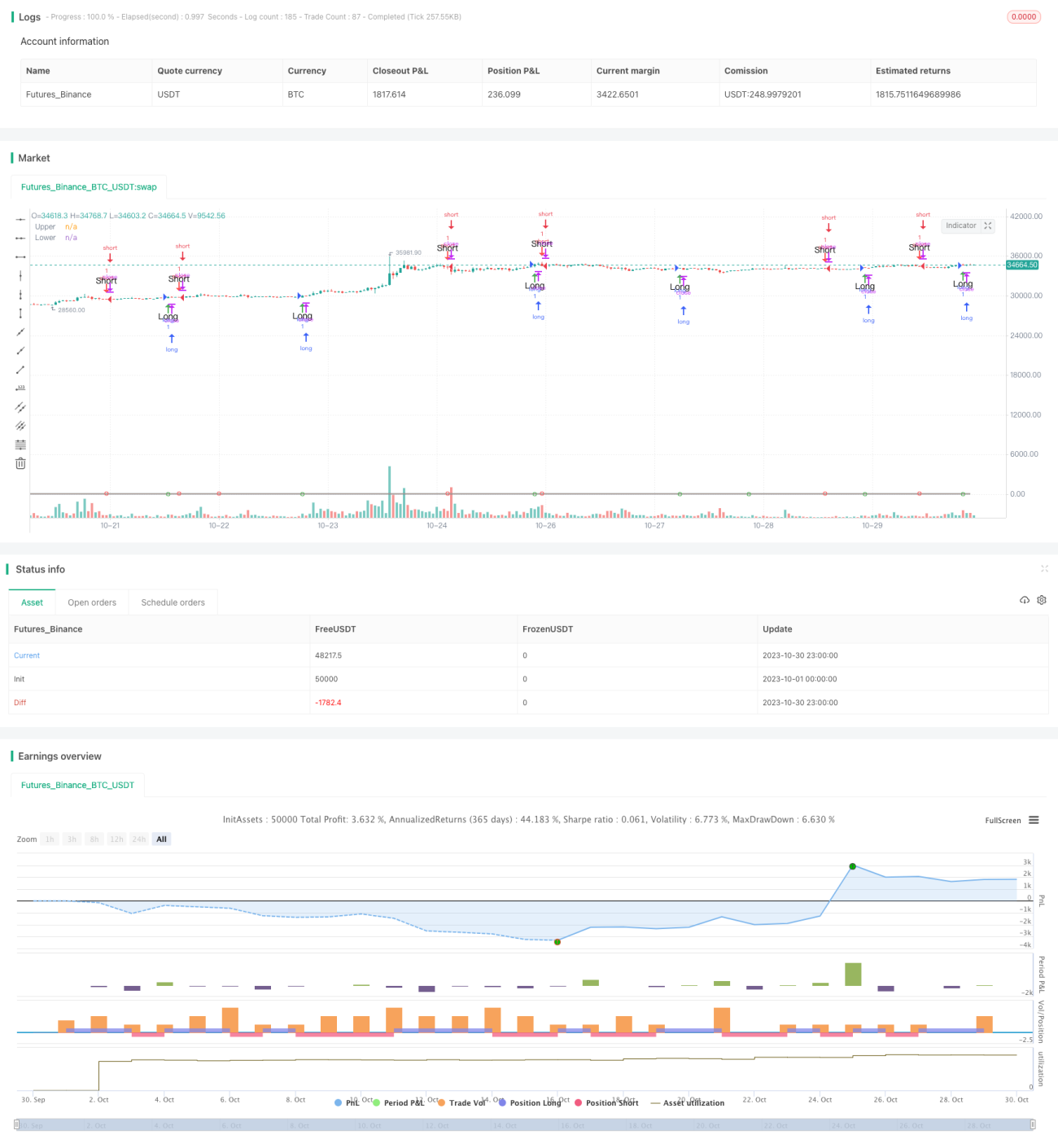
अवलोकन
यह रणनीति Schaff ट्रेंड साइकिल इंडिकेटर पर आधारित है, जो Stoch RSI के ओवरबॉट और ओवरसोल्ड सिद्धांतों को जोड़ती है, और मोमेंटम इंडिकेटर के माध्यम से प्रवृत्ति का निर्धारण और अनुसरण करती है। जब कीमत ओवरसोल्ड क्षेत्र से टूटकर ओवरबॉट क्षेत्र में प्रवेश करती है, तो लॉन्ग पोजीशन ली जाती है; जब कीमत ओवरबॉट क्षेत्र से नीचे टूटकर ओवरसोल्ड क्षेत्र में प्रवेश करती है, तो शॉर्ट पोजीशन ली जाती है। यह रणनीति मूल्य प्रवृत्ति में बदलाव के बिंदुओं को पकड़कर, गतिशील रूप से पोजीशन को समायोजित करती है और मूल्य चाल का अनुसरण करती है।
रणनीति सिद्धांत
-
- MACD की गणना करें, जिसमें Fast Length का डिफ़ॉल्ट मान 23 और Slow Length का डिफ़ॉल्ट मान 50 है। MACD अल्पकालिक और दीर्घकालिक मूविंग एवरेज के बीच के अंतर को दर्शाता है, जिसका उपयोग मूल्य मोमेंटम का निर्धारण करने के लिए किया जाता है।
-
- MACD पर Stoch RSI प्रोसेसिंग करके K मान बनाया जाता है, जिसमें Cycle Length का डिफ़ॉल्ट मान 10 है, जो MACD के मोमेंटम इंडिकेटर के ओवरबॉट और ओवरसोल्ड को दर्शाता है।
-
- K मान पर वेटेड मूविंग एवरेज लगाकर D मान बनाया जाता है, जिसमें 1st %D Length का डिफ़ॉल्ट मान 3 है, जो K मान में शोर को हटाता है।
-
- D मान पर फिर से Stoch RSI प्रोसेसिंग करके प्रारंभिक STC मान बनाया जाता है, जिसमें 2nd %D Length का डिफ़ॉल्ट मान 3 है, जो सटीक ओवरबॉट/ओवरसोल्ड सिग्नल बनाता है।
-
- प्रारंभिक STC मान पर वेटेड मूविंग एवरेज लगाकर अंतिम STC मान प्राप्त किया जाता है, जिसकी सीमा 0-100 होती है। STC 75 से ऊपर होने पर ओवरबॉट क्षेत्र और 25 से नीचे होने पर ओवरसोल्ड क्षेत्र माना जाता है।
-
- जब STC नीचे से ऊपर की ओर 25 को पार करता है, तो लॉन्ग लें; जब STC ऊपर से नीचे की ओर 75 को पार करता है, तो शॉर्ट लें।
रणनीति के लाभ
-
- STC इंडिकेटर में Stoch RSI का डिज़ाइन शामिल है, जो स्पष्ट रूप से ओवरबॉट और ओवरसोल्ड क्षेत्रों की पहचान कर सकता है और मजबूत प्रवृत्ति संकेत उत्पन्न कर सकता है।
-
- डबल Stoch RSI फ़िल्टरिंग के माध्यम से, झूठे ब्रेकआउट को प्रभावी ढंग से फ़िल्टर किया जा सकता है।
-
- STC 0-100 का मानकीकृत रेंज बनाता है, जो मशीनीकृत ट्रेडिंग सिग्नल बनाने में सुविधा प्रदान करता है।
-
- यह रणनीति बैकटेस्ट में विज़ुअलाइज़्ड ब्रेकआउट मार्कर और टेक्स्ट पॉप-अप अलर्ट प्रदान करती है, जो ट्रेडिंग अवसरों को स्पष्ट और सहजता से पकड़ने में मदद करती है।
-
- रणनीति में अनुकूलित पैरामीटर संयोजन का उपयोग किया गया है, जो अनावश्यक ट्रेडों को प्रभावी ढंग से नियंत्रित कर सकता है और अत्यधिक संवेदनशीलता से बच सकता है।
रणनीति जोखिम
-
- STC इंडिकेटर पैरामीटर के प्रति संवेदनशील है; विभिन्न क्रिप्टोकरेंसी और समय सीमाओं के लिए बाजार विशेषताओं के अनुसार पैरामीटर सेट को समायोजित करना आवश्यक है।
-
- ब्रेकआउट ट्रेडिंग रणनीति में फंसने का जोखिम होता है, जोखिम को नियंत्रित करने के लिए स्टॉप-लॉस लगाना आवश्यक है।
-
- कम तरलता वाले बाजारों में झूठे ब्रेकआउट गलत सिग्नल ट्रिगर कर सकते हैं, इसलिए वॉल्यूम जैसे संकेतकों के साथ फ़िल्टर करना आवश्यक है।
-
- यह रणनीति केवल STC इंडिकेटर पर आधारित है; प्रवृत्ति की पुष्टि के लिए अन्य कारकों को शामिल करना आवश्यक हो सकता है, ताकि रिवर्सल के कारण स्टॉप-लॉस से बचा जा सके।
-
- महत्वपूर्ण सपोर्ट और रेज़िस्टेंस लेवल पर ध्यान देना आवश्यक है, ताकि उस क्षेत्र में गलत सिग्नल से बचा जा सके।
रणनीति अनुकूलन दिशाएँ
-
- विभिन्न समय सीमाओं और क्रिप्टोकरेंसी के अनुकूल होने के लिए MACD के पैरामीटर संयोजन को अनुकूलित करें।
-
- Stoch RSI के K और D मान पैरामीटर को अनुकूलित करके STC वक्र को चिकना करें।
-
- वॉल्यूम इंडिकेटर को शामिल करके कम तरलता वाले बाजारों में झूठे ब्रेकआउट से बचें।
-
- प्रवृत्ति संकेत की पुष्टि के लिए अन्य संकेतक जोड़ें, उदाहरण के लिए बोलिंजर बैंड।
-
- स्टॉप-लॉस तंत्र जोड़ें, जैसे ट्रेलिंग स्टॉप या ATR स्टॉप।
-
- प्रवेश बिंदु को समायोजित करें, उदाहरण के लिए ब्रेकआउट के बाद रिट्रेसमेंट पर प्रवेश करके प्रवृत्ति की पुष्टि सुनिश्चित करें।
सारांश
Schaff ट्रेंड साइकिल रणनीति मोमेंटम इंडिकेटर के माध्यम से ओवरबॉट और ओवरसोल्ड क्षेत्रों का निर्धारण करती है, और इस आधार पर मूल्य में अल्प-से-मध्यम अवधि की प्रवृत्ति में बदलाव का आकलन करती है। यह रणनीति सरल और स्पष्ट है, विभिन्न बाजारों के अनुसार पैरामीटर समायोजित किए जा सकते हैं, लेकिन इसमें फंसने का जोखिम भी है। सहायक संकेतकों और स्टॉप-लॉस के माध्यम से अनुकूलन किया जा सकता है, और मजबूत प्रवृत्ति में अच्छा प्रदर्शन कर सकती है।
/*backtest
start: 2023-10-01 00:00:00
end: 2023-10-31 00:00:00
period: 1h
basePeriod: 15m
exchanges: [{"eid":"Futures_Binance","currency":"BTC_USDT"}]
*/

//@version=3
// Copyright (c) 2018-present, Alex Orekhov (everget)
// Schaff Trend Cycle script may be freely distributed under the MIT license.
strategy("Schaff Trend Cycle", shorttitle="STC Backtest", overlay=true)- 1