# रेनबो ऑसिलेटर बैकटेस्टिंग स्ट्रैटेजी

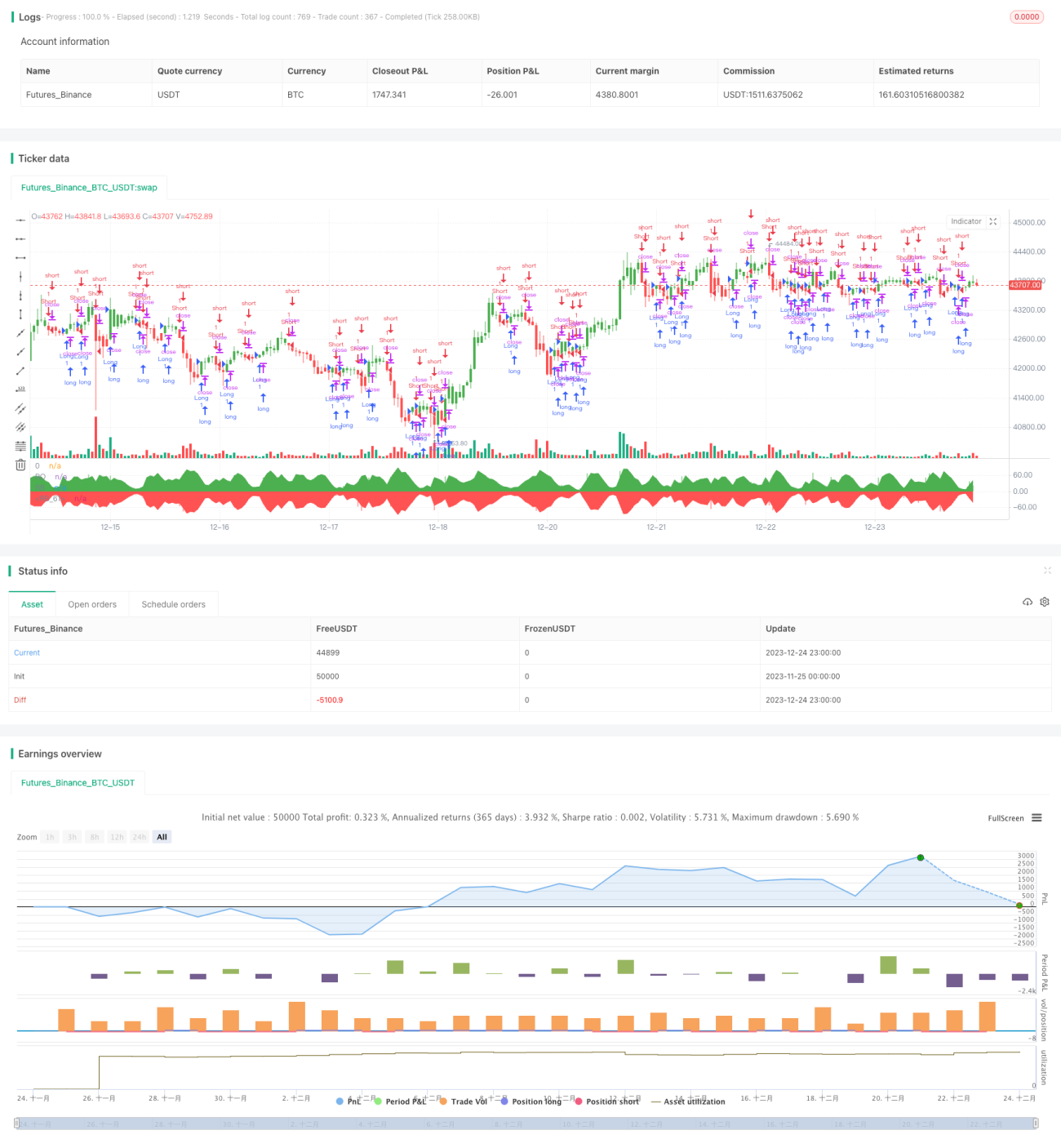
सारांश
रेनबो ऑसिलेटर बैकटेस्ट रणनीति एक मात्रात्मक ट्रेडिंग रणनीति है जो रेनबो ऑसिलेटर इंडिकेटर पर आधारित है। यह रणनीति स्टॉक मूल्य और मूविंग एवरेज के बीच विचलन की डिग्री की गणना करके बाजार की प्रवृत्ति दिशा और ताकत का निर्धारण करती है, और इस प्रकार लॉन्ग और शॉर्ट पोजीशन की दिशा तय करती है।
रणनीति का सिद्धांत
इस रणनीति का मुख्य संकेतक रेनबो ऑसिलेटर (Rainbow Oscillator, RO) है, जिसका गणना सूत्र इस प्रकार है:
RO = 100 * ((收盘价 - 10日移动平均线) / (最高价的最高值 - 最低价的最低值))
यहाँ 10-दिवसीय मूविंग एवरेज 10 अवधियों के समापन मूल्यों का सरल मूविंग एवरेज है। यह संकेतक अपने मूविंग एवरेज के सापेक्ष मूल्य के विचलन को दर्शाता है। जब RO > 0 होता है, तो यह दर्शाता है कि मूल्य मूविंग एवरेज से ऊपर है, जो बुलिश संकेत है; जब RO < 0 होता है, तो यह दर्शाता है कि मूल्य मूविंग एवरेज से नीचे है, जो बियरिश संकेत है।
यह रणनीति एक सहायक संकेतक भी गणना करती है——बैंडविड्थ (Bandwidth, RB), जिसका गणना सूत्र इस प्रकार है:
RB = 100 * ((均线的最高值 - 均线的最低值) / (最高价的最高值 - 最低价的最低值))
RB मूविंग एवरेज के बीच की चौड़ाई को दर्शाता है। RB जितना बड़ा होता है, मूल्य में उतना ही अधिक उतार-चढ़ाव होता है, और इसके विपरीत मूल्य स्थिर होता है। RB संकेतक का उपयोग बाजार की स्थिरता की डिग्री का आकलन करने के लिए किया जा सकता है।
RO और RB संकेतकों के मानों के आधार पर, यह रणनीति मूल्य विचलन और बाजार स्थिरता का निर्धारण करती है, और इस प्रकार लॉन्ग और शॉर्ट पोजीशन के ट्रेडिंग सिग्नल उत्पन्न करती है।
रणनीति के लाभ
इस रणनीति के निम्नलिखित लाभ हैं:
- दो संकेतकों पर आधारित निर्णय, एकल संकेतक निर्णय की सीमाओं से बचाता है।
- एक साथ मूल्य प्रवृत्ति और बाजार स्थिरता का निर्धारण कर सकता है।
- गणना सरल, समझने और लागू करने में आसान।
- दृश्य संकेतक, "इंद्रधनुष" प्रभाव बनाता है, सहज और पढ़ने में आसान।
रणनीति के जोखिम
इस रणनीति में कुछ जोखिम भी हैं:
- RO और RB संकेतकों के पैरामीटर का अनुचित सेटिंग गलत ट्रेडिंग सिग्नल का कारण बन सकता है।
- दोहरी मूविंग एवरेज रणनीति आसानी से गलत सिग्नल और बार-बार ट्रेडिंग उत्पन्न कर सकती है।
- बैकटेस्ट अवधि और उपकरण का अनुचित चयन रणनीति के प्रदर्शन को प्रभावित कर सकता है।
- ट्रेडिंग लागत पर विचार नहीं किया गया, वास्तविक व्यापार में प्रभाव खराब हो सकता है।
समाधान:
- RO और RB संकेतकों के पैरामीटर का अनुकूलन करें।
- बार-बार ट्रेडिंग से बचने के लिए फ़िल्टर शर्तें जोड़ें।
- उपयुक्त बैकटेस्ट अवधि और उपकरण चुनें।
- ट्रेडिंग लागत की गणना करें और उसे ध्यान में रखें।
रणनीति का अनुकूलन
इस रणनीति को निम्नलिखित पहलुओं से और अनुकूलित किया जा सकता है:
- RO संकेतक में स्मूथ (Smooth) फ़ंक्शन जोड़ें, ताकि संकेतक में अत्यधिक उतार-चढ़ाव से बचा जा सके।
- स्टॉप-लॉस रणनीति जोड़ें, प्रति व्यापार हानि को नियंत्रित करें।
- अन्य संकेतकों के साथ मिलाकर संयोजन व्यापार करें, लाभ की संभावना बढ़ाएँ।
- पूर्वानुमान के लिए मशीन लर्निंग मॉडल जोड़ें, संकेतक की प्रभावशीलता का मूल्यांकन करें।
- विभिन्न उपकरणों के लिए पैरामीटर अनुकूलन करें, अनुकूलनशीलता बढ़ाएँ।
निष्कर्ष
रेनबो ऑसिलेटर बैकटेस्ट रणनीति मूल्य और मूविंग एवरेज के बीच विचलन संबंध की गणना करके बाजार की प्रवृत्ति और स्थिरता का निर्धारण करती है, और इस प्रकार लॉन्ग और शॉर्ट पोजीशन व्यापार करती है। यह रणनीति सहज और पढ़ने में आसान है, लागू करने में सरल है, और इसका कुछ व्यावहारिक मूल्य है। लेकिन इसमें कुछ जोखिम भी हैं, जिन्हें कम करने और वास्तविक व्यापार में प्रदर्शन में सुधार के लिए पैरामीटर और ट्रेडिंग नियमों के अनुसार अनुकूलित करने की आवश्यकता है।
/*backtest
start: 2023-11-25 00:00:00
end: 2023-12-25 00:00:00
period: 1h
basePeriod: 15m
exchanges: [{"eid":"Futures_Binance","currency":"BTC_USDT"}]
*/

//@version=2
////////////////////////////////////////////////////////////
//  Copyright by HPotter v1.0 18/03/2018
// Ever since the people concluded that stock market price movements are not - 1