अनुकूली कॉफ़मैन मूविंग एवरेज प्रवृत्ति अनुसरण रणनीति

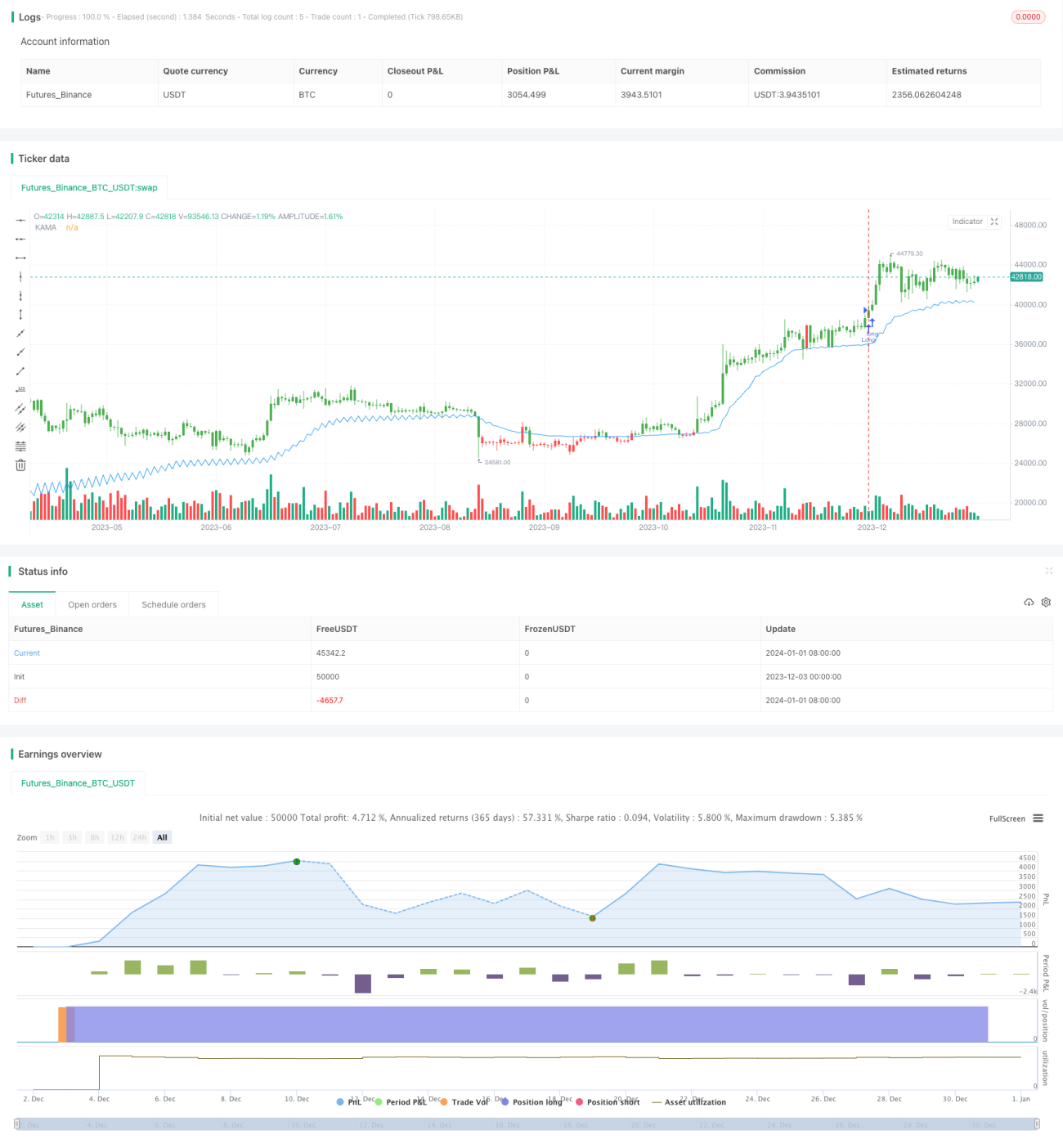
सिंहावलोकन
यह रणनीति मूल्य प्रवृत्ति को ट्रैक करने के लिए अनुकूली मूविंग एवरेज इंडिकेटर कॉफ़मैन एडेप्टिव मूविंग एवरेज (KAMA) का उपयोग करती है, जिससे कम खरीदकर और अधिक बेचकर लाभ कमाया जा सकता है।
रणनीति का सिद्धांत
कॉफ़मैन एडेप्टिव मूविंग एवरेज (KAMA) इंडिकेटर की गणना सूत्र इस प्रकार है:
nAMA = nz(nAMA[1]) + nsmooth * (Close - nz(nAMA[1]))
जहाँ:
nsmooth = (nefratio * (nfastend - nslowend) + nslowend)^2
nefratio = nsignal / nnoise
nsignal = |Close - Close[Length]|
nnoise = sum(|Close - Close[1]|, Length)
nfastend = 0.666
nslowend = 0.0645
यह इंडिकेटर बाजार की अस्थिरता और मूल्य परिवर्तन की प्रवृत्ति को ध्यान में रखता है, जिससे मूल्य प्रवृत्ति का तेजी से अनुसरण किया जा सकता है। विशेष रूप से:
- जब बाजार में उतार-चढ़ाव कम होता है, तो nsmooth nslowend के करीब होता है, KAMA रेखा धीमी गति से बदलती है, जिससे बाजार का शोर दब जाता है।
- जब बाजार में उतार-चढ़ाव बढ़ता है और प्रवृत्ति दिखाई देती है, तो nsmooth nfastend के करीब होता है, KAMA रेखा तेजी से बदलती है, प्रवृत्ति का अनुसरण करती है।
मूल्य और KAMA के संबंध की तुलना करके मूल्य की प्रवृत्ति की दिशा का निर्धारण किया जा सकता है, जिसके आधार पर लॉन्ग या शॉर्ट का निर्णय लिया जाता है।
रणनीति के लाभ
इस रणनीति का सबसे बड़ा लाभ यह है कि यह अनुकूली मूविंग एवरेज इंडिकेटर का उपयोग करके मूल्य प्रवृत्ति में परिवर्तन को ट्रैक करती है, जिससे शोर के प्रभाव को प्रभावी ढंग से कम किया जा सकता है और ट्रैकिंग बेहतर होती है। विशिष्ट लाभ इस प्रकार हैं:
- KAMA इंडिकेटर बाजार के शोर को दबाता है, जिससे अनावश्यक ट्रेडों की संख्या कम हो सकती है।
- KAMA इंडिकेटर मूल्य परिवर्तन की प्रवृत्ति पर तेजी से प्रतिक्रिया करता है, ट्रैकिंग प्रभाव अच्छा होता है।
- रणनीति के निर्णय नियम सरल और स्पष्ट हैं, समझने और लागू करने में आसान हैं।
- विभिन्न बाजार स्थितियों के अनुकूल बनाने के लिए रिवर्स ट्रेडिंग को कॉन्फ़िगर किया जा सकता है।
रणनीति जोखिम
इस रणनीति में कुछ जोखिम भी हैं:
- साइडवेज़ बाजार में, KAMA इंडिकेटर गलत संकेत दे सकता है। पैरामीटर समायोजित करके इंडिकेटर के प्रदर्शन को अनुकूलित किया जा सकता है।
- ट्रैकिंग में देरी होती है, जिससे अल्पकालिक मूल्य उलटफेर छूट सकता है। विवेकानुसार अन्य इंडिकेटर्स के साथ संयोजन करके निदान किया जा सकता है।
- ट्रेडिंग शुल्क और स्लिपेज पर विचार नहीं किया गया है, वास्तविक बाजार में प्रदर्शन बैकटेस्ट से कमजोर होगा।
रणनीति अनुकूलन दिशाएँ
इस रणनीति को निम्नलिखित पहलुओं से और अनुकूलित किया जा सकता है:
- KAMA पैरामीटर को अनुकूलित करके इंडिकेटर की ट्रैकिंग संवेदनशीलता में सुधार करना।
- स्टॉप-लॉस तंत्र जोड़ना, प्रति ट्रेड अधिकतम हानि को नियंत्रित करना।
- संकेतों को फ़िल्टर करने और निर्णय सटीकता में सुधार करने के लिए अन्य इंडिकेटर्स के साथ संयोजन करना।
- प्रवृत्ति का और अधिक अनुसरण करने के लिए पुनः प्रवेश तंत्र जोड़ना।
सारांश
यह रणनीति कॉफ़मैन एडेप्टिव मूविंग एवरेज इंडिकेटर का उपयोग करके मूल्य प्रवृत्ति को ट्रैक करती है, निर्णय नियम सरल और स्पष्ट हैं, वास्तविक ट्रेडिंग में लागू करना आसान है। यह इंडिकेटर शोर को दबाने के साथ-साथ मूल्य परिवर्तन पर तेजी से प्रतिक्रिया करता है, ट्रैकिंग प्रभाव अच्छा है, और यह एक अनुशंसित प्रवृत्ति अनुसरण रणनीति है।
/*backtest
start: 2023-12-03 00:00:00
end: 2024-01-02 00:00:00
period: 1d
basePeriod: 1h
exchanges: [{"eid":"Futures_Binance","currency":"BTC_USDT"}]
*/

//@version=2
////////////////////////////////////////////////////////////
//  Copyright by HPotter v1.0 25/08/2017
// Everyone wants a short-term, fast trading trend that works without large- 1