स्टोकैस्टिक इंडिकेटर पर आधारित आवधिक विकल्प ट्रेडिंग रणनीति

अवलोकन
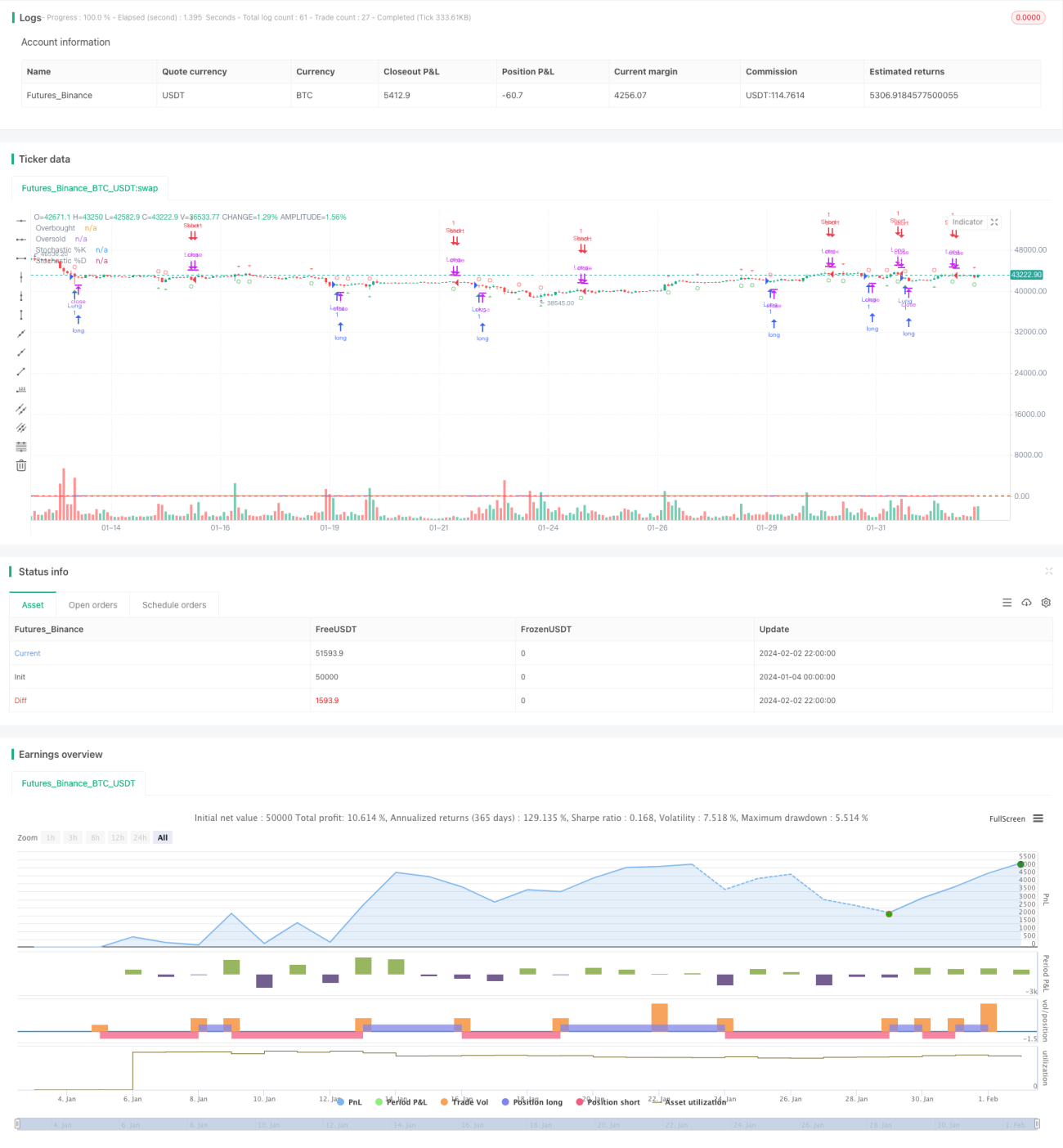
इस रणनीति का नाम "स्टोकेस्टिक संकेतक पर आधारित आवधिक विकल्प ट्रेडिंग रणनीति" है। यह स्टोकेस्टिक ऑसिलेटर का उपयोग करके विकल्प ट्रेडिंग के लिए संभावित प्रवेश और निकास बिंदुओं की पहचान करती है। यह रणनीति विशेष रूप से विकल्प ट्रेडिंग के लिए डिज़ाइन की गई है और लॉन्ग तथा शॉर्ट दोनों पक्षों पर ट्रेडिंग अवसरों की पहचान करती है।
रणनीति का सिद्धांत
यह रणनीति 14-अवधि के स्टोकेस्टिक %K लाइन और 3-अवधि के सरल मूविंग एवरेज का उपयोग करके स्टोकेस्टिक %D लाइन बनाती है। जब %K लाइन निचले स्तर से %D लाइन को ऊपर पार करती है, तो इसे तेजी का संकेत माना जाता है; जब %K लाइन उच्च स्तर से %D लाइन को नीचे पार करती है, तो इसे मंदी का संकेत माना जाता है। विशिष्ट प्रवेश और निकास शर्तें इस प्रकार हैं:
- लॉन्ग प्रवेश: जब %K लाइन 20 से नीचे के स्तर से %D लाइन को ऊपर पार करती है, तो लॉन्ग करें
- लॉन्ग निकास: जब %K लाइन 80 से ऊपर के स्तर से %D लाइन को नीचे पार करती है, तो पोजीशन बंद करें
- शॉर्ट प्रवेश: जब %K लाइन 80 से ऊपर के स्तर से %D लाइन को नीचे पार करती है, तो शॉर्ट करें
- शॉर्ट निकास: जब %K लाइन 20 से नीचे के स्तर से %D लाइन को ऊपर पार करती है, तो पोजीशन बंद करें
रणनीति के लाभ
- स्टोकेस्टिक संकेतक का उपयोग करके ओवरबॉट और ओवरसोल्ड क्षेत्रों की पहचान करता है, जिससे बाजार के शीर्ष पर लॉन्ग और निचले स्तर पर शॉर्ट करने से बचा जा सकता है
- संकेतक मापदंडों के अनुकूलन के साथ, ट्रेडिंग सिग्नल की गुणवत्ता में सुधार किया जा सकता है
- प्रवेश और निकास शर्तों को अनुकूलित किया जा सकता है, जिससे पोजीशन प्रबंधन में सुधार होता है
- विकल्प ट्रेडिंग में उपयोग किया जा सकता है, जिससे पूंजी दक्षता बढ़ती है
जोखिम विश्लेषण
- स्टोकेस्टिक संकेतक आसानी से गलत संकेत उत्पन्न कर सकता है, इसलिए अन्य संकेतकों के साथ फ़िल्टर करना आवश्यक है
- निश्चित पैरामीटर सेटिंग्स कुछ ट्रेडिंग अवसरों को छोड़ सकती हैं
- ड्रॉडाउन बढ़ सकता है, इसलिए प्रति ट्रेड पोजीशन आकार को नियंत्रित करना आवश्यक है
- स्टॉक के मूलभूत पहलुओं और व्यापक आर्थिक वातावरण में बदलाव पर ध्यान देना आवश्यक है
रणनीति अनुकूलन की दिशा
- मूविंग एवरेज जैसे संकेतकों के साथ गलत संकेतों को फ़िल्टर करना
- विभिन्न पैरामीटर संयोजनों का परीक्षण करके पैरामीटर सेटिंग्स को अनुकूलित करना
- ब्रेकआउट पैरामीटर बढ़ाकर गलत संकेतों को कम करना
- स्टॉप-लॉस और टेक-प्रॉफिट शर्तों को अनुकूलित करके प्रति ट्रेड हानि को नियंत्रित करना
सारांश
यह रणनीति स्टोकेस्टिक संकेतक के ओवरबॉट और ओवरसोल्ड सिद्धांत का उपयोग करके संभावित प्रवेश अवसरों की पहचान करती है। पारंपरिक ट्रेंड-फॉलोइंग रणनीतियों की तुलना में, यह बाजार के मोड़ पर बड़े चालों को पकड़ सकती है। पैरामीटर अनुकूलन और सिग्नल फ़िल्टरिंग जैसे माध्यमों से रणनीति की स्थिरता को और बढ़ाया जा सकता है। यह रणनीति विकल्प ट्रेडिंग में उपयोग की जा सकती है, जो जोखिम नियंत्रण के तहत उच्च रिटर्न प्राप्त करने का प्रयास करती है।
- 1