Strategi Kuantitatif Moving Average Adaptif

Ikhtisar
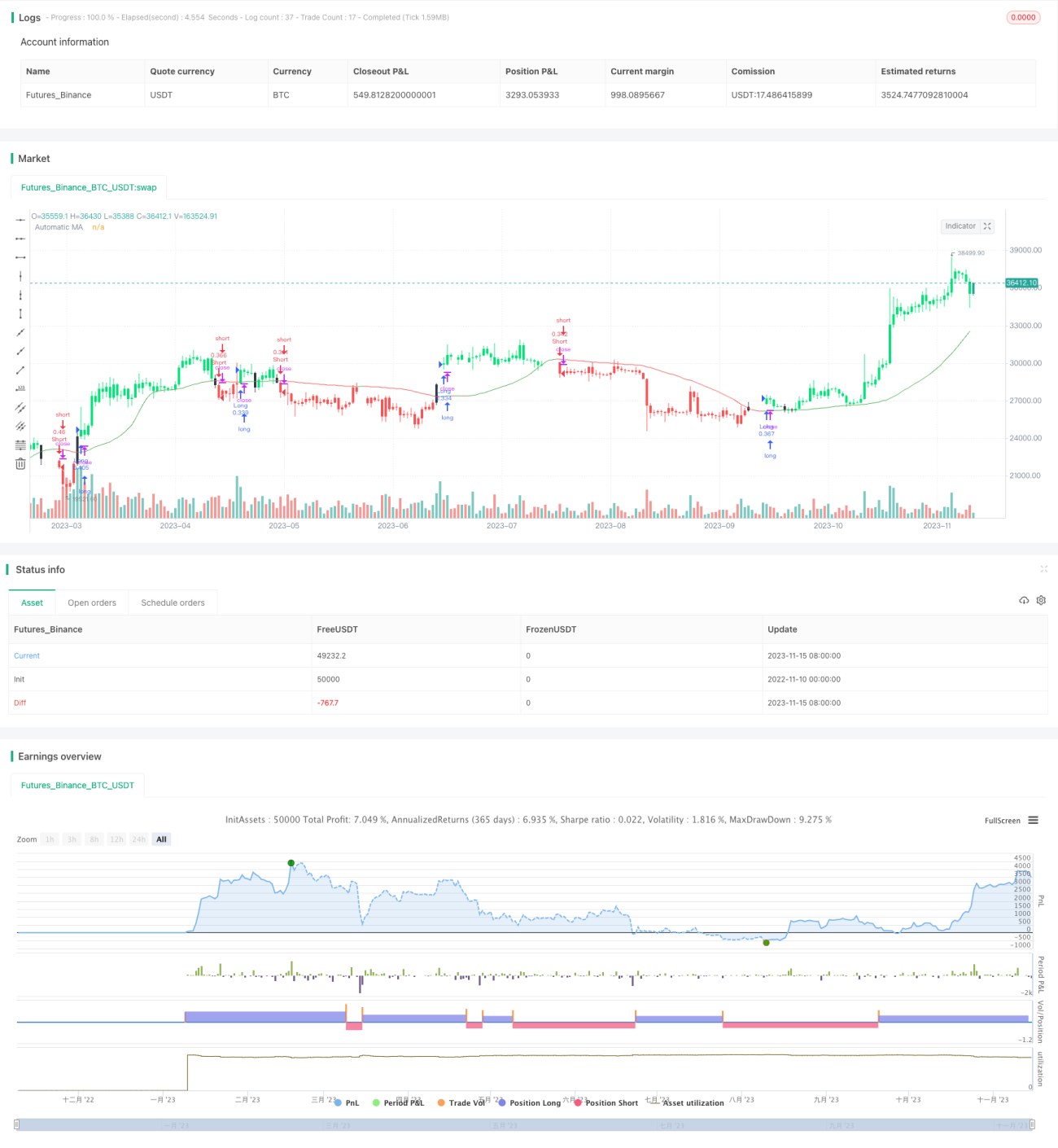
Strategi ini didasarkan pada moving average, yang dapat menyesuaikan parameter secara otomatis, dan cocok untuk pasar yang bergejolak pada timeframe tinggi. Strategi ini dapat secara otomatis menemukan kombinasi parameter terbaik dan menghasilkan sinyal trading ketika harga menembus garis moving average.
Logika Strategi
Strategi ini menggunakan moving average adaptif sebagai sinyal trading. Pertama, dihitung simple moving average (CMA) dari periode yang ditentukan (start). Kemudian, kombinasi parameter di sekitar CMA diuji, dengan menentukan kombinasi mana yang paling sedikit disentuh oleh badan dan sumbu lilin (candlestick body and wick). Akhirnya, CMA dengan sentuhan paling sedikit digunakan sebagai garis sinyal.
Secara spesifik, strategi ini menguji CMA dengan periode ditambah 1 (CMA_P1) dan dikurangi 1 (CMA_M1), menghitung jumlah sentuhan oleh badan dan sumbu lilin. Jika CMA memiliki sentuhan lebih sedikit daripada CMA_P1 dan CMA_M1, maka periode saat ini dipertahankan; jika CMA_P1 memiliki sentuhan lebih sedikit, maka periode ditambah 1; jika CMA_M1 memiliki sentuhan lebih sedikit, maka periode dikurangi 1. Ini menghasilkan CMA yang relatif halus sebagai garis sinyal.
Ketika harga menembus CMA ke atas, sinyal beli dihasilkan; ketika harga menembus CMA ke bawah, sinyal jual dihasilkan.
Analisis Keunggulan
Strategi moving average adaptif ini memiliki keunggulan sebagai berikut:
- Menemukan parameter optimal secara otomatis. Tidak perlu memilih periode moving average secara manual, strategi akan menguji periode yang berbeda dan menemukan yang optimal.
- Mengurangi sinyal palsu. Dibandingkan dengan moving average periode tetap, MA adaptif dapat menyaring lebih banyak noise, sehingga mengurangi banyak sinyal palsu.
- Beradaptasi dengan perubahan pasar. Ketika pasar beralih dari sideways ke tren, periode MA secara otomatis akan bertambah untuk menghasilkan sinyal; ketika pasar beralih dari tren ke sideways, periode MA secara otomatis akan berkurang. Dengan demikian, strategi dapat beradaptasi secara dinamis terhadap perubahan pasar.
- Menyederhanakan sistem trading. Metode adaptif ini dapat menyederhanakan seluruh sistem trading tanpa optimasi parameter manual.
- Skalabilitas yang baik. Konsep ini dapat diterapkan pada indikator lain seperti Bollinger Bands adaptif, KD adaptif, dll.
Analisis Risiko
Ada juga beberapa risiko yang perlu diperhatikan dari strategi ini:
- Risiko Opsi Beli. Ketika pasar menunjukkan pola opsi beli (call option), badan lilin mungkin gagal menembus garis MA, menghasilkan sinyal yang salah. Kondisi filter perlu ditambahkan untuk mengurangi risiko ini.
- Risiko Breakout Gagal. Breakout MA tidak selalu berkelanjutan, beberapa breakout gagal dapat terjadi. Validasi breakout diperlukan untuk memastikan tingkat keberhasilan yang tinggi.
- Risiko Pembalikan Tren. Pembalikan setelah memasuki pasar yang sedang tren perlu diantisipasi dengan cepat, jika tidak maka akan menyebabkan kerugian. Kondisi stop loss dapat ditetapkan untuk mengendalikan kerugian.
- Risiko Optimasi Parameter. Parameter yang disesuaikan secara adaptif dapat jatuh ke dalam optimasi lokal, sehingga menghasilkan moving average yang jelas redundan. Metode evaluasi model perlu diperkenalkan untuk menghindari masalah ini.
- Risiko Over-optimasi. Penyesuaian parameter secara adaptif dapat menyebabkan over-optimasi dan kehilangan kemampuan generalisasi model. Verifikasi jangka panjang di berbagai lingkungan pasar diperlukan, dan tidak boleh terlalu bergantung pada hasil backtest.
Arah Optimasi
Arah optimasi yang memungkinkan untuk strategi moving average adaptif ini meliputi:
- Menambahkan mekanisme validasi breakout tren, menyaring breakout palsu melalui breakout berturut-turut.
- Menambahkan strategi stop loss, stop loss ketika harga kembali ke sisi lain dari moving average.
- Menambahkan mekanisme filter opsi, menghindari sinyal yang salah dalam kondisi pasar opsi beli.
- Memperkenalkan metrik evaluasi untuk membatasi penyesuaian parameter, seperti IC, LIC, SIC, dll., untuk menghindari parameter yang dioptimasi secara berlebihan.
- Memperluas ke indikator lain, merancang strategi Golden Cross/Death Cross adaptif, strategi Bollinger Bands adaptif, dll.
- Mengoptimalkan metode perhitungan moving average, menggunakan Weighted Moving Average, Exponential Moving Average, dll., untuk menghaluskan moving average.
Ringkasan
Strategi ini menghasilkan sinyal trading dengan menyesuaikan periode moving average secara adaptif untuk menemukan parameter optimal. Dibandingkan dengan parameter tetap, strategi ini dapat mengurangi banyak sinyal palsu dan beradaptasi dengan perubahan pasar. Namun, kita juga perlu memperhatikan beberapa potensi risiko. Strategi perlu diverifikasi dan dioptimasi dengan walk forward agar dapat memperoleh keuntungan yang stabil dalam trading aktual.
-
Risiko pembalikan tren. Setelah memasuki suatu tren, jika terjadi pembalikan arah, perlu segera beralih; jika tidak, dapat menyebabkan kerugian. Harus menetapkan stop loss untuk mengendalikan kerugian.
-
Risiko optimasi parameter. Parameter yang disesuaikan secara adaptif dapat jatuh ke dalam optimasi lokal, sehingga menghasilkan MA yang berlebihan. Diperlukan metode evaluasi model untuk menghindari masalah ini.
-
Risiko overfitting. Penyetelan parameter yang berlebihan dapat menyebabkan overfitting dan kehilangan kemampuan generalisasi model. Diperlukan verifikasi jangka panjang di berbagai lingkungan pasar, tidak hanya mengandalkan hasil backtest.
Arah Pengembangan
Beberapa arah untuk meningkatkan strategi MA adaptif ini:
-
Menambahkan validasi breakout tren melalui breakout berturut-turut untuk menyaring sinyal breakout palsu.
-
Meningkatkan strategi stop loss, hentikan kerugian ketika harga bergerak kembali ke sisi lain dari MA.
-
Menambahkan filter opsi untuk menghindari sinyal yang salah ketika opsi call muncul.
-
Memperkenalkan metrik evaluasi seperti IC, LIC, SIC, dll. untuk membatasi penyetelan parameter dan mencegah overfitting.
-
Memperluas ke indikator lain seperti strategi golden cross adaptif, Bollinger Bands adaptif, dll.
-
Mengoptimalkan perhitungan MA dengan menggunakan weighted MA, exponential MA, dll. untuk mendapatkan MA yang lebih halus.
Ringkasan
Strategi ini menghasilkan sinyal trading dengan menyesuaikan periode MA secara adaptif untuk menemukan parameter yang optimal. Dibandingkan dengan parameter tetap, strategi ini dapat mengurangi banyak sinyal palsu dan beradaptasi terhadap perubahan pasar. Namun, kita juga perlu mewaspadai potensi risiko, serta melakukan verifikasi dan optimasi walk-forward sebelum menerapkannya dalam trading langsung untuk mendapatkan keuntungan yang stabil.
- 1