Strategi Timing dengan Indikator Ganda SuperTrend, Momentum, dan Volatilitas

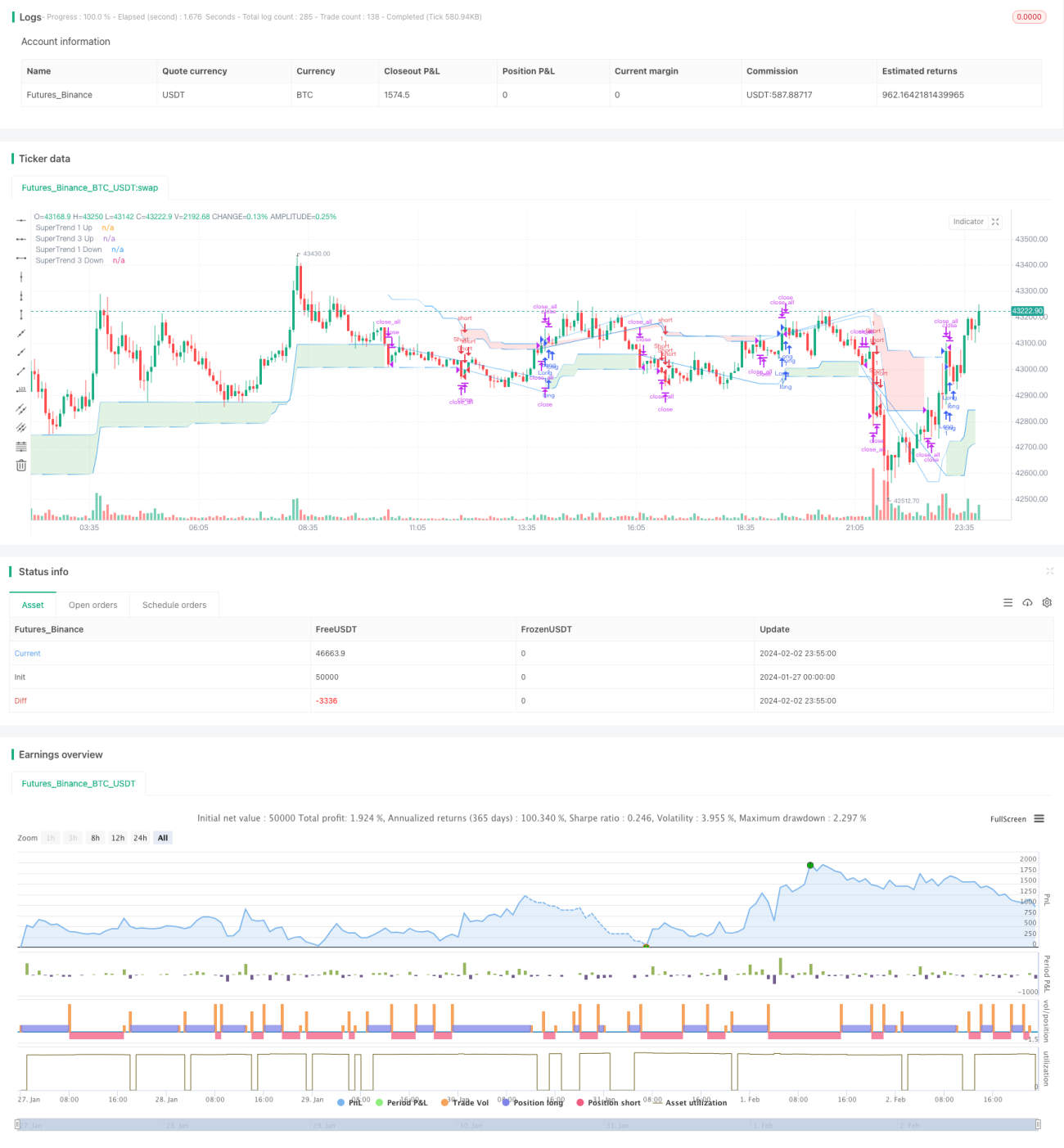
Ikhtisar
Strategi ini menggabungkan indikator SuperTrend dan teori gelombang Elliott untuk membangun alat trading teknis yang kokoh. Dengan menggunakan analisis tren bertingkat, strategi ini memberikan perspektif pasar yang lebih komprehensif, yang dapat menangkap lebih awal potensi pembalikan tren dan pergerakan harga signifikan di pasar.
Prinsip Strategi
Ide inti terletak pada pendekatan bertingkatnya:
- Menggunakan 4 indikator SuperTrend, masing-masing dengan panjang ATR dan pengganda yang berbeda, untuk menilai tren dari jangka pendek hingga jangka panjang.
- Melalui penggabungan indikator, dapat menghasilkan sinyal beli dan jual yang kuat.
- Merujuk pada metode pengenalan pola gelombang Elliott untuk mengidentifikasi pola perilaku pasar yang serupa dan mengonfirmasi sinyal trading.
Dengan cara ini, strategi memanfaatkan beberapa indikator sekaligus menambahkan pengenalan pola, menjadikannya lebih kokoh.
Analisis Keunggulan
- Desain multi-indikator memberikan penilaian menyeluruh.
- Terinspirasi teori gelombang, pengenalan pola meningkatkan stabilitas.
- Penyesuaian arah secara real-time untuk beradaptasi dengan perubahan pasar.
- Parameter dapat dikonfigurasi, cocok untuk berbagai instrumen dan kerangka waktu.
Analisis Risiko
- Pengaturan parameter bergantung pada pengalaman, perlu penyesuaian untuk menentukan kombinasi parameter optimal.
- Desain multi-indikator cukup kompleks, meningkatkan beban komputasi.
- Tidak dapat sepenuhnya menghindari timbulnya sinyal palsu.
Risiko dapat dikelola melalui optimasi parameter untuk menentukan parameter optimal secara bertahap, menggunakan komputasi awan untuk meningkatkan kinerja komputasi, dan menetapkan stop loss untuk mengendalikan risiko.
Arah Optimasi
Optimasi dapat dilakukan dari beberapa aspek berikut:
- Menambahkan modul penyesuaian parameter adaptif untuk menyesuaikan parameter secara dinamis sesuai kondisi pasar.
- Menambahkan model pembelajaran mesin untuk membantu menilai keandalan sinyal trading.
- Menggabungkan faktor eksternal seperti indikator sentimen, peristiwa berita, dll. untuk menilai pola pasar.
- Mendukung template parameter multi-instrumen untuk mengurangi beban pengujian.
Ini akan membuat parameter strategi lebih cerdas, penilaian lebih akurat, dan penerapan praktis lebih mudah.
Kesimpulan
Strategi ini mempertimbangkan dua dimensi: tren dan pola, yang memastikan ketahanan penilaian sekaligus meningkatkan fleksibilitas strategi. Multi-indikator dan pengaturan parameter menjamin penerapan di seluruh pasar. Jika diperkenalkan metode cerdas dan otomatis lebih lanjut, tingkat praktis strategi akan sangat ditingkatkan. Ini memberikan inspirasi dan referensi yang berguna bagi perkembangan trading teknis.
/*backtest
start: 2024-01-27 00:00:00
end: 2024-02-03 00:00:00
period: 5m
basePeriod: 1m
exchanges: [{"eid":"Futures_Binance","currency":"BTC_USDT"}]
*/

//@version=5
strategy("Elliott's Quadratic Momentum - Strategy [presentTrading]",shorttitle = "EQM Strategy [presentTrading]", overlay=true )

// Inputs for selecting trading direction- 1