Strategi Moving Average Berbasis Persilangan Dua Rata-Rata Bergerak

Ringkasan
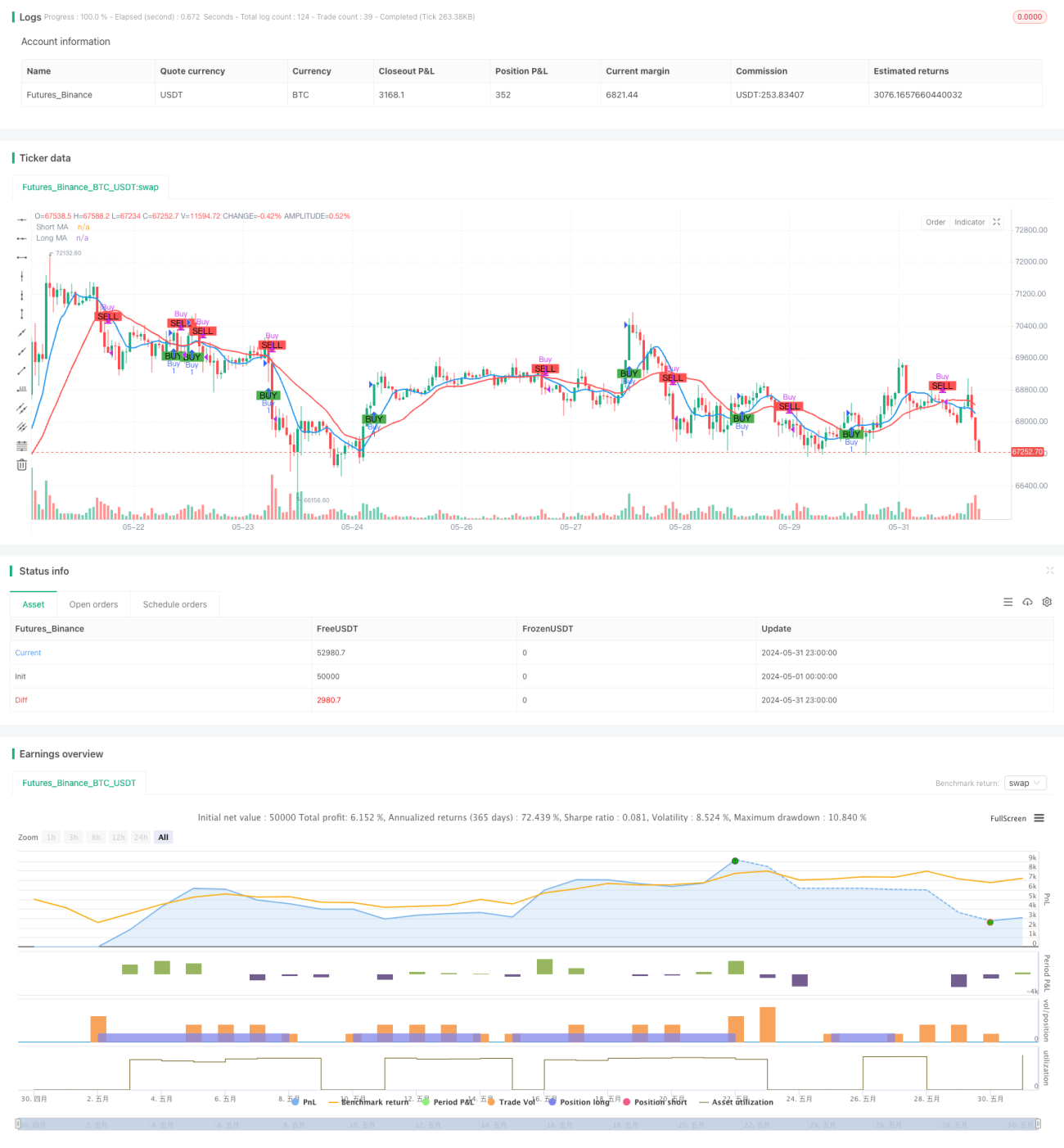
Strategi Rata-Rata Bergerak berdasarkan persilangan dua rata-rata bergerak adalah metode trading intraday yang sederhana dan efektif, yang dirancang untuk mengidentifikasi potensi peluang beli dan jual di pasar dengan menganalisis hubungan antara dua rata-rata bergerak dengan periode yang berbeda. Strategi ini menggunakan rata-rata bergerak sederhana (SMA) jangka pendek dan rata-rata bergerak sederhana (SMA) jangka panjang. Ketika rata-rata bergerak jangka pendek melintas di atas rata-rata bergerak jangka panjang, ini menunjukkan sinyal bullish, yang mengindikasikan potensi peluang beli. Sebaliknya, ketika rata-rata bergerak jangka pendek melintas di bawah rata-rata bergerak jangka panjang, ini menunjukkan sinyal bearish, yang mengindikasikan potensi peluang jual. Metode persilangan ini membantu trader menangkap pergerakan tren pasar sambil meminimalkan gangguan kebisingan pasar.
Prinsip Strategi
Prinsip inti dari strategi ini adalah memanfaatkan karakteristik tren dan kelambatan (lag) dari rata-rata bergerak dengan periode yang berbeda. Dengan membandingkan posisi relatif antara rata-rata bergerak jangka pendek dan rata-rata bergerak jangka panjang, strategi ini menentukan arah tren pasar saat ini dan membuat keputusan trading yang sesuai. Ketika tren naik muncul di pasar, harga akan terlebih dahulu menembus di atas rata-rata bergerak jangka panjang, dan rata-rata bergerak jangka pendek kemudian akan melintas di atas rata-rata bergerak jangka panjang, membentuk golden cross dan menghasilkan sinyal beli. Ketika tren turun muncul di pasar, harga akan terlebih dahulu menembus di bawah rata-rata bergerak jangka panjang, dan rata-rata bergerak jangka pendek kemudian akan melintas di bawah rata-rata bergerak jangka panjang, membentuk death cross dan menghasilkan sinyal jual. Dalam pengaturan parameter strategi ini, periode rata-rata bergerak jangka pendek ditetapkan pada 9, dan periode rata-rata bergerak jangka panjang ditetapkan pada 21. Kedua parameter ini dapat disesuaikan berdasarkan karakteristik pasar dan preferensi pribadi. Selain itu, strategi ini juga memperkenalkan konsep manajemen modal dengan menetapkan modal awal dan persentase risiko per trading, menggunakan penyesuaian ukuran posisi untuk mengontrol eksposur risiko setiap trading.
Keunggulan Strategi
- Mudah dipahami: Strategi ini didasarkan pada teori rata-rata bergerak klasik, logikanya jelas, mudah dipahami dan diimplementasikan.
- Adaptif: Strategi ini dapat diterapkan di berbagai pasar dan instrumen trading yang berbeda. Dengan menyesuaikan pengaturan parameter, strategi ini dapat secara fleksibel merespons karakteristik pasar yang berbeda.
- Menangkap Tren: Dengan menggunakan persilangan dua rata-rata bergerak untuk menentukan arah tren, strategi ini membantu trader untuk mengikuti tren utama secara tepat waktu, meningkatkan peluang profitabilitas.
- Kontrol Risiko: Strategi ini memperkenalkan konsep manajemen risiko, mengontrol eksposur risiko setiap trading melalui penyesuaian ukuran posisi, secara efektif mengelola potensi kerugian.
- Mengurangi Kebisingan: Memanfaatkan karakteristik kelambatan rata-rata bergerak, strategi ini secara efektif menyaring kebisingan acak di pasar, meningkatkan keandalan sinyal trading.
Risiko Strategi
- Pemilihan Parameter: Pengaturan parameter yang berbeda akan berdampak signifikan pada kinerja strategi. Pemilihan yang tidak tepat dapat menyebabkan strategi gagal atau berkinerja buruk.
- Tren Pasar: Dalam pasar yang bergejolak (sideways) atau pada titik balik tren, strategi ini mungkin mengalami kerugian beruntun.
- Biaya Slippage: Trading yang sering dapat menghasilkan biaya slippage yang tinggi, yang memengaruhi profitabilitas keseluruhan strategi.
- Peristiwa Black Swan: Strategi ini memiliki adaptabilitas yang buruk terhadap kondisi pasar yang ekstrem. Peristiwa black Swan dapat menyebabkan kerugian besar pada strategi.
- Risiko Overfitting: Jika optimasi parameter terlalu bergantung pada data historis, hal ini dapat menyebabkan strategi berkinerja buruk dalam trading aktual.
Arah Optimasi Strategi
- Optimasi Parameter Dinamis: Sesuaikan parameter strategi secara dinamis berdasarkan perubahan kondisi pasar untuk meningkatkan adaptabilitas.
- Konfirmasi Tren: Setelah sinyal trading dihasilkan, perkenalkan indikator lain atau pola aksi harga untuk mengonfirmasi tren, meningkatkan keandalan sinyal.
- Stop Loss dan Take Profit: Perkenalkan mekanisme stop loss dan take profit yang wajar untuk lebih mengontrol eksposur risiko setiap trading.
- Manajemen Ukuran Posisi: Optimalkan metode penyesuaian ukuran posisi, misalnya dengan memperkenalkan indikator volatilitas, menyesuaikan ukuran posisi secara dinamis berdasarkan tingkat volatilitas pasar.
- Penilaian Kekuatan Bullish/Bearish: Nilai hubungan kekuatan antara pihak bullish dan bearish, masuk pada awal tren untuk meningkatkan akurasi dalam menangkap tren.
Kesimpulan
Strategi Rata-Rata Bergerak berdasarkan persilangan dua rata-rata bergerak adalah metode trading intraday yang sederhana dan praktis. Dengan membandingkan posisi relatif rata-rata bergerak dari periode yang berbeda, strategi ini menentukan arah tren pasar dan menghasilkan sinyal trading. Strategi ini memiliki logika yang jelas, adaptif, secara efektif dapat menangkap tren pasar, dan pada saat yang sama memperkenalkan langkah-langkah manajemen risiko untuk mengendalikan potensi kerugian. Namun, strategi ini juga memiliki risiko potensial seperti pemilihan parameter, pembalikan tren, dan frekuensi trading yang tinggi, yang perlu ditingkatkan stabilitas dan profitabilitasnya melalui optimasi dinamis, konfirmasi sinyal, manajemen ukuran posisi, dan cara lainnya. Secara keseluruhan, sebagai indikator analisis teknikal klasik, prinsip dasar dan nilai aplikasi praktis dari rata-rata bergerak telah diverifikasi secara luas oleh pasar, menjadikannya strategi trading yang layak untuk dipelajari secara mendalam dan dioptimalkan secara berkelanjutan.
Overview
The Moving Average Crossover Strategy based on dual moving averages is a straightforward and effective intraday trading approach designed to identify potential buy and sell opportunities in the market by analyzing the relationship between two moving averages of different periods. This strategy utilizes a short-term simple moving average (SMA) and a long-term simple moving average. When the short-term moving average crosses above the long-term moving average, it indicates a bullish signal, suggesting a potential buying opportunity. Conversely, when the short-term moving average crosses below the long-term moving average, it indicates a bearish signal, suggesting a potential selling opportunity. This crossover method helps traders capture trending moves in the market while minimizing market noise interference.
Strategy Principle
The core principle of this strategy is to utilize the trend characteristics and lag of moving averages with different periods. By comparing the relative position relationship between the short-term moving average and the long-term moving average, it determines the current market trend direction and makes corresponding trading decisions. When an upward trend emerges in the market, the price will first break through the long-term moving average, and the short-term moving average will subsequently cross above the long-term moving average, forming a golden cross and generating a buy signal. When a downward trend emerges in the market, the price will first break below the long-term moving average, and the short-term moving average will subsequently cross below the long-term moving average, forming a death cross and generating a sell signal. In the parameter settings of this strategy, the period of the short-term moving average is set to 9, and the period of the long-term moving average is set to 21. These two parameters can be adjusted based on market characteristics and personal preferences. Additionally, this strategy introduces the concept of money management by setting the initial capital and risk percentage per trade, using position sizing to control the risk exposure of each trade.
Kelebihan Strategi
- Kesederhanaan: Strategi ini didasarkan pada teori rata-rata bergerak klasik, dengan logika yang jelas dan mudah dipahami serta diimplementasikan.
- Adaptabilitas: Strategi ini dapat diterapkan di berbagai pasar dan instrumen perdagangan yang berbeda. Dengan menyesuaikan pengaturan parameter, strategi ini dapat secara fleksibel beradaptasi dengan karakteristik pasar yang berbeda.
- Penangkapan Tren: Dengan menggunakan persilangan rata-rata bergerak ganda untuk menentukan arah tren, strategi ini membantu pedagang mengikuti tren utama secara tepat waktu dan meningkatkan peluang keuntungan.
- Pengendalian Risiko: Strategi ini memperkenalkan konsep manajemen risiko, menggunakan ukuran posisi untuk mengontrol eksposur risiko setiap perdagangan, sehingga mengelola potensi kerugian secara efektif.
- Pengurangan Noise: Dengan memanfaatkan karakteristik lag dari rata-rata bergerak, strategi ini secara efektif menyaring noise acak di pasar, meningkatkan keandalan sinyal perdagangan.
Risiko Strategi
- Pemilihan Parameter: Pengaturan parameter yang berbeda dapat berdampak signifikan terhadap kinerja strategi. Pemilihan yang tidak tepat dapat menyebabkan kegagalan strategi atau kinerja yang buruk.
- Tren Pasar: Di pasar yang bergerak dalam rentang atau pada titik balik tren, strategi ini mungkin mengalami kerugian berturut-turut.
- Biaya Slippage: Perdagangan yang sering dapat mengakibatkan biaya slippage yang lebih tinggi, yang memengaruhi profitabilitas keseluruhan strategi.
- Peristiwa Black Swan: Strategi ini memiliki kemampuan adaptasi yang buruk terhadap kondisi pasar yang ekstrem, dan peristiwa black swan dapat menyebabkan kerugian signifikan pada strategi.
- Risiko Overfitting: Jika optimasi parameter terlalu bergantung pada data historis, hal ini dapat menyebabkan strategi berkinerja buruk dalam perdagangan aktual.
Arah Optimasi Strategi
- Optimasi Parameter Dinamis: Menyesuaikan parameter strategi secara dinamis berdasarkan perubahan kondisi pasar untuk meningkatkan adaptabilitas.
- Konfirmasi Tren: Setelah menghasilkan sinyal perdagangan, perkenalkan indikator lain atau pola perilaku harga untuk mengonfirmasi tren, sehingga meningkatkan keandalan sinyal.
- Stop-Loss dan Take-Profit: Perkenalkan mekanisme stop-loss dan take-profit yang wajar untuk lebih mengontrol eksposur risiko setiap perdagangan.
- Manajemen Posisi: Optimalkan metode ukuran posisi, misalnya dengan memperkenalkan indikator volatilitas untuk menyesuaikan posisi secara dinamis berdasarkan tingkat volatilitas pasar.
- Penilaian Kekuatan Bullish dan Bearish: Nilai hubungan perbandingan antara kekuatan bullish dan bearish, masuk pada tahap awal tren untuk meningkatkan akurasi penangkapan tren.
Ringkasan
Strategi Persilangan Rata-Rata Bergerak yang didasarkan pada rata-rata bergerak ganda adalah metode perdagangan intraday yang sederhana dan praktis. Dengan membandingkan posisi relatif dari rata-rata bergerak dengan periode yang berbeda, strategi ini menentukan arah tren pasar dan menghasilkan sinyal perdagangan. Strategi ini memiliki logika yang jelas, adaptabilitas yang kuat, dan secara efektif dapat menangkap tren pasar sambil memperkenalkan langkah-langkah manajemen risiko untuk mengendalikan potensi kerugian. Namun, strategi ini juga memiliki potensi risiko seperti pemilihan parameter, pembalikan tren, perdagangan yang sering, dll. Perlu ditingkatkan lebih lanjut melalui optimasi dinamis, konfirmasi sinyal, manajemen posisi, dan metode lainnya untuk meningkatkan ketahanan dan profitabilitas strategi. Secara umum, sebagai indikator analisis teknikal klasik, prinsip dasar dan nilai praktis dari rata-rata bergerak telah diverifikasi secara luas oleh pasar. Ini adalah strategi perdagangan yang layak untuk diteliti secara mendalam dan dioptimalkan secara berkelanjutan.
- 1