Strategi Adaptif Momentum Tren Teori Dow

DTTAS HH/HL LH/LL SL/TP TTS
Tanggal Pembuatan: 2025-04-03 13:05:17 Akhirnya memodifikasi: 2025-04-03 13:05:17
menyalin: 0 Jumlah klik: 359
2
fokus pada
319
Pengikut

Strategi Adaptif Momentum Tren Teori Dow Strategi Adaptif Momentum Tren Teori Dow

Ringkasan

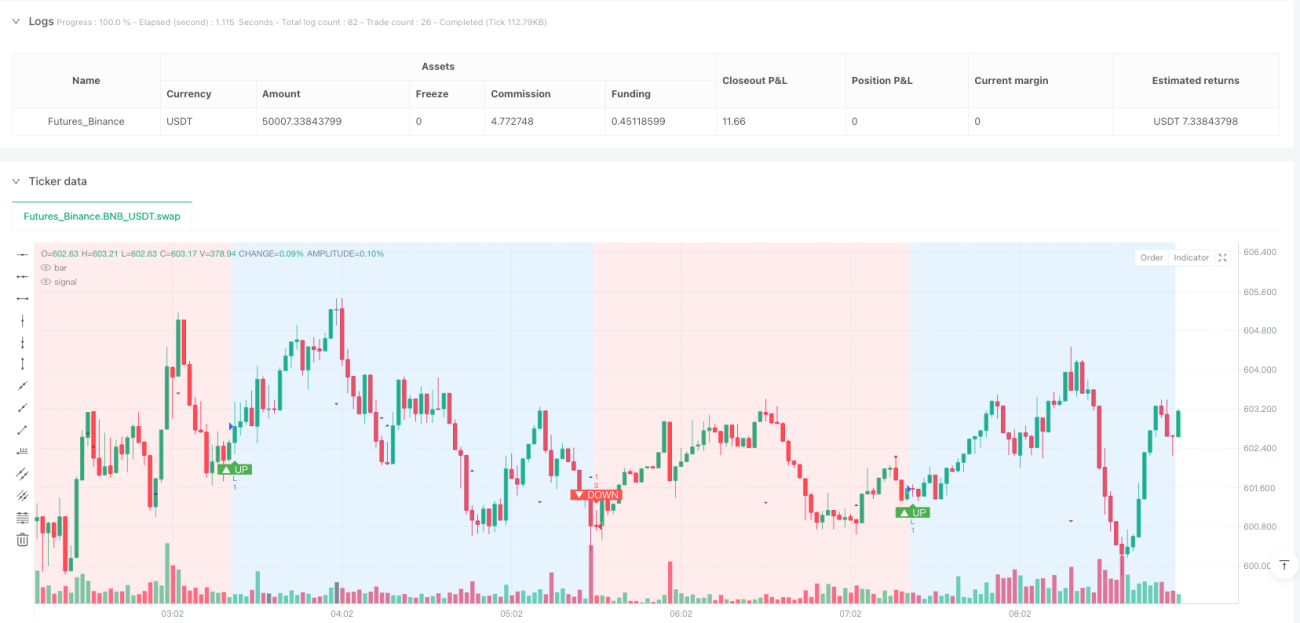
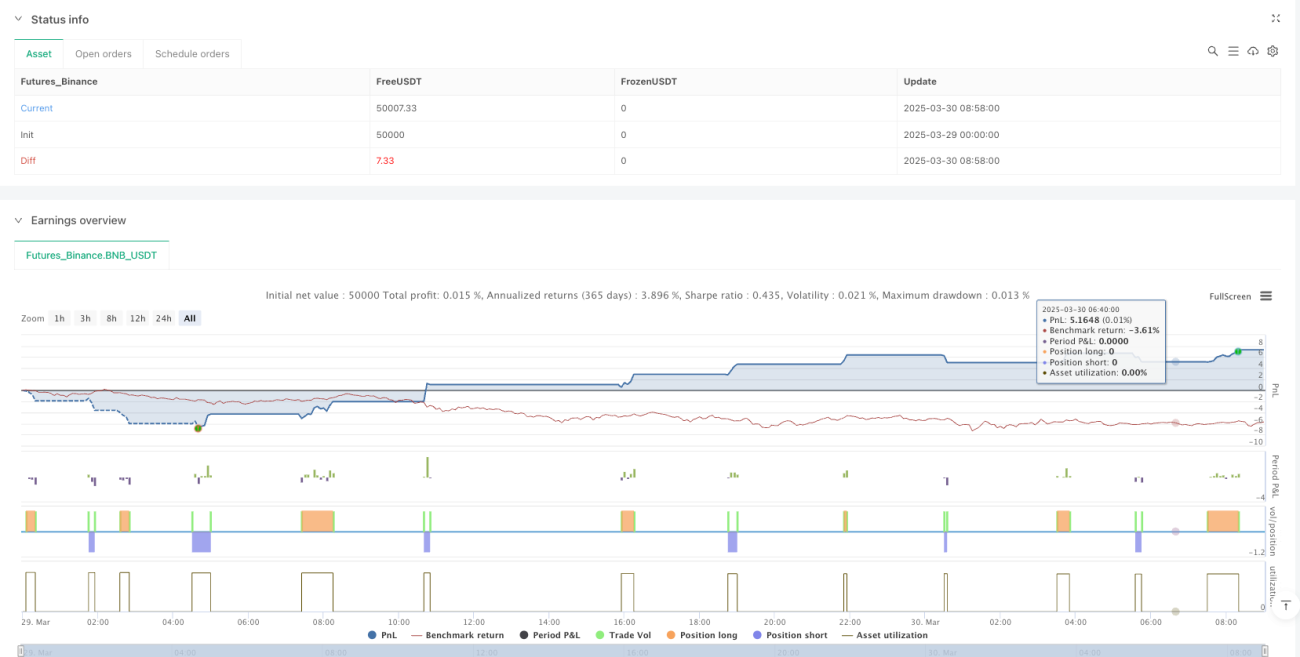
Strategi Dynamics Adaptive Dow Theory adalah metode perdagangan canggih yang didasarkan pada prinsip-prinsip klasik Dow Theory untuk membimbing keputusan perdagangan dengan mengidentifikasi titik-titik penting dalam tren pasar. Strategi ini berfokus pada mendeteksi dan mengkonfirmasi dinamika dasar tren harga, menggunakan Highs yang lebih tinggi (Higher Highs) dan High Lows (Higher Lows) untuk mendefinisikan tren naik, menggunakan Low Highs (Lower Highs) dan Low Lows (Lower Lows) untuk mendefinisikan tren turun. Metode ini bertujuan untuk memberikan metode sistematis untuk menangkap tren pasar dan bereaksi tepat waktu ketika tren berubah.

Prinsip Strategi

Prinsip-prinsip inti dari strategi ini didasarkan pada metode identifikasi tren klasik dari teori Dow. Strategi ini mendeteksi titik-titik penting dengan menggunakan fungsi ta.pivothigh () dan ta.pivotlow () fungsi. Implementasi konkret meliputi langkah-langkah penting berikut:

  1. Deteksi titik pivot: Menggunakan pivotLookback parameter untuk menentukan jumlah pilar di kedua sisi kiri dan kanan, untuk mengidentifikasi titik tinggi dan rendah.
  2. Konfirmasi tren: tren naik dikonfirmasi hanya jika kondisi tinggi yang lebih tinggi dan kondisi rendah yang lebih tinggi terpenuhi secara bersamaan; juga, tren turun dikonfirmasi hanya jika kondisi tinggi yang lebih rendah dan kondisi rendah yang lebih rendah terpenuhi secara bersamaan.
  3. Keberlanjutan tren: Jika kondisi konversi tren tidak terpenuhi, strategi akan mempertahankan status tren sebelumnya, sehingga memungkinkan pelacakan tren yang lebih halus.

Keunggulan Strategis

  1. Identifikasi Tren Dinamis: Strategi dapat menangkap perubahan tren pasar secara dinamis dengan terus menganalisis titik-titik perubahan utama.
  2. Fleksibilitas dalam trading: menawarkan tiga mode trading yang berbeda untuk memenuhi kebutuhan trader yang berbeda.
  3. Pengelolaan risiko: mekanisme built-in stop loss dan stop loss, yang dapat secara efektif mengontrol risiko transaksi tunggal.
  4. Trending visualisasi: menampilkan arah tren secara intuitif melalui warna latar belakang dan tanda, sehingga memudahkan pedagang untuk memahami keadaan pasar dengan cepat.
  5. Delay rendah: Metode ini dapat bereaksi lebih cepat terhadap perubahan tren dibandingkan dengan strategi moving average tradisional.

Risiko Strategis

  1. Risiko keterbelakangan: Strategi memiliki risiko keterbelakangan yang melekat karena menggunakan deteksi titik balik dan mungkin tidak dapat menangkap sinyal awal tren.
  2. Risiko pasar yang bergoyang: Dalam pasar yang tidak bergoyang, perubahan harga kecil yang sering terjadi dapat menyebabkan transaksi yang tidak perlu.
  3. Sensitivitas parameter: Pilihan parameter pivotLookback memiliki dampak besar pada kinerja strategi, yang perlu disesuaikan dengan pasar dan kerangka waktu yang berbeda.
  4. Biaya transaksi: seringnya transaksi dapat menyebabkan biaya transaksi yang lebih tinggi, terutama jika komisi yang tinggi.

Arah optimasi strategi

  1. Masukkan filter tambahan: menggabungkan indikator kekuatan tren (seperti ATR) untuk menyaring sinyal tren lemah.
  2. Adaptasi parameter dinamis: Mengembangkan mekanisme pivot Lookback parameter yang beradaptasi berdasarkan volatilitas pasar.
  3. Verifikasi multi-frame: Memverifikasi sinyal tren pada frame waktu yang berbeda untuk meningkatkan keandalan sinyal.
  4. Peningkatan Pembelajaran Mesin: Menjelajahi penggunaan algoritma pembelajaran mesin untuk mengoptimalkan identifikasi tren dan waktu masuk.
  5. Optimalisasi manajemen risiko: Mengatur stop loss dan stop loss sesuai dengan dinamika volatilitas pasar.

Meringkaskan

Strategi Dow Theory Trend Adaptive Dynamics adalah metode pelacakan tren yang kuat, yang menyediakan para pedagang dengan alat identifikasi tren yang sistematis melalui teknologi analisis titik balik yang inovatif. Meskipun ada beberapa risiko yang melekat, fleksibilitas dan dinamika membuatnya menjadi metode yang berharga dalam strategi perdagangan kuantitatif modern.

Overview

The Dow Theory Trend Adaptive Momentum Strategy is an advanced trading approach based on classic Dow Theory principles, designed to guide trading decisions by identifying key turning points in market trends. The strategy focuses on detecting and confirming the fundamental dynamics of price trends, using Higher Highs and Higher Lows to define uptrends, and Lower Highs and Lower Lows to define downtrends. This method aims to provide a systematic approach to capturing market trends and responding promptly when trends change.

Strategy Principles

The core principle of this strategy is based on the classic Dow Theory trend identification method. The strategy detects key turning points using ta.pivothigh() and ta.pivotlow() functions. Specific implementation includes the following key steps:

  1. Turning Point Detection: Use the pivotLookback parameter to determine the number of bars on both sides for identifying highs and lows.
  2. Trend Confirmation: An uptrend is confirmed only when both Higher Highs and Higher Lows conditions are met; similarly, a downtrend is confirmed only when both Lower Highs and Lower Lows conditions are satisfied.
  3. Trend Persistence: If trend conversion conditions are not met, the strategy maintains the previous trend state, achieving smoother trend tracking.

Strategy Advantages

  1. Dynamic Trend Identification: By continuously analyzing key turning points, the strategy can dynamically capture market trend changes.
  2. Flexible Trading Modes: Provides three trading modes - automatic, long-only, and short-only - to meet different traders’ needs.
  3. Risk Management: Built-in stop-loss and take-profit mechanisms effectively control the risk of individual trades.
  4. Trend Visualization: Intuitively displays trend direction through background colors and markers, making it easy for traders to understand market conditions.
  5. Low Latency: Compared to traditional moving average strategies, this method can respond to trend changes more quickly.

Strategy Risks

  1. Lag Risk: Due to using pivot point detection, the strategy inherently carries a lag risk and may not capture the earliest trend signals.
  2. Ranging Market Risk: In markets with unclear fluctuations, frequent small price changes may lead to unnecessary trades.
  3. Parameter Sensitivity: The choice of pivotLookback parameter significantly impacts strategy performance and requires adjustment for different markets and timeframes.
  4. Trading Costs: Frequent trading may result in high transaction costs, especially with higher commission rates.

Strategy Optimization Directions

  1. Introduce Additional Filters: Combine trend strength indicators (such as ATR) to filter weak trend signals.
  2. Dynamic Parameter Adjustment: Develop an adaptive pivotLookback parameter mechanism based on market volatility.
  3. Multi-Timeframe Verification: Cross-verify trend signals across different timeframes to improve signal reliability.
  4. Machine Learning Enhancement: Explore using machine learning algorithms to optimize trend identification and entry timing.
  5. Risk Management Optimization: Dynamically adjust stop-loss and take-profit distances based on market volatility.

Conclusion

The Dow Theory Trend Adaptive Momentum Strategy is a powerful trend-following method that provides traders with a systematic trend identification tool through innovative turning point analysis techniques. Despite some inherent risks, its flexibility and dynamism make it a valuable approach in modern quantitative trading strategies. Successfully applying this strategy requires a deep understanding of its working principles and continuous optimization and adjustment based on specific market environments.

Kode Sumber Strategi
/*backtest
start: 2025-03-29 00:00:00
end: 2025-03-30 09:00:00
period: 2m
basePeriod: 2m
exchanges: [{"eid":"Futures_Binance","currency":"BNB_USDT"}]
*/

//@version=5
// strategy(title="Dow Theory Trend Strategy v3", shorttitle="Dow Trend Strat v3", overlay=true,
//      initial_capital=10000, default_qty_type=strategy.percent_of_equity, default_qty_value=10,
//      commission_type=strategy.commission.percent, commission_value=0.1, // Example strategy settings with commission
//      process_orders_on_close=true) // Consider processing on bar close for more stable backtests
strategy(title="Dow Theory Trend Strategy v3", shorttitle="Dow Trend Strat v3", overlay=true) // Basic strategy settings

// --- 設定 ---
// Calculation Settings
pivotLookback = input.int(10, title="Pivot Lookback Period", minval=1, tooltip="ピボットハイ/ローを検出するための左右のバーの数", group="Calculation Settings")

// Display Settings
showPivotPoints = input.bool(true, title="Show Pivot Points", tooltip="ピボットハイ/ローのポイントを表示します", group="Display Settings")
showTrendChange = input.bool(true, title="Show Trend Change Signals", tooltip="トレンド転換のシグナル(エントリーポイント)を表示します", group="Display Settings")

// Strategy Settings
// --- Manual Trend Override (配列定義を input 内に変更) ---
manualTrendMode = input.string("Auto", title="Manual Trend Mode",
     options=["Auto", "Long Only", "Short Only"], // オプションをここで直接定義
     tooltip="手動でトレード方向を指定 (Auto: ダウ理論に従う, Long Only: ロングのみ, Short Only: ショートのみ)",
     group="Strategy Settings")

// Risk Management Settings
useStopLoss = input.bool(true, title="Use Stop Loss", group="Risk Management")
stopLossTicks = input.float(100, title="Stop Loss (Ticks)", minval=1, group="Risk Management", tooltip="エントリー価格からのストップロスまでのティック(最小値動き)数。例:EURUSDで20 pips (tick=0.00001)なら200。")
useTakeProfit = input.bool(true, title="Use Take Profit", group="Risk Management")
takeProfitTicks = input.float(200, title="Take Profit (Ticks)", minval=1, group="Risk Management", tooltip="エントリー価格からのテイクプロフィットまでのティック(最小値動き)数。例:EURUSDで40 pips (tick=0.00001)なら400。")

// --- ピボットハイ/ローの検出 ---
pivotHighPrice = ta.pivothigh(high, pivotLookback, pivotLookback)
pivotLowPrice = ta.pivotlow(low, pivotLookback, pivotLookback)

// --- ピボットポイントの値を保持するための変数 ---
var float lastPivotHigh = na
var float prevPivotHigh = na
var float lastPivotLow = na
var float prevPivotLow = na
var int lastPivotHighBar = na
var int prevPivotHighBar = na
var int lastPivotLowBar = na
var int prevPivotLowBar = na

// --- 新しいピボットが確定したかどうかの検出と値の更新 ---
if not na(pivotHighPrice)
    if na(lastPivotHigh) or pivotHighPrice != lastPivotHigh
        prevPivotHigh := lastPivotHigh
        prevPivotHighBar := lastPivotHighBar
        lastPivotHigh := pivotHighPrice
        lastPivotHighBar := bar_index - pivotLookback

if not na(pivotLowPrice)
    if na(lastPivotLow) or pivotLowPrice != lastPivotLow
        prevPivotLow := lastPivotLow
        prevPivotLowBar := lastPivotLowBar
        lastPivotLow := pivotLowPrice
        lastPivotLowBar := bar_index - pivotLookback

// --- ダウ理論に基づくトレンド判定 (改良版) ---
var int trendDirection = 0
bool hasEnoughPivots = not na(lastPivotHigh) and not na(prevPivotHigh) and not na(lastPivotLow) and not na(prevPivotLow)

if hasEnoughPivots
    isHigherHigh = lastPivotHigh > prevPivotHigh
    isHigherLow = lastPivotLow > prevPivotLow
    isUptrendConfirmed = isHigherHigh and isHigherLow

    isLowerHigh = lastPivotHigh < prevPivotHigh
    isLowerLow = lastPivotLow < prevPivotLow
    isDowntrendConfirmed = isLowerHigh and isLowerLow

    if isUptrendConfirmed
        trendDirection := 1
    else if isDowntrendConfirmed
        trendDirection := -1
    else
        trendDirection := trendDirection[1]

// --- トレンド転換の検出 ---
bool trendChanged = ta.change(trendDirection) != 0
bool changedToUp = trendChanged and trendDirection == 1
bool changedToDown = trendChanged and trendDirection == -1

// --- 描画処理 ---
bgcolor(trendDirection == 1 ? color.new(color.blue, 85) : trendDirection == -1 ? color.new(color.red, 85) : color.new(color.gray, 90), title="Trend Background")
plotshape(showPivotPoints and not na(pivotHighPrice), title="Pivot High", location=location.abovebar, color=color.new(color.maroon, 20), style=shape.triangledown, size=size.tiny, offset=-pivotLookback)
plotshape(showPivotPoints and not na(pivotLowPrice), title="Pivot Low", location=location.belowbar, color=color.new(color.navy, 20), style=shape.triangleup, size=size.tiny, offset=-pivotLookback)
plotshape(showTrendChange and changedToUp, title="Uptrend Start Signal", location=location.belowbar, color=color.new(color.green, 0), style=shape.labelup, text="▲ UP", textcolor=color.white, size=size.small)
plotshape(showTrendChange and changedToDown, title="Downtrend Start Signal", location=location.abovebar, color=color.new(color.red, 0), style=shape.labeldown, text="▼ DOWN", textcolor=color.white, size=size.small)

// --- ストラテジーロジック ---
bool allowLong = manualTrendMode == "Auto" or manualTrendMode == "Long Only"
bool allowShort = manualTrendMode == "Auto" or manualTrendMode == "Short Only"

if (changedToUp and allowLong)
    strategy.entry("L", strategy.long, comment="Go Long")
    if (useStopLoss or useTakeProfit)
        float slValue = useStopLoss and stopLossTicks > 0 ? stopLossTicks : na
        float tpValue = useTakeProfit and takeProfitTicks > 0 ? takeProfitTicks : na
        strategy.exit("LX", from_entry="L", loss=slValue, profit=tpValue, comment_loss="SL Long", comment_profit="TP Long")

if (changedToDown and allowShort)
    strategy.entry("S", strategy.short, comment="Go Short")
    if (useStopLoss or useTakeProfit)
        float slValue = useStopLoss and stopLossTicks > 0 ? stopLossTicks : na
        float tpValue = useTakeProfit and takeProfitTicks > 0 ? takeProfitTicks : na
        strategy.exit("SX", from_entry="S", loss=slValue, profit=tpValue, comment_loss="SL Short", comment_profit="TP Short")

// --- デバッグ用 ---
// plot(trendDirection, title="Trend Direction Value")