Strategi Pelacakan Volatilitas Crossover Rata-rata Bergerak Adaptif untuk Perdagangan Kuantitatif

MA交叉 ATR EMA SMA WMA HMA VWMA 趋势过滤 波动率过滤 跟踪止损 双重止盈
Tanggal Pembuatan: 2025-05-14 10:49:04 Akhirnya memodifikasi: 2025-05-14 10:49:04
menyalin: 0 Jumlah klik: 317
2
fokus pada
319
Pengikut

Strategi Pelacakan Volatilitas Crossover Rata-rata Bergerak Adaptif untuk Perdagangan Kuantitatif Strategi Pelacakan Volatilitas Crossover Rata-rata Bergerak Adaptif untuk Perdagangan Kuantitatif

Tinjauan Strategi

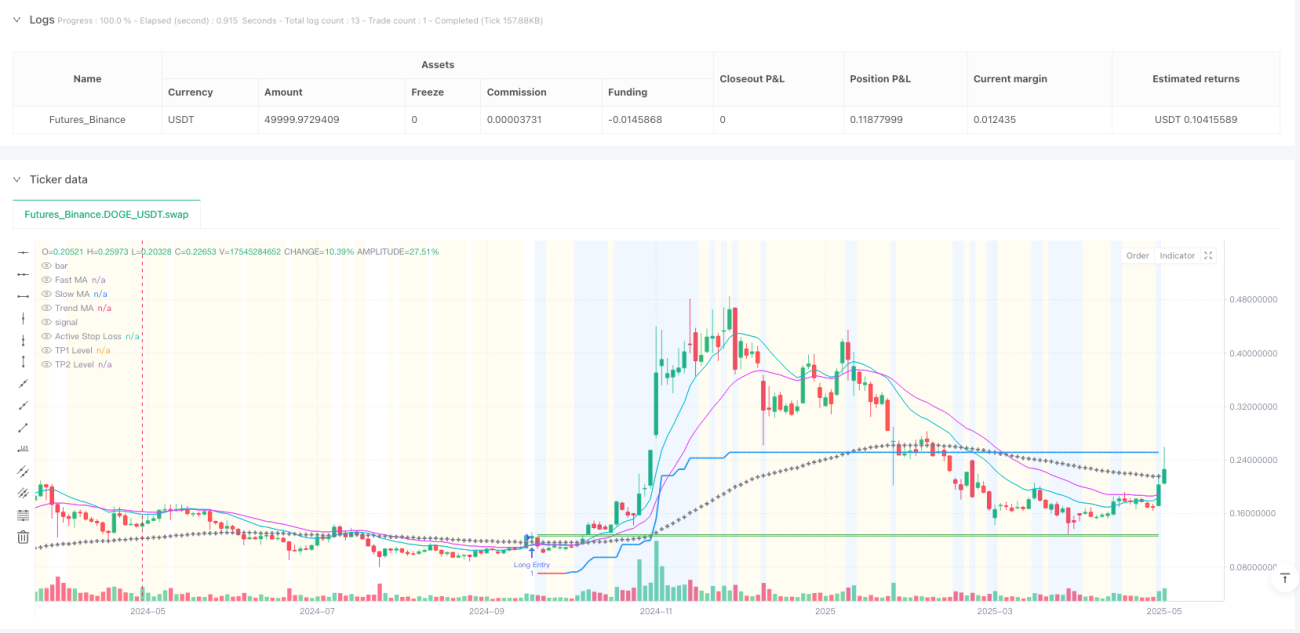
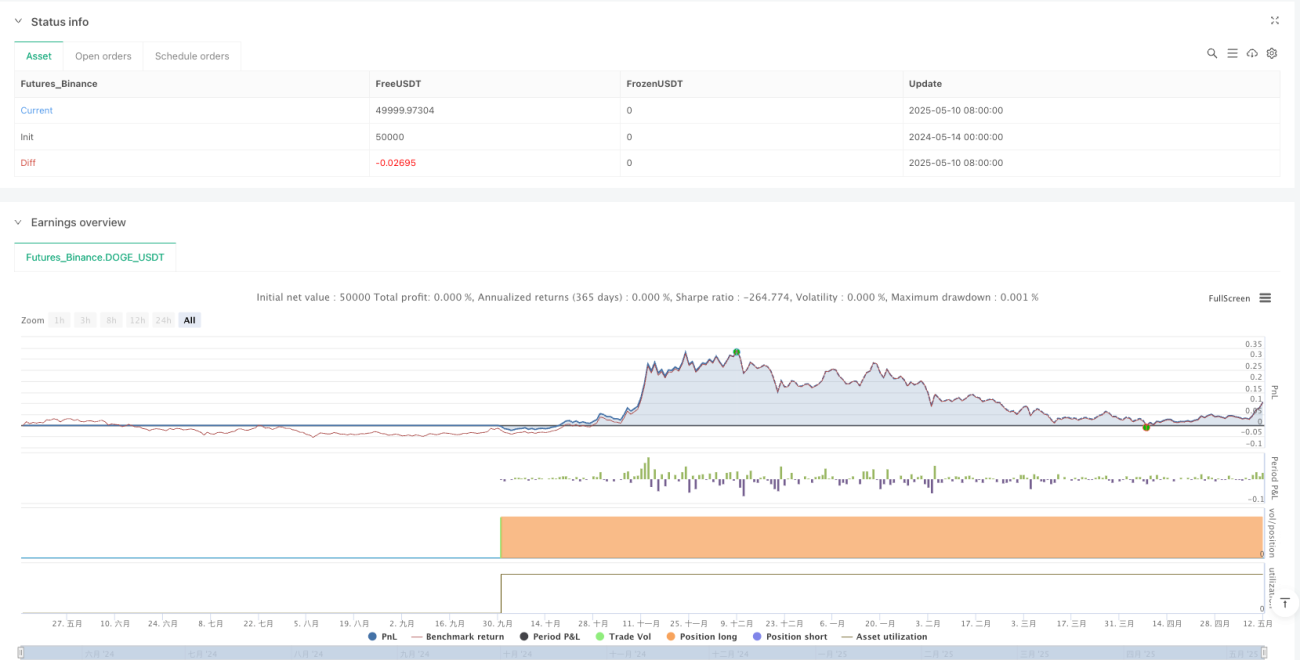
Strategi perdagangan kuantitatif dengan pelacakan volatilitas rata-rata rata-rata adalah strategi sistematis yang dirancang khusus untuk perdagangan frekuensi tinggi dan operasi garis pendek. Inti dari strategi ini adalah menggunakan persilangan rata-rata bergerak cepat (MA) dengan rata-rata bergerak lambat sebagai titik pemicu sinyal utama, sementara menggabungkan berbagai filter kunci dan alat manajemen risiko yang tepat untuk menangkap pergerakan harga kecil namun cepat. Strategi ini sangat dapat dikonfigurasi, memungkinkan pengguna untuk memilih jenis rata-rata rata-rata (EMA, SMA, WMA, HMA, VWMA) dan parameter siklusnya secara fleksibel untuk menyesuaikan dengan kebutuhan perdagangan yang berbeda dengan irama pasar.

Prinsip Strategi

Logika inti dari strategi ini dibagi menjadi beberapa bagian penting:

  1. Sinyal masuk: terutama melalui persimpangan/penyeberangan antara garis rata-rata cepat dan garis rata-rata lambat sebagai pemicu masuk. Pengguna dapat secara fleksibel mengkonfigurasi jenis garis rata-rata (EMA, SMA, WMA, HMA, VWMA) dan panjang siklus untuk menyesuaikan sensitivitas sinyal, sesuai dengan kondisi pasar yang berbeda.

  2. Filter trenStrategi: Secara selektif menggunakan garis rata-rata bergerak jangka panjang sebagai filter tren besar, memastikan bahwa perdagangan dilakukan hanya di arah tren besar, dan menghindari perdagangan garis pendek berlawanan di pasar dengan arah yang kuat.

  3. Konfirmasi filter

    • Filter tingkat ATR: Dirancang untuk penundaan masuk di pasar yang sangat datar atau “diam”, di mana volatilitas pasar berada di bawah nilai terendah yang dinamis (berdasarkan ATR rata-rata), membantu mencegah getaran di kondisi tanpa tren dan rendah energi.
    • Filter kuantitas pengiriman: Memverifikasi sinyal masuk dengan meminta keterlibatan pasar minimum (perbandingan volume transaksi dengan rata-rata bergeraknya), menghindari masuk berdasarkan pergerakan rendah pada puncak atau tindakan harga yang tidak penting.
  4. Paket Manajemen Risiko

    • Stop loss pada volatilitas awalStop loss awal berbasis ATR memberikan titik awal yang objektif untuk definisi risiko setiap transaksi, sesuai dengan volatilitas jangka pendek.
    • ATR Tracking Stop LossHal ini sangat penting untuk pasar yang dinamis, karena jalur stop loss akan disesuaikan dengan pergerakan harga yang menguntungkan, yang bertujuan untuk melindungi keuntungan dari perdagangan short line yang sukses, sementara mengurangi kerugian secara relatif cepat ketika tren berbalik.
    • Stop loss (opsional): Setelah mencapai TP1 atau harga bergerak pada jarak ATR tertentu, stop loss dapat secara otomatis dipindahkan ke harga masuk (dengan buffer) untuk risiko perdagangan yang cepat dan sedang yang telah menunjukkan keberhasilan awal.
    • Tingkat keuntungan gandaTP1 dirancang untuk mendapatkan keuntungan cepat (misalnya 50%), sedangkan TP2 untuk mendapatkan ruang yang lebih besar untuk sisa posisi.
  5. Manajemen Posisi: Mengadopsi ukuran posisi dengan jumlah tetap, memungkinkan kontrol yang tepat atas ukuran posisi untuk setiap transaksi, sangat penting untuk aplikasi risiko yang konsisten dan perintah API yang dihasilkan dalam lingkungan frekuensi tinggi.

Keunggulan Strategis

Dengan analisis kode yang mendalam, strategi ini memiliki keuntungan yang jelas sebagai berikut:

  1. Konfigurasi tinggi: Pengguna dapat secara fleksibel menyesuaikan berbagai parameter, termasuk jenis garis rata dan siklus, pengaturan filter, dan parameter manajemen risiko, sehingga strategi dapat disesuaikan dengan berbagai lingkungan pasar dan gaya perdagangan.

  2. Mekanisme penyaringan bertingkatFitur: Menggabungkan trend, volatilitas, dan volume filter, efektif mengurangi sinyal salah dan kebisingan pasar, meningkatkan kualitas transaksi.

  3. Manajemen Risiko yang BaikStrategi: Mengintegrasikan mekanisme multi-stop loss (Initial, Tracking, Balancing) dan target profit ganda, untuk mengontrol risiko dan melindungi keuntungan.

  4. Desain ramah APILogika masuk dan keluar yang jelas dan jelas menghasilkan sinyal yang tidak membingungkan, memudahkan integrasi dengan sistem perdagangan eksternal, dan memungkinkan eksekusi pesanan yang hampir instan.

  5. Pengendalian posisi yang tepat: Ukuran posisi dengan jumlah tetap menyederhanakan muatan terisi pada titik akhir API, membuat pelaksanaan otomatisasi lebih andal.

  6. Sangat mudah beradaptasiDengan penyesuaian parameter, strategi dapat beralih dari mode perdagangan frekuensi tinggi ke mode pelacakan tren yang lebih lama, sesuai dengan kondisi pasar yang berbeda dan preferensi perdagangan individu.

Risiko Strategis

Meskipun strategi ini dirancang dengan baik, masih ada beberapa risiko dan tantangan potensial:

  1. Risiko Optimasi ParameterOleh karena strategi mengandung banyak parameter yang dapat dikonfigurasi, optimasi berlebihan dapat menyebabkan hasil yang baik tetapi kinerja yang buruk. Investor harus memverifikasi data di luar sampel atau menghindari risiko ini dengan pengujian ke depan.

  2. Dampak biaya transaksiPerdagangan frekuensi tinggi berarti banyaknya transaksi, akumulasi komisi, dan slippage yang dapat secara signifikan mempengaruhi keuntungan bersih, dan biaya ini harus dihitung dengan tepat pada pengaturan dan pengembalian sebelum digunakan.

  3. Fluktuasi kualitas sinyalReliabilitas sinyal crossover linear dapat berubah dalam kondisi pasar yang berbeda, terutama di pasar yang bergejolak atau sangat berfluktuasi.

  4. Ketergantungan teknologiSebagai strategi siap API, efektivitasnya sebagian tergantung pada kecepatan eksekusi dan stabilitas teknologi. Keterlambatan atau kegagalan sistem dapat menyebabkan kehilangan peluang atau penyimpangan eksekusi.

  5. Pembatasan jumlah danaJumlah posisi tetap mungkin tidak sesuai untuk semua ukuran akun, akun kecil mungkin berisiko berlebihan, dan akun besar mungkin tidak dapat memanfaatkan dana secara maksimal.

Arah optimasi strategi

Berdasarkan desain strategi dan potensi risiko, berikut adalah beberapa arah optimasi yang mungkin:

  1. Parameter adaptasi: Mengembangkan parameter-parameter kunci (seperti ATR dan siklus rata-rata) untuk menyesuaikan secara otomatis berdasarkan kondisi pasar, meningkatkan kemampuan strategi untuk beradaptasi pada fase pasar yang berbeda.

  2. Penguatan Filter Cerdas: Mengintegrasikan indikator status pasar tambahan (seperti struktur pasar, identifikasi pola fluktuasi, atau relevansi aset terkait) untuk meningkatkan akurasi filter lebih lanjut.

  3. Manajemen Posisi DinamisPengelolaan dana yang lebih cerdas: Mengganti jumlah posisi tetap dengan posisi dinamis berdasarkan ukuran akun, volatilitas saat ini, dan kinerja strategi baru-baru ini.

  4. Konfirmasi multi-frame waktu: Memverifikasi sinyal pada kerangka waktu yang berbeda, memastikan bahwa arah perdagangan sesuai dengan struktur pasar yang lebih besar, mengurangi transaksi yang tidak perlu.

  5. Integrasi pembelajaran mesin: Menggunakan algoritma pembelajaran mesin untuk menganalisis kinerja sinyal historis, memprediksi probabilitas keberhasilan sinyal masa depan, dan memprioritaskan transaksi dengan tingkat keberhasilan tinggi.

  6. Manajemen sesi perdaganganTambahkan filter waktu perdagangan, menghindari periode likuiditas rendah atau volatilitas tinggi, dan fokus pada jendela perdagangan yang paling efisien di pasar.

  7. Filter relevansiUntuk perdagangan multi-aset, tambahkan analisa relevansi dengan pasar terkait, dan hindari keterpaparan berlebihan terhadap faktor-faktor risiko tertentu.

Meringkaskan

Strategi perdagangan kuantitatif dengan pelacakan volatilitas silang rata-rata adalah sistem perdagangan frekuensi tinggi yang komprehensif, yang memicu sinyal melalui silang rata-rata, yang dikombinasikan dengan berbagai filter kunci dan alat manajemen risiko yang tepat, yang dirancang khusus untuk menangkap fluktuasi harga yang kecil tetapi cepat. Kekuatan strategi ini terletak pada kerangka manajemen risiko yang sangat konfigurasinya dan sempurna, yang memungkinkan pedagang untuk menyesuaikan parameter perdagangan sesuai dengan toleransi risiko individu dan kondisi pasar.

Bagi trader dengan frekuensi tinggi, strategi ini memberikan logika masuk dan keluar yang jelas, serta kemampuan untuk integrasi yang mulus dengan platform pelaksanaan eksternal, yang sangat penting untuk keputusan yang cepat dalam pasar yang berubah-ubah. Namun, ketika menggunakan strategi ini, perhatian khusus harus diberikan pada risiko akumulasi dan over-optimalisasi biaya perdagangan, untuk memastikan strategi tetap sehat dan menguntungkan dalam perdagangan aktual.

Pada akhirnya, strategi ini mewakili pendekatan yang seimbang untuk memanfaatkan kekuatan indikator teknis dan alat manajemen risiko, sambil tetap cukup fleksibel untuk beradaptasi dengan kondisi pasar yang berubah. Dengan penyesuaian parameter yang hati-hati dan perbaikan pemantauan yang berkelanjutan, strategi ini dapat menjadi komponen yang berharga dalam portofolio perdagangan kuantitatif.

Kode Sumber Strategi
/*backtest
start: 2024-05-14 00:00:00
end: 2025-05-12 08:00:00
period: 2d
basePeriod: 2d
exchanges: [{"eid":"Futures_Binance","currency":"DOGE_USDT"}]
*/

//@version=5
// © ArrowTrade x:ArrowTrade

// --- STRATEGY DEFINITION ---
strategy(
     title="Arrow's Flexible MA Cross Strategy [API Ready]", // Added branding
     shorttitle="ArrowFlex",                  // Added branding
     overlay=true,
     initial_capital=1000, // Example capital, user should adjust
     commission_type=strategy.commission.percent,
     commission_value=0.036, // Example commission, user MUST adjust to their broker/exchange
     slippage=2,             // Example slippage (in ticks), user should adjust based on asset/broker
     process_orders_on_close=true, // Calculates/executes on bar close. Set to false for intrabar (use with caution & specific logic)
     pyramiding=0,           // No pyramiding allowed (one entry per direction)
     default_qty_type=strategy.fixed // Defaulting to fixed quantity
     // Removed default_qty_value from here
     )

// ================================================================================
//  Strategy Description (for TradingView Public Library & Users)
// ================================================================================
// © ArrowTrade
//
// A configurable Moving Average Crossover strategy designed for flexibility and
// API integration.
//
// Features:
// - MA Crossover Entries: Uses configurable Fast/Slow MA crossovers for signals.
// - Trend Filter: Optional longer-term MA filter to trade only with the trend.
// - Volatility Filter: Optional ATR filter to avoid low-volatility periods.
// - Volume Filter: Optional Volume filter to confirm entries with sufficient volume.
// - Stop Loss Options:
//     - Initial Volatility Stop (ATR-based)
//     - ATR Trailing Stop
//     - Break-Even Stop (activated by TP1 hit or ATR distance)
// - Take Profit Options:
//     - Two independent TP levels (percentage-based).
//     - Configurable partial close percentage at TP1.
// - Position Sizing: Fixed quantity per trade (adjustable).
//
// Intended Use:
// While configurable for various styles (scalping to trend-following by adjusting
// parameters), this strategy is built with API automation in mind. The clear
// entry and exit logic facilitates integration with external execution platforms
// via webhooks or other methods. Parameters can be tightened (shorter MAs,
// tighter stops/TPs, specific filters) for higher-frequency signals suitable
// for scalping.
//
// Disclaimer:
// Backtesting results are hypothetical and do not guarantee future performance.
// Market conditions change constantly. Always perform your own due diligence,
// forward testing, and rigorous risk management before trading live with any
// strategy. Ensure you adjust inputs like commission, slippage, and position
// size to accurately reflect your specific broker/exchange and risk profile.
// ================================================================================


// === INPUTS (Grouped and Ordered by Importance/Function) ===

// --- 1. Core Signal & Trend Filter ---
grp_signal = "1. Core Signal & Trend Filter"
signalSource   = input.source(high, title="Signal Source", group=grp_signal, tooltip="Price source for calculating the signal MAs (e.g., close, hl2, ohlc4). 'hlc3' or 'ohlc4' can provide smoother signals.")
signalMaType   = input.string("EMA", title="Signal MA Type", options=["EMA", "SMA", "WMA", "HMA", "VWMA"], group=grp_signal, tooltip="Type of Moving Average used for the fast/slow signal lines (EMA reacts faster, SMA smoother, HMA reduces lag).")
signalFastLen  = input.int(12, title="Fast MA Period", minval=2, maxval=100, step=1, group=grp_signal, tooltip="Period for the shorter-term signal MA. Shorter periods lead to more frequent signals (potentially more noise/scalping).")
signalSlowLen  = input.int(25, title="Slow MA Period", minval=3, maxval=200, step=1, group=grp_signal, tooltip="Period for the longer-term signal MA. Must be greater than Fast MA Period. Defines the crossover signal.")
useTrendFilter = input.bool(true, title="Enable Trend Filter", group=grp_signal, tooltip="If enabled, entry signals are only taken in the direction of the longer-term trend defined by the Trend MA.")
trendMaType    = input.string("EMA", title="Trend MA Type", options=["EMA", "SMA", "WMA", "HMA", "VWMA"], group=grp_signal, tooltip="Type of Moving Average used for the trend filter.")
trendMaLen     = input.int(100, title="Trend MA Period", minval=50, maxval=500, step=10, group=grp_signal, tooltip="Period for the Trend MA. Significantly longer than signal MAs typically. Higher values filter more aggressively.")
trendMaSource  = input.source(hl2, title="Trend MA Source", group=grp_signal, tooltip="Price source for the Trend MA calculation.")

// --- 2. Risk Management: Stop Loss ---
grp_stop = "2. Risk Management: Stop Loss"
useVolatilityStop    = input.bool(true, title="Enable Initial Volatility Stop", group=grp_stop, tooltip="Sets the initial stop loss based on Average True Range (ATR) at the time of entry.")
volStopAtrPeriod     = input.int(7, title="   Initial Stop ATR Period", minval=1, maxval=50, step=1, group=grp_stop, tooltip="ATR lookback period for calculating the initial stop distance.")
volStopAtrMultiplier = input.float(5, title="   Initial Stop ATR Multiplier", minval=0.5, maxval=10, step=0.1, group=grp_stop, tooltip="Multiplier for the ATR value to determine stop distance (Stop = Entry +/- ATR * Multiplier). Lower values = tighter initial stop.")
useTrailingStop      = input.bool(true, title="Enable ATR Trailing Stop", group=grp_stop, tooltip="If enabled, the stop loss will trail behind price based on current ATR, potentially locking in profits. Can override the initial/BE stop if it moves favorably.")
trailAtrPeriod       = input.int(15, title="   Trailing ATR Period", minval=1, maxval=50, step=1, group=grp_stop, tooltip="ATR lookback period for calculating the trailing distance.")
trailAtrMultiplier   = input.float(4.0, title="   Trailing ATR Multiplier", minval=0.5, maxval=10, step=0.1, group=grp_stop, tooltip="Multiplier for the current ATR to determine trailing distance. Lower values trail tighter.")
useBreakEvenStop     = input.bool(false, title="Enable Break-Even Stop", group=grp_stop, tooltip="If enabled, moves the stop loss to entry price (plus a small profit buffer) once a certain condition is met.")
beActivationChoice   = input.string("TP1 Reached", title="   BE Activation Condition", options=["TP1 Reached", "ATR Distance Moved"], group=grp_stop, tooltip="When should the Break-Even Stop activate? When TP1 is hit, or when price moves a certain ATR distance from entry?")
beActivationAtrMult  = input.float(1.5, title="   BE Activation ATR Multiplier", minval=0.1, maxval=5, step=0.1, group=grp_stop, tooltip="Used only if 'ATR Distance Moved' is selected. BE activates if price moves (Entry +/- ATR * Multiplier). Uses 'Initial Stop ATR Period'.")
beProfitTicks        = input.int(2, title="   BE Profit Buffer (Ticks)", minval=0, maxval=50, step=1, group=grp_stop, tooltip="Moves the stop to Entry Price +/- this many ticks (e.g., to cover commissions). Set to 0 for exact entry price.")

// --- 3. Risk Management: Take Profit ---
grp_tp = "3. Risk Management: Take Profit (TP)"
useTp1        = input.bool(true, title="Enable TP1", group=grp_tp, tooltip="Enable the first Take Profit level.")
tp1Pct        = input.float(1.5, title="   TP1 Target (%)", minval=0.1, maxval=20, step=0.1, group=grp_tp, tooltip="First TP target as a percentage distance from the entry price. Should be less than TP2 %.")
tp1QtyPercent = input.int(50, title="   TP1 Close Quantity (%)", minval=1, maxval=100, step=5, group=grp_tp, tooltip="Percentage of the original position size to close when TP1 is hit.")
useTp2        = input.bool(true, title="Enable TP2", group=grp_tp, tooltip="Enable the second (final) Take Profit level.")
tp2Pct        = input.float(3.0, title="   TP2 Target (%)", minval=0.2, maxval=30, step=0.1, group=grp_tp, tooltip="Second TP target as a percentage distance from the entry price. Closes the remaining position.")

// --- 4. Additional Filters ---
grp_filters = "4. Additional Filters"
useAtrFilter        = input.bool(true, title="Enable ATR Volatility Filter", group=grp_filters, tooltip="If enabled, avoids entries during periods of very low volatility (ATR below a moving average of ATR). Helps filter choppy/sideways markets.")
atrFilterPeriod     = input.int(14, title="   ATR Filter Period", minval=1, maxval=50, step=1, group=grp_filters, tooltip="Lookback period for calculating the current ATR and its average for the filter.")
atrFilterMultiplier = input.float(0.5, title="   ATR Filter Threshold Multiplier", minval=0.1, maxval=5, step=0.1, group=grp_filters, tooltip="Entry requires current ATR to be >= (Average ATR * Multiplier). Lower values filter more aggressively.")
useVolumeFilter     = input.bool(true, title="Enable Volume Filter", group=grp_filters, tooltip="If enabled, requires the volume of the entry bar to be above a moving average of volume. Acts as confirmation.")
volumeLookback      = input.int(30, title="   Volume MA Period", minval=2, maxval=100, step=1, group=grp_filters, tooltip="Lookback period for calculating the average volume.")
volumeMultiplier    = input.float(1.0, title="   Min Volume Ratio (vs Avg)", minval=0.1, maxval=5, step=0.1, group=grp_filters, tooltip="Entry requires current volume to be >= (Average Volume * Multiplier). Values >= 1 require above-average volume.")

// --- 5. Position Sizing ---
grp_size = "5. Position Sizing"
// Define the quantity input with its own default value
qtyValue = input.float(0.01, title="Position Size (Fixed Qty)", minval=0.0001, step=0.0001, group=grp_size, tooltip="Fixed quantity (contracts/shares/lots) per trade. Adjust based on your account size, risk tolerance, and the asset being traded. Can be overridden by API.")


// === FUNCTIONS ===
f_ma(maType, src, len) =>
    float result = na
    if maType == "SMA"
        result := ta.sma(src, len)
    else if maType == "EMA"
        result := ta.ema(src, len)
    else if maType == "WMA"
        result := ta.wma(src, len)
    else if maType == "HMA"
        result := ta.hma(src, len)
    else if maType == "VWMA"
        result := ta.vwma(src, len)
    result

// === CORE CALCULATIONS ===

// Parameter Sanity Check
if signalSlowLen <= signalFastLen and barstate.islast
    runtime.error("Signal Slow MA Period must be greater than Fast MA Period!")

// 1. Moving Averages
float fastMA = f_ma(signalMaType, signalSource, signalFastLen)
float slowMA = f_ma(signalMaType, signalSource, signalSlowLen)
float trendMA = useTrendFilter ? f_ma(trendMaType, trendMaSource, trendMaLen) : na

// 2. ATR Values
float atrValueStop = ta.atr(volStopAtrPeriod)
float atrValueTrail = ta.atr(trailAtrPeriod)
float atrValueFilter = ta.atr(atrFilterPeriod)
float atrValueBE = ta.atr(volStopAtrPeriod)

// 3. Filter Conditions
bool trendFilterOK_L = not useTrendFilter or (not na(trendMA) and signalSource > trendMA)
bool trendFilterOK_S = not useTrendFilter or (not na(trendMA) and signalSource < trendMA)
float avgAtrFilter = ta.sma(atrValueFilter, atrFilterPeriod)
bool volatilityFilterOK = not useAtrFilter or (not na(atrValueFilter) and not na(avgAtrFilter) and atrValueFilter >= avgAtrFilter * atrFilterMultiplier)
float avgVolume = ta.sma(volume, volumeLookback)
bool volumeFilterOK = not useVolumeFilter or (not na(volume) and not na(avgVolume) and volume >= avgVolume * volumeMultiplier)
bool finalFilterOK_L = trendFilterOK_L and volatilityFilterOK and volumeFilterOK
bool finalFilterOK_S = trendFilterOK_S and volatilityFilterOK and volumeFilterOK

// 4. Entry Signals
bool longCross = not na(fastMA) and not na(slowMA) and ta.crossover(fastMA, slowMA)
bool shortCross = not na(fastMA) and not na(slowMA) and ta.crossunder(fastMA, slowMA)
bool longEntrySignal = longCross and finalFilterOK_L
bool shortEntrySignal = shortCross and finalFilterOK_S

// === STRATEGY EXECUTION LOGIC ===

// --- State Variables (persisted between bars) ---
var float entryPriceVar = na
var float initialStopPrice = na
var float currentStopPrice = na
var float trailStopLevel = na
var bool isBEActive = false
var bool tp1Reached = false
var float qtyToCloseTp1_Var = na

// --- Position Status ---
bool inLong = strategy.position_size > 0
bool inShort = strategy.position_size < 0
bool inTrade = strategy.position_size != 0

// --- Reset State Variables on Trade Exit ---
if not inTrade and inTrade[1]
    entryPriceVar := na
    initialStopPrice := na
    currentStopPrice := na
    trailStopLevel := na
    isBEActive := false
    tp1Reached := false
    qtyToCloseTp1_Var := na

// --- Handle New Entries ---
if longEntrySignal and not inTrade
    strategy.entry("Long Entry", strategy.long, qty=qtyValue) // Use qtyValue from input

if shortEntrySignal and not inTrade
    strategy.entry("Short Entry", strategy.short, qty=qtyValue) // Use qtyValue from input


// --- Manage Stops and Take Profits for Open Positions ---
if inTrade
    // Initialize state on the bar immediately AFTER entry
    if na(entryPriceVar)
        entryPriceVar := strategy.position_avg_price
        float positionQty = strategy.position_size

        if not na(positionQty) and tp1QtyPercent > 0 and useTp1
            qtyToCloseTp1_Var := math.abs(positionQty * tp1QtyPercent / 100)
        else
            qtyToCloseTp1_Var := 0.0

        if useVolatilityStop and not na(atrValueStop)
            initialStopPrice := entryPriceVar + (inLong ? -1 : 1) * atrValueStop * volStopAtrMultiplier
            currentStopPrice := initialStopPrice
        else
            initialStopPrice := na
            currentStopPrice := na

        if useTrailingStop and not na(atrValueTrail)
            trailStopLevel := entryPriceVar + (inLong ? -1 : 1) * atrValueTrail * trailAtrMultiplier
        else
            trailStopLevel := na

        isBEActive := false
        tp1Reached := false

    // --- Calculations within the trade (if entry price is set) ---
    if not na(entryPriceVar)

        // 1. Calculate TP Levels for the current bar
        float tp1LevelL = na, float tp2LevelL = na, float tp1LevelS = na, float tp2LevelS = na
        if useTp1
            tp1LevelL := entryPriceVar * (1 + tp1Pct / 100)
            tp1LevelS := entryPriceVar * (1 - tp1Pct / 100)
        if useTp2
            tp2LevelL := entryPriceVar * (1 + tp2Pct / 100)
            tp2LevelS := entryPriceVar * (1 - tp2Pct / 100)

        // 2. Check and Activate Break-Even Stop
        if useBreakEvenStop and not isBEActive and not na(currentStopPrice)
            float beTriggerL = na, float beTriggerS = na
            if beActivationChoice == "TP1 Reached" and useTp1
                if not na(tp1LevelL)
                    beTriggerL := tp1LevelL
                if not na(tp1LevelS)
                    beTriggerS := tp1LevelS
            else if beActivationChoice == "ATR Distance Moved" and not na(atrValueBE)
                beTriggerL := entryPriceVar + atrValueBE * beActivationAtrMult
                beTriggerS := entryPriceVar - atrValueBE * beActivationAtrMult

            float beTargetLevel = entryPriceVar + (inLong ? 1 : -1) * beProfitTicks * syminfo.mintick

            if not na(beTriggerL) and not na(beTargetLevel) and inLong and high >= beTriggerL and beTargetLevel > currentStopPrice
                currentStopPrice := beTargetLevel
                isBEActive := true
            if not na(beTriggerS) and not na(beTargetLevel) and inShort and low <= beTriggerS and beTargetLevel < currentStopPrice
                currentStopPrice := beTargetLevel
                isBEActive := true

        // 3. Update Trailing Stop
        if useTrailingStop and not na(currentStopPrice) and not na(atrValueTrail)
            float newTrailStopL = low - atrValueTrail * trailAtrMultiplier
            float newTrailStopS = high + atrValueTrail * trailAtrMultiplier
            float prevTrail = trailStopLevel[1]
            float calculatedNewTrail = na

            if inLong
                calculatedNewTrail := na(prevTrail) ? newTrailStopL : math.max(prevTrail, newTrailStopL)
                if not na(calculatedNewTrail)
                    trailStopLevel := calculatedNewTrail
                if not na(trailStopLevel) and trailStopLevel > currentStopPrice
                    currentStopPrice := trailStopLevel
            if inShort
                calculatedNewTrail := na(prevTrail) ? newTrailStopS : math.min(prevTrail, newTrailStopS)
                if not na(calculatedNewTrail)
                    trailStopLevel := calculatedNewTrail
                if not na(trailStopLevel) and trailStopLevel < currentStopPrice
                    currentStopPrice := trailStopLevel

        // --- Execute Exits ---

        // 4. Apply Stop Loss Exit
        if not na(currentStopPrice)
            bool isTrailingActiveNow = useTrailingStop and not na(trailStopLevel) and currentStopPrice == trailStopLevel
            string stop_comment = isBEActive ? "BE Stop" : (isTrailingActiveNow ? "Trail Stop" : "Vol Stop")
            if inLong
                strategy.exit("SL Exit L", from_entry="Long Entry", stop=currentStopPrice, comment=stop_comment + " L")
            if inShort
                strategy.exit("SL Exit S", from_entry="Short Entry", stop=currentStopPrice, comment=stop_comment + " S")

        // 5. Apply Take Profit Exits
        // TP1 Exit (Partial Quantity)
        if useTp1 and not tp1Reached and not na(qtyToCloseTp1_Var) and qtyToCloseTp1_Var > 0
            if inLong and not na(tp1LevelL)
                strategy.exit("TP1 Exit L", from_entry="Long Entry", qty=qtyToCloseTp1_Var, limit=tp1LevelL, comment="TP1 Hit L")
                if high >= tp1LevelL
                    tp1Reached := true
            if inShort and not na(tp1LevelS)
                strategy.exit("TP1 Exit S", from_entry="Short Entry", qty=qtyToCloseTp1_Var, limit=tp1LevelS, comment="TP1 Hit S")
                if low <= tp1LevelS
                    tp1Reached := true

        // TP2 Exit (Remaining Quantity)
        if useTp2
            if inLong and not na(tp2LevelL)
                strategy.exit("TP2 Exit L", from_entry="Long Entry", limit=tp2LevelL, comment="TP2 Hit L")
            if inShort and not na(tp2LevelS)
                strategy.exit("TP2 Exit S", from_entry="Short Entry", limit=tp2LevelS, comment="TP2 Hit S")


// === PLOTTING ===

// 1. Moving Averages
plot(fastMA, "Fast MA", color=color.new(color.aqua, 0), linewidth=1)
plot(slowMA, "Slow MA", color=color.new(color.fuchsia, 0), linewidth=1)
plot(useTrendFilter and not na(trendMA) ? trendMA : na, "Trend MA", color=color.new(color.gray, 0), linewidth=2, style=plot.style_cross)

// 2. Active Stop Loss Level
color stopColor = color.new(color.red, 0)
bool isTrailingActivePlot = useTrailingStop and not na(trailStopLevel) and not na(currentStopPrice) and currentStopPrice == trailStopLevel
if isBEActive
    stopColor := color.new(color.orange, 0)
else if isTrailingActivePlot
    stopColor := color.new(color.blue, 0)
plot(inTrade and not na(currentStopPrice) ? currentStopPrice : na, "Active Stop Loss", stopColor, style=plot.style_linebr, linewidth=2)

// 3. Take Profit Levels
float plot_tp1LevelL = na, float plot_tp1LevelS = na, float plot_tp2LevelL = na, float plot_tp2LevelS = na
if not na(entryPriceVar)
    if useTp1
        plot_tp1LevelL := entryPriceVar * (1 + tp1Pct / 100)
        plot_tp1LevelS := entryPriceVar * (1 - tp1Pct / 100)
    if useTp2
        plot_tp2LevelL := entryPriceVar * (1 + tp2Pct / 100)
        plot_tp2LevelS := entryPriceVar * (1 - tp2Pct / 100)
plot(inTrade and useTp1 and not na(inLong ? plot_tp1LevelL : plot_tp1LevelS) ? (inLong ? plot_tp1LevelL : plot_tp1LevelS) : na, "TP1 Level", color=color.new(color.green, 30), style=plot.style_linebr, linewidth=1)
plot(inTrade and useTp2 and not na(inLong ? plot_tp2LevelL : plot_tp2LevelS) ? (inLong ? plot_tp2LevelL : plot_tp2LevelS) : na, "TP2 Level", color=color.new(color.green, 0), style=plot.style_linebr, linewidth=1)

// 4. Entry Signal Markers
plotshape(longEntrySignal, title="Long Entry Signal", location=location.belowbar, color=color.new(color.green, 0), style=shape.triangleup, size=size.small)
plotshape(shortEntrySignal, title="Short Entry Signal", location=location.abovebar, color=color.new(color.red, 0), style=shape.triangledown, size=size.small)

// 5. Background Color Filters
bgcolor(useTrendFilter and not na(trendMA) and inTrade ? (inLong ? color.new(color.blue, 90) : color.new(color.red, 90)) : na, title="Trend Filter Active")
bgcolor(useAtrFilter and not volatilityFilterOK ? color.new(color.gray, 85) : na, title="Low Volatility Filter Active")
bgcolor(useVolumeFilter and not volumeFilterOK ? color.new(color.yellow, 90) : na, title="Low Volume Filter Active")