
Ikhtisar
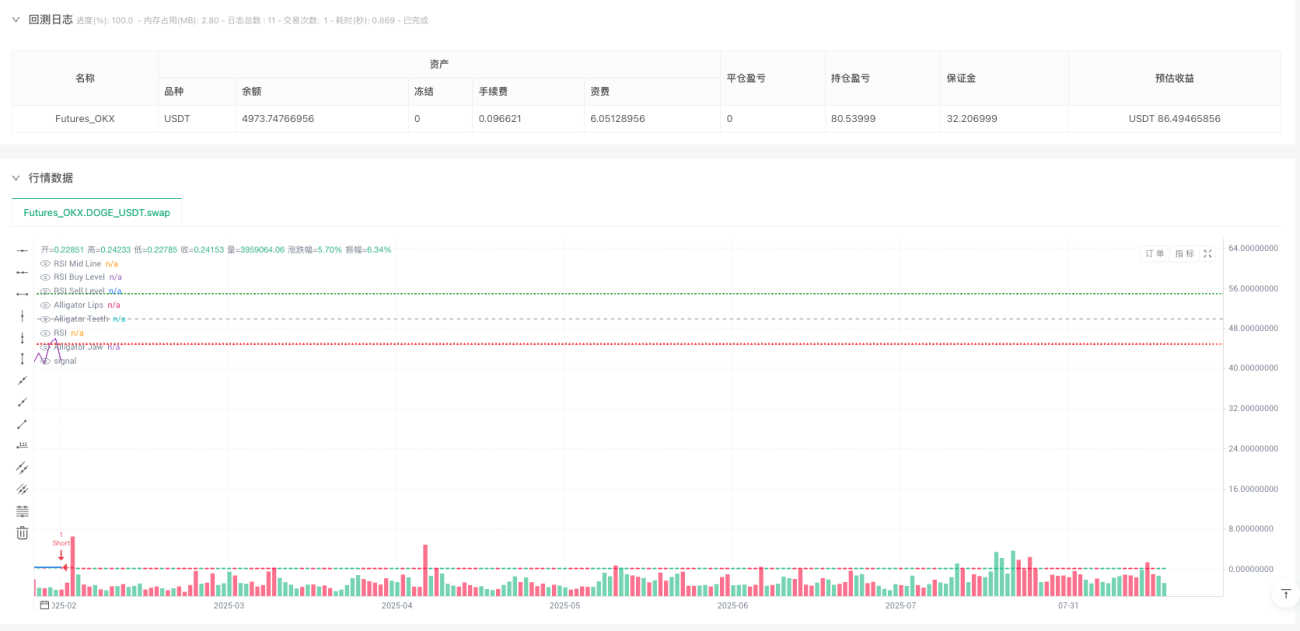
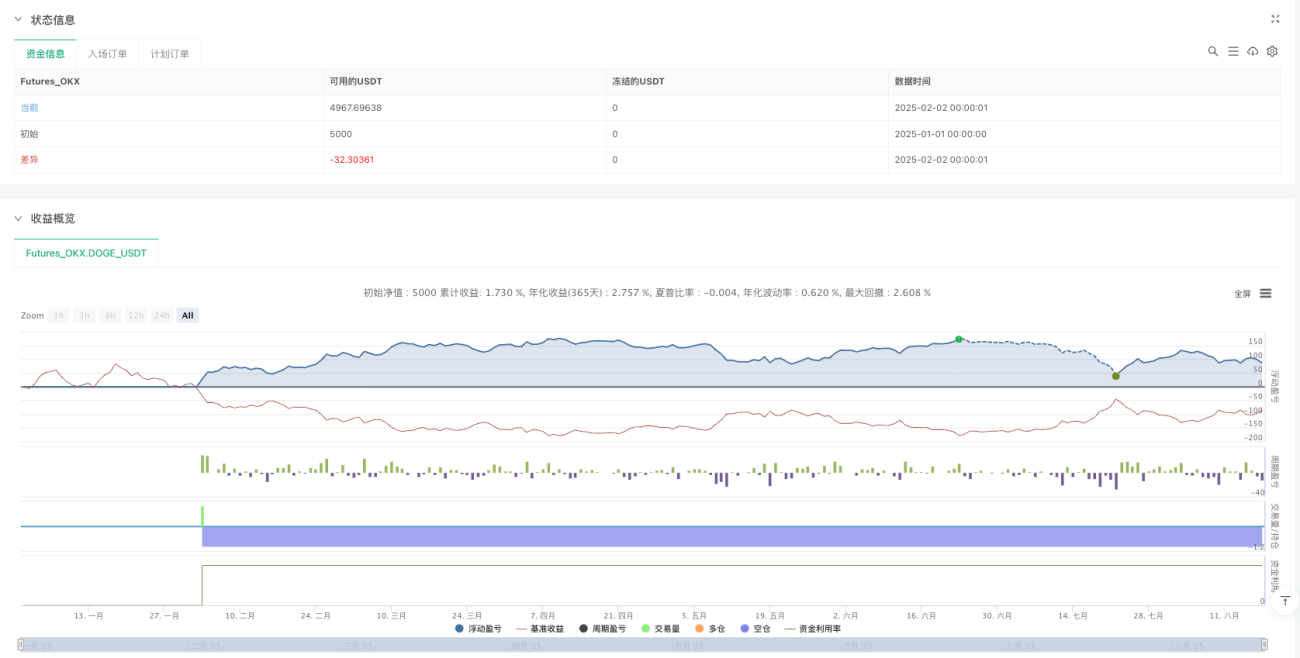
Strategi Breakout Momentum RSI Indikator William Alligator adalah strategi trading kuantitatif multi-kerangka waktu yang mengintegrasikan indikator William Alligator dan Relative Strength Index (RSI). Strategi ini beroperasi pada interval kandil 15 menit, menggunakan tiga garis rata-rata bergerak dari indikator Alligator (Bibir, Gigi, Rahang) untuk menentukan arah tren pasar, sekaligus menggabungkan RSI untuk mengonfirmasi kekuatan momentum, sehingga membentuk kerangka sinyal masuk dan keluar yang lengkap. Strategi ini dirancang dengan mekanisme stop-loss dan take-profit yang jelas, serta penyaringan kondisi berganda untuk memastikan keandalan sinyal, sangat cocok untuk lingkungan pasar dengan karakteristik tren yang jelas.
Prinsip Strategi
Prinsip inti dari strategi ini didasarkan pada kemampuan identifikasi tren dari indikator William Alligator dan fungsi konfirmasi momentum dari RSI. Indikator William Alligator terdiri dari tiga garis rata-rata bergerak dengan periode berbeda: Rahang (13 periode, offset 8), Gigi (8 periode, offset 5), dan Bibir (5 periode, offset 3). Ketika ketiga garis ini berurutan dalam urutan Bibir > Gigi > Rahang, ini menunjukkan tren naik; sebaliknya menunjukkan tren turun.
Sinyal beli dipicu ketika empat kondisi terpenuhi secara bersamaan: harga penutupan di atas Bibir, Bibir di atas Gigi, Gigi di atas Rahang, dan RSI di atas 55. Mekanisme penyaringan berganda ini memastikan posisi hanya dibuka ketika tren jelas dan momentum cukup. Sinyal jual berlaku sebaliknya: harga penutupan di bawah Bibir, Bibir di bawah Gigi, Gigi di bawah Rahang, dan RSI di bawah 45.
Mekanisme stop-loss dirancang dengan tiga lapis perlindungan: RSI turun di bawah 50, harga menembus di bawah Gigi, atau Bibir turun di bawah Gigi. Take-profit ditetapkan sebesar jumlah tetap (25 rupee), memberikan kontrol rasio risiko-imbal hasil yang jelas.
Keunggulan Strategi
Pertama, integrasi multi-indikator memberikan akurasi sinyal yang lebih tinggi. Indikator William Alligator unggul dalam mengidentifikasi awal dan akhir tren, sementara RSI mampu mengukur momentum harga secara efektif. Kombinasi keduanya dapat secara signifikan mengurangi probabilitas sinyal palsu. Kedua, strategi ini menggunakan verifikasi kondisi bertahap; sinyal trading hanya dihasilkan ketika semua kondisi terpenuhi secara bersamaan, sehingga sangat meningkatkan tingkat keberhasilan trading.
Strategi ini memiliki kemampuan adaptasi yang baik; penyesuaian parameter dapat disesuaikan dengan lingkungan pasar dan instrumen trading yang berbeda. Kerangka waktu 15 menit mampu menangkap fluktuasi harga jangka pendek hingga menengah tanpa menyebabkan frekuensi trading yang berlebihan. Mekanisme take-profit tetap menyederhanakan proses pengambilan keputusan trading dan membantu menjaga disiplin trading.
Strategi ini juga memiliki sistem manajemen risiko yang lengkap; tiga kondisi stop-loss memastikan keluar tepat waktu dalam situasi yang tidak menguntungkan, secara efektif mengendalikan kerugian maksimum per transaksi. Identifikasi sinyal trading yang divisualisasikan membuat eksekusi strategi lebih intuitif dan nyaman.
Risiko Strategi
Risiko utama yang dihadapi strategi ini meliputi risiko pembalikan tren. Dalam kasus pembalikan pasar yang kuat, beberapa indikator mungkin gagal secara bersamaan, menyebabkan kerugian besar. Terutama di pasar yang bergerak sideways, indikator Alligator dapat menghasilkan sinyal palsu yang sering, sementara RSI juga rentan memberikan pembacaan yang menyesatkan selama fase konsolidasi.
Mekanisme take-profit tetap, meskipun menyederhanakan operasi, juga dapat membatasi potensi keuntungan dalam tren yang kuat. Ketika pasar mengalami pergerakan satu arah yang berkelanjutan, take-profit yang terlalu dini dapat menyebabkan hilangnya peluang keuntungan yang lebih besar. Keterlambatan adalah masalah lain yang perlu diperhatikan; karena indikator William Alligator didasarkan pada rata-rata bergerak, ia memiliki karakteristik lag alami, yang dapat menyebabkan waktu masuk yang kurang tepat.
Sensitivitas parameter juga merupakan titik risiko. Nilai batas RSI (55 dan 45) serta parameter periode indikator Alligator perlu disesuaikan dengan lingkungan pasar yang berbeda; parameter tetap mungkin tidak cocok untuk semua kondisi pasar. Selain itu, strategi ini sensitif terhadap biaya trading; frekuensi masuk dan keluar yang tinggi dapat menggerus keuntungan karena komisi dan selisih harga.
Arah Optimasi
Penyesuaian parameter dinamis adalah arah optimasi yang penting. Mekanisme adaptif dapat diperkenalkan untuk secara otomatis menyesuaikan ambang batas RSI dan parameter indikator Alligator berdasarkan volatilitas pasar. Misalnya, meningkatkan ambang batas RSI di lingkungan volatilitas tinggi dan menurunkannya di lingkungan volatilitas rendah, agar sesuai dengan kondisi pasar yang berbeda.
Mekanisme take-profit dapat diubah dari jumlah tetap menjadi take-profit dinamis, misalnya menggunakan kelipatan ATR (Average True Range) sebagai target take-profit, sehingga dapat lebih baik menyesuaikan dengan karakteristik volatilitas pasar. Juga dapat dipertimbangkan untuk menerapkan trailing take-profit, yaitu mengaktifkan trailing stop setelah keuntungan mencapai tingkat tertentu, untuk menangkap keuntungan tren yang lebih besar.
Menambahkan filter lingkungan pasar adalah arah optimasi lainnya. Indikator kekuatan pasar atau indikator volatilitas dapat diperkenalkan untuk menilai apakah pasar saat ini cocok untuk strategi ini, dan menghentikan trading di lingkungan pasar yang tidak menguntungkan. Filter waktu juga penting, yaitu menghindari trading selama periode likuiditas rendah.
Mekanisme konfirmasi sinyal dapat diperkuat lebih lanjut. Konfirmasi volume dapat ditambahkan; sinyal hanya dianggap valid jika volume meningkat. Juga dapat dipertimbangkan analisis multi-kerangka waktu, yaitu mengonfirmasi arah tren pada kerangka waktu yang lebih tinggi, lalu mencari titik masuk spesifik pada kerangka waktu yang lebih rendah.
Kesimpulan
Strategi Breakout Momentum RSI Indikator William Alligator adalah sistem trading kuantitatif yang dirancang dengan relatif baik. Melalui integrasi multi-indikator dan penyaringan kondisi yang ketat, strategi ini memiliki potensi kinerja yang baik di pasar bertren. Keunggulan utama strategi ini terletak pada manajemen risiko yang sistematis dan mekanisme pembangkitan sinyal yang jelas, yang dapat memberikan kerangka trading yang relatif stabil bagi para trader.
Namun, strategi ini juga memiliki beberapa keterbatasan, terutama kinerja yang mungkin kurang memuaskan di pasar yang bergerak sideways. Pengaturan parameter tetap mungkin tidak dapat beradaptasi dengan semua lingkungan pasar. Dengan memperkenalkan penyesuaian parameter dinamis, memperbaiki mekanisme take-profit, menambahkan filter lingkungan pasar, dan langkah optimasi lainnya, daya adaptasi dan profitabilitas strategi dapat lebih ditingkatkan.
Bagi trader yang menggunakan strategi ini, disarankan untuk melakukan pengujian ulang dan verifikasi langsung yang memadai di berbagai lingkungan pasar, serta menyesuaikan parameter sesuai dengan kinerja aktual. Pada saat yang sama, menjaga manajemen modal yang baik dan disiplin trading adalah kunci keberhasilan implementasi strategi.
Pertama, fusion indikator majemuk memberikan akurasi sinyal yang lebih tinggi. Williams Alligator unggul dalam mengidentifikasi awal dan akhir tren, sementara RSI secara efektif mengukur momentum harga; kombinasinya secara signifikan mengurangi probabilitas sinyal palsu. Kedua, strategi ini menggunakan verifikasi kondisi progresif, menghasilkan sinyal trading hanya ketika semua kondisi terpenuhi secara bersamaan, yang secara substansial meningkatkan tingkat keberhasilan trading.
Strategi ini menunjukkan kemampuan adaptasi yang baik, memungkinkan penyesuaian parameter agar sesuai dengan lingkungan pasar dan instrumen trading yang berbeda. Timeframe 15 menit menangkap fluktuasi harga jangka menengah sambil menghindari frekuensi trading yang berlebihan. Mekanisme take-profit tetap menyederhanakan keputusan trading dan membantu menjaga disiplin trading.
Strategi ini juga memiliki sistem manajemen risiko yang komprehensif di mana tiga kondisi stop-loss memastikan keluar tepat waktu selama situasi yang merugikan, secara efektif mengontrol kerugian maksimum per trading. Identifikasi sinyal trading secara visual membuat eksekusi strategi lebih intuitif dan nyaman.
Risiko Strategi
Risiko utama termasuk risiko pembalikan tren. Selama pembalikan pasar yang kuat, beberapa indikator mungkin gagal secara bersamaan, yang menyebabkan kerugian signifikan. Terutama di pasar yang bergerak dalam kisaran (oscillating), indikator Alligator dapat menghasilkan sinyal palsu yang sering, sementara RSI dapat menghasilkan pembacaan yang menyesatkan selama fase konsolidasi sideways.
Meskipun mekanisme take-profit tetap menyederhanakan operasi, hal itu dapat membatasi potensi keuntungan selama pergerakan tren yang kuat. Selama pasar berarah berkelanjutan, pengambilan keuntungan yang terlalu dini dapat menyebabkan hilangnya peluang keuntungan yang lebih besar. Keterlambatan (lag) menjadi perhatian lain, karena dasar rata-rata bergerak dari Williams Alligator menciptakan karakteristik penundaan alami, yang berpotensi menyebabkan waktu masuk yang kurang optimal.
Sensitivitas parameter menghadirkan risiko tambahan. Nilai ambang RSI (55 dan 45) dan parameter periode Alligator memerlukan penyesuaian untuk lingkungan pasar yang berbeda; parameter tetap mungkin tidak cocok untuk semua kondisi pasar. Selain itu, strategi ini sensitif terhadap biaya trading, di mana entri dan keluar yang sering dapat menggerus pengembalian melalui komisi dan selip (slippage).
Arah Optimasi
Penyesuaian parameter dinamis merupakan arah optimasi yang krusial. Menerapkan mekanisme adaptif untuk secara otomatis menyesuaikan ambang RSI dan parameter Alligator berdasarkan volatilitas pasar dapat meningkatkan kinerja. Misalnya, menaikkan ambang RSI di lingkungan volatilitas tinggi sambil menurunkannya di kondisi volatilitas rendah akan lebih baik beradaptasi dengan kondisi pasar yang bervariasi.
Mekanisme take-profit dapat berevolusi dari jumlah tetap menjadi target dinamis, seperti menggunakan kelipatan ATR (Average True Range) sebagai sasaran profit, yang lebih sesuai dengan karakteristik volatilitas pasar. Menerapkan trailing take-profit juga dapat dipertimbangkan, yang mengaktifkan trailing stop setelah mencapai tingkat profit tertentu untuk menangkap keuntungan tren yang lebih besar.
Menambahkan filter lingkungan pasar merupakan jalur optimasi lainnya. Memperkenalkan indikator kekuatan pasar atau ukuran volatilitas untuk menilai kesesuaian pasar saat ini bagi strategi dapat menjeda trading selama kondisi yang tidak menguntungkan. Filter waktu juga sama pentingnya, menghindari trading selama periode likuiditas rendah.
Mekanisme konfirmasi sinyal perlu diperkuat lebih lanjut. Konfirmasi volume dapat ditambahkan, hanya memvalidasi sinyal selama ekspansi volume. Analisis multi-timeframe juga dapat dipertimbangkan, mengonfirmasi arah tren di timeframe yang lebih tinggi sebelum mencari titik masuk spesifik di timeframe yang lebih rendah.
Ringkasan
Strategi Breakout Momentum Williams Alligator RSI adalah sistem trading kuantitatif yang dirancang dengan cukup baik. Melalui integrasi multi-indikator dan penyaringan kondisi yang ketat, strategi ini menunjukkan potensi kinerja yang baik di pasar yang sedang tren. Keunggulan utama strategi ini terletak pada manajemen risiko yang sistematis dan mekanisme pembentukan sinyal yang jelas, memberikan kerangka trading yang relatif stabil bagi para trader.
Namun, strategi ini memiliki keterbatasan, terutama potensi kinerja yang kurang optimal di pasar yang berfluktuasi (oscillating), di mana pengaturan parameter tetap mungkin tidak dapat beradaptasi dengan semua lingkungan pasar. Melalui penyesuaian parameter dinamis, mekanisme take-profit yang lebih baik, dan penyaringan lingkungan pasar tambahan, kemampuan adaptasi dan profitabilitas strategi dapat lebih ditingkatkan.
Bagi trader yang menerapkan strategi ini, disarankan untuk melakukan backtesting menyeluruh dan verifikasi trading langsung di berbagai lingkungan pasar, serta melakukan penyesuaian parameter yang tepat berdasarkan kinerja aktual. Menjaga manajemen uang dan disiplin trading yang tepat tetap menjadi kunci keberhasilan implementasi strategi.
- 1