月次トレンドブレイク戦略

1
Follow
1815
Followers
概要
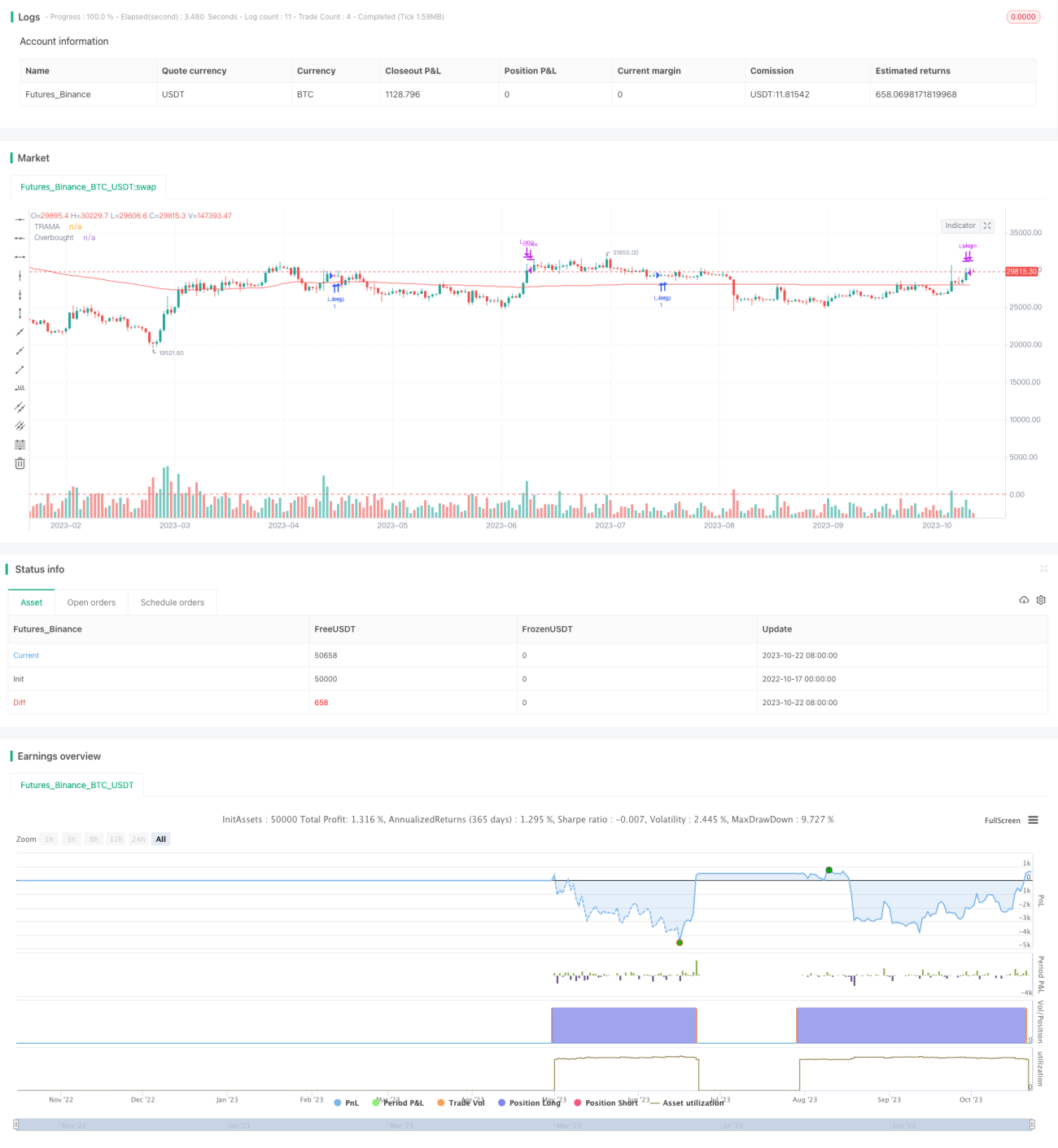
月次トレンドブレイクアウト戦略は、Pineスクリプトに基づくTradingViewインジケーターです。この戦略は、適応型移動平均線、トレンドライン突破、およびRSI指標の組み合わせを利用して、月に一度のみのロングエントリータイミングを決定します。RSI指標が買われすぎを示した際に、ポジションをクローズします。
戦略の原理
- 前回のエントリー月を記録する変数
lastEntryMonthを定義します。currentMonthで現在の月を取得します。 - TRAMA(適応型移動平均線)のパラメータ
length=99を設定し、価格を平滑化してトレンド方向を判断します。 - パラメータ
length_trend=14を設定し、高値のトレンドラインupperを描画します。価格がトレンドラインを上抜けた場合、ブレイクアウトと判断します。 - RSI指標のパラメータ
rsiLength=14を計算し、買われすぎ・売られすぎを判断します。 - エントリーロジック:終値がTRAMAより高く、かつ終値が上側トレンドラインをブレイクした場合、前月にエントリーしていなければロングエントリーします。
- エグジットロジック:RSIが70より大きい場合、ポジションをクローズします。
- TRAMA曲線、RSIの買われすぎラインを描画して戦略を完成させます。
本戦略は、3つの主要なテクニカル指標を組み合わせ、トレンド、モメンタム、買われすぎ・売られすぎの状況を判断し、月に一度だけの低リスクなロング機会を探します。同時に、上昇トレンドをブレイクした場合のみエントリーすることで、レンジ相場での無駄な取引を避けます。
優位性分析
- 複数のインジケーターを組み合わせ、市場の状態を総合的に判断し、意思決定の精度を高めます。
- 月次の時間枠でのブレイクアウト時にのみエントリーするため、過剰な取引を避けられます。
- 適応型移動平均線でトレンド方向を判断するため、転換点を素早く捉えられます。
- 買われすぎ指標を組み合わせることで、市場の高値を回避し、リスクを効果的に管理します。
- エントリー・エグジット条件がシンプルで直感的であり、容易に理解できます。
- 必要に応じてパラメータを調整し、戦略の最適化を図れます。
リスク分析
- ブレイクアウト失敗によるワ―プサー(往復ビンタ)リスク。エントリー後に再び価格が上側トレンドラインを下回ると、損失が発生する可能性があります。
- トレンドブレイクアウトのタイミングが不適切で、高値付近でのエントリーとなる場合があります。
- インジケータのパラメータ設定が不適切だと、誤ったシグナルを生成する可能性があります。
- ブレイクアウトは最近の市場の変動性のみを反映します。適応型ストップやポジションサイジングの検討が必要です。
- リスク・リワード比率を監視してください。プルバックのみを取引する、または他の確認フィルターを追加することを検討してください。
- 複数の時間枠でインジケータを検証してください。上位時間枠でトレンドを特定し、下位時間枠でエントリーを行います。
- 異なる市場環境でのバックテストを実施してください。市場タイプに合わせてパラメータを最適化してください。
最適化の方向性
- 出来高(Volume)や移動平均出来高インジケータを追加し、出来高の少ない偽のブレイクアウトを回避します。
- RSI買われすぎによるクローズ時に、一部の利益を確定させて残りのポジションを保持することを検討します。
- 移動平均線のパラメータを最適化し、適応的に変化させることで、トレンド転換をより良く追跡できるようにします。
- ブレイクアウトポイントの前後にゾーンを設定し、転換点の高値で直接エントリーするのを避けます。
- チャネル指標やボラティリティ指標など、より多くのフィルター条件を追加し、判断の精度を高めます。
- 段階的エントリー:価格が新たな抵抗線をブレイクした場合にポジションを追加します。
まとめ
月次トレンドブレイクアウト戦略は、トレンド、エネルギー、限界状況など複数の要素を総合的に考慮します。月足の時間枠でトレンド方向を判断し、より低い時間枠でのブレイクアウトを利用してエントリーを実行します。同時に、RSI指標を使用して取引リスクを効果的に管理します。本戦略はシンプルなロジックで月に一度の良好なロング機会を探します。トレンドフォローを考慮しつつ、リスク管理も重視しています。パラメータ最適化により、さまざまな市場環境に適応できます。総じて、月次トレンドブレイクアウト戦略は、シンプルで実用的でありながらリスクコントロールを重視した取引戦略です。
Source
Pine
/*backtest
start: 2022-10-17 00:00:00
end: 2023-10-23 00:00:00
period: 1d
basePeriod: 1h
exchanges: [{"eid":"Futures_Binance","currency":"BTC_USDT"}]
*/

//@version=5
strategy('Bannos Strategy', shorttitle='Bannos', overlay=true)

//The provided script is an indicator for TradingView written in Pine Script version 5. The indicator is used to determine entry and exit points for a trading strategy. Here's a detailed breakdown of what the script does:Strategy parameters
Related strategies
Comment
All comments (0)
No data
- 1