未来価格延長線のバックテスト戦略

1
Follow
1815
Followers
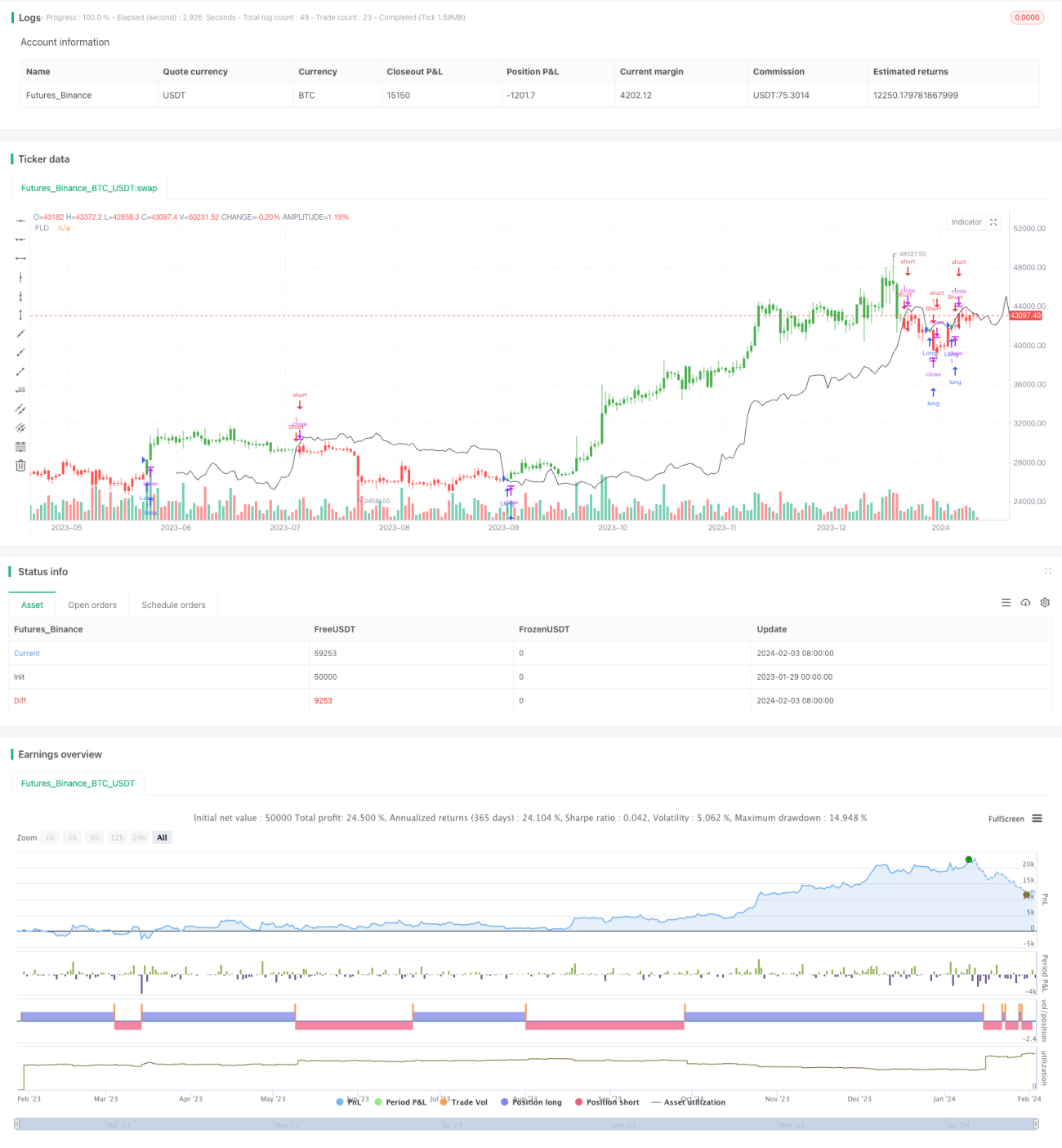
概要
この戦略の主な考え方は、将来の価格延長線を描き、現在の価格とその線との関係に基づいて将来の価格方向を判断することです。価格が延長線より上か下かによって、それぞれロングまたはショートのポジションを取ります。
戦略の原理
将来価格延長線(Future Lines of Demarcation、FLD)は、将来の特定サイクルにおける中央値、最高値、最安値を表します。この戦略はFLDを用いて将来の価格動向を判断します。その原理は以下の通りです。
- サイクル長に基づいて、FLDのシフト周期Period(価格の将来価格)を計算します。
- 現在のClose価格とFLDシフト後の価格を比較します。
- Close価格がFLD将来価格を下回っている場合、強気シグナルと判断します。
- Close価格がFLD将来価格を上回っている場合、弱気シグナルと判断します。
- 強気・弱気シグナルに基づいて、対応するロング・ショートの取引を行います。
優位性分析
この戦略の主な優位性は以下の通りです。
- FLDを使用して将来の価格動向を判断するため、精度が比較的高いです。
- 周期パラメータをカスタマイズでき、さまざまな市場環境に適応できます。
- 中央値、最高値、最安値のいずれかをFLDの描画元として選択でき、適応性が高いです。
リスク分析
この戦略の主なリスクは以下の通りです。
- FLD自体が機能しなくなり、機会損失や誤ったシグナルが発生する可能性があります。他の指標と組み合わせて判断することができます。
- 周期パラメータの設定が不適切だと、誤ったシグナルが多発する可能性があります。周期長の最適化が必要です。
- 突発的なイベントにより価格が急激に変動し、FLDの予測が無効になる可能性があります。ストップロスを設定してリスクを管理できます。
最適化の方向性
この戦略は以下の点から最適化できます。
- 他の指標(MACD、KDJなど)を組み合わせてシグナルをフィルタリングし、戦略精度を向上させる。
- 周期パラメータを最適化し、最適なパラメータ組み合わせを見つける。
- ストップロス・利確メカニズムを追加し、1回の損失と利益を管理する。
- バックテスト結果に基づいてロング・ショートルールを調整し、誤ったシグナルを減らす。
まとめ
この戦略は、価格とシフト後の将来価格延長線を比較することで将来の価格動向を判断する、典型的なトレンドフォロー戦略です。全体的にロジックは明確で理解しやすく、実装リスクも比較的小さいです。パラメータ最適化や指標の組み合わせにより、良好な戦略効果を得ることができます。
Source
Pine
/*backtest
start: 2023-01-29 00:00:00
end: 2024-02-04 00:00:00
period: 1d
basePeriod: 1h
exchanges: [{"eid":"Futures_Binance","currency":"BTC_USDT"}]
*/

//@version=2
////////////////////////////////////////////////////////////////////
//  Copyright by HPotter v1.0 15/02/2017
// An FLD is a line that is plotted on the same scale as the price and is in fact the Strategy parameters
Related strategies
Comment
All comments (0)
No data
- 1