モメンタムトレンド同期戦略

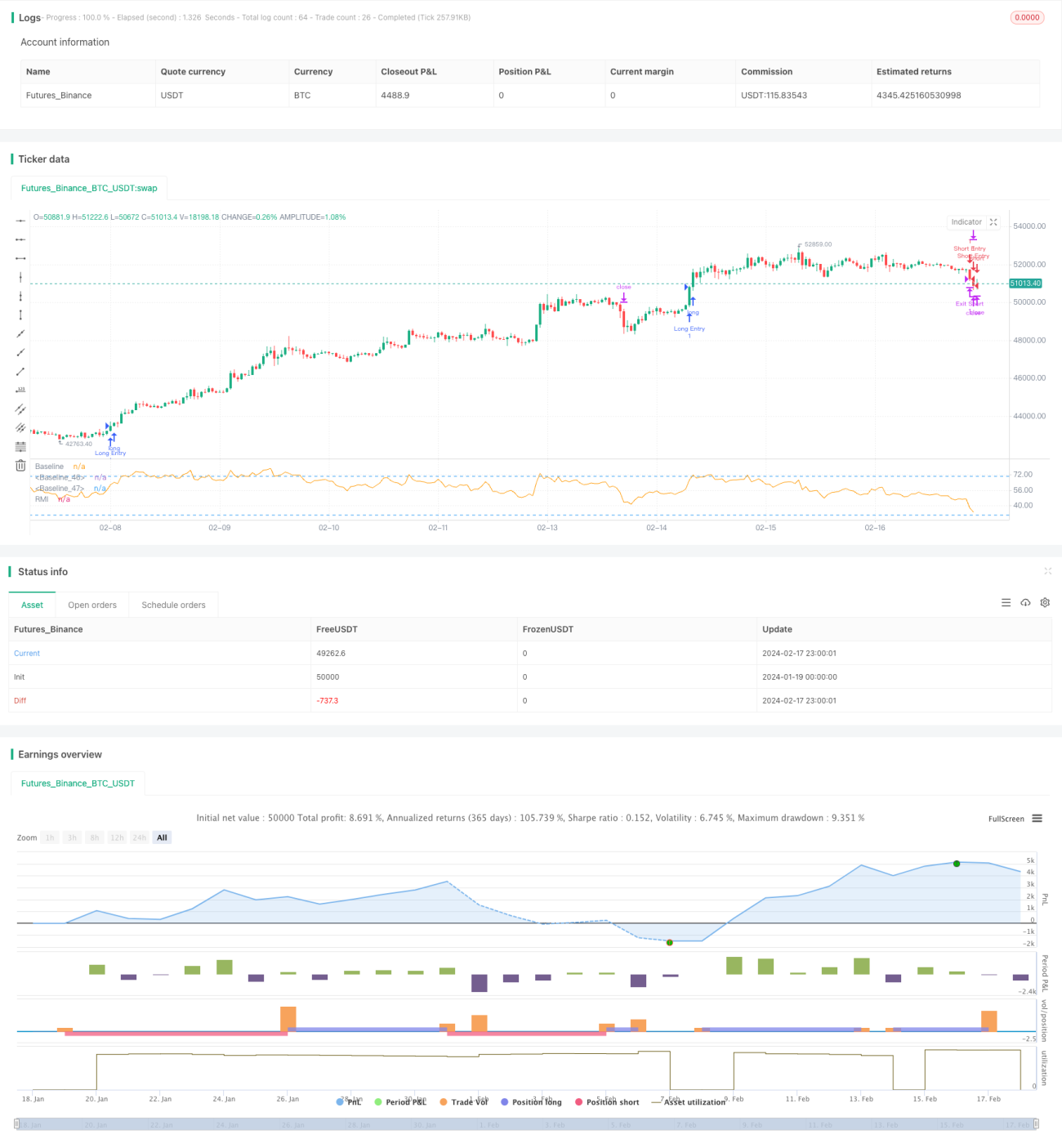
概要
モメンタムトレンド同期戦略は、相対モメンタム指数(RMI)とカスタムのpresentTrendインジケーターを組み合わせた取引戦略です。この戦略は多層的なアプローチを採用し、モメンタム分析とトレンド判断を統合することで、トレーダーにより柔軟で高感度な売買メカニズムを提供します。
戦略の原理
RMIインジケーター
RMIは相対力指数(RSI)の変種であり、過去一定期間の価格変動に対する上昇・下降モメンタムの大きさを測定します。計算式は以下の通りです。
RMI = 100 – 100 / (1 + 上昇平均値 / 下降平均値)
- 上昇平均値は過去N期間の平均上昇幅
- 下降平均値は過去N期間の平均下降幅
RMIの値は0から100の間を取り、値が大きいほど上昇勢力が強く、小さいほど下降勢力が強いことを示します。
presentTrendインジケーター
presentTrendインジケーターは、真の変動幅(ATR)と移動平均線を組み合わせてトレンド方向および動的サポート・レジスタンスラインを判断します。計算式は以下の通りです。
-
上限バンド:移動平均線 +(ATR × F)
-
下限バンド:移動平均線 –(ATR × F)
-
移動平均線は過去M期間の終値平均
-
ATRは過去M期間の平均真の変動幅
-
Fは感度を調整する乗数
価格がpresentTrendの上下バンドをブレイクすると、トレンド転換を示し、潜在的なエントリーまたはエグジットのシグナルとなります。
戦略ロジック
エントリー条件:
- ロング:RMIが閾値(例:60)を超え、強い強気モメンタムを示し、かつ価格がpresentTrendの上限バンドを上回り、上昇トレンドが確認された場合にロングエントリー。
- ショート:RMIが閾値(例:40)を下回り、強い弱気モメンタムを示し、かつ価格がpresentTrendの下限バンドを下回り、下降トレンドが確認された場合にショートエントリー。
エグジット条件(動的ストップロス付き):
- ロングエグジット:価格がpresentTrend下限バンドを下回るか、RMIが中立領域に戻り、強気勢力の減退が示唆された場合にエグジット。
- ショートエグジット:価格がpresentTrend上限バンドを上回るか、RMIが中立領域に戻り、弱気勢力の減退が示唆された場合にエグジット。
動的ストップロスの計算式:
- ロングポジション:エントリー後、presentTrend下限バンドをエグジット価格とする
- ショートポジション:エントリー後、presentTrend上限バンドをエグジット価格とする
本戦略の優位性は、RMIのモメンタム判断とpresentTrendのトレンド判断および動的ストップロスを融合し、トレンドに追随しながらリスクを効果的にコントロールできる点にあります。
優位性分析
本戦略には以下の利点があります。
- 多層的判断メカニズムにより、モメンタム指標とトレンド指標を組み合わせ、意思決定の効率を向上
- 動的ストップロスメカニズムにより、市場変動に応じてストップロス位置を調整し、リスクを効果的に管理
- 個人の好みに応じてロング、ショート、または双方向取引を選択可能で、柔軟性が高い
- RMIパラメータを調整可能で、異なる期間の判断に対応
- presentTrendパラメータを調整可能で、戦略の感度を制御可能
リスク分析
本戦略には以下のようなリスクも存在します。
- 売買シグナルが多く、過剰取引による取引コストとスリッページリスクが増加
- 二重判断メカニズムにより、一部の取引機会を逃す可能性
- パラメータを適切に調整し、自身の取引スタイルと一致させる必要あり
- 大きなトレンド方向の判断は依然として人手に委ね、逆張り取引を回避する必要あり
エントリー条件を適度に緩和し、パラメータ組み合わせを最適化し、トレンド判断と組み合わせることで上記リスクを低減できます。
最適化の方向性
本戦略は以下の方向で最適化が可能です。
- ボラティリティ指標と組み合わせ、高ボラティリティ時の誤エントリーを回避
- 出来高指標を追加し、十分な勢力によるエントリーを確保
- 動的ストップロスの幅を最適化し、損失を抑えつつより大きな利益を追求
- 再エントリー条件を追加し、トレンド機会を十分に捕捉
- パラメータ最適化とバックテストを行い、最適パラメータを見つけて収益率を最大化
まとめ
モメンタムトレンド同期戦略は多層的な取引戦略であり、モメンタム指標とトレンド指標の両方を考慮し、正確な判断と優れたリスク管理を特徴とします。本戦略は個人の好みに応じて柔軟に調整可能で、深度最適化後にトレンド捕捉の利点を最大限に発揮できる、推奨に値する取引戦略です。
/*backtest
start: 2024-01-19 00:00:00
end: 2024-02-18 00:00:00
period: 1h
basePeriod: 15m
exchanges: [{"eid":"Futures_Binance","currency":"BTC_USDT"}]
*/

// This Pine Script™ code is subject to the terms of the Mozilla Public License 2.0 at https://mozilla.org/MPL/2.0/
// © PresentTrading

//@version=5- 1