ダブル移動平均線クロスに基づく移動平均線戦略

概要
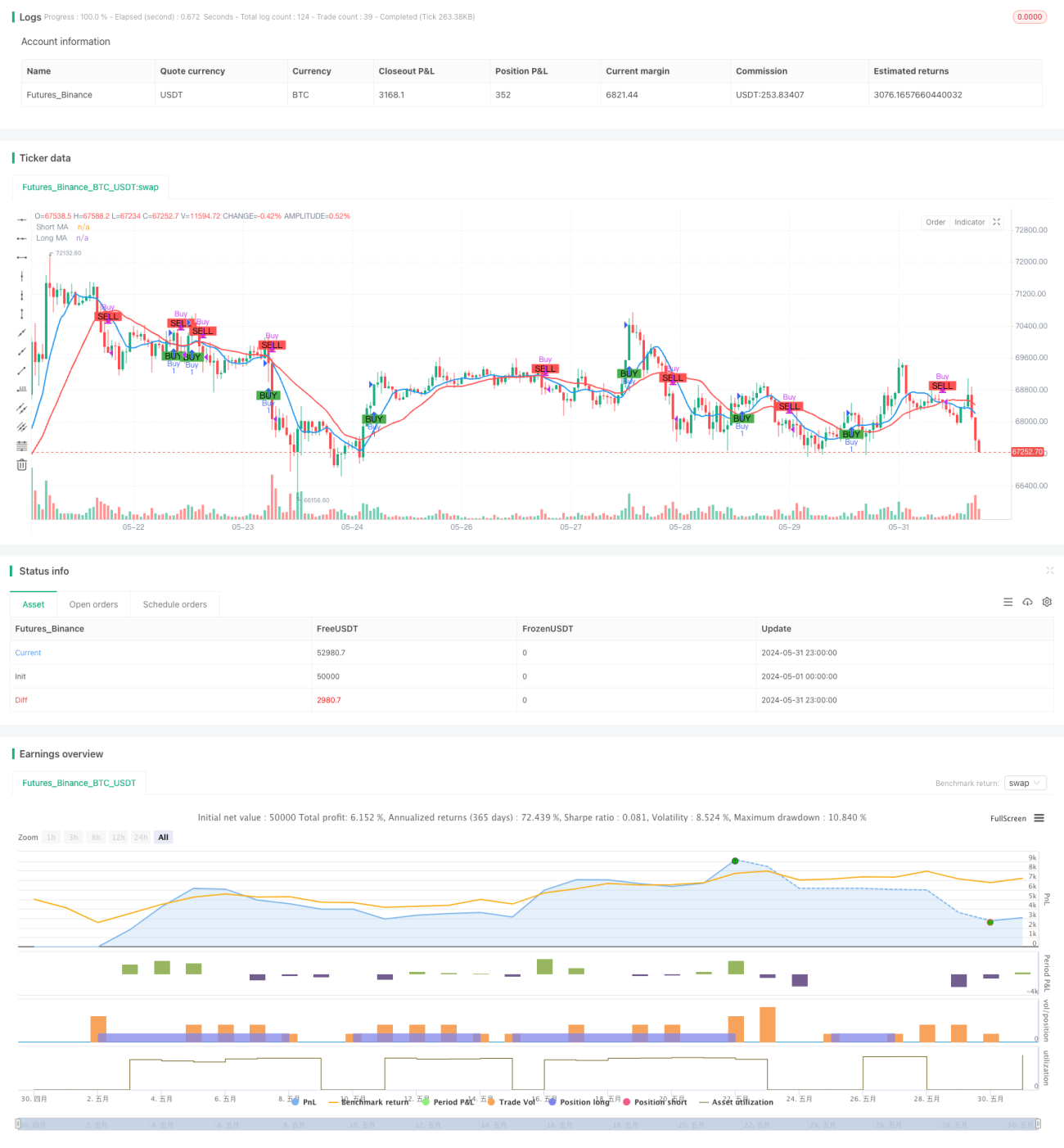
二重移動平均線クロス戦略は、シンプルかつ効果的なデイトレード手法であり、異なる期間の移動平均線間の関係を分析することで、市場の潜在的な買いシグナルと売りシグナルを識別します。本戦略は、短期単純移動平均線(SMA)と長期単純移動平均線を使用します。短期均線が長期均線を上抜けた場合、強気シグナルを示し、潜在的な買い機会を示唆します。逆に、短期均線が長期均線を下抜けた場合、弱気シグナルを示し、潜在的な売り機会を示唆します。このクロスオーバー手法により、トレーダーは市場トレンドを捉えつつ、市場ノイズの影響を最小限に抑えることができます。
戦略原理
本戦略の核心原理は、異なる期間の移動平均線のトレンド特性とラグを活用することです。短期均線と長期均線の相対的な位置関係を比較することで、現在の市場トレンド方向を判断し、対応する取引判断を下します。上昇トレンドが発生した場合、価格がまず長期均線を突破し、その後短期均線が長期均線を上抜けてゴールデンクロスを形成し、買いシグナルが生成されます。下降トレンドが発生した場合、価格がまず長期均線を下回り、その後短期均線が長期均線を下抜けてデッドクロスを形成し、売りシグナルが生成されます。本戦略のパラメータ設定では、短期均線の期間は9、長期均線の期間は21に設定されています。これらの2つのパラメータは、市場の特性や個人の好みに応じて調整可能です。さらに、本戦略では資金管理の概念を導入し、初期資金と1回の取引あたりのリスク比率を設定し、ポジション調整により各取引のリスクエクスポージャーを管理します。
戦略の利点
- シンプルで理解しやすい:本戦略は古典的な移動平均線理論に基づいており、ロジックが明確で、理解と実装が容易です。
- 適応性が高い:本戦略は複数の市場や異なる取引対象に適用でき、パラメータ設定を調整することで、異なる市場特性に柔軟に対応できます。
- トレンドの捕捉:二重均線クロスによりトレンド方向を判断することで、トレーダーが主流トレンドに追随し、利益機会を高めるのに役立ちます。
- リスク管理:本戦略はリスク管理の概念を導入し、ポジション調整により各取引のリスクエクスポージャーを管理し、潜在的な損失を効果的にコントロールします。
- ノイズ低減:移動平均線のラグ特性を活用することで、市場のランダムノイズを効果的にフィルタリングし、取引シグナルの信頼性を高めます。
戦略のリスク
- パラメータ選択:異なるパラメータ設定は戦略のパフォーマンスに大きな影響を与え、適切でない選択は戦略の機能不全やパフォーマンス低下を招く可能性があります。
- 市場トレンド:レンジ相場やトレンド転換点では、本戦略が連続的な損失を被る可能性があります。
- スリッページコスト:頻繁な取引は高いスリッページコストを発生させ、戦略の総収益に影響を与える可能性があります。
- ブラックスワンイベント:本戦略は極端な相場への適応性が低く、ブラックスワンイベントは戦略に大きな損失をもたらす可能性があります。
- オーバーフィッティングリスク:パラメータ最適化が過去データに過度に依存すると、実際の取引でのパフォーマンスが低下する可能性があります。
戦略の最適化方向
- 動的パラメータ最適化:市場状態の変化に応じて戦略パラメータを動的に調整し、適応性を高める。
- トレンド確認:取引シグナル発生後、他の指標や価格行動パターンを導入してトレンドを確認し、シグナルの信頼性を高める。
- ストップロスとテイクプロフィット:合理的なストップロスとテイクプロフィットメカニズムを導入し、1回の取引あたりのリスクエクスポージャーをさらに管理する。
- ポジション管理:ポジション調整方法を最適化し、例えばボラティリティ指標を導入し、市場のボラティリティ水準に応じてポジションを動的に調整する。
- 買い・売り勢力評価:買い勢力と売り勢力の対比関係を評価し、トレンド初期に介入することで、トレンド把握の精度を高める。
まとめ
二重移動平均線クロス戦略は、シンプルで実用的なデイトレード手法であり、異なる期間の均線の位置関係を比較することで市場トレンド方向を判断し、取引シグナルを生成します。本戦略はロジックが明確で適応性が高く、市場トレンドを効果的に捉え、同時にリスク管理措置を導入して潜在的な損失を管理します。ただし、本戦略はパラメータ選択、トレンド転換、頻繁な取引などの潜在的なリスクも存在するため、動的最適化、シグナル確認、ポジション管理などの方法により、戦略の頑健性と収益性をさらに向上させる必要があります。総じて、移動平均線は古典的なテクニカル分析指標として、その基本原則と実用的価値は市場で広く検証されており、深く研究し継続的に最適化する価値のある取引戦略です。
Overview
The Moving Average Crossover Strategy based on dual moving averages is a straightforward and effective intraday trading approach designed to identify potential buy and sell opportunities in the market by analyzing the relationship between two moving averages of different periods. This strategy utilizes a short-term simple moving average (SMA) and a long-term simple moving average. When the short-term moving average crosses above the long-term moving average, it indicates a bullish signal, suggesting a potential buying opportunity. Conversely, when the short-term moving average crosses below the long-term moving average, it indicates a bearish signal, suggesting a potential selling opportunity. This crossover method helps traders capture trending moves in the market while minimizing market noise interference.
Strategy Principle
The core principle of this strategy is to utilize the trend characteristics and lag of moving averages with different periods. By comparing the relative position relationship between the short-term moving average and the long-term moving average, it determines the current market trend direction and makes corresponding trading decisions. When an upward trend emerges in the market, the price will first break through the long-term moving average, and the short-term moving average will subsequently cross above the long-term moving average, forming a golden cross and generating a buy signal. When a downward trend emerges in the market, the price will first break below the long-term moving average, and the short-term moving average will subsequently cross below the long-term moving average, forming a death cross and generating a sell signal. In the parameter settings of this strategy, the period of the short-term moving average is set to 9, and the period of the long-term moving average is set to 21. These two parameters can be adjusted based on market characteristics and personal preferences. Additionally, this strategy introduces the concept of money management by setting the initial capital and risk percentage per trade, using position sizing to control the risk exposure of each trade.
戦略の利点
- シンプルさ:本戦略は古典的な移動平均線理論に基づいており、ロジックが明確で理解・実装が容易です。
- 適応性:複数の市場や異なる取引商品に適用可能で、パラメータ設定を調整することで様々な市場特性に柔軟に対応できます。
- トレンドの捕捉:二重移動平均線のクロスオーバーでトレンド方向を判断するため、トレーダーがメイントレンドに追随しやすく、収益機会を増やします。
- リスク管理:リスク管理の概念を取り入れ、ポジションサイジングで各取引のリスクエクスポージャーをコントロールし、潜在的な損失を効果的に管理します。
- ノイズ低減:移動平均線の遅延特性を活用し、市場のランダムノイズを効果的にフィルタリングすることで、取引シグナルの信頼性を向上させます。
戦略のリスク
- パラメータ選択:パラメータ設定の違いは戦略のパフォーマンスに大きな影響を与えます。不適切な選択は戦略の失敗や低パフォーマンスにつながる可能性があります。
- 相場トレンド:レンジ相場やトレンド転換点では、本戦略が連続的な損失を被る可能性があります。
- スリッページコスト:頻繁な取引は高いスリッページコストを引き起こし、戦略全体の収益性に悪影響を及ぼす可能性があります。
- ブラックスワンイベント:極端な市場環境への適応性が低く、ブラックスワンイベントは戦略に大きな損失をもたらす恐れがあります。
- オーバーフィッティングリスク:パラメータ最適化が履歴データに過度に依存すると、実際の取引で戦略のパフォーマンスが低下する可能性があります。
戦略の最適化方向性
- 動的パラメータ最適化:市場環境の変化に応じて戦略パラメータを動的に調整し、適応性を向上させます。
- トレンド確認:取引シグナル発生後、他の指標や価格行動パターンを導入してトレンドを確認し、シグナルの信頼性を高めます。
- ストップロスと利確:合理的なストップロス・利確メカニズムを導入し、各取引のリスクエクスポージャーをさらに抑制します。
- ポジション管理:ポジションサイジング手法を最適化します。例えば、ボラティリティ指標を導入し、市場の変動性に基づいて動的にポジションを調整します。
- 強弱判断:買いと売りの勢力の比較関係を評価し、トレンド初期段階でエントリーすることで、トレンド捕捉の精度を高めます。
まとめ
二重移動平均線をベースとした移動平均線クロスオーバー戦略は、シンプルで実用的なデイトレード手法です。異なる期間の移動平均線の位置関係を比較することで、市場トレンドの方向性を判断し、取引シグナルを生成します。本戦略はロジックが明確で適応性に優れ、市場トレンドを効果的に捕捉できると同時に、リスク管理策を導入して潜在的な損失をコントロールします。ただし、パラメータ選択やトレンド転換、頻繁な取引といった潜在的なリスクも存在するため、動的最適化やシグナル確認、ポジション管理などの方法でさらに改善し、戦略のロバスト性と収益性を高める必要があります。総じて、古典的なテクニカル分析指標として、移動平均線の基本原理と実践的な応用価値は市場で広く検証されており、深く研究し継続的に最適化する価値のある取引戦略です。
- 1