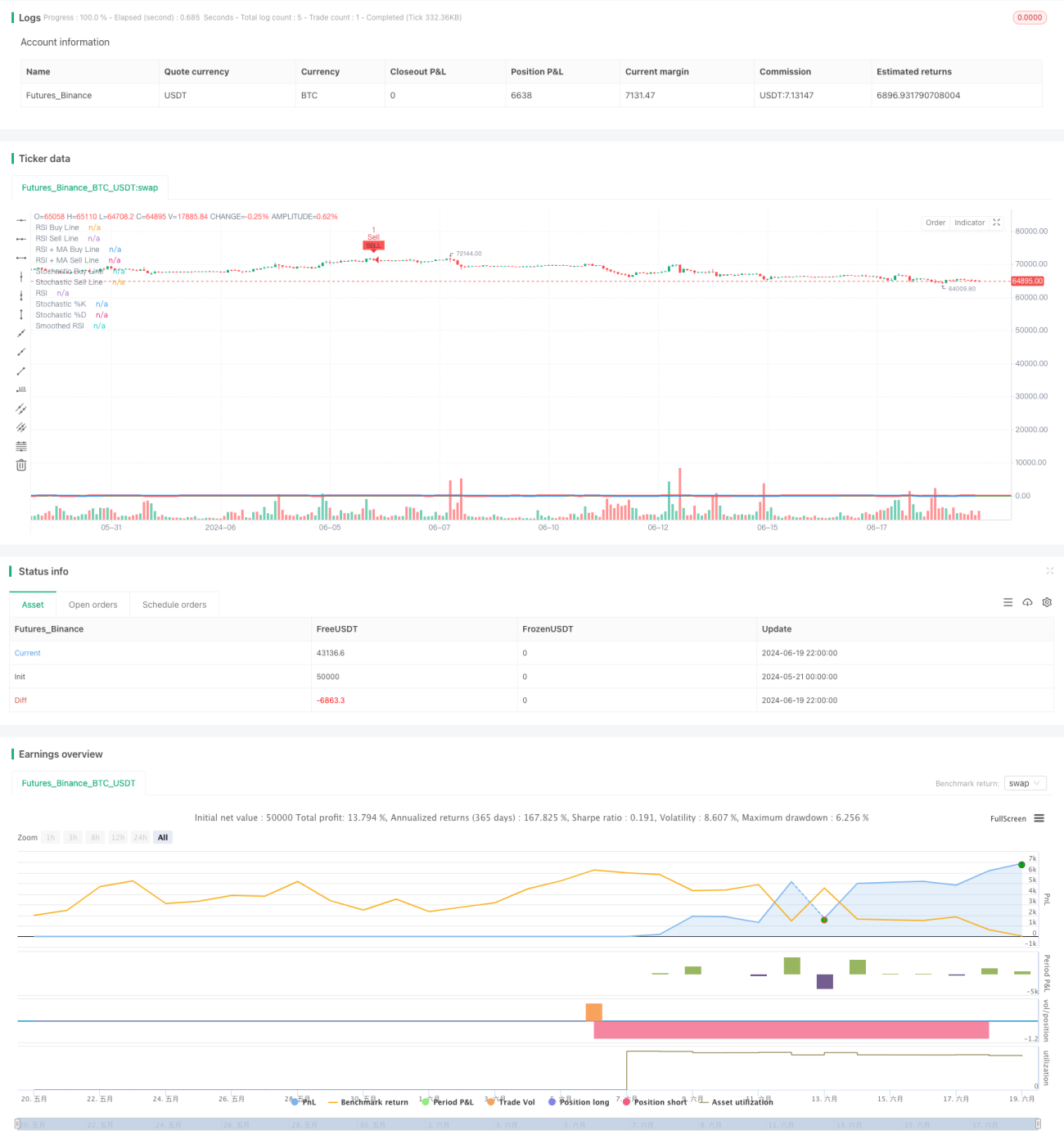
この戦略は,総合的な技術分析システムであり,主に相対的に強い指標 ((RSI) とランダムな指標 ((Stochastic) の特性を組み合わせ,移動平均 ((MA) の概念を統合している.戦略の核心思想は,複数の動量指標の交差と値判断によって市場の転換点を捕捉して,購入と販売のシグナルを生成することである.この多次元的な分析方法は,取引決定の正確性と信頼性を向上させることを目的としている.
RSIの分析:
RSIは平らで
ランダムな指標分析:
複合信号生成:
多指標融合:RSI,ランダム指標,移動平均を組み合わせることで,戦略は複数の角度から市場の動きを分析し,偽信号を減らすことができます.
ダイナミックな適応性:RSIとランダムな指標の交差信号を使用し,異なる市場環境により良く適応できます.
トレンド確認:RSIと滑り線の交差は,不確実な信号をフィルターするのに役立つ追加のトレンド確認を提供します.
柔軟性: 戦略は,RSIの長さ,取引の値などの複数のパラメータをカスタマイズできるようにし,異なる市場と個人の好みに合わせて調整することができます.
視覚的フィードバック: 戦略は,市場状況と信号生成プロセスを直観的に理解するのに役立つ豊富なグラフを描画機能を提供します.
過剰取引:多重な条件により,信号が頻繁に生成され,取引コストが増加する可能性があります.
遅滞性:複数の移動平均と滑らかな処理を使用すると,信号が遅滞し,急速に変化する市場でチャンスを逃す可能性があります.
パラメータの感受性: 策略は複数の調整可能なパラメータに依存し,不適切なパラメータ設定は,策略の不良なパフォーマンスを引き起こす可能性があります.
市場環境依存: 傾向が不明な場合や横断的な市場では,戦略は大量に偽信号を生成する可能性があります.
技術指標への過度な依存:基本面や市場情勢などの重要な要因を無視すると判断の誤りが生じます.
ダイナミックパラメータ調整:自調メカニズムを導入し,市場の変動に応じてRSIとランダムな指標のパラメータを自動的に調整する.
トレンドフィルターを追加: 長期移動平均線またはADX指標と組み合わせて,強いトレンド中に取引することを保証する.
取引量分析の導入:取引量指標を意思決定プロセスに組み込み,信号の信頼性を向上させる.
出場戦略の最適化:追跡ストップまたはATRベースのダイナミックストップを使用するなど,より精巧なストップストップメカニズムを開発する.
タイムフレームの調整:偽信号を減らすために複数のタイムフレームで信号を検証し,正確性を向上させる.
機械学習統合:機械学習アルゴリズムを使用してパラメータ選択と信号生成プロセスを最適化する.
RSIとランダムな指標融合交差戦略は,複数の動向指標と移動平均を組み合わせて,市場の重要な転換点を捉えるための包括的な技術分析システムである.この戦略の優点は,その多次元分析方法と柔軟なパラメータ設定で,異なる市場環境に適応できるようにするものである.しかしながら,戦略は,過度な取引やパラメータの感受性などのリスクにも直面している.将来の最適化方向は,戦略の自律性を高め,より多くの市場情報を取り入れ,リスクメカニズムを最適化することに焦点を当てなければならない.
/*backtest
start: 2024-05-21 00:00:00
end: 2024-06-20 00:00:00
period: 2h
basePeriod: 15m
exchanges: [{"eid":"Futures_Binance","currency":"BTC_USDT"}]
*/
//@version=5
strategy("-VrilyaSS-RSI&SToch-Cross+2xRSI+2xStoch-Lines+RSI-SMA-Cross-V4-", overlay=true)
// RSI settings
rsiLength = input.int(14, title="RSI Length")
rsiSource = input.source(ohlc4, title="RSI Source")
rsiBuyLine = input.int(37, title="RSI Buy Line", minval=0, maxval=100)
rsiSellLine = input.int(49, title="RSI Sell Line", minval=0, maxval=100)
rsi = ta.rsi(rsiSource, rsiLength)
// Smoothed RSI (Gleitender Durchschnitt von RSI)
smaLength = input.int(14, title="MA Length for RSI")
smaSource = input.source(ohlc4, title="MA Source for RSI")
maTypeRSI = input.string(title="MA Type for RSI", defval="SMA", options=["SMA", "EMA", "WMA", "SMMA (RMA)", "VMMA"])
f_get_ma_rsi(source, length, type) =>
switch type
"SMA" => ta.sma(source, length)
"EMA" => ta.ema(source, length)
"WMA" => ta.wma(source, length)
"SMMA (RMA)" => ta.rma(source, length) // Smoothed Moving Average (Simple Moving Average)
"VMMA" => ta.vwma(source, length) // Volume Weighted Moving Average (VMMA)
smoothedRsi = f_get_ma_rsi(ta.rsi(smaSource, rsiLength), smaLength, maTypeRSI)
rsiSmaBuyLine = input.int(40, title="RSI + MA Buy Line", minval=0, maxval=100)
rsiSmaSellLine = input.int(60, title="RSI + MA Sell Line", minval=0, maxval=100)
// Stochastic settings
kLength = input.int(14, title="Stochastic K Length")
kSmoothing = input.int(3, title="Stochastic K Smoothing")
dSmoothing = input.int(3, title="Stochastic D Smoothing")
stochBuyLine = input.int(20, title="Stochastic Buy Line", minval=0, maxval=100)
stochSellLine = input.int(80, title="Stochastic Sell Line", minval=0, maxval=100)
stochK = ta.sma(ta.stoch(close, high, low, kLength), kSmoothing)
stochD = ta.sma(stochK, dSmoothing)
// Stochastic Crosses
bullishCross = ta.crossover(stochK, stochD)
bearishCross = ta.crossunder(stochK, stochD)
// RSI Direction and Crosses
rsiUp = ta.change(rsi) > 0
rsiDown = ta.change(rsi) < 0
rsiCrossAboveSMA = ta.crossover(rsi, smoothedRsi) and rsi < rsiSmaBuyLine
rsiCrossBelowSMA = ta.crossunder(rsi, smoothedRsi) and rsi > rsiSmaSellLine
// Buy Signal (RSI geht hoch und ist unter der Buy-Line, Stochastic unter Buy-Line mit bullischem Cross, und RSI kreuzt über SMA unterhalb der RSI+SMA Buy Line)
buySignal = rsiUp and rsi < rsiBuyLine and bullishCross and stochK < stochBuyLine and rsiCrossAboveSMA
// Sell Signal (RSI geht runter und ist über der Sell-Line, Stochastic über Sell-Line mit bärischem Cross, und RSI kreuzt unter SMA oberhalb der RSI+SMA Sell Line)
sellSignal = rsiDown and rsi > rsiSellLine and bearishCross and stochK > stochSellLine and rsiCrossBelowSMA
// Plot RSI, Smoothed RSI, and Stochastic for reference with default visibility off
plot(rsi, title="RSI", color=color.yellow, linewidth=2, display=display.none)
plot(smoothedRsi, title="Smoothed RSI", color=color.blue, linewidth=2, display=display.none)
hline(rsiBuyLine, "RSI Buy Line", color=color.green, linewidth=2, linestyle=hline.style_solid, display=display.none)
hline(rsiSellLine, "RSI Sell Line", color=color.red, linewidth=2, linestyle=hline.style_solid, display=display.none)
hline(rsiSmaBuyLine, "RSI + MA Buy Line", color=color.purple, linewidth=2, linestyle=hline.style_solid, display=display.none)
hline(rsiSmaSellLine, "RSI + MA Sell Line", color=color.orange, linewidth=2, linestyle=hline.style_solid, display=display.none)
plot(stochK, title="Stochastic %K", color=color.aqua, linewidth=2, display=display.none)
plot(stochD, title="Stochastic %D", color=color.red, linewidth=3, display=display.none)
hline(stochBuyLine, "Stochastic Buy Line", color=color.green, linewidth=2, linestyle=hline.style_solid, display=display.none)
hline(stochSellLine, "Stochastic Sell Line", color=color.red, linewidth=2, linestyle=hline.style_solid, display=display.none)
// Alert conditions
alertcondition(buySignal, title="Buy Signal", message="Buy Signal: RSI and Stochastic conditions met.")
alertcondition(sellSignal, title="Sell Signal", message="Sell Signal: RSI and Stochastic conditions met.")
// Plot buy and sell signals for visual reference
plotshape(series=buySignal, location=location.belowbar, color=color.new(color.green, 0), style=shape.labelup, text="BUY", textcolor=color.black, size=size.tiny)
plotshape(series=sellSignal, location=location.abovebar, color=color.new(color.red, 0), style=shape.labeldown, text="SELL", textcolor=color.black, size=size.tiny)
// Strategy orders
if (buySignal)
strategy.entry("Buy", strategy.long)
if (sellSignal)
strategy.entry("Sell", strategy.short)