3期間の高低モメンタム取引戦略

FVG OHLC
作成日: 2024-07-30 10:44:11 最終変更日: 2024-07-30 10:44:11
コピー: 0 クリック数: 641
1
フォロー
1617
フォロワー

3期間の高低モメンタム取引戦略

概要

この戦略は,3周期の高低をベースにした動的取引戦略である.これは,最近の3週間の価格データを活用して,潜在的な買入と売却の機会を識別する.この戦略は,主に最新の高点,最新の閉店価格と3週間前の閉店価格の関係に焦点を当て,これらの価格レベルを比較して取引シグナルを生成する.この方法は,短期市場騒音の影響を回避しながら,中間期間の価格動向を捉えることを目的としています.

戦略原則

この戦略の核心となる要素は以下の通りです.

  1. 計算した指標は

    • 最新高点:ta.highest () 関数を使用して,過去30日 (約4週間) の最高値を計算します.
    • 最近の閉店価格:closeを使用[1]前日の閉店価格を入手する.
    • 3週間前 閉店価格:closeを使用[30日前の取引終了価格を入手する.
  2. 購入条件:

    • 条件1: 最新の高値が3週間前の閉盘価格より大きいかそれと同等である.
    • 条件2:最新の閉店価格は3週間前の閉店価格より大きい.
  3. 販売条件:

    • 売り込みシグナルは,最新の閉店価格が3週間前の閉店価格より大きいときに発生します.
  4. 取引の実行:

    • 購入信号のトリガーで,実行すると多入場となります.
    • 販売シグナルがトリガーされると,平仓は現在の多頭位を終了する.
  5. 画像の表示:

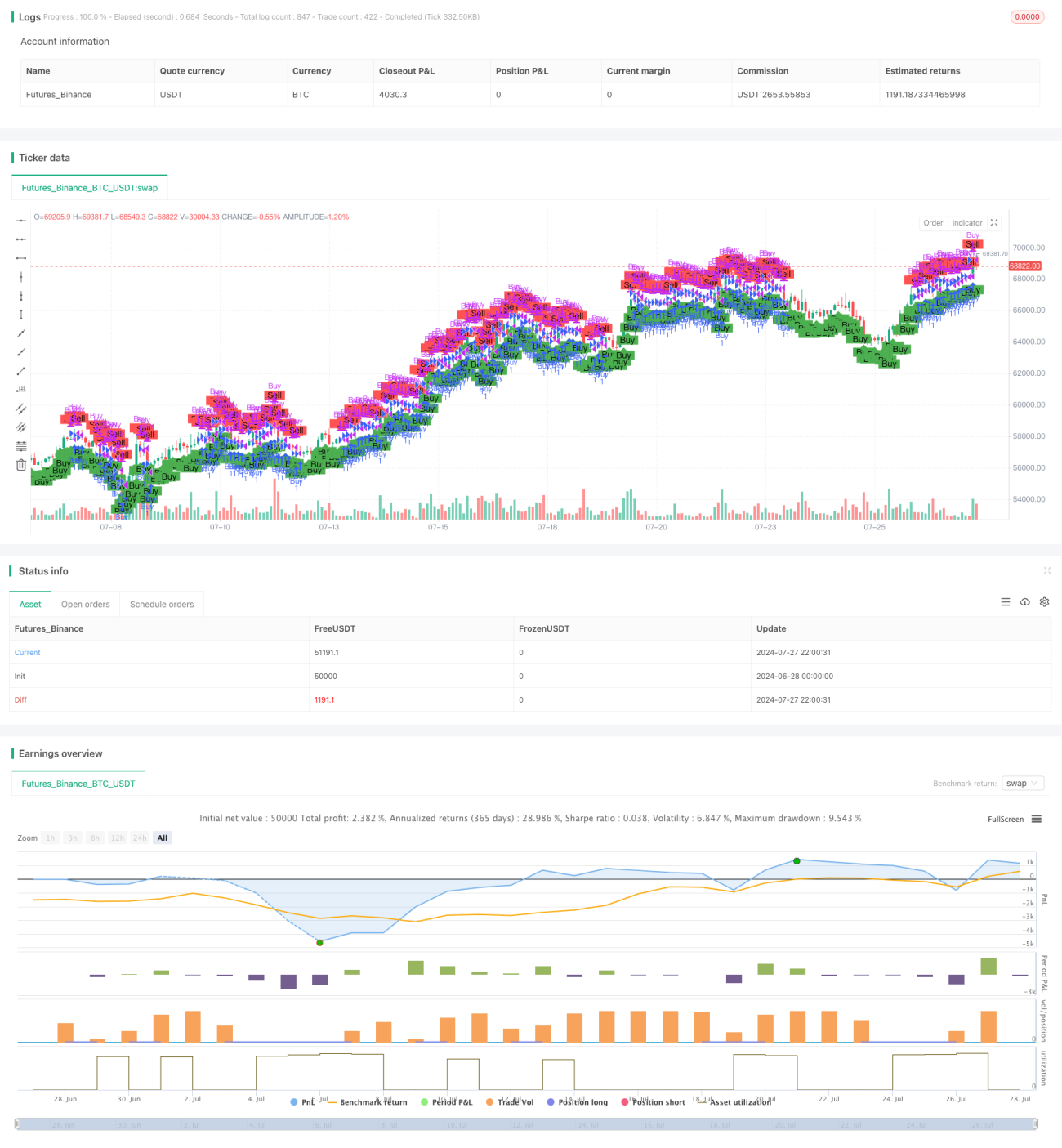
    • plotshape ((() 関数を使用して,グラフ上の買取と販売の信号をマークする.

このデザインは,価格が3週間前の水準を突破したときに上昇する勢いを捉え,価格が下がったときに利益を守るため,適時に平衡を保つことを目的としています.

戦略的優位性

  1. 中期トレンドキャプチャ:現在の価格と3週間前の価格レベルを比較することによって,戦略は中期トレンドの形成と継続を効果的に識別することができます.

  2. ノイズフィルター: 3周期のタイムフレームを使用することで,短期市場の変動をフィルタリングし,信号の信頼性を高めることができます.

  3. 動的適応: 最新の価格データに基づいて判断基準を継続的に更新する戦略で,市場の変化に動的に適応できる.

  4. リスク管理: 明確な販売条件を設定することで,戦略は市場が変化する時に,適切なタイミングでポジションをクリアし,リスクを効果的にコントロールすることができます.

  5. シンプルで分かりやすい: 戦略の論理は直感的で,理解し,実行しやすい. 初心者にも経験豊富なトレーダーにも適しています.

  6. ビジュアルサポート:取引者の直観的な判断と反分析を容易にするために,取引信号をグラフで明確に標識する.

戦略リスク

  1. フェイクブレークリスク:横断市場では,頻繁にフェイクブレークが発生し,過剰な取引と不必要な手数料の損失を引き起こす可能性があります.

  2. 遅滞性:三期間の歴史データを使用すると,信号が遅滞し,急速に変化する市場での最適な入場時間を逃す可能性があります.

  3. 単一の時間枠の制限: 3 期間のデータのみに依存するデータは,他の時間枠の重要な市場情報を無視する可能性があります.

  4. ストップ・メカニズムの欠如:現在の戦略には明確なストップ・メカニズムの欠如があり,市場が激しく波動すると大きな損失に直面する可能性があります.

  5. 策略は,主に閉盘価格に基づいて判断し,閉盘中の重要な価格変動を無視する可能性がある.

  6. 取引量確認の欠如:取引量要因を考慮していないため,低取引量期間に偽信号が生じる可能性があります.

戦略最適化の方向性

  1. マルチタイムフレーム分析:日線,周線,月線などの複数のタイムフレームのデータを統合し,より包括的な市場視点を提供します.

  2. 交差量指標の導入:交差量分析を組み合わせて,信号の信頼性を向上させ,特に突破確認の面において.

  3. ダイナミック・ストップ・メカニズム:トラッキング・ストップやATRベースのストップなどの自主的なストップ・戦略を導入し,リスクをより良く管理する.

  4. シグナルフィルター:偽信号を減らすために,RSIやMACDのような技術指標や市場情緒指標を追加する.

  5. 入場最適化: 取引価格の優位性を得るために,直接市場価格の入場ではなく,制限価格または観察区間を使用することを検討してください.

  6. ポジション管理:ダイナミックなポジション管理戦略を実装し,市場変動と口座リスクに応じて各取引のポジションサイズを調整する.

  7. 市場状態識別:市場状態 ((トレンド,収束,高波動) の識別論理を付加し,異なる市場環境で異なる取引パラメータを採用する.

  8. 追及と最適化:大量に歴史データを追及し,時間周期,条件値などの戦略パラメータを最適化する.

要約する

三周期高低動力の取引戦略は,シンプルで効果的な中期トレンド追跡方法である.最新の高点,最新の閉店価格と3週間前の閉店価格を比較することによって,戦略は価格の突破と動力の変化を捕捉することができる.その優点は,短期的なノイズをフィルターすることができ,中期トレンドを捕捉することができ,論理は簡単に理解できるということです.しかし,戦略は,偽の突破,信号の遅れ,リスク管理の欠如などの課題にも直面しています.

将来の最適化の方向は,マルチタイムフレーム分析,取引量確認,ダイナミックリスク管理,および市場状態の識別などの側面に目を向けるべきである.これらの改善によって,戦略は,異なる市場環境でより安定したパフォーマンスを発揮し,トレーダーにより信頼できる意思決定支援を提供することが期待されている.

全体として,この戦略は,量的な取引のための良い出発点を提供し,継続的な最適化と改善によって,強力な取引ツールになる可能性があります.しかし,投資家は,市場リスクを十分に理解し,自分のリスク承受能力と投資目標と組み合わせて,この戦略を使用する際には,慎重に注意を払って,実際に使用する必要があります.

Overview

This strategy is a momentum trading approach based on three-week high and low points. It utilizes price data from the recent three weeks to identify potential buying and selling opportunities. The strategy primarily focuses on the relationship between the latest high, the latest closing price, and the closing price from three weeks ago, generating trading signals by comparing these price levels. This method aims to capture medium-term price trends while avoiding the impact of short-term market noise.

Strategy Principle

The core principles of this strategy include the following key elements:

  1. Indicator Calculations:

    • Latest High: Uses the ta.highest() function to calculate the highest price over the last 30 trading days (approximately 4 weeks).
    • Latest Close: Uses close[1] to get the closing price of the previous day.
    • Three Weeks Ago Close: Uses close[30] to get the closing price from 30 trading days ago.
  2. Buy Conditions:

    • Condition 1: The latest high is greater than or equal to the closing price from three weeks ago.
    • Condition 2: The latest closing price is greater than the closing price from three weeks ago.
  3. Sell Condition:

    • Triggers a sell signal when the latest closing price is greater than the closing price from three weeks ago.
  4. Trade Execution:

    • Enters a long position when the buy signal is triggered.
    • Closes the current long position when the sell signal is triggered.
  5. Visualization:

    • Uses the plotshape() function to mark buy and sell signals on the chart.

This design aims to capture upward momentum when the price breaks above the level from three weeks ago, while promptly closing positions to protect profits when the price falls back.

Strategy Advantages

  1. Medium-Term Trend Capture: By comparing current prices with levels from three weeks ago, the strategy effectively identifies the formation and continuation of medium-term trends.

  2. Noise Filtering: Using a three-week time frame helps filter out short-term market fluctuations, improving the reliability of signals.

  3. Dynamic Adaptation: The strategy continuously updates its decision criteria based on the latest price data, allowing it to dynamically adapt to market changes.

  4. Risk Management: Through clear sell conditions, the strategy can close positions promptly when the market turns, effectively controlling risk.

  5. Simple and Understandable: The strategy logic is intuitive, easy to understand and implement, suitable for both novice and experienced traders.

  6. Visual Support: Buy and sell signals are clearly marked on the chart, facilitating intuitive judgment and backtesting analysis for traders.

Strategy Risks

  1. False Breakout Risk: In sideways markets, frequent false breakouts may occur, leading to excessive trading and unnecessary transaction fee losses.

  2. Lagging Nature: Using historical data from three weeks may result in lagging signals, potentially missing optimal entry points in rapidly changing markets.

  3. Single Time Frame Limitation: Relying solely on three-week data may overlook important market information from other time frames.

  4. Lack of Stop-Loss Mechanism: The current strategy lacks a clear stop-loss mechanism, potentially facing significant losses during severe market fluctuations.

  5. Over-reliance on Closing Prices: The strategy mainly bases its judgments on closing prices, potentially ignoring important intraday price movements.

  6. Lack of Volume Confirmation: Not considering volume factors may lead to false signals during periods of low trading volume.

Strategy Optimization Directions

  1. Multi-Time Frame Analysis: Integrate data from multiple time frames, such as daily, weekly, and monthly, to provide a more comprehensive market perspective.

  2. Incorporate Volume Indicators: Combining volume analysis can improve signal reliability, especially in breakout confirmation.

  3. Dynamic Stop-Loss Mechanism: Implement adaptive stop-loss strategies, such as trailing stops or ATR-based stops, for better risk management.

  4. Signal Filters: Add additional technical or market sentiment indicators, like RSI or MACD, to reduce false signals.

  5. Entry Optimization: Consider using limit orders or observation zones instead of direct market orders for entry to obtain better execution prices.

  6. Position Management: Implement dynamic position sizing strategies, adjusting the size of each trade based on market volatility and account risk.

  7. Market State Recognition: Add logic to identify market states (trending, ranging, high volatility) and adopt different trading parameters for different market environments.

  8. Backtesting and Optimization: Conduct extensive historical data backtesting to optimize strategy parameters such as time periods and condition thresholds.

Summary

The Three-Week High-Low Momentum Trading Strategy is a simple yet effective method for medium-term trend following. By comparing the latest high, latest close, and the closing price from three weeks ago, the strategy can capture price breakouts and momentum changes. Its strengths lie in filtering short-term noise, capturing medium-term trends, and its simple, easy-to-understand logic. However, the strategy also faces challenges such as false breakouts, signal lag, and insufficient risk management.

Future optimization directions should focus on multi-time frame analysis, volume confirmation, dynamic risk management, and market state recognition. Through these improvements, the strategy has the potential to perform more robustly in different market environments, providing traders with more reliable decision support.

Overall, this strategy provides a good starting point for quantitative trading. With continuous optimization and refinement, it has the potential to become a powerful trading tool. However, investors should be cautious when applying it in practice, fully recognizing market risks and using the strategy in conjunction with their own risk tolerance and investment objectives.

ストラテジーソースコード
/*backtest
start: 2024-06-28 00:00:00
end: 2024-07-28 00:00:00
period: 2h
basePeriod: 15m
exchanges: [{"eid":"Futures_Binance","currency":"BTC_USDT"}]
*/

//@version=5
strategy("Buy and Sell Strategy", overlay=true)

// Calculate the latest high, close, and volume
latestHigh = ta.highest(high, 30) // 4 weeks = 30 trading days
latestClose = close[1]


// Calculate the high, close, 
threeWeeksAgoClose = close[30] // 4 weeks = 30 trading days + 1 current day


// Condition 1: Buy if latest high >= 4 weeks ago close
condition1 = latestHigh >= threeWeeksAgoClose

// Condition 2: Buy if latest close > 4 weeks ago close
condition2 = latestClose > threeWeeksAgoClose


// Generate buy and sell signals
buySignal = condition1  
sellSignal = condition2

// Entry and exit logic using if statements
if buySignal
    strategy.entry("Buy", strategy.long)
    
if sellSignal
    strategy.close("Buy")

// Plotting buy and sell signals on the chart
plotshape(buySignal, color=color.green, style=shape.labelup, location=location.belowbar, text="Buy")
plotshape(sellSignal, color=color.red, style=shape.labeldown, location=location.abovebar, text="Sell")