多均線トレンドモメンタムクロス取引システム

概要
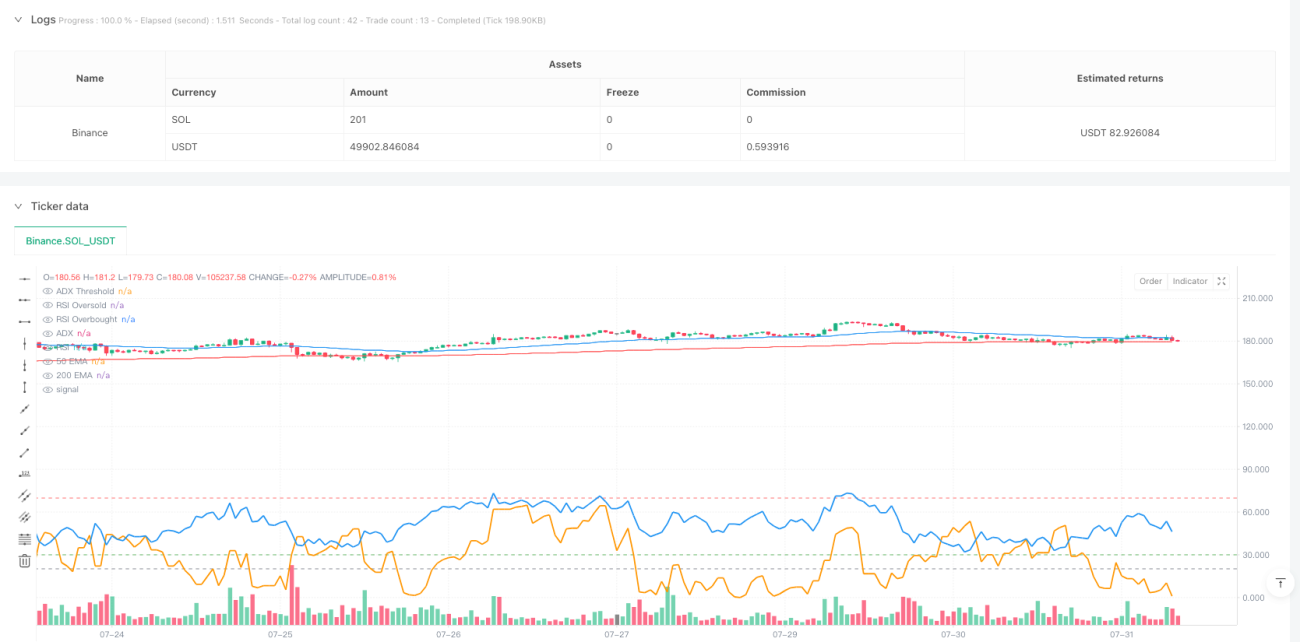
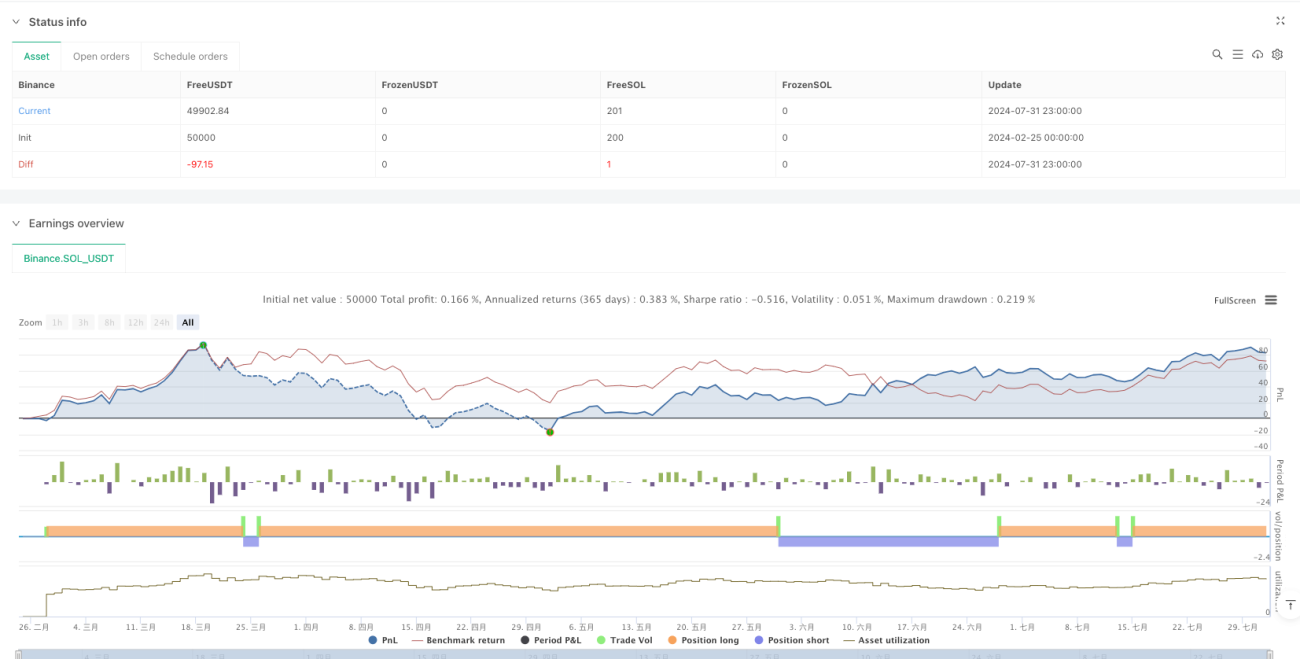
本戦略は、複数のテクニカル指標を組み合わせたトレンドフォローシステムであり、移動平均線(EMA)、平均方向性指数(ADX)、相対力指数(RSI)の利点を統合しています。50日および200日の指数平滑移動平均線のクロスにより市場トレンドを識別し、ADXで弱いトレンドをフィルタリングし、RSIを使用して買われすぎや売られすぎの領域での取引を回避します。戦略は、平均真実範囲(ATR)に基づく動的ストップロスと利益確定目標を採用し、リスク管理と利益最大化の両方を実現します。
戦略の原理
戦略の核となるロジックは、以下の主要要素に基づいています:
- トレンド判断:高速EMA(50日)と低速EMA(200日)のクロスを利用して市場トレンドの方向を判断します。50日EMAが200日EMAを上抜けた場合、上昇トレンドを示します。50日EMAが200日EMAを下抜けた場合、下降トレンドを示します。
- トレンド強度の確認:ADX指標を使用してトレンドの強さを測定し、ADXが20を超える場合のみエントリーを検討することで、強いトレンドでのみ取引を行います。
- モメンタムフィルタリング:RSI指標によるモメンタムフィルタリングを適用し、RSIが30~70の範囲にある場合のみポジションを保有し、買われすぎや売られすぎの領域での取引を回避します。
- リスク管理:ATRベースの動的ストップロスと利益確定目標を使用し、ストップロスはATRの2倍、利益確定はATRの4倍に設定します。
戦略の利点
- 多次元のトレンド確認:移動平均線のクロス、ADX、RSIの三重フィルタリングを組み合わせることで、取引シグナルの信頼性が大幅に向上します。
- 動的リスク管理:ATRに基づく動的ストップロスと利益確定設定により、市場のボラティリティに応じて自動調整されます。
- 弱いトレンドのフィルタリング:ADX指標の導入により、レンジ相場での頻繁な取引を効果的に回避します。
- 極端なエントリーの防止:RSIフィルタリングメカニズムにより、極端な領域での取引を防ぎます。
戦略のリスク
- トレンド反転リスク:急激な反転局面では、移動平均線システムの遅延性により大きなドローダウンが発生する可能性があります。
- レンジ相場リスク:市場がレンジ内で推移している場合、偽のブレイクアウトシグナルが頻繁に発生する可能性があります。
- パラメータ感度:複数の指標のパラメータ設定は、異なる市場環境に応じて最適化する必要があります。
- スリッページリスク:流動性の低い市場では、実際の約定価格がシグナル価格と大きく乖離する可能性があります。
戦略最適化の方向性
- 出来高指標の導入:出来高による確認メカニズムを追加し、出来高を伴ったブレイクアウト時のみ取引を行うことを検討します。
- ストップロスメカニズムの改善:トレーリングストップの導入を検討し、トレンドの進行中に既得利益を保護します。
- 時間フィルターの追加:取引時間フィルターを追加し、ボラティリティの高い時間帯の取引を回避します。
- 市場環境の分類:異なる市場環境(トレンド相場、レンジ相場)に応じて戦略パラメータを動的に調整します。
まとめ
本戦略は、複数のテクニカル指標を総合的に活用することで、完全なトレンドフォロー取引システムを構築しています。戦略の利点は多次元のシグナル確認メカニズムと動的リスク管理体制にありますが、トレンド反転やレンジ相場に伴うリスクにも注意が必要です。継続的な最適化と改善を通じて、本戦略は様々な市場環境で安定したパフォーマンスを維持することが期待されます。
Overview
This strategy is a trend-following system based on multiple technical indicators, combining the advantages of Exponential Moving Averages (EMA), Average Directional Index (ADX), and Relative Strength Index (RSI). It identifies market trends through the crossover of 50-day and 200-day EMAs, filters weak trends using ADX, and avoids trading in overbought or oversold areas using RSI. The strategy employs dynamic stop-loss and take-profit targets based on Average True Range (ATR), ensuring both risk control and profit maximization.
Strategy Principles
The core logic of the strategy is built on the following key elements:
- Trend Identification: Uses the crossover of fast EMA (50-day) and slow EMA (200-day) to determine market trend direction. A bullish trend is signaled when the 50-day EMA crosses above the 200-day EMA, and a bearish trend when it crosses below.
- Trend Strength Confirmation: Utilizes the ADX indicator to measure trend strength, only considering entry when ADX is above 20, ensuring trades only in strong trends.
- Momentum Filtering: Applies RSI indicator for momentum filtering, only entering positions when RSI is between 30-70, avoiding trades in overbought or oversold areas.
- Risk Management: Uses ATR-based dynamic stop-loss and take-profit levels, with stop-loss set at 2x ATR and take-profit at 4x ATR.
Strategy Advantages
- Multi-dimensional Trend Confirmation: Combines EMA crossover, ADX, and RSI triple filtering to significantly improve signal reliability.
- Dynamic Risk Management: ATR-based dynamic stop-loss and take-profit settings adapt to market volatility.
- Weak Trend Filtering: Introduction of ADX effectively avoids frequent trading in ranging markets.
- Prevention of Extreme Entries: RSI filtering mechanism prevents trading in extreme areas.
Strategy Risks
- Trend Reversal Risk: The lag in moving average systems may lead to significant drawdowns in quick reversal scenarios.
- Range-bound Market Risk: May generate frequent false breakout signals during sideways markets.
- Parameter Sensitivity: Multiple indicator parameters need optimization across different market conditions.
- Slippage Risk: Actual execution prices may significantly deviate from signal prices in less liquid markets.
Strategy Optimization Directions
- Volume Indicator Integration: Consider adding volume confirmation, only trading on volume breakouts.
- Stop-loss Mechanism Enhancement: Consider implementing trailing stops to protect profits during trend development.
- Time Filter Addition: Add trading time filters to avoid high-volatility periods.
- Market Environment Classification: Dynamically adjust strategy parameters based on different market conditions (trending, ranging).
概要
この戦略は、複数のテクニカル指標を統合的に活用することで、総合的なトレンドフォロー型取引システムを構築しています。強みは多次元シグナル確認と動的リスク管理体制にあり、トレンド反転やレンジ相場によるリスクに注意を払う必要があります。継続的な最適化と改良を通じて、この戦略は様々な市場環境で安定したパフォーマンスを維持する可能性を秘めています。
- 1