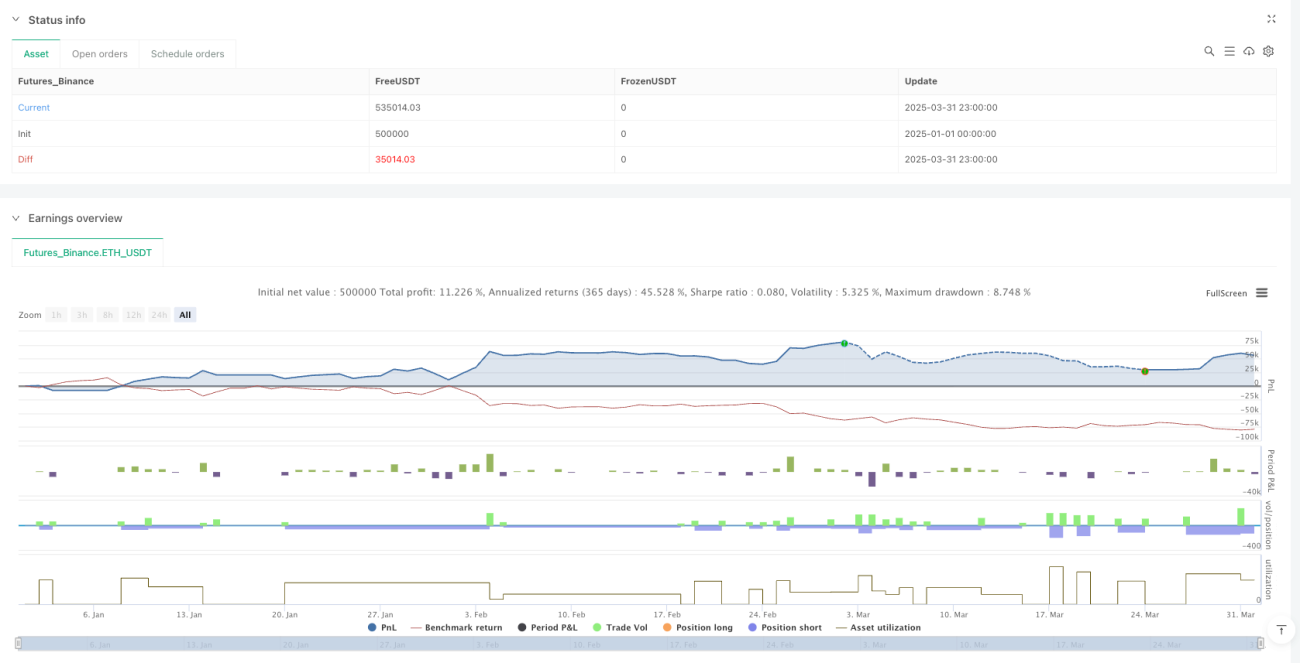
量子取引では,一つの技術指標が市場の騒音の中で偽信号を発生し,頻繁にストップと資金の撤収を誘発することがしばしばあるという根本的な問題に直面しています. では,どのようにトレンドを捉え,騒音を効果的にフィルターできる取引システムを構築するか?
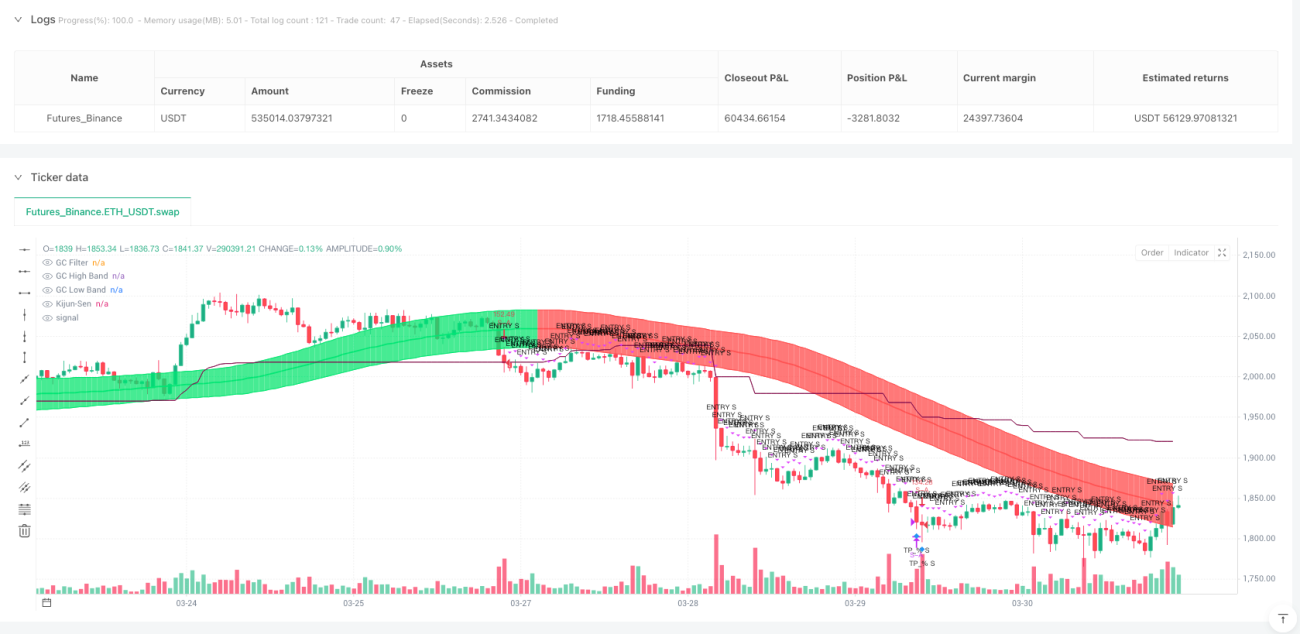
今日分析したガウス・チャネルの複数のフィルタリング戦略は,4つの異なる次元を巧妙に組み合わせた技術指標によって,私たちが深く研究する価値のある解決策を提供します.
1. ガウスチャンネル - トレンド認識の核心
策略の基礎は,144周期のサンプリングウィンドウを使用する4段階の高士フィルターである.従来の移動平均とは異なり,高士フィルターは,数学的なモデリングにより,価格変化に対する感受性を保ちながら,市場のノイズの大半を排除する.
キーパラメータの設定:
2. キジュン・セン線 ((130周期) - 中長期トレンド確認
伝統的な26周期ではなく,130周期のKijun-Sen線がトレンドフィルターとして使用されています.
より長い周期設定は:
3. VAPI指標 - 取引量価格分析
VAPI (Volume Adjusted Price Indicator) は,取引量と価格の変化の関係を分析し,市場参加者の真の意図を判断する.VAPI > 0時には多額の支持,< 0時には空調の支持する.
4. ATR ダイナミック・ストップ・リスク・コントロール・メカニズム
11サイクルATRの4.5倍をストップ距離として使用し,この設定は市場の波動性を考慮するとともに,市場騒音によって引き起こされる過密のストップを避ける.
この戦略の最も学ぶに値する点は,その独特な資金管理方法である.
分散論理:
デザインの理由とは
1. 入場リスク管理
2. ポジションのリスク管理
3. 信号フィルタリング 4つの技術指標が同時に確認され,偽信号の確率が大幅に減少した.
中心的な長所:
潜在的制限:
1. 品種選択 主要な通貨ペア,株式指数期貨などの傾向が強い品種を選択してください.
2. パラメータ最適化 特定の取引品種の歴史データに基づいて,追溯・最適化を行うことを推奨し,特に以下に注目する.
3. 市場環境への適応 明らかに揺れ動いている市場では,戦略を一時的に停止するか,パラメータ設定を調整することを考えることができます.
この戦略の価値は,技術的な実現だけでなく,体系的な思考にもあります.
この戦略は,量的なトレーダーにとって,良いフレームワークの参照を提供している. 鍵はパラメータを照らすことではなく,設計の考え方を理解し,自分の取引品種とリスクの好みに合わせて適切に調整することです.
ビジネス戦略は,最も複雑な戦略ではなく,あなたの取引スタイルと市場環境に最も適したものであることを覚えておいてください.
/*backtest
start: 2025-01-01 00:00:00
end: 2025-04-01 00:00:00
period: 1h
basePeriod: 1h
exchanges: [{"eid":"Futures_Binance","currency":"ETH_USDT","balance":500000}]
*/
// @version=6
strategy("Gaussian Channel Strategy – GC + Kijun (120) + VAPI Gate + ATR(4.5x) + 75/25 TP-TRAIL + Extra %TP",
overlay=true)
// =============================
// ======= INPUTS ==============
// =============================
N_poles = input.int(4, "Gaussian Poles", minval=1, maxval=9)
per = input.int(144, "Sampling Period", minval=2)
mult = input.float(1.414, "Filtered TR Multiplier", step=0.001)
src = input.source(hlc3, "Source")
modeLag = input.bool(false, "Reduced Lag Mode")
modeFast = input.bool(false, "Fast Response Mode")
kijunLen = input.int(130, "Kijun-Sen Period")
vapiLen = input.int(10, "VAPI Length")
vapiThresh= input.float(0.0, "VAPI Threshold (0 = zero line)")
atrLen = input.int(11, "ATR Length (RMA)")
slATRmul = input.float(4.5, "SL = ATR ×", step=0.1)
rr_fixed = input.float(3.5, "Fixed TP RR (Leg A)", step=0.1)
allocA = input.float(75, "Allocation %: Fixed TP Leg", minval=1, maxval=99)
riskPct = input.float(3.0, "Risk % of Equity per Trade", step=0.1, minval=0.1, maxval=10)
tpEnable = input.bool(true, "Enable Extra % Take Profit")
tpPctLong = input.float(10.0, "Extra Long TP % of Entry", step=0.1, minval=0)
tpPctShort = input.float(10.0, "Extra Short TP % of Entry", step=0.1, minval=0)
// =============================
// ===== CORE COMPONENTS =======
// =============================
atr = ta.rma(ta.tr(true), atrLen)
donchian_avg(len) => (ta.highest(high, len) + ta.lowest(low, len)) / 2.0
kijun = donchian_avg(kijunLen)
// --- VAPI_LB (LazyBear) ---
rs(x, len) => ta.cum(x) - nz(ta.cum(x)[len])
v_x = (2*close - high - low) / math.max(high - low, syminfo.mintick)
v_tva = rs(volume * v_x, vapiLen)
v_tv = rs(volume, vapiLen)
v_va = 100 * (v_tva / v_tv)
// =============================
// ===== Gaussian Channel ======
// =============================
f_filt9x(_a, _s, _i) =>
int _m2 = 0, int _m3 = 0, int _m4 = 0, int _m5 = 0, int _m6 = 0,
int _m7 = 0, int _m8 = 0, int _m9 = 0, float _f = 0.0, _x = (1 - _a)
_m2 := _i == 9 ? 36 : _i == 8 ? 28 : _i == 7 ? 21 : _i == 6 ? 15 : _i == 5 ? 10 : _i == 4 ? 6 : _i == 3 ? 3 : _i == 2 ? 1 : 0
_m3 := _i == 9 ? 84 : _i == 8 ? 56 : _i == 7 ? 35 : _i == 6 ? 20 : _i == 5 ? 10 : _i == 4 ? 4 : _i == 3 ? 1 : 0
_m4 := _i == 9 ? 126 : _i == 8 ? 70 : _i == 7 ? 35 : _i == 6 ? 15 : _i == 5 ? 5 : _i == 4 ? 1 : 0
_m5 := _i == 9 ? 126 : _i == 8 ? 56 : _i == 7 ? 21 : _i == 6 ? 6 : _i == 5 ? 1 : 0
_m6 := _i == 9 ? 84 : _i == 8 ? 28 : _i == 7 ? 7 : _i == 6 ? 1 : 0
_m7 := _i == 9 ? 36 : _i == 8 ? 8 : _i == 7 ? 1 : 0
_m8 := _i == 9 ? 9 : _i == 8 ? 1 : 0
_m9 := _i == 9 ? 1 : 0
_f := math.pow(_a, _i) * nz(_s) +
_i * _x * nz(_f[1]) - (_i >= 2 ?
_m2 * math.pow(_x, 2) * nz(_f[2]) : 0) + (_i >= 3 ?
_m3 * math.pow(_x, 3) * nz(_f[3]) : 0) - (_i >= 4 ?
_m4 * math.pow(_x, 4) * nz(_f[4]) : 0) + (_i >= 5 ?
_m5 * math.pow(_x, 5) * nz(_f[5]) : 0) - (_i >= 6 ?
_m6 * math.pow(_x, 6) * nz(_f[6]) : 0) + (_i >= 7 ?
_m7 * math.pow(_x, 7) * nz(_f[7]) : 0) - (_i >= 8 ?
_m8 * math.pow(_x, 8) * nz(_f[8]) : 0) + (_i == 9 ?
_m9 * math.pow(_x, 9) * nz(_f[9]) : 0)
f_pole(_a, _s, _i) =>
_f1 = f_filt9x(_a, _s, 1), _f2 = (_i >= 2 ? f_filt9x(_a, _s, 2) : 0), _f3 = (_i >= 3 ? f_filt9x(_a, _s, 3) : 0)
_f4 = (_i >= 4 ? f_filt9x(_a, _s, 4) : 0), _f5 = (_i >= 5 ? f_filt9x(_a, _s, 5) : 0), _f6 = (_i >= 6 ? f_filt9x(_a, _s, 6) : 0)
_f7 = (_i >= 7 ? f_filt9x(_a, _s, 7) : 0), _f8 = (_i >= 8 ? f_filt9x(_a, _s, 8) : 0), _f9 = (_i == 9 ? f_filt9x(_a, _s, 9) : 0)
_fn = _i == 1 ? _f1 : _i == 2 ? _f2 : _i == 3 ? _f3 : _i == 4 ? _f4 : _i == 5 ? _f5 : _i == 6 ? _f6 : _i == 7 ? _f7 : _i == 8 ? _f8 : _i == 9 ? _f9 : na
[_fn, _f1]
beta = (1 - math.cos(4*math.asin(1)/per)) / (math.pow(1.414, 2/N_poles) - 1)
alpha = - beta + math.sqrt(math.pow(beta, 2) + 2*beta)
lag = (per - 1) / (2.0 * N_poles)
srcdata = modeLag ? src + (src - nz(src[lag])) : src
tr_raw = ta.tr(true)
trdata = modeLag ? tr_raw + (tr_raw - nz(tr_raw[lag])) : tr_raw
[filt_n, filt_1] = f_pole(alpha, srcdata, N_poles)
[filt_n_tr, filt_1_tr] = f_pole(alpha, trdata, N_poles)
filt = modeFast ? (filt_n + filt_1)/2.0 : filt_n
filttr = modeFast ? (filt_n_tr + filt_1_tr)/2.0 : filt_n_tr
hband = filt + filttr * mult
lband = filt - filttr * mult
// =============================
// ===== Signals & Filters =====
// =============================
doLong = close > filt and close > kijun and v_va > vapiThresh
doShort = close < filt and close < kijun and v_va < -vapiThresh
// =============================
// ===== Position Sizing =======
// =============================
riskValue = strategy.equity * (riskPct/100.0)
slDist = atr * slATRmul
qtyTotal = slDist > 0 ? riskValue / slDist : 0.0
qtyA = qtyTotal * (allocA/100.0)
qtyB = qtyTotal * ((100 - allocA)/100.0)
// =============================
// ===== Order Execution =======
// =============================
var float trailStopL = na
var float trailStopS = na
inLong = strategy.position_size > 0
inShort = strategy.position_size < 0
entryPx = strategy.position_avg_price
// Entries
if doLong and not inLong and strategy.position_size <= 0
strategy.order("L-A", strategy.long, qty=qtyA)
strategy.order("L-B", strategy.long, qty=qtyB)
trailStopL := na
if doShort and not inShort and strategy.position_size >= 0
strategy.order("S-A", strategy.short, qty=qtyA)
strategy.order("S-B", strategy.short, qty=qtyB)
trailStopS := na
// LONG management
if inLong
slL = entryPx - slDist
tpA = entryPx + rr_fixed * slDist
// Leg A: 固定RR止盈 + 止损
strategy.exit("TP/SL-LA", from_entry="L-A", limit=tpA, stop=slL)
// Leg B: 追踪止损
trailStopL := na(trailStopL[1]) or strategy.position_size[1] <= 0 ? slL : math.max(trailStopL[1], close - slDist)
strategy.exit("Trail-LB", from_entry="L-B", stop=trailStopL)
// 额外百分比止盈
if tpEnable and high >= entryPx * (1 + tpPctLong/100.0)
strategy.close("L-A", comment="ExtraTP")
strategy.close("L-B", comment="ExtraTP")
// SHORT management
if inShort
slS = entryPx + slDist
tpA = entryPx - rr_fixed * slDist
// Leg A: 固定RR止盈 + 止损
strategy.exit("TP/SL-SA", from_entry="S-A", limit=tpA, stop=slS)
// Leg B: 追踪止损
trailStopS := na(trailStopS[1]) or strategy.position_size[1] >= 0 ? slS : math.min(trailStopS[1], close + slDist)
strategy.exit("Trail-SB", from_entry="S-B", stop=trailStopS)
// 额外百分比止盈
if tpEnable and low <= entryPx * (1 - tpPctShort/100.0)
strategy.close("S-A", comment="ExtraTP")
strategy.close("S-B", comment="ExtraTP")
// =============================
// ===== 图表绘制 ==============
// =============================
fcolor = filt > nz(filt[1]) ? color.new(color.lime, 0) : filt < nz(filt[1]) ? color.new(color.red, 0) : color.new(color.gray, 0)
plotFilter = plot(filt, title="GC Filter", color=fcolor, linewidth=2)
plotH = plot(hband, title="GC High Band", color=fcolor)
plotL = plot(lband, title="GC Low Band", color=fcolor)
fill(plotH, plotL, color=color.new(fcolor, 80))
plot(kijun, "Kijun-Sen", color=color.new(color.maroon, 0))
// 信号标记
plotshape(doLong, title="Long Setup", style=shape.triangleup, location=location.belowbar, color=color.new(color.lime, 0), size=size.tiny, text="ENTRY L")
plotshape(doShort, title="Short Setup", style=shape.triangledown, location=location.abovebar, color=color.new(color.fuchsia, 0), size=size.tiny, text="ENTRY S")