슈퍼트렌드선 기반 추세 추종 전략

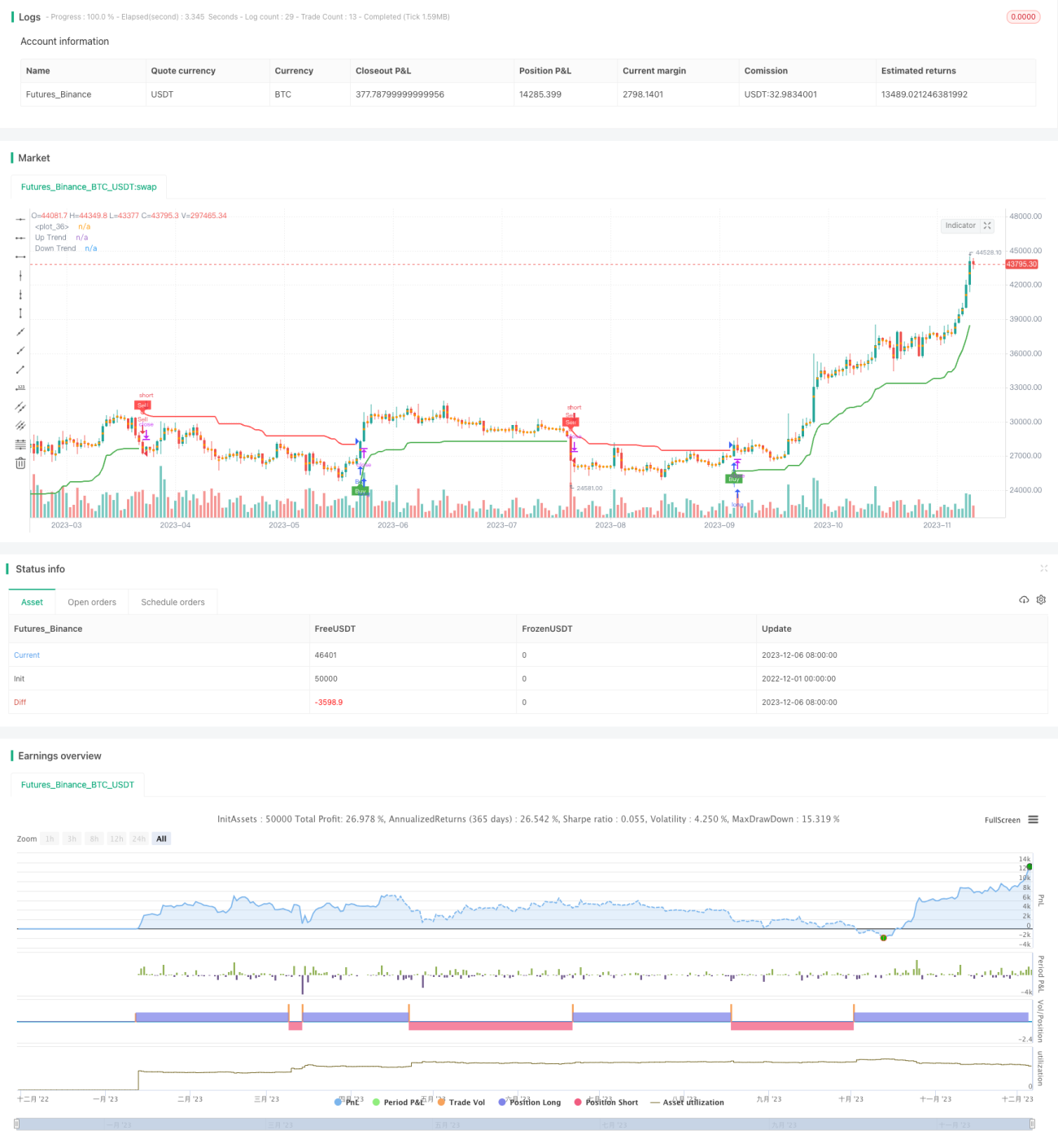
개요
본 전략은 평균 실제 범위(Average True Range, ATR) 지표를 기반으로 구축된 슈퍼 트렌드 라인을 사용하여 시장 추세 방향을 판단하고 거래 신호를 제공하는 추세 추종 전략입니다. 해당 전략은 추세 판단과 추세 추종의 이중 기능을 동시에 가지며, 주식 선물, 외환 및 디지털 통화 등의 분야에 사용될 수 있습니다.
전략 원리
본 전략은 일정 기간 동안의 ATR 지표를 계산한 후 이를 가격과 비교하여 가격이 상승 추세 채널 내에 있는지 판단합니다. 구체적으로, 전략은 먼저 ATR 지표를 계산한 다음, ATR 값에 계수를 곱하여 상단 밴드와 하단 밴드를 구성합니다. 가격이 상단 밴드보다 높으면 상승 추세로 판단하고, 가격이 하단 밴드보다 낮으면 하락 추세로 판단합니다. 상승 추세에서 가격이 하락 추세에서 상승 추세로 전환되면 매수 신호가 발생하고, 하락 추세에서 가격이 상승 추세에서 하락 추세로 전환되면 매도 신호가 발생합니다.
이 전략의 핵심은 추세 판단 기준인 슈퍼 트렌드 라인을 구축하는 데 있습니다. 슈퍼 트렌드 라인은 ATR 지표를 기반으로 동적으로 변화하므로 시장 노이즈를 효과적으로 필터링하고 주요 추세 방향을 판단할 수 있습니다. 동시에 슈퍼 트렌드 라인은 어느 정도 지연성을 가지며, 이는 추세 전환점을 확인하고 잘못된 거래 신호를 방지하는 데 도움이 됩니다.
전략 장점
이 전략의 가장 큰 장점은 추세 판단과 추세 추종 기능을 결합한 능력입니다. 구체적인 주요 장점은 다음과 같습니다.
- ATR을 사용하여 구축한 슈퍼 트렌드 라인은 시장 추세를 효과적으로 식별하고 노이즈를 필터링할 수 있습니다.
- 슈퍼 트렌드 라인은 어느 정도 지연성을 가지므로 잘못된 신호를 줄이는 데 도움이 됩니다.
- 추세 판단과 거래 신호를 동시에 제공하여 조작이 간단합니다.
- 매개변수 최적화를 통해 더 넓은 시장에 적용할 수 있습니다.
- 시각화된 지표로 현재 추세 상태를 직관적으로 판단할 수 있습니다.
위험 분석
본 전략에는 주로 다음과 같은 위험이 존재합니다.
- ATR 매개변수가 부적절하게 설정되면 슈퍼 트렌드 라인이 지나치게 민감하거나 지연될 수 있습니다.
- 노이즈의 영향을 완전히 피할 수 없으며, 특정 상황에서 잘못된 신호가 발생할 수 있습니다.
- 시세가 급변할 경우 슈퍼 트렌드 라인의 판단 정확도가 다소 떨어질 수 있습니다.
- 추세 반전 지점을 예측할 수 없으며, 이미 발생한 추세만 추적할 수 있습니다.
대책으로는 ATR 기간, 슈퍼 트렌드 라인 계수 등의 매개변수를 조정하여 최적화하거나 다른 지표와 결합하여 검증함으로써 잘못된 신호의 확률을 낮출 수 있습니다. 또한 손절매 지점을 설정하여 단일 손실을 통제할 수 있습니다.
최적화 방향
본 전략은 추가로 최적화할 여지가 있습니다.
- 머신러닝 알고리즘을 결합하여 매개변수의 자동 최적화를 구현할 수 있습니다.
- 지수 이동 평균(Exponential Moving Average) 등의 지표를 추가하여 판단하고 검증할 수 있습니다.
- 손절매 및 이익 실현 전략을 설정하여 자금 관리를 최적화할 수 있습니다.
- 심리 지표, 뉴스 분석 등의 방법을 결합하여 잠재적인 추세 반전을 예측할 수 있습니다.
- 딥러닝 기술을 활용하여 더 많은 양의 과거 데이터를 분석하여 판단 정확도를 높일 수 있습니다.
심층 최적화를 통해 전략의 안정성, 적응성 및 수익 공간을 더욱 향상시킬 수 있을 것입니다.
요약
본 전략은 전반적으로 안정적이고 신뢰할 수 있으며 수익이 좋은 특징을 가지고 있습니다. 슈퍼 트렌드 라인을 구축하여 주요 추세를 판단하고 동시에 거래 신호를 제공하는 것이 전략의 가장 큰 장점입니다. 그러나 어느 정도의 지연성과 오판 위험도 존재합니다. 매개변수 및 모델 최적화를 통해 더 나은 전략 성과를 얻을 수 있을 것으로 기대됩니다. 전반적으로, 본 전략은 추세 기반 전략의 전형적인 예시로서 실전 검증과 적용 가치가 있습니다.
- 1