다중 시간 삼중 초추세 전략 기반

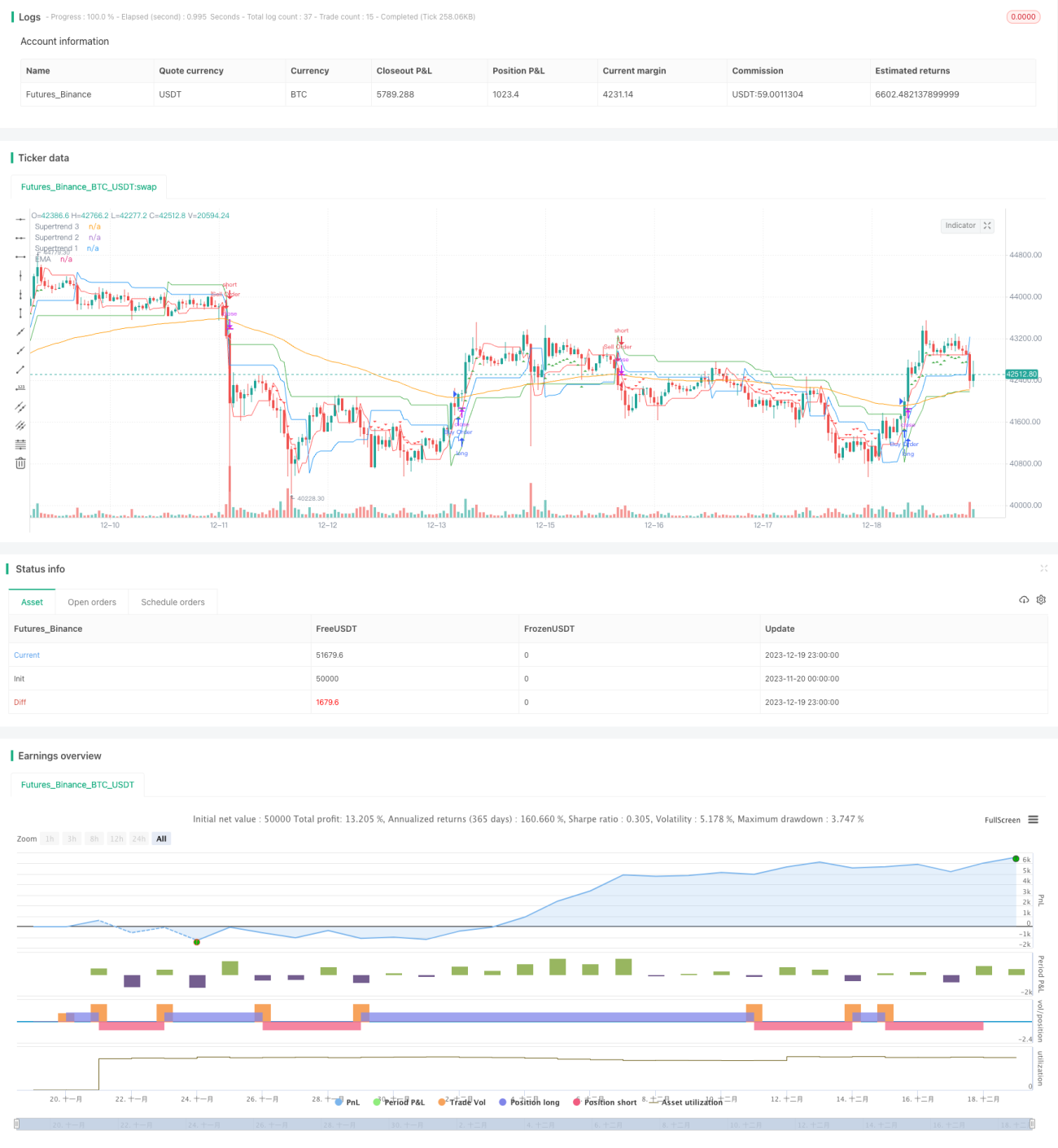
개요
삼중 슈퍼트렌드 전략은 여러 시간 프레임의 슈퍼트렌드 지표와 이동평균선을 기반으로 하는 추세 추종 전략입니다. 이 전략은 추세 방향을 효과적으로 식별하여 추세가 형성될 때 적시에 진입하고, 추세가 반전될 때 적시에 청산하여 수익을 얻습니다. 단일 슈퍼트렌드 전략과 비교하여 삼중 슈퍼트렌드 전략은 시장 추세를 더 정확하게 묘사하고 가짜 돌파로 인한 손실을 방지할 수 있습니다.
전략 원리
이 전략은 서로 다른 파라미터 설정을 가진 세 개의 슈퍼트렌드 지표(슈퍼트렌드1, 슈퍼트렌드2, 슈퍼트렌드3)를 동시에 사용합니다. 각각의 주기 길이는 길고 짧으며, 입력 파라미터는 supertrend1_period, supertrend2_period, supertrend3_period입니다. 세 개의 슈퍼트렌드 지표는 이동평균선 EMA와 함께 작동하며, 구체적인 로직은 다음과 같습니다.
매수 진입 신호: 종가가 세 개의 슈퍼트렌드 라인과 이동평균선 위에 있을 때 매수합니다.
매도 진입 신호: 종가가 세 개의 슈퍼트렌드 라인과 이동평균선 아래에 있을 때 매도합니다.
이렇게 서로 다른 주기의 슈퍼트렌드 지표는 상호 검증 역할을 하여 시장 추세를 잘못 해석하는 것을 방지합니다. 이동평균선 EMA를 추가하면 일부 가짜 돌파를 걸러낼 수 있습니다.
전략 장점
-
삼중 슈퍼트렌드 시스템을 사용하여 추세를 더 정확하게 판단하고 가짜 돌파로 인한 오해를 방지합니다.
-
서로 다른 파라미터 설정의 슈퍼트렌드 지표가 상호 검증되어 전략의 신뢰성을 높입니다.
-
이동평균선 필터를 추가하여 단기 노이즈를 더욱 줄일 수 있습니다.
-
전략의 참여 방식이 합리적이어서 추세를 따라 수익을 얻는 동시에 적시에 청산하여 위험을 통제할 수 있습니다.
전략 위험 및 해결 방법
-
슈퍼트렌드 지표에는 지연성이 존재하여 진입 시점이 다소 늦어질 수 있습니다. 파라미터를 적절히 조정하거나 다른 선행 지표를 추가할 수 있습니다.
-
이동평균선도 필터로서 지연 문제가 있습니다. EMA, 모멘텀 지표 등 다른 평활 지표를 테스트하여 대체할 수 있습니다.
-
추세 반전 시 손실이 커질 수 있습니다. 손절매 지점을 설정하거나 잠재적 반전을 판단하는 추가 지표를 포함시킬 수 있습니다.
-
파라미터 설정이 부적절하면 전략 효과에 영향을 미칠 수 있습니다. 충분한 백테스트 최적화를 통해 최적의 파라미터 조합을 찾아야 합니다.
전략 최적화 방향
-
MACD, DMI 등 다른 추세 판단 지표를 추가하여 추세 판단의 정확성을 검증합니다.
-
파라미터를 자동으로 최적화하여 슈퍼트렌드의 주기와 승수가 다양한 시장 환경에 적응할 수 있도록 시도합니다.
-
동적 손절매 및 이익 실현 조건을 설정하여 전략이 실시간 변동성에 따라 손익비를 자동으로 조정할 수 있게 합니다.
-
이동평균선 파라미터를 최적화하거나 다른 지표를 도입하여 가짜 돌파 신호를 필터링합니다.
-
더 긴 시간 프레임(일봉, 주봉 등)에서 전략을 실행하여 큰 추세에서의 포착 효과를 판단합니다.
요약
삼중 슈퍼트렌드 전략은 서로 다른 파라미터를 가진 세 그룹의 슈퍼트렌드 지표를 동시에 사용하여 추세 방향을 상호 검증하고, 이동평균선을 결합하여 필터링합니다. 이를 통해 추세를 효과적으로 식별하고 적시에 진입하며 가짜 돌파를 방지할 수 있는 신뢰할 수 있는 추세 추종 전략입니다. 이 전략은 파라미터 최적화, 손절매 메커니즘 개선, 다른 지표 추가 등을 통해 업그레이드할 수 있으며, 중장기 추세를 포착하면서 위험을 통제할 수 있어 광범위한 최적화 여지를 가지고 있습니다.
/*backtest
start: 2023-11-20 00:00:00
end: 2023-12-20 00:00:00
period: 1h
basePeriod: 15m
exchanges: [{"eid":"Futures_Binance","currency":"BTC_USDT"}]
*/

//@version=5
strategy("Triple Supertrend Strategy", shorttitle = "TSS", overlay = true, pyramiding = 1) // Added pyramiding = 1

// Define input settings for Supertrend indicators- 1