지원 및 저항 스윙 트레이딩 전략


생성 날짜: 2024-01-25 15:53:06 마지막으로 수정됨: 2024-01-25 15:53:06
복사: 0 클릭수: 504
avatar of ChaoZhang ChaoZhang
1
집중하다
1617
수행원

지원 및 저항 스윙 트레이딩 전략

개요

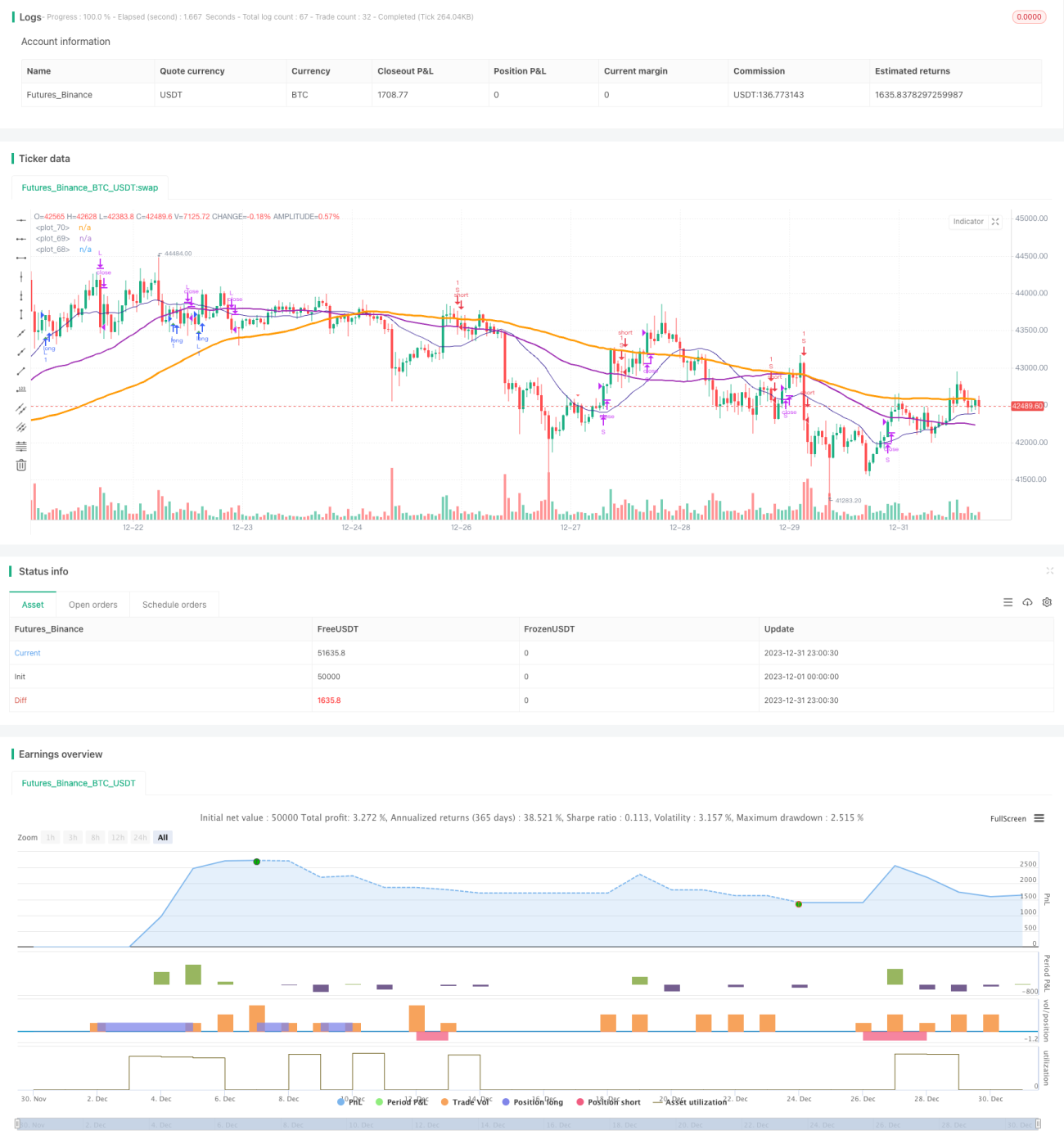
이 전략은 RSI, 무작위 지표의 교차 전략과 평점 미끄러지점 최적화 전략과 결합하여 거래 논리를 정확하게 제어하고 정확한 스톱로스를 구현합니다. 또한 신호 최적화를 도입함으로써 트렌드를 더 잘 제어하고 자금을 합리적으로 관리 할 수 있습니다.

전략 원칙

  1. RSI 지표는 오버 바이 오버 셀 영역을 판단하고, 랜덤 지표의 K값과 D값의 골드 포크 데드 포크가 거래 신호를 형성한다.
  2. K선에 대한 분류 식별을 도입하여 트렌드 신호를 판단하고, 잘못된 거래를 방지한다.
  3. SMA 평균선은 트렌드 방향을 결정하는데 보조한다. 단기 평균선은 아래에서 위로 장기 평균선을 돌파할 때 시선 신호이다.
  4. 평평한 위치 슬라이드 포인트 전략, 최고 가격과 최저 가격의 변동 범위에 따라 스톱 로스 스톱 가격을 설정한다.

우위 분석

  1. RSI 지수 변수 최적화, 오버 바이 오버 셀 영역을 잘 판단하여 잘못된 거래를 피합니다.
  2. STO 지표 매개 변수를 최적화하고, 부드러움 매개 변수를 조정하여 소음을 제거하고, 신호 품질을 향상시킵니다.
  3. Heikin-Ashi 기술 분석을 도입하여 K선 엔티티의 방향 변화를 식별하여 거래 신호의 정확성을 보장합니다.
  4. SMA 평균선은 큰 트렌드 방향을 판단하여 역동적인 거래를 피합니다.
  5. 스톱 스톱 슬라이드 포인트 전략과 결합하여 거래 당 수익을 최대화 할 수 있습니다.

위험 분석

  1. 대시장 하락이 지속되면 자금이 더 큰 위험에 처하게 됩니다.
  2. 거래 빈도가 너무 높아서 거래 비용과 슬라이드 포인트 비용이 증가할 수 있습니다.
  3. RSI 지표는 가짜 신호를 생성하기 쉽다. 다른 지표와 함께 필터링해야합니다.

전략 최적화

  1. RSI 변수를 조정하여 과매매 판단을 최적화합니다.
  2. STO 지표 매개 변수, 부드러움 및 주기를 조정하여 신호 품질을 향상시킵니다.
  3. 이동 평균 주기 조정, 트렌드 판단 최적화
  4. 더 많은 기술 지표를 도입하여 신호 판단의 정확성을 향상시킵니다.
  5. 단편 거래 위험을 줄이기 위해 스톱 스톱 비율을 최적화

요약하다

이 전략은 여러 주류 기술 지표의 장점을 통합하여, 매개 변수 최적화 및 규칙 개선을 통해 거래 신호 품질과 스톱 스톱 손실의 균형을 달성한다. 어느 정도의 보편성과 안정적인 수익성을 가지고 있다. 지속적인 최적화를 통해 승률과 수익률을 더욱 높일 수 있다.

전략 소스 코드
/*backtest
start: 2023-12-01 00:00:00
end: 2023-12-31 23:59:59
period: 1h
basePeriod: 15m
exchanges: [{"eid":"Futures_Binance","currency":"BTC_USDT"}]
*/

//@version=4
//study(title="@sentenzal strategy", shorttitle="@sentenzal strategy", overlay=true)
strategy(title="@sentenzal strategy", shorttitle="@sentenzal strategy", overlay=true  )
smoothK = input(3, minval=1)
smoothD = input(3, minval=1)
lengthRSI = input(14, minval=1)
lengthStoch = input(14, minval=1)
overbought = input(80, minval=1)
oversold = input(20, minval=1)
smaLengh = input(100, minval=1)
smaLengh2 = input(50, minval=1)
smaLengh3 = input(20, minval=1)

src = input(close, title="RSI Source")
testStartYear = input(2017, "Backtest Start Year")
testStartMonth = input(1, "Backtest Start Month")
testStartDay = input(1, "Backtest Start Day")
testPeriodStart = timestamp(testStartYear,testStartMonth,testStartDay,0,0)
testPeriod() =>
    time >= testPeriodStart ? true : false

rsi1 = rsi(src, lengthRSI)
k = sma(stoch(rsi1, rsi1, rsi1, lengthStoch), smoothK)
d = sma(k, smoothD)
crossBuy = crossover(k, d) and k < oversold
crossSell = crossunder(k, d) and k > overbought

dcLower = lowest(low, 10)
dcUpper = highest(high, 10)


heikinashi_close = security(heikinashi(syminfo.tickerid), timeframe.period, close)
heikinashi_open = security(heikinashi(syminfo.tickerid), timeframe.period, open)
heikinashi_low = security(heikinashi(syminfo.tickerid), timeframe.period, low)
heikinashi_high = security(heikinashi(syminfo.tickerid), timeframe.period, high)
heikinashiPositive = heikinashi_close >= heikinashi_open

heikinashiBuy = heikinashiPositive == true and heikinashiPositive[1] == false  and heikinashiPositive[2] == false
heikinashiSell = heikinashiPositive == false and heikinashiPositive[1] == true and heikinashiPositive[2] == true

//plotshape(heikinashiBuy, style=shape.arrowup, color=green, location=location.belowbar, size=size.tiny)
//plotshape(heikinashiSell, style=shape.arrowdown, color=red, location=location.abovebar, size=size.tiny)

buy = (crossBuy == true or crossBuy[1] == true or crossBuy[2] == true) and (heikinashiBuy == true or heikinashiBuy[1] == true or heikinashiBuy[2] == true)
sell = (crossSell == true or crossSell[1] == true or crossSell[2] == true) and (heikinashiSell == true or heikinashiSell[1] == true or heikinashiSell[2] == true)

mult = timeframe.period == '15' ? 4 : 1
mult2 = timeframe.period == '240' ? 0.25 : mult

movingAverage = sma(close, round(smaLengh))
movingAverage2 = sma(close, round(smaLengh2))
movingAverage3 = sma(close, round(smaLengh3))

uptrend = movingAverage < movingAverage2 and movingAverage2 < movingAverage3 and close > movingAverage
downtrend = movingAverage > movingAverage2 and movingAverage2 > movingAverage3 and close < movingAverage

signalBuy = (buy[1] == false and buy[2] == false and buy == true) and uptrend
signalSell = (sell[1] == false and sell[2] == false and sell == true) and downtrend

takeProfitSell = (buy[1] == false and buy[2] == false and buy == true) and uptrend == false
takeProfitBuy = (sell[1] == false and sell[2] == false and sell == true)  and uptrend

plotshape(signalBuy, style=shape.triangleup, color=green, location=location.belowbar, size=size.tiny)
plotshape(signalSell, style=shape.triangledown, color=red, location=location.abovebar, size=size.tiny)


plot(movingAverage, linewidth=3, color=orange, transp=0)
plot(movingAverage2, linewidth=2, color=purple, transp=0)
plot(movingAverage3, linewidth=1, color=navy, transp=0)

alertcondition(signalBuy, title='Signal Buy', message='Signal Buy')
alertcondition(signalSell, title='Signal Sell', message='Signal Sell')


strategy.close("L", when=dcLower[1] > low)
strategy.close("S", when=dcUpper[1] < high)

strategy.entry("L", strategy.long, 1, when = signalBuy and testPeriod() and uptrend) 
strategy.entry("S", strategy.short, 1, when = signalSell and testPeriod() and uptrend ==false) 

//strategy.exit("Exit Long", from_entry = "L", loss = 25000000, profit=25000000)
//strategy.exit("Exit Short", from_entry = "S", loss = 25000000, profit=25000000)