미래 가격 연장선 백테스팅 전략

1
Follow
1815
Followers
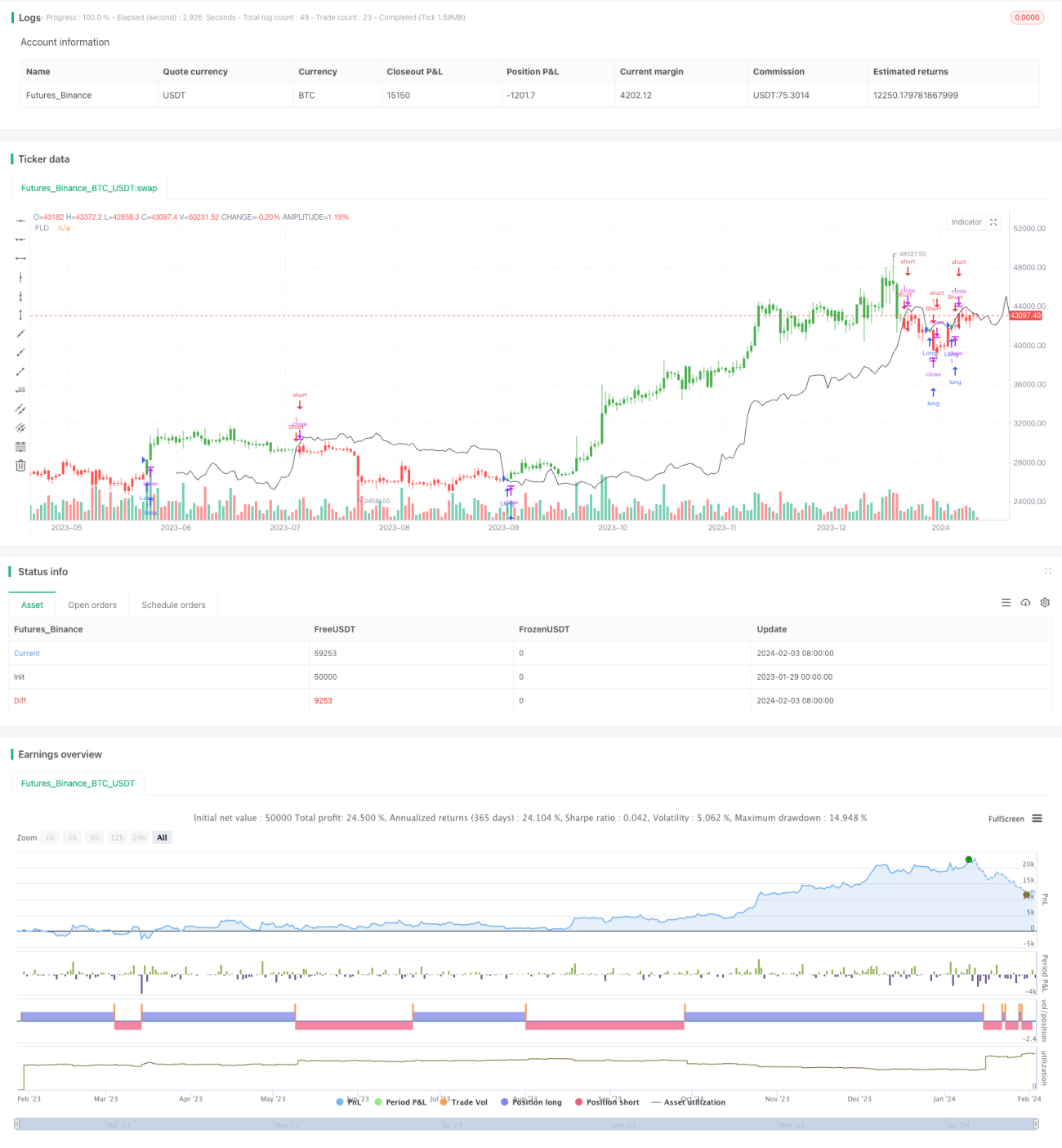
개요
이 전략의 주요 아이디어는 미래 가격 연장선을 그린 후, 현재 가격과 해당 선의 관계를 통해 미래 가격 방향을 판단하는 것입니다. 가격이 연장선 위나 아래에 있을 때 각각 매수 또는 매도할 수 있습니다.
전략 원리
미래 가격 연장선(FLD)은 특정 미래 주기 내의 중간 가격, 최고가 또는 최저가를 나타냅니다. 이 전략은 FLD를 사용하여 가격의 미래 추세를 판단하며, 그 원리는 다음과 같습니다.
- 주기 길이에 따라 FLD의 이동 주기인 Period를 계산합니다. 즉, Price의 미래 가격입니다.
- 현재 종가(Close)와 이동 주기 이후의 FLD 가격을 비교합니다.
- 종가가 FLD 미래 가격보다 낮으면 강세 신호로 판단합니다.
- 종가가 FLD 미래 가격보다 높으면 약세 신호로 판단합니다.
- 강세 및 약세 신호에 따라 해당 매수 또는 매도 작업을 수행합니다.
장점 분석
이 전략의 주요 장점은 다음과 같습니다.
- FLD를 사용하여 미래 가격 추세를 판단하므로 정확도가 높습니다.
- 사용자 정의 기간 매개변수를 사용할 수 있어 다양한 시장 환경에 적용 가능합니다.
- 중간 가격, 최고가 또는 최저가를 FLD 그리기 소스로 선택할 수 있어 적응성이 뛰어납니다.
리스크 분석
이 전략의 주요 리스크는 다음과 같습니다.
- FLD 자체가 무효화되어 기회를 놓치거나 잘못된 신호가 발생할 수 있습니다. 다른 지표와 결합하여 판단할 수 있습니다.
- 기간 매개변수가 잘못 설정되면 너무 많은 잘못된 신호가 발생할 수 있습니다. 기간 길이를 최적화해야 합니다.
- 돌발 상황으로 인해 가격이 급격히 변동하여 FLD 예측이 무효화될 수 있습니다. 손절매를 설정하여 리스크를 통제할 수 있습니다.
최적화 방향
이 전략은 다음과 같은 측면에서 최적화할 수 있습니다.
- 다른 지표(예: MACD, KDJ 등)를 결합하여 신호를 필터링하고 전략 정확도를 높입니다.
- 기간 매개변수를 최적화하여 최상의 매개변수 조합을 찾습니다.
- 손절매 및 이익 실현 메커니즘을 추가하여 단일 손실 및 수익을 제어합니다.
- 백테스트 결과에 따라 매수/매도 규칙을 조정하여 잘못된 신호를 줄입니다.
요약
이 전략은 가격을 이동된 미래 가격 연장선과 비교하여 가격의 미래 추세 방향을 판단하는 전형적인 추세 추종 전략입니다. 전반적으로 논리가 명확하고 이해하기 쉬우며 실행 리스크가 적습니다. 매개변수 최적화 및 지표 조합을 통해 좋은 전략 효과를 얻을 수 있습니다.
Source
Pine
/*backtest
start: 2023-01-29 00:00:00
end: 2024-02-04 00:00:00
period: 1d
basePeriod: 1h
exchanges: [{"eid":"Futures_Binance","currency":"BTC_USDT"}]
*/

//@version=2
////////////////////////////////////////////////////////////////////
//  Copyright by HPotter v1.0 15/02/2017
// An FLD is a line that is plotted on the same scale as the price and is in fact the Strategy parameters
Related strategies
Comment
All comments (0)
No data
- 1