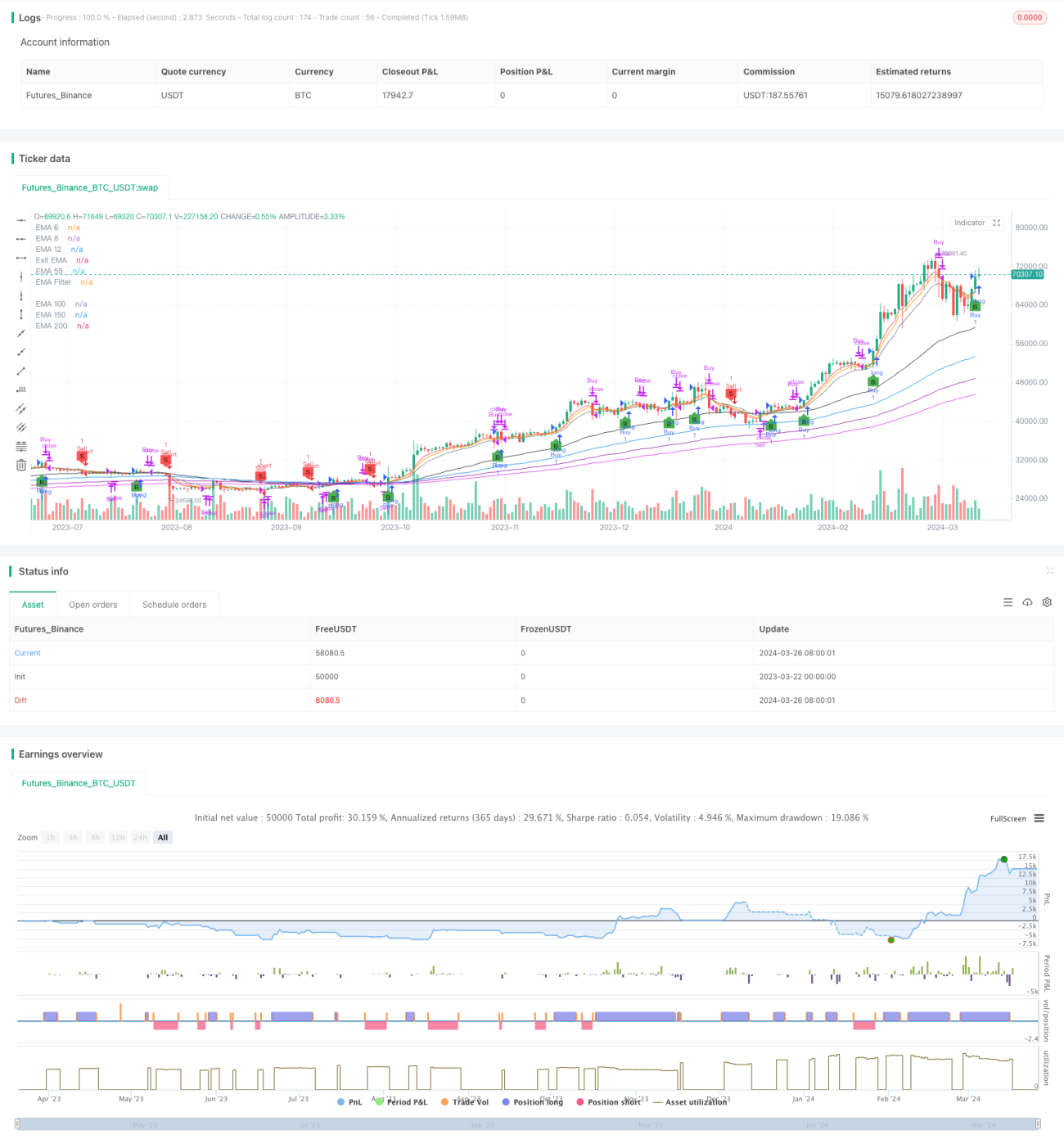
다중 이동 평균선, RSI 및 표준 편차 종료를 사용한 캔들스틱 높이 돌파 거래 전략


생성 날짜: 2024-03-28 16:13:45 마지막으로 수정됨: 2024-03-28 16:13:45
복사: 0 클릭수: 671
avatar of ChaoZhang ChaoZhang
1
집중하다
1617
수행원

다중 이동 평균선, RSI 및 표준 편차 종료를 사용한 캔들스틱 높이 돌파 거래 전략

전략 개요

이 전략은 여러 지수 이동 평균 (EMA), 상대적으로 강한 지수 (RSI) 및 표준 격차 출구 조건에 기반한 잠재적인 매매 기회를 식별하기 위해 여러 지수 이동 평균 (EMA), 상대적으로 약한 지수 (RSI) 및 표준 격차 출구 조건을 결합합니다. 단기 (6,8,12일), 중기 (5,55) 및 장기 (150일,200일,250일) 의 EMA를 사용하여 시장 추세의 방향과 강도를 분석합니다. RSI는 조정 가능한 구매 (~30) 및 판매 (~70) 경계를 사용하여 동력을 평가하고 과매 또는 과매를 식별합니다.

전략 원칙

  1. 여러 주기의 EMA ((6, 8, 12, 55, 100, 150, 200) 을 계산하여 시장을 평가하는 시각적 참조로 사용한다.
  2. 사용자가 입력한 선 수 ((3-4根) 에 따라, 최근 N根線의 최고 가격과 최저 가격을 계산한다.
  3. 구매 조건: 현재 종료 가격은 최근 N 루트 선의 최고 가격보다 높고, EMA 필터 ((만일 활성화) 보다 높다.
  4. 매각 조건: 현재 매각 가격은 최근 N 루트 선의 최저 가격보다 낮고 EMA 필터 (만약 활성화된 경우) 보다 낮다.
  5. 장점 출구 조건: 현재 종결 가격은 12일 EMA + 0.5배 표준 차점 이하, 또는 12일 EMA 이하이다.
  6. 짧은 입점 출구 조건: 현재 종료 가격은 12일 EMA보다 높습니다 - 0.5배 표준 차, 또는 12일 EMA보다 높습니다.
  7. RSI를 보조 지표로 사용하여, 기본 주기는 14이며, 초상도 시한은 30이며, 초상도 시한은 70이다.

전략적 이점

  1. 트렌드 트래킹 (다중 EMA) 과 동력 (RSI) 두 차원을 결합하여 더 포괄적인 시장 분석 관점을 제공합니다.
  2. 독특한 표준 격차 기반의 출전 메커니즘은 수익을 보호하고 위험을 통제하는 균형을 이룰 수 있습니다.
  3. 코드 모듈화가 높고, 핵심 파라미터가 사용자에 의해 구성될 수 있으며, 유연성이 강하다.
  4. 다양한 종류와 시간대에 적용되며, 특히 일선의 주식과 비트코인 거래에 적합하다.

위험 분석

  1. 위기시장이나 트렌드 반전의 초기에는 잘못된 신호가 자주 발생하여 연속적인 손실이 발생한다.
  2. 기본 파라미터는 모든 시장 환경에 적합하지 않으며, 피드백과 함께 파라미터를 최적화해야 한다.
  3. 이 전략에만 의존하는 거래는 위험합니다. 다른 지표와 결합하여 저항 수준을 지원하는 보조 의사 결정이 권장됩니다.
  4. 급격한 주요 사건에 대한 반응이 느리다.

최적화 방향

  1. EMA와 RSI 파라미터를 최적화합니다: 품종, 주기 및 시장 특성에 따라 다양한 파라미터 조합을 소작하여 최적의 파라미터 범위를 찾습니다.
  2. 손해 막기 메커니즘을 추가: ATR과 같은 변동률 지표를 참조하고, 합리적인 손해와 막점을 설정하고, 단일 거래 위험을 제어한다.
  3. 포지션 관리를 도입: 트렌드 강도 (ADX와 같은) 또는 핵심 지지 저항 지점으로부터 멀리 떨어져있는 위치에 따라 포지션 크기를 조정할 수 있다.
  4. 다른 기술 지표의 조합과 함께 사용: 예를 들어, 브린 밴드, MACD, 평선 교차 등, 평점 포지션 신호의 신뢰성을 높인다.
  5. 분시장 상태 최적화: 트렌드, 흔들림, 전환 등 다양한 시장 상태에 대해 각각 최적화 파라미터의 조합.

요약하다

이 글은 다중 이동 평균, RSI 및 표준 오차 출구에 기반한 선 선 고도 돌파 트레이딩 전략을 제시한다. 이 전략은 추세와 동력의 두 차원에서 시장을 분석하며, 독특한 표준 오차 출구 메커니즘을 사용하며, 트렌드 기회를 잡는 동시에 위험을 통제한다. 전략이 명확하고, 논리적으로 엄격하며, 코드가 간단하고 효율적으로 구현된다.

전략 소스 코드
/*backtest
start: 2023-03-22 00:00:00
end: 2024-03-27 00:00:00
period: 1d
basePeriod: 1h
exchanges: [{"eid":"Futures_Binance","currency":"BTC_USDT"}]
*/

//@version=5
strategy("Candle Height Breakout with Configurable Exit and Signal Control", shorttitle="CHB Single Signal", overlay=true)

// Input parameters for EMA filter and its length
useEmaFilter = input.bool(true, "Use EMA Filter", group="Entry Conditions")
emaFilterLength = input.int(55, "EMA Filter Length", minval=1, group="Entry Conditions")
candleCount = input.int(4, "SamG Configurable Candle Count for Entry", minval=3, maxval=4, step=1, group="Entry Conditions")
exitEmaLength = input.int(12, "Exit EMA Length", minval=1, group="Exit Conditions", defval=12)
exitStdDevMultiplier = input.float(0.5, "Exit Std Dev Multiplier", minval=0.1, maxval=2.0, step=0.1, group="Exit Conditions")

// State variables to track if we are in a long or short position
var bool inLong = false
var bool inShort = false

// Calculating EMAs with fixed periods for visual reference
ema6 = ta.ema(close, 6)
ema8 = ta.ema(close, 8)
ema12 = ta.ema(close, 12)
ema55 = ta.ema(close, 55)
ema100 = ta.ema(close, 100)
ema150 = ta.ema(close, 150)
ema200 = ta.ema(close, 200)
emaFilter = ta.ema(close, emaFilterLength)
exitEma = ta.ema(close, exitEmaLength)

// Plotting EMAs
plot(ema6, "EMA 6", color=color.red)
plot(ema8, "EMA 8", color=color.orange)
plot(ema12, "EMA 12", color=color.yellow)
plot(ema55, "EMA 55", color=color.green)
plot(ema100, "EMA 100", color=color.blue)
plot(ema150, "EMA 150", color=color.purple)
plot(ema200, "EMA 200", color=color.fuchsia)
plot(emaFilter, "EMA Filter", color=color.black)
plot(exitEma, "Exit EMA", color=color.gray)

// Calculating the highest and lowest of the last N candles based on user input
highestOfN = ta.highest(high[1], candleCount)
lowestOfN = ta.lowest(low[1], candleCount)

// Entry Conditions with EMA Filter
longEntryCondition = not inLong and not inShort and (close > highestOfN) and (not useEmaFilter or (useEmaFilter and close > emaFilter))
shortEntryCondition = not inLong and not inShort and (close < lowestOfN) and (not useEmaFilter or (useEmaFilter and close < emaFilter))

// Update position state on entry
if (longEntryCondition)
    strategy.entry("Buy", strategy.long, comment="B")
    inLong := true
    inShort := false

if (shortEntryCondition)
    strategy.entry("Sell", strategy.short, comment="S")
    inLong := false
    inShort := true

// Exit Conditions based on configurable EMA and Std Dev Multiplier
smaForExit = ta.sma(close, exitEmaLength)
upperExitBand = smaForExit + exitStdDevMultiplier * ta.stdev(close, exitEmaLength)
lowerExitBand = smaForExit - exitStdDevMultiplier * ta.stdev(close, exitEmaLength)

exitConditionLong = inLong and (close < upperExitBand or close < exitEma)
exitConditionShort = inShort and (close > lowerExitBand or close > exitEma)

// Strategy exits
if (exitConditionLong)
    strategy.close("Buy", comment="Exit")
    inLong := false

if (exitConditionShort)
    strategy.close("Sell", comment="Exit")
    inShort := false

// Visualizing entry and exit points
plotshape(series=longEntryCondition, style=shape.labelup, location=location.belowbar, color=color.green, size=size.tiny, title="Buy Signal", text="B")
plotshape(series=shortEntryCondition, style=shape.labeldown, location=location.abovebar, color=color.red, size=size.tiny, title="Sell Signal", text="S")